
Mary Annette Pember
ICT
At first, Rhiana Yazzie didn’t know what would happen to her play when President Donald Trump suddenly declared himself chairman of the board of the Kennedy Center in Washington, D.C.
The play, “The Other Children of the Sun,” had been set to premiere just 10 days later at the performing arts center as part of the Theater for Young Audiences BIPOC Superhero Project, a nationwide initiative with playwrights of color.
SUPPORT INDIGENOUS JOURNALISM. CONTRIBUTE TODAY.
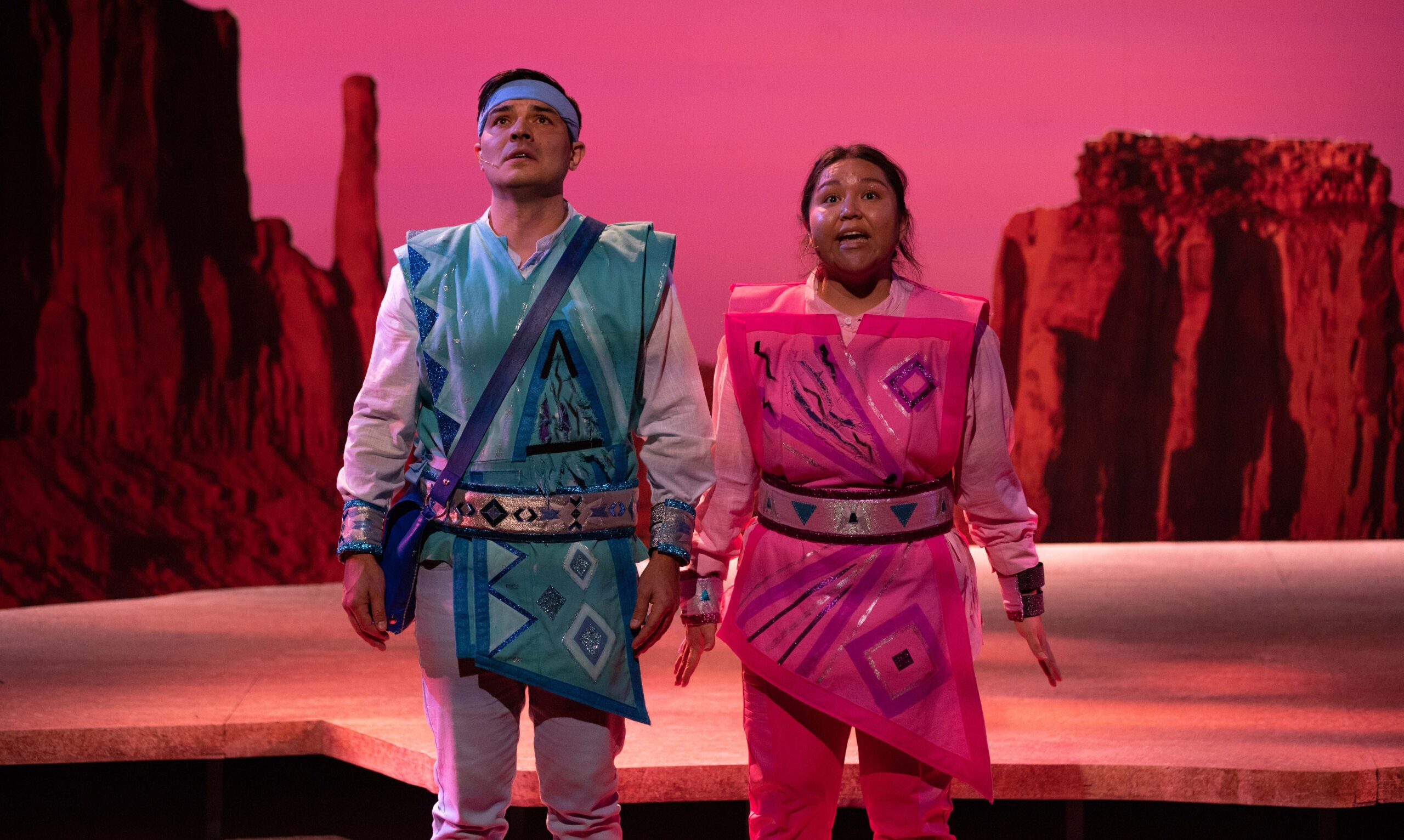
Her play is based on characters in the Navajo creation story and includes messages and teachings about finding and maintaining harmony and balance as well as learning restraint and wisdom.
“We didn’t know what was happening,” Yazzie, Navajo, told ICT. “But I decided my priority would be leading this team of Native artists who had never had an opportunity like this before.”
Much to her relief, the premiere went on as scheduled on Feb. 22, making Yazzie the first Native woman to write and direct a play at the Kennedy Center. It will run through Sunday, March 9.
Yazzie was commissioned by the Kennedy Center to write and direct “The Other Children of the Sun” as part of the Theater for Young Audiences program, which works to connect playwrights of color with theaters and bring communities together through “inspiring stories of new heroes.” She worked with dramaturg Steven Paul Judd, a Kiowa/Choctaw filmmaker and screenwriter.
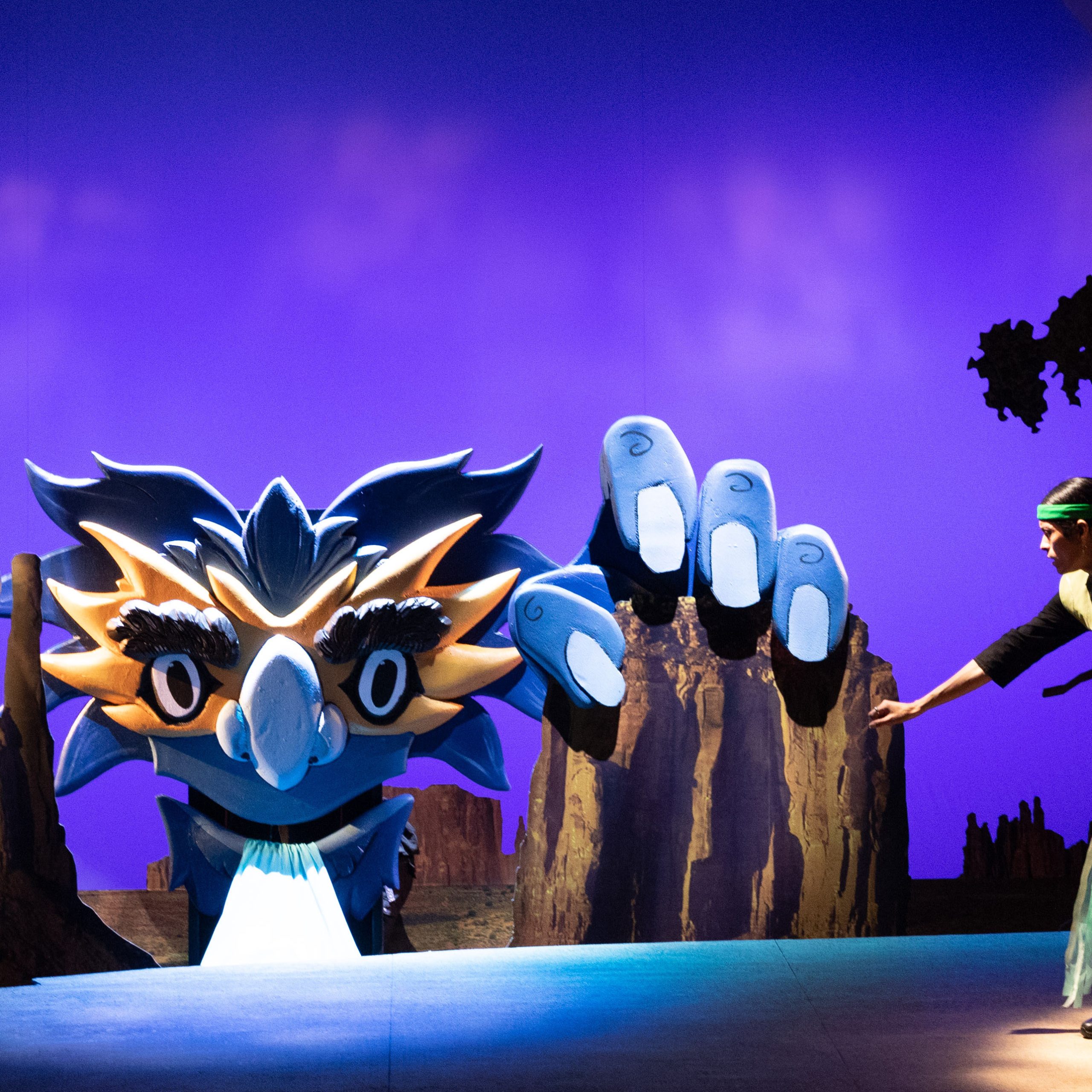
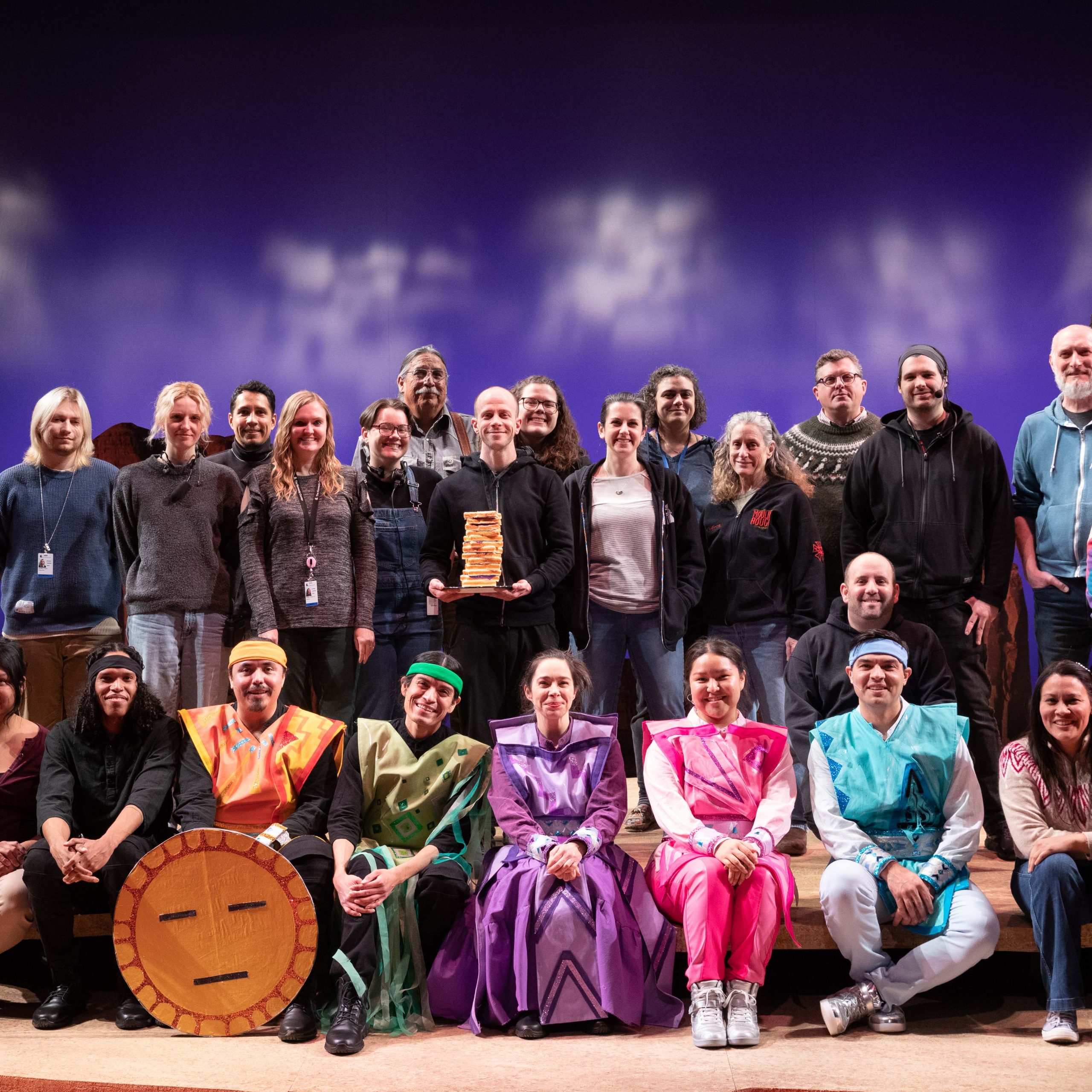
The family-friendly production features a colorful set and large, colorful puppets designed by Chamindika Wandurgala and Johnathan Boyd, Red Lake Nation.
Featured artists include actors Kholan Studi, the son of Cherokee actor Wes Studi; Derek Garza, Wichita/Comanche and Latino; Nikcoma Lee Mahkewa, Hopi-Tewa, Mohave, Chemehuevi; Sienna Tso, Diné; Joe Gallegos Jr., Tewa/Latino; Alex Slim, Diné; Becca Worthington, Cherokee Nation; and actor/singer/puppeteer Vicki Oceguera, Qawalangin Tribe/Mexican.
The shakeup in leadership initially created a lot of uncertainty about the project, Yazzie told ICT.
“But then we just started to take it day by day,” she said.
The official description of the Superhero Project is rich in language dismissed by Trump and his supporters as “woke,” or supportive of policies that incorporate diversity, equity and inclusion, known as DEI.
Shortly after taking office in January, Trump ousted the performing arts center’s leadership, filled the board of trustees with his supporters, and announced he had been elected unanimously to be the board’s chairman.
“The Kennedy Center learned the hard way that if you go woke, you will go broke,” White House press secretary Karoline Leavitt said in a statement to The Wall Street Journal in February.
“President Trump and the members of his newly-appointed board are devoted to rebuilding the Kennedy Center into a thriving and highly respected institution where all Americans, and visitors from around the world, can enjoy the arts with respect to America’s great history and traditions.”
The new leadership at the center informed them, however, that nothing already in programming would be canceled.
‘A good place to start’
Yazzie has been a playwright for most of her adult life, beginning her professional career in 2006 in Minnesota where she later opened her own theater company in Minneapolis, the New Native Theater.
Born and raised in Farmington and Albuquerque, she moved to Minneapolis after graduating from the University of Southern California’s Master of Professional Writing Program.
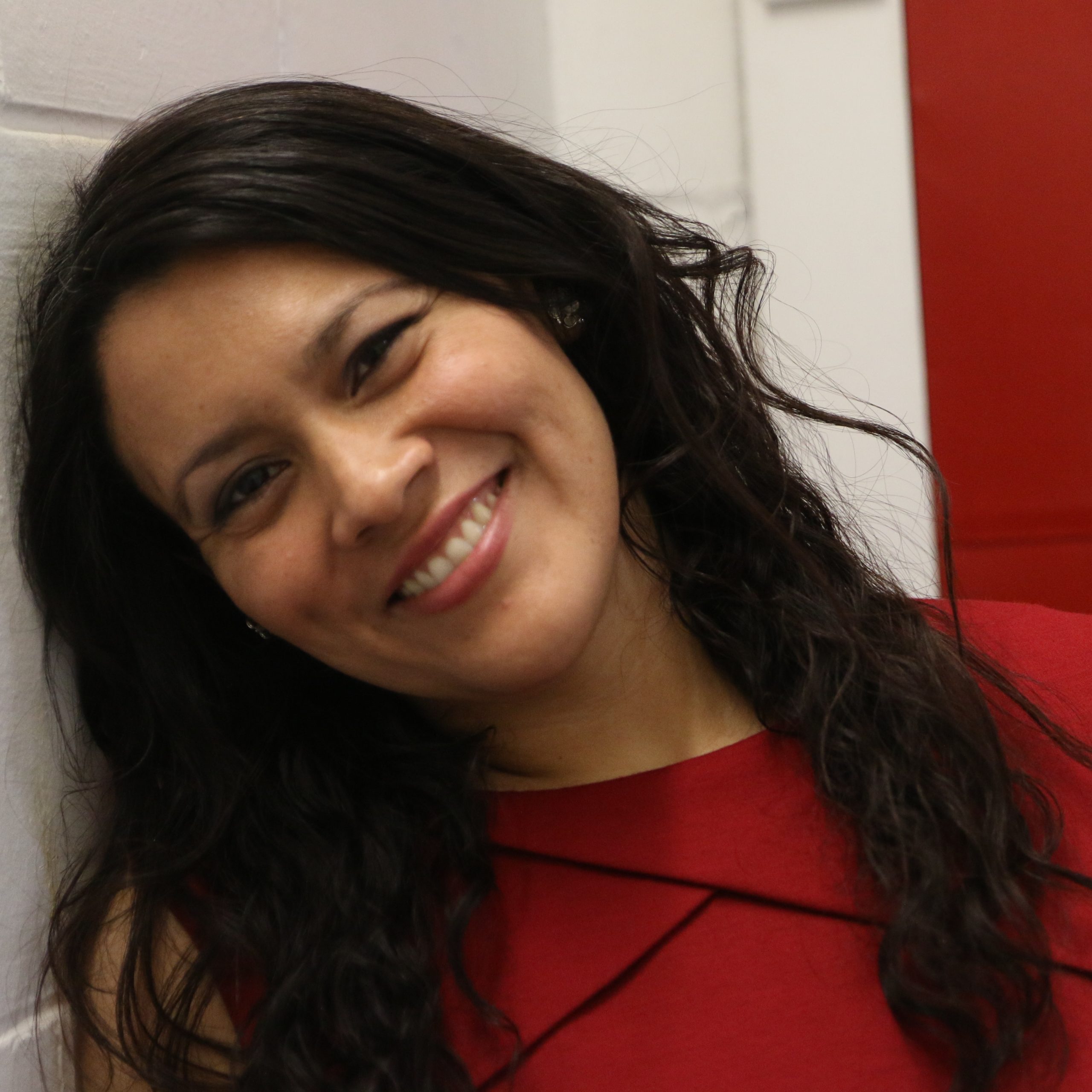
Yazzie has won numerous professional awards and fellowships, including the 2025 United States Artist Fellowship, a Lanford Wilson and Steinberg Award, the 2023 Headwaters Bush Prize for social justice.
She has also written, produced and directed the debut feature film, “A Winter Love,” and has written for seasons two and three of the television psychological thriller series, “Dark Winds,” on AMC television.
She is currently at work on her second feature film, as well as directing a new play, “The Nut, the Hermit, the Monk and the Crow,” at the New Native Theater.
Although Yazzie has written plays and stories for young people, this is her first work about super heroes.
“I’m not necessarily the person you’d turn to when thinking of writing a super hero script,” she said.
But Yazzie was very interested in finding something popular for Navajo youth that other young people would also enjoy.
“I’ve always wanted to look at the Navajo creation story and thought of the brother and sister hero twins, Ánaaí and Adeezhí, as a good place to start,” she said.
‘Beauty and harmony’
In the play, the twins – the children of the sun, Jóhonaa’éí – complain that their life in the sky is too boring.
They travel to Earth on a mission to destroy human-eating monsters, and they meet some minor monsters in the process. The minor monsters are called Winter Woman, Hunger Man and Old Age Bringer.
“The minor monsters make us uncomfortable but they are actually necessary for humanity,” Yazzie said. “For instance, without Winter Woman, you would have an unbalanced planet, which is something we’re learning now, right?”
Another character, Old Age Bringer, represents the cycle of life in which one is born, grows up and eventually dies.
“Everything has to pass away and that’s unfortunate but it’s important in order to maintain balance,” Yazzie said. “There’s a reason certain types of suffering exists on the Earth; it’s actually part of the balance that is part of being alive and human.”
One of the central messages of “The Other Children of the Sun,” is the importance of maintaining balance and harmony in our lives.
“Discernment and wisdom are also important themes; the twins needed some wisdom and understanding in order to do good. Being a hero isn’t just about destroying monsters,” Yazzie said.
As Winter Woman says in the play, “Shi’yazhí, we’re all part of the larger cycles of life. It’s each of our responsibilities to grow and create beauty and harmony. And then to pass that on to the next ones that come.”
Growing up, Yazzie recalls never seeing any coming-of-age stories in popular culture that featured Native people.
“It’s important to create more visibility for Native people to be able to see themselves in stories,” she said.
A long history
Producing the play at the Kennedy Center is an important statement for Yazzie.
“It took all of us a lot of years to get to the level it takes to get to the Kennedy Center,” she said. “We didn’t just get here because of a BIPOC program. We got here because we’re very good.”
She says audiences are loving the play.
“The young people are so engaged,” she said. “Our story begins with a monster howling in the dark. It’s really fun and energizing for kids and families.”
Yazzie’s only regret is that the play won’t be taken to the Navajo Nation.
“It’s a beautiful play with large visuals,” she said. “I wish we could tour across Indian Country.”
The Kennedy Center has a long history. President Dwight D. Eisenhower signed bipartisan legislation creating a National Cultural Center in Washington, D.C., in 1958. President Lyndon B. Johnson signed an act of Congress designating the center as a living memorial after President John F. Kennedy was assassinated in 1963.
The center’s very origins are bipartisan. Presidents have routinely attended honors at the center even in the presence of artists who disagreed with them politically.
Trump, however, has been more aggressive and proactive in his second term, citing some drag show performances at the center as a reason to transform it.
“At my direction, we are going to make the Kennedy Center in Washington D.C., GREAT AGAIN,” he wrote on his social media. “I have decided to immediately terminate multiple individuals from the Board of Trustees, including the Chairman, who do not share our Vision for a Golden Age in Arts and Culture.”
Meanwhile, the Kennedy Center website still includes a passage about the core mission, one that strives “to ensure that the education and outreach programs and policies of the John F. Kennedy Center for the Performing Arts meet the highest level of excellence and reflect the cultural diversity of the United States.”
The website also continues to include a land acknowledgement.
“We acknowledge that the Kennedy Center is standing on the traditional land of the Nacotchtank and Piscataway peoples past and present, and honor with gratitude the land itself and the people who have been stewards of this land throughout the generations.”
Fallout continues
The fallout from Trump’s announcement, however, has been unprecedented.
Kennedy Center consultants such as musician Ben Folds and singer Renée Fleming have resigned, and actor Issa Rae and author Louise Penny have canceled appearances. During a concert in early March that proceeded as scheduled, singer-songwriter Victoria Clark wore a T-shirt reading “ANTI TRUMP AF.”
On Tuesday, March 5, singer-musician Rhiannon Giddens said she was canceling a May show at the Kennedy Center and moving it to another D.C. venue.
“The Kennedy Center show was booked long before the current administration decided to take over this previously non-political institution,” Giddens said.
Several people on social media encouraged Yazzie and performers in “The Other Children of the Sun,” to resign in protest.
“There was no way I was going to walk away from this opportunity in protest,” Yazzie said.
Although other presidential administrations may have been more friendly toward Native people and the arts, it’s still very difficult to get their work presented on major stages, according to Yazzie.
“I think the protest is staying and making sure that our voice is heard and we are seen and our Native artists get to complete their jobs,” she said. “All of these considerations were important to me.
“This is our art center; our space, our building.”
The story contains material from The Associated Press.

Our stories are worth telling. Our stories are worth sharing. Our stories are worth your support. Contribute today to help ICT carry out its critical mission. Sign up for ICT’s free newsletter.

