
Lyric Aquino
Underscore Native News + Report for America
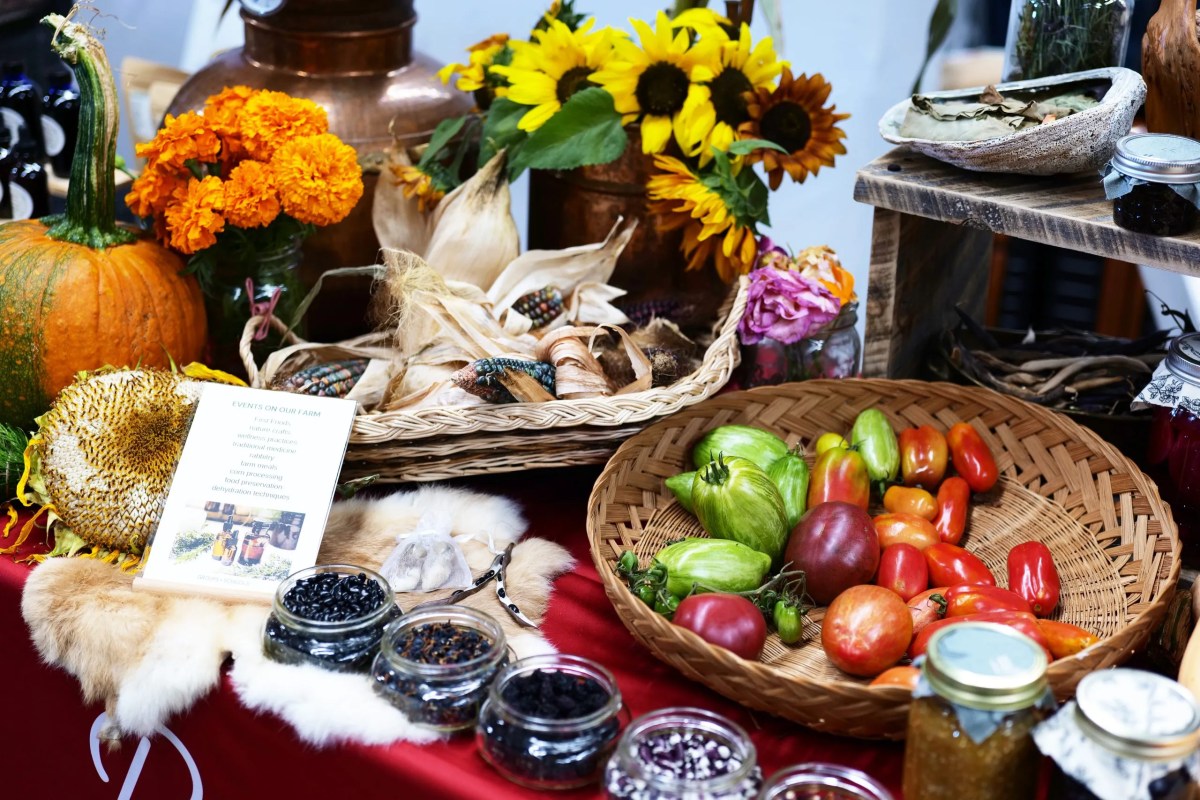
The halls of Seattle’s Bell Harbor International Conference Center were filled with the scents of freshly smoked salmon, rich and earthy homemade tea blends, and hearty slow cooked stews.
Pumpkin, light amber and cinnamon brown colored decorations hung throughout the vendor stalls of Indigenous foods, medicines and educational programming for the inaugural Native Grown and Gathered Food Expo.
From Oct. 1 to 3, warmth emanated throughout the space, in cozy autumnal surroundings attended by friends, family and community.
“In our culture, here in the Northwest, we’re inspired by the cedar tree whose boughs go up,” said Valerie Segrest, Muckleshoot, “It’s as if grandmother cedar is lifting her hands up, and that’s what we do. We try to lift people up.”

Segrest is the CEO for Tahoma Peak Solutions, an Indigenous, woman-owned consulting firm specializing in food systems planning and strategic communications. She spent the past several years planning the Native Grown and Gathered Food Expo with Nora Frank-Buckner, the director of food sovereignty programs with Tahoma Peak Solutions.
“We wanted people to feel held and celebrated,” Segrest added, while also noting that this food expo had been multiple years in the making.
The event saw over 500 attendees while featuring Indigenous food producers, Native small business owners, educators, buyers and chefs to explore the theme “feeding the future.”
Organizers did just that, gearing the first day of the expo towards youth, with 100 students from Muckleshoot, Suquamish, Tulalip Puyallup and Siletz in attendance. The invitation-only youth day helped build connections in the Native Northwestern Native food systems.
Each student and chaperon left with culturally relevant food kits filled with berry jam, honey, infused olive oil, Salish sea salt and potatoes, smoked salmon and other smoked products.

Buckner, an enrolled member of the Nez Perce and Klamath descendant, said inviting youth to the expo was both successful and rewarding to see the networking and connections being made.
“It was amazing to see that many people in one space that cared about the same thing. It’s really empowering especially now where we are with our political climate,” Buckner said.
In the wake of the Trump administration’s decision to claw back funds already appropriated to the USDA, slated for programs that affect both farmers and their community partners, the Native food industry is taking a huge hit. As federal budget cuts keep coming, Native businesses are left questioning how they’ll make up for lost funding they were already promised, leaving them to make sacrifices as they’re trying to grow.
Revoked USDA Funds
Jonalee Squeochs, interim general manager of Yakama Nation Farms, told Underscore that many conference attendees made connections around stability and growth amidst trying times. Squeochs, a Yakama Nation citizen, among other food producers were hoping to find buyers in a market that’s at capacity.

“We’ve been working a lot to try to develop intertribal connections and reconnect our trade routes,” Squeochs said. “As tribal people, the thing that really helped drive our communities and our connectivity to each other was our food sources.”
Yakama Farms is composed of 500 acres and is filled with certified organic and conventional produce that’s sold up and down the I-5 corridor and in Utah. The farm, which has been in the hands of the tribe for four years, has relied heavily on federal funding for operations.
The United State Department of Agriculture had a funding program geared for state, tribal and territorial governments to purchase foods produced within the state or within 400 miles of the delivery destination to help support local, and regional producers. The Local Food Purchase Assistance Cooperative Agreement Program or LFPA, was used by the Yakama Nation to purchase foods from their enterprise that were then used for giving out thousands of food boxes over several years to their community.

In turn, these funds were used by Yakama Nation Farms to cover basic overhead costs such as production costs, water, seed and fertilizer. In March, the USDA stated that nearly $1 billion in funding from the department would be cut, including these funds. Additionally, the LFPA Plus program and Local Food for Schools Cooperative Agreement Program were cut. Existing LFPA agreements were temporarily frozen, then released but no new funds will be dispersed.
According to Squeoch, although Yakama Nation Farms is looking to make up those funds, the Food Expo was a big win in sourcing buyers for their produce and getting “boots on the ground” deals made.
“What’s awesome about events like this is that someone can say, ‘I know a guy that has this and is able to do this,’ so it doesn’t feel like pandering. It’s an actual, real deal,” said Squeoch.
“Feeding the future”
As Valergie Segrest witnessed the success of the expo, she took a step back to reflect. People kept asking her if there was going to be another expo the following year and although she wanted to say yes, she couldn’t give them an answer.

Amidst federal budget cuts, Tahoma Peak Solutions wasn’t spared. The USDA had regional food business center funding, which was meant to supply seed-funding for on-the-ground regional organizations to support small micro farms. This is, including but is not limited to, supply chain infrastructure, delivery logistics, food processing equipment and financing. But it was announced in August that the funding would be cut, leaving Segrest and Frank-Buckner with three years less of funds that totaled around $700,000.
Segrest said the Northwest region in particular had a strong emphasis on supporting Native food producers and Tahoma Peaks came in as a consultant to build out that goal, and in turn the idea for the food expo was born. However, with the funds now eliminated, Segrest said she’s unsure if the expo will return.
“We’re on the fence about saying we’ll do it again in two years,” Segrest told Underscore. “Because if I had the choice between getting the producers funds to keep their businesses alive during whatever is to come in this administration or spending money on another event, I would want them to have the money.”

Next year, Segrest said there was a plan to give out $300,000 in grants to farmers. But those funds, which were already granted and then clawed back are now gone, leaving Segrest, Frank-Buckner and the benefiting farmers to figure out the next steps.
For Segrest, the expo was about uplifting local food producers and stimulating the Native economy in the Pacific Northwest. Each producer came to the expo with a sale already made from event co-hosts Tahoma Peak Solutions and Feed Seven Generations. The non-profit, operating out of Muckleshoot, is dedicated to revitalizing health and wellness of Tribal communities.

“We have our own economy,” Segrest said. “When you’re here you’re looking at somebody across the table in this room that understands and sees you and understands your values and why you might prioritize the abundance in your crops to go to people who need it the most. We just need to hear it and remember we’re not alone.”
Reflecting on her time at the inaugural Native Grown and Gathered Food Expo, Jonalee Squeoch said colonization took a toll on Indigenous food systems but that she and Native producers are finding their way back to each other.
“When colonization and the reservations happened it separated all of us and it took that toll,” Squeoch said. “I think we’re finally in a place in our healing and working on getting ourselves reestablished to the point where we can stand back and say, ‘Okay, I see you guys again. How do we reconnect?’”

