

Mary Annette Pember
ICT
Native authors may finally be here to stay.
Indigenous peoples have revered the power of stories since time immemorial, traditionally keeping their cultures and histories alive through story. But their presence as authors has vacillated for decades in the U.S. publishing world.
SUPPORT INDIGENOUS JOURNALISM. CONTRIBUTE TODAY.
From the early recognition of Indigenous writings in the late 1800s to the works of Pulitzer Prize-winning authors M. Scott Momaday and Louise Erdrich, Native authors have gained the literary spotlight but often faded slowly back into relative obscurity.
This time may be different, however. A new Native Renaissance may well be underway in the publishing world amid growing interest in books, poems and other writings by Indigenous authors.
“About dang time,” said Anton Treuer, of the White Earth and Leech Lake tribes and professor of Ojibwe language at Bemidji State University in Minnesota. Treuer has written a number of nonfiction books about language and culture, and recently released his first novel, “Where Wolves Don’t Die.”
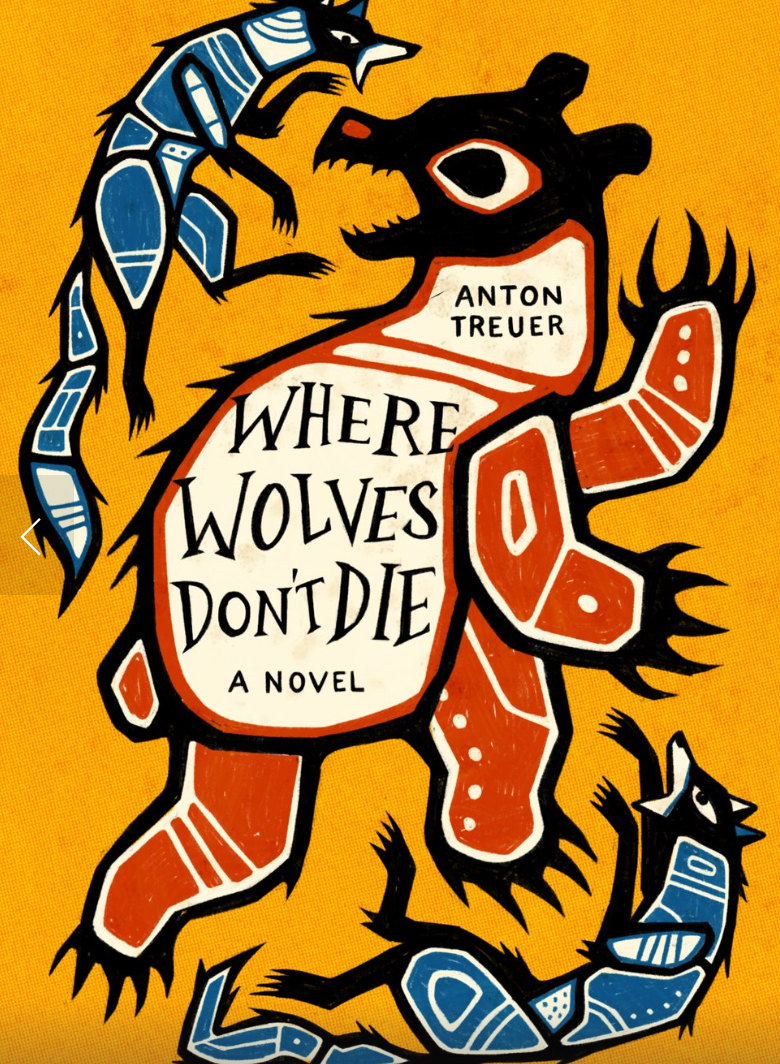
“I think it was a surprise for the publishing world that one could have books with Black or Indigenous protagonists. And that those books could be popular,” he said.
But is the recent increase in Native writers and other authors of color just a flash in the pan? Some in the book industry worry that the bump is a tortured short-term response by the corporate publishing world to calls for racial equity borne out of the Black Lives Matter movement.
Renewed interest
This isn’t the first time popular culture has turned to Native writers.
Deborah Jackson Taffa, director of the Institute of American Indian Arts master’s degree program in creative writing, noted a wave of popular interest in Native writing during the 1960s and 1970s that some have referred to as a Native American Renaissance.
Taffa, Kwatsaa’n and Laguna Pueblo, said the surge in political division, social unrest and anti-government sentiment during that period helped drive interest in Native authors as the public began examining long-held beliefs about racial and societal identities.
“People started to look for alternative definitions of what it means to be an American citizen and began to look at Indigenous histories (as a way to explore their place in America),” she said.
Similarly, as Alexandra Alter and Elizabeth Harris wrote in the The New York Times, the cycle is happening again with Black and other writers of color.
In 2020, workers took part in a “day of action” protesting racial inequities in the publishing industry in the wake of George Floyd’s murder and rise of the Black Lives Matter Movement. The publishing industry responded by publicly committing to diversifying their hiring and publishing practices.
In an internal audit, Penguin Random House, one of the country’s largest publishers, found that White writers accounted for 76 percent of its books released in 2019 to 2020, far higher than the U.S. White population, which makes up 60 percent.
Although publishers took steps to diversify their companies as during the Civil Rights era they “often returned to the status quo once the pressure subsided or literary trends shifted,” Alter and Harris wrote.
But there may be other factors driving popular interest in Native authors.
Author and filmmaker Julian Brave NoiseCat, Canim Lake Band Tsq’escen, wrote in The Paris Review that he believes climate change and environmental interests — which captured the public’s attention with Standing Rock and other activism — have put a spotlight on Indigenous thoughts and knowledge.
According to NoiseCat, Indigenous writers, “speak with the authority of a people who have lived through genocide and survived to talk about it,” in terms of confronting climate change.
NoiseCat is co-director of the documentary film, “Sugarcane,” which investigates unmarked graves at Indian residential schools. “Sugarcane” was selected for an Enterprise Documentary Grant in 2022 by the International Documentary Association, and had its world premiere on Jan. 20, 2024, at the Sundance Film Festival, where it won the grand jury award for directing.
Still, however, Native authors represent a small portion of the works being published out of New York in what the industry calls “the big four” —Penguin Random House, Hachette, HarperCollins and Pan Macmillan, according Taffa.
But her hope is that the rising interest in Indigenous authors will continue.
“We are only beginning to scratch the surface of the diversity of Indigenous peoples, languages and cultural ways,” Taffa said.
Centuries of storytelling
Little data is available about the numbers of Native authors.
Data collected by The Atlantic in June 2024 show the percentage of novels written by Black authors increased from 4 percent in 2019 to 9 percent in 2023, and that the percentage of novels written by all other authors of color went from 8 percent in 2019 to 16 percent in 2023.
The “other” category included Indigenous, Asian, Latino, mixed-race, multiracial and biracial people.
Data for children’s and young readers’ books, however, show the presence of Native authors nearly doubled from 2018 to 2023, though the numbers remained shockingly low, moving from 1.4 percent in 2018 to 2.4 percent in 2023, according to the Cooperative Children’s Books Center School of Education at the University of Wisconsin-Madison.
But the publishing industry remains overwhelmingly White. Remarkably, in an article for The New York Times, “Just How White is the Book Industry?” reporters Richard Jean So and Gus Wezerek found that in 2018, 89 percent of English language fiction books were written by White authors. The reporters concluded that the imbalance was probably linked to the fact that 85 percent of people who work in the publishing industry, acquiring and editing books, are also White.
Several Native authors and others in the publishing industry spoke with ICT about the resurgence, saying they are committed to ensuring the popularity of Native writers regardless of social trends.
They believe Native writers can withstand shifting pop-culture memes for the simple reason that Native people are great storytellers and that their stories touch on common human experiences and struggles.
It’s not for lack of trying. Ancient Indigenous oral and written traditions in the Americas predate European contact by centuries.
Tribes such as the Tohono O’odham, Lakota, Ojibwe and many others employed various mnemonic styles of pictography to record and share stories and histories, long before White colonizers hit the shores of America.
Innovators that they are, Native folks soon grew inspired to write their own books after Europeans introduced the alternative form of storytelling. Although the publications held great interest for Native readers, their popularity among White readers varied.
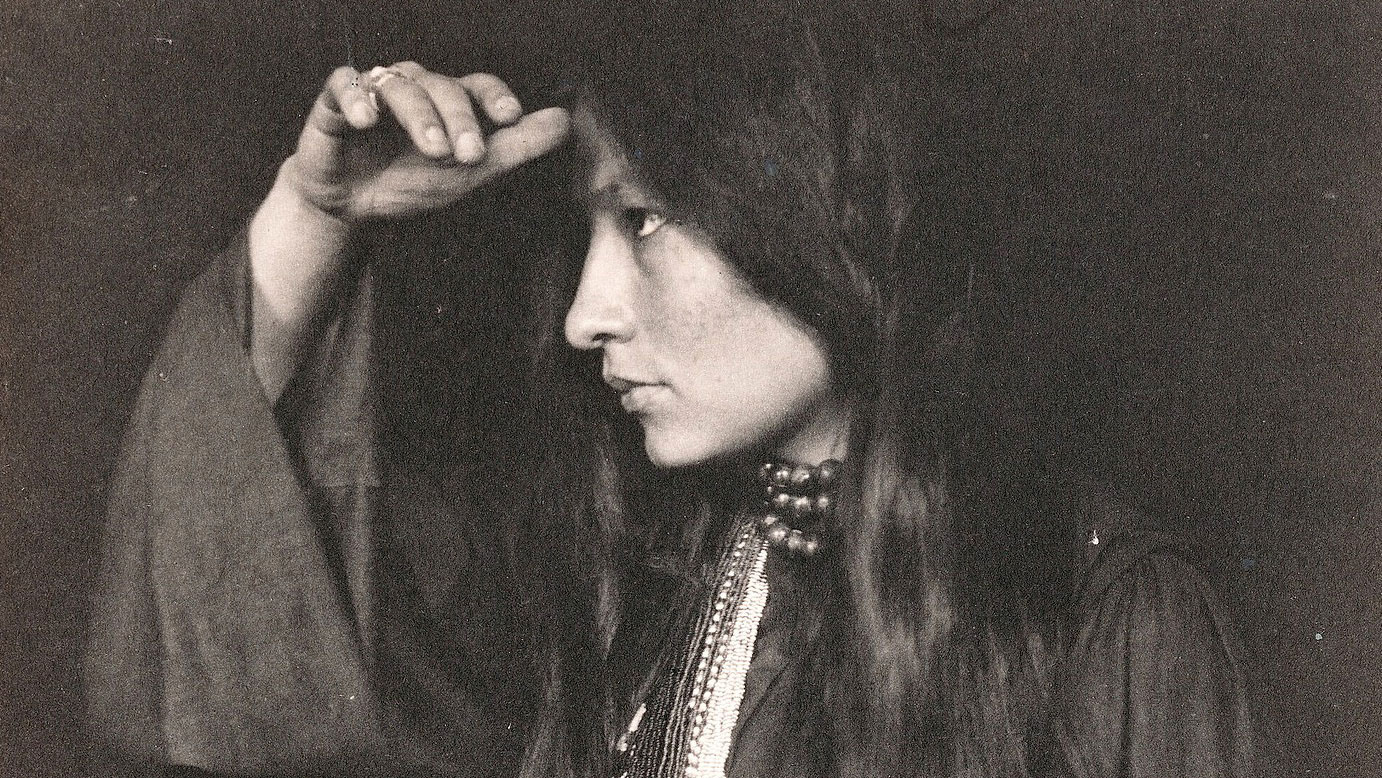
Authors such as Zitkala-Sa, Lakota, a former music teacher at Carlisle Indian Industrial School more than 100 years ago, was among the early Indigenous authors to gain the mainstream literary spotlight. Then, beginning in the 1960s, another wave of Indigenous authors began.
During those initial Renaissance years, other Native authors gained popularity, including Momaday, Kiowa; Leslie Marmon Silko Laguna Pueblo; Vine Deloria Jr., Standing Rock Sioux Tribe; and Simon Ortiz, Acoma.
Momaday, Kiowa, who died in January 2024 at age 89, won a Pulitzer Prize in 1969 for his novel, “House Made of Dawn.”
Erdrich, Turtle Mountain Band of Chippewa Indians of North Dakota, gained recognition in the early 1980s, and won a Pulitzer Prize for fiction in 2021 for her novel, “The Night Watchman.” She was also named a Pulitzer finalist in 2009 for “A Plague of Doves.”
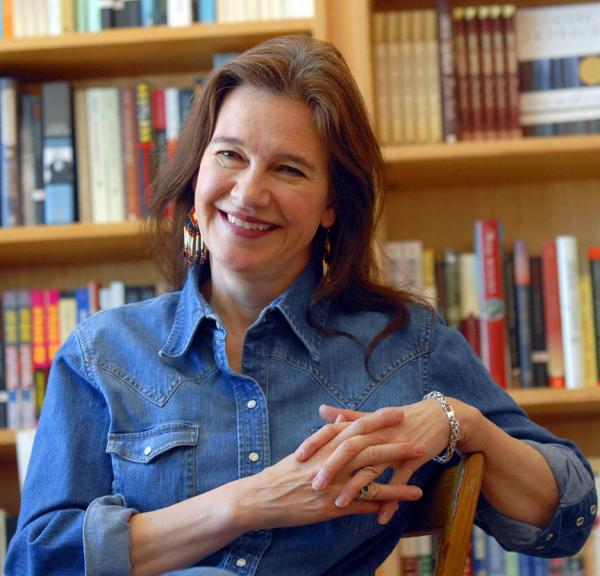
They have been followed by Tommy Orange, Kelli Jo Ford, David Treuer, Linda LeGarde Grover, Teresa Marie Mailhot, Mona Susan Power, Rebecca Nagle, and others.
And the trend appears to be growing.
Cash Blackbear mysteries
Marcie R. Rendon, White Earth Nation, was surprised and a bit shocked at the popularity of her Cash Murder Mystery Series, which follows a young Ojibwe woman named Cash Blackbear.
Her success, however, got off to a slow start.
“I wrote the first book, ‘Murder on the Red River,’ and got five years of rejection letters from agents and publishers,” Rendon told ICT from her home in Minneapolis. “I was told that people aren’t writing Native crime, and I was almost ready to just hang it up.”

But another Native writer, Debbie Reese of Nambé Pueblo and founder of American Indians in Children’s Literature, encouraged her to try Cinco Puntos Press, an independent press based in El Paso, Texas, that has since been acquired by Lee & Low Books.
Rendon’s first book was published in 2017, and then came the awards. In 2018, she won the Pinckley Prize for crime fiction for “Murder on the Red River.”
“When I got the award I thought, ‘Well, jeez, maybe I do know how to write,’” she said.
The fourth book in the series, “Broken Fields,” is due out in March 2025 from Soho Press, an independent publisher based in New York.
The publishing business, however, remains a mystery for most Native people.
“I had done journalism. I’d written magazine articles, but it was a different thing to actually have a book published,” Rendon said. “I didn’t know that awards were a thing.”
Rendon soon learned that the recognition that comes with winning awards helped drive interest in her work. She has since won several awards, including the McKnight Distinguished Artist Award, and she was included in Oprah’s 2020 list of 31 Native American authors to “read right now.”
Rendon is also part of a Native women’s writing group, Women from the Center, based in Minneapolis. In addition to supporting each other’s writing, they share information about navigating the publishing world.
“Native women are often taken up with dealing with everyday crises,” Rendon said. “We have our own trauma we’re trying to handle.”
There are many good writers in Indian Country, she said, but they lack opportunity and support.
“Our lives as Native people aren’t set up for success,” she said. “We’re set up for struggle.”
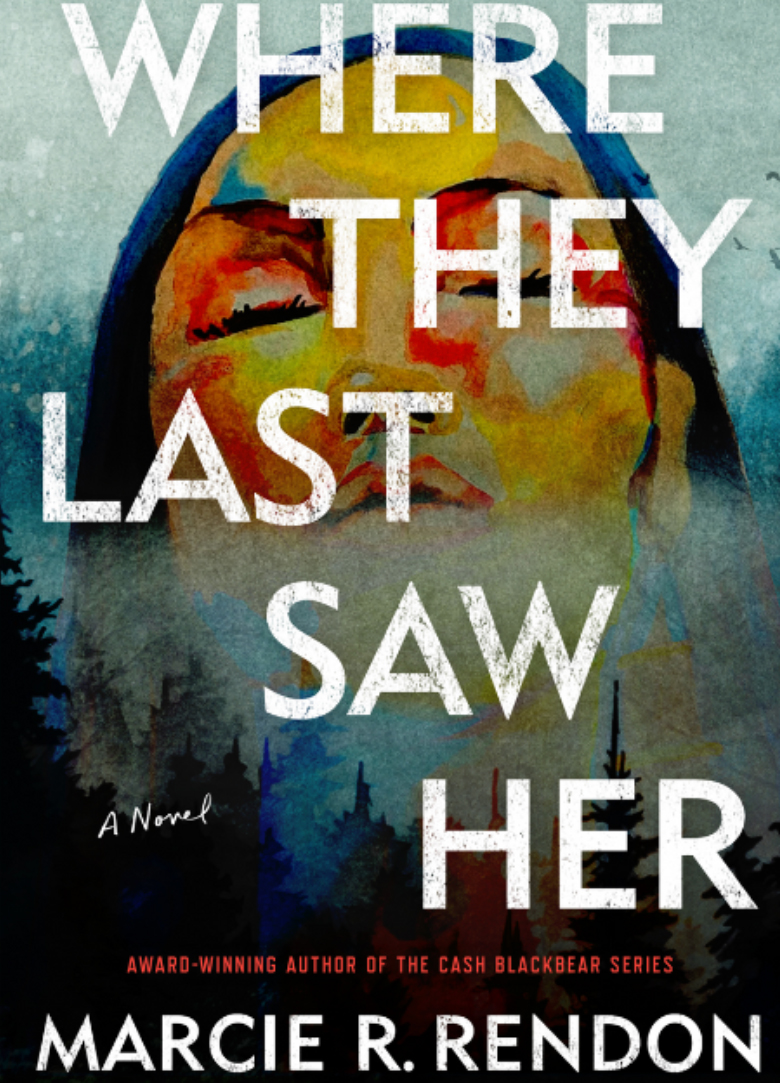
Now, at age 70, after raising children and grandchildren, Rendon has time to pursue a writing career. In addition to the Cash Blackbear mysteries, she has written children’s books, poetry and has a book, “When They Last Saw Her,” that came out in September 2024. It’s a love letter to Native women’s strength and resilience that explores themes such as complicated justice on reservations, missing and murdered Indigenous women, race and class.
Rendon was surprised that non-Native people enjoy her books.
“I have a following of White rural readers,” she said. “The Cash Murder Mysteries are set in rural country and are about farming and the land. Many crime novels are set in big cities.”
But it’s the appreciation from Native people that especially touches her.
“I’ve had so many Native women tell me, ‘You wrote my story in the Cash Blackbear series,’” she said. “That means a lot to me.”
The recent responses have given her hope that Native authors are gaining recognition.
“It seems like every 20 years there’s been a rise in Native authors and then we disappear,” Rendon said. “This time it seems like our popularity might last.”
A view from publishers
Author Cynthia Leitich Smith of the Muscogee (Creek) Nation is doing everything she can to ensure the growing interest in Native literature is not a mere trend.
She teamed up with Rosemary Brosnan, one of the co-founders of We Need Diverse Books and an editor at HarperCollins Children’s Books, to create Heartdrum, a Native-focused imprint launched in 2021. It was the first imprint at a major American publishing company dedicated to the works of Indigenous authors.
Smith is the author of several children’s books, including, “Jingle Dancer” and “Indian Shoes.”
The rising popularity of books written by people of color reflects the greater diversity in the world overall, according to Smith
“Books with Black or Indigenous heroes or other people of color are more familiar to kids,” Smith told ICT. “They are living in a multicultural world.”
The original plan with Heartdrum was to publish two to four books a year, Smith said.
“Now we’re publishing nine books a year, which is a lot, and we just brought on a second editor,” she said.
Depicting Native people who seem like real, live human beings is critical for kids.
“We are everywhere and we ring true … when we’re seen as part of the fabric of everyday life,” Smith said.
Keeping the perspective
Treuer said readers are interested in learning about different cultures, but need context in which to understand them. Those interests are building on the foundation of literature already established.
“We’ve had an emerging effort in the literary field of having people tell their own stories,” he said. “We need lots more of it because it’s starting to gain traction … Publishers are seeing that people don’t only want to read about themselves; they want to understand other cultures but want to do so in a way that doesn’t offend others.”

In the past, Native literature has often been dominated by tropes and stereotypes of trauma and tragedy, he said. Until fairly recently, authors accepted the notion that they had to always have a strong White character at the center of the story.
“People of color could be sidekicks,” Treuer said.
His new novel, “Where Wolves Don’t Die,” tells the story of a 15-year-old Native boy who is looking into a murder but embarks on a journey of self-discovery, finding himself in the process.
Treuer describes the book as a thriller that is also a tender coming-of-age story about a boy finding his community, ancestors and family connection all while grappling with loss.
“We’re all interested in the human condition and our relationships as we look for connection, meaning and love,” Treuer told ICT.
It’s this common humanity and tension that drives a good story, regardless of the protagonist’s race or ethnicity, he said.
“I’ve been telling stories my whole life in ceremony, winter legends and while working with elders,” Treuer said. “But I’ve always deeply understood that Ojibwe relate to the world and get our teachings through story.”
He continued, “I wanted to do something different; I wanted to give people a window into the vibrant, living, beautiful culture that we [Ojibwe] still have today.”
Treuer has developed educator guides to go along with his book that teachers can use in the classroom.
How to get published
So what advice would Native authors and editors offer to those who want to write a book?
“The number one thing is that you have to submit your work to somebody, someplace,” Rendon said. “You have to take that risk and put your work out there. Maybe you won’t get rejected and maybe you will, but at least you’ll have some idea of what you need to do differently.”
Getting a writing mentor helps, too, she said.
The first step, authors advised, is to start writing.
“Anyone who wants to write a book should,” Treuer said. “Sometimes we worry too much about how to say it or what others have said. If you have something to say, it will be interesting.”
Smith said she is interested in hearing from tribal members or second-generation descendants to point them in the right direction.
“They can email me; I have a whole list of resources to share,” said Smith.
“Our working theory is that we are not going to ever again settle for this mainstream publishing idea that we need to have only a single star,” Smith said. “We shine brightest when we shine together.”
Editor’s note: ICT National Correspondent Mary Annette Pember’s book, “Medicine River: A Story of Survival and the Legacy of Indian Boarding Schools,” is expected to be released in April 2025 by Penguin Random House.
Native authors
A growing number of works by Native American authors have been published in recent years, for adults, children and youth. Here’s an informal – and obviously incomplete – list of some Indigenous authors. And one last note from our editor: Don’t be upset if we failed to mention you; we are a small staff at ICT and our resources are limited.
Here is a sampling of authors, in alphabetical order, and some of their works:
*Sherman Alexie: His works include “The Lone Ranger and Tonto Fistfight in Heaven” (1993); “Reservation Blues” (1995);” Indian Killer” (1996); “Ten Little Indians” (2003)
*Ned Blackhawk: His nonfiction books include “The Rediscovery of America: Native Peoples and the Unmaking of U.S. History” (2023; and “Violence Over the Land: Indians and Empire in the Early American Waste” (2008).
*Angeline Boulley: Her works for young adults include “Firekeeper’s Daughter” (2021) and “Warrior Girl Unearthed” (2023)
*Brenda Child: Her nonfiction works include “My Grandfather’s Walking Sticks: Ojibwe Family Life and Labor on the Reservation” (2024; “Holding Our World Together: Ojibwe Women and the Survival of Community” (2012); and “Away From Home: American Indian Boarding School Experiences, 1879-2000” (2000)
*Eddie Chuculate: “Cheyenne Madonna” (2012); “This Indian Kid” (2023)
*Ramona Emerson: The writer/filmmaker’s works include “Shutter” (2022) and “Exposure” (2024).
*Louise Erdrich: Her works include “The Plague of Doves,” a 2009 Pulitzer Prize finalist, and “The Night Watchman,” a 2021 Pulitzer winner.
*Kelli Jo Ford: “Cottonmouths” (2017); “Crooked Hallelujah” (2020; “Real Bad Things” (2022); “The Hunt” (2023)+
*Denise Lajimodiere: She is a poet, author and the North Dakota state Poet Laureate. Her works include the children’s book, “Josie Dances” (2021), and the academic book, “Stringing Rosaries: The History, The Unforgivable, The Healing of Northern Plains Boarding School Survivors.”
*Linda LeGarde Grover: The novelist, poet and short story writer’s works include “a song over miskwaa rapids” (2023); “Gichigami Hearts: Stories and Histories from Misaabekong” (2021); “In the Night of Memory” (2019); and “The Dance Boots” (2010).
*Joy Harjo: A three-time U.S. Poet Laureate, Harjo is a poet, author and playwright whose works include 10 books of poetry and three children’s books.
*Brandon Hobson: His works include novels, “The Removed” (2021) and “Where the Dead Sit Talking” (2018) and a children’s book, “The Storyteller” (2023).
*Linda Hogan: A poet, author and playwright, her long list of works include the novel, “Mean Spirit” (1990), which was a Pulitzer finalist in 1991.
*Oscar Hokeah: “Calling for a Blanket Dance” (2022)
*Sterling HolyWhiteMountain: He drew acclaim after The New Yorker published his short stories,”Featherweight,” in 2021 and “Wolves,” in 2023.
*Stephen Graham Jones: “The Only Good Indians” (2020); “My Heart is a Reaper” (2021); “Don’t Fear the Reaper” (2023); and “The Angel of Indian Lake” (2024).
*Teresa Marie Mailhot: “Heart Berries: A Memoir” (2018)
*Tiffany Midge: “The Dreamcatcher in the Rye” (2024); “The Woman who Married a Bear” (2016); “Bury My Heart at Chuck E. Cheese’s” (2019)
*Devon A. Mihesuah: “Hatak holhkunn – The Witches” (2021); “Document of Expectations” (2011); “Big Bend Luck” (2008)
*N. Scott Momaday:He died in January 2024 after decades of works that included novels, nonfiction, poetry, plays and children’s books. Among his works are the novels “House Made of Dawn” (1968), which won a Pulitzer Prize for Fiction, and “The Ancient Child” (1989); poetry works including “Earth Keeper: Reflections on the American Land” (2020); and the nonfiction “The Journey of Tai-me,” (1967), which was revised and published as “The Way to Rainy Mountain” (1969).
*Mary Kathryn Nagle: A lawyer and playwright whose works include “Sovereignty” (2013) and “Manahatta” (2013). She is the sister to writer Rebecca Nagle.
*Rebecca Nagle: “By the Fire We Carry: The Generations-Long Fight for Justice on Native Land” (2024). She is the sister to writer Mary Kathryn Nagle.
*Tommy Orange: “There There” (2018), a Pulitzer Prize finalist in 2019; and “Wandering Stars” (2024)
*Tommy Pico: “Feed” (2019); “Junk” (2018); “Nature Poem” (2017)
*Mona Susan Power: “The Grass Dancer” (1994); “A Council of Dolls” (2023)
*Marcie Rendon: Her Cash Murder Mystery Series includes “Murder on the Red River” (2017); “Girl Gone Missing” (2019); “Where They Last Saw Her” (2024); and the anticipated “Broken Fields” (2025).
*Mark Anthony Rolo: Rolo died in 2020 but his works include “My Mother is Now Earth” (2012); “What’s an Indian Woman to Do? And Other Plays” (2010); and “The Wonder Bull” (2006)
*Leslie Marmon Silko: “Ceremony” (1977); “Storyteller” (1981); “The Turquoise Ledge: A Memoir” (2010)
*Jake Skeets: “Eyes Bottle Dark With a Mouthful of Flowers” (2019)
*Layli Long Soldier: “Whereas” (2017)
*Dennis E. Staples: “This Town Sleeps” (2021)
*Anton Treuer: “The Cultural Toolbox: Traditional Ojibwe Living in the Modern World” (2021); “Everything You Wanted to Know about Indians But Were Afraid to Ask,” (revised in 2023); “Where Wolves Don’t Die” (2024)
*David Treuer: “The Heartbeat of Wounded Knee” (2019); “Prudence: A Novel” (2015); “Rez Life: An Indian’s Journey Through Reservation Life” (2012)
*Taté Walker and Ohíya Walker: “The Trickster Riots” (2022)
*David Heska Wanbli Weiden; “Wisdom Corner” (2023); “Winter Counts” (2020); and “Spotted Tail” (2019)
*Michael John Witgen: “Seeing Red: Indigenous Land, American Expansion, and the Political Economy of Plunder in North America” (2021); “An Infinity of Nations: How the Native New World Shaped Early North America” (2011)
Source: ICT research

Our stories are worth telling. Our stories are worth sharing. Our stories are worth your support. Contribute today to help ICT carry out its critical mission. Sign up for ICT’s free newsletter.
