Amelia Schafer
ICT
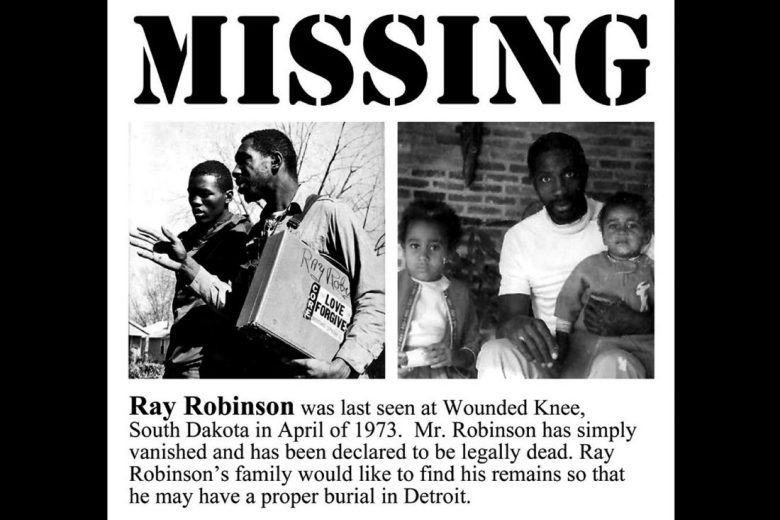
RAPID CITY, S.D. – After a half-century of uncertainty, all Cheryl Buswell-Robinson wants is the body of her husband, Perry Ray Robinson, to be returned.
In March 1973, Robinson called home to Alabama from a conference in Taos, New Mexico, to tell his wife he planned to join the American Indian Movement’s takeover of Wounded Knee on the Pine Ridge Reservation where tribal members were protesting then-tribal president Dick Wilson.
“He thought it was going to be the spark to light the prairie fire,” Buswell-Robinson said. “I said, I didn’t think that was going to happen and I wanted him to come home.”
Being the 1970s, Buswell-Robinson didn’t hear back from her husband for a while, and there wasn’t an easy way to communicate with little access to landlines in an occupied space under near constant FBI surveillance. So that fall, when a caravan from Wounded Knee of Black civil rights activists pulled into the driveway of the Robinson farm in Alabama, Buswell-Robinson expected her husband to be with them.
He wasn’t.
At first, Buswell-Robinson thought her husband may have been arrested by the FBI during the occupation, but soon she discovered in South Dakota the rumor was Robinson was killed in a bunker in Wounded Knee and buried somewhere nearby. When closing its investigation into Robinson’s disappearance in 2014, the FBI confirmed to the family that Robinson was killed in Wounded Knee and buried in an unknown grave, she said.
For her, the situation feels like being stuck in a big, deep hole. Unable to do anything from over one 1,000 miles away, Buswell-Robinson has worked hard over the past five decades to raise the couple’s three children alone with no answers about where her husband is buried.
“I can’t do anything with my kids to make that hole better,” she said. “It’s just there, and it’s impacted our family so badly.”
Buwell-Robinson, now 82, recently survived a stroke and while her family reassured her she still has time, she isn’t so sure. All she wants now is to be buried next to her husband. And if that isn’t possible, she just wants a place for her children, now adults with families of their own, to mourn the civil rights activist who gave his life for what he believed in.
“We’ve never really mourned,” she said. “The tears I cried, I cried in private. I didn’t want the kids to see.”
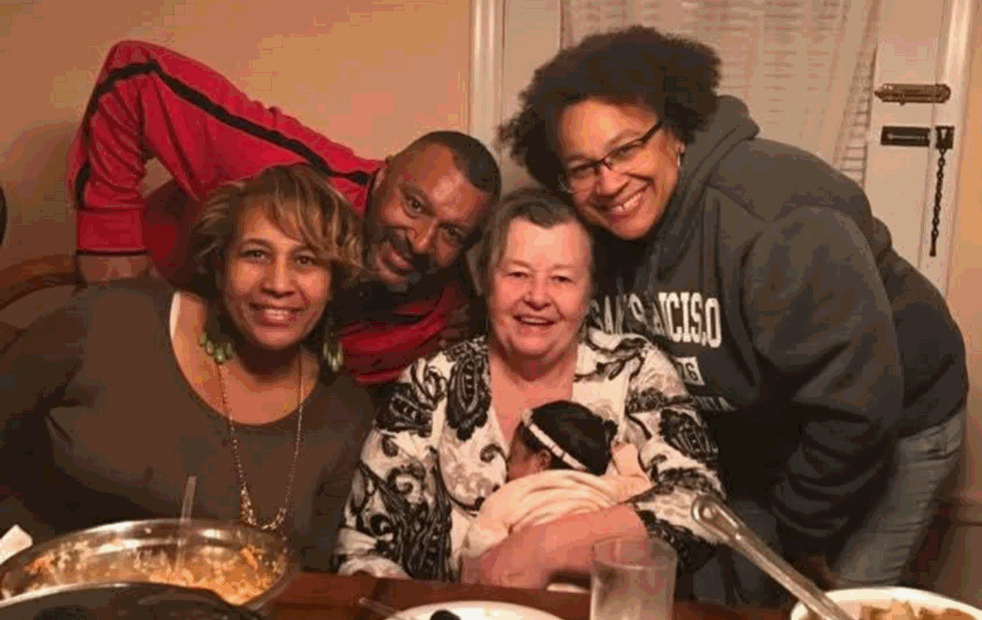
Nearing the end of 2025, with help from a group of Oceti Sakowin activists and descendants of the 1890 Wounded Knee Massacre survivors, the family may be closer than ever to finding where Robinson is buried.
Following the closure of the FBI’s investigation into Robinson’s death 11 years ago, documents released to the Robinson family and the public confirmed he had been killed and identified several spots in Wounded Knee where he is likely buried.
While no law enforcement agencies are currently investigating Robinson’s death, a search for his body would be possible through an agreement between the Robinson family and Oglala Sioux Tribe.
A complicated search
Searching for Robinson’s body is especially difficult due to its proximity to the mass graves of those slain at Wounded Knee. The Seventh Cavalry killed nearly 300 Mnicouju Lakota men, women and children from Si Tanka’s band who had traveled south to Pine Ridge from what are now the Standing Rock and Cheyenne River reservations for relief. After the massacre, the military buried Lakotas in mass graves where they’ve remained ever since.
What happened to Ray Robinson in 1973 has weighed heavily on the mind of Justin Baker, a 41-year-old employee of Sinte Gleska University, a tribally controlled institution on the nearby Rosebud Reservation in south-central South Dakota directly east of Pine Ridge.
Baker said he’s known about Robinson’s death for roughly two decades, and joined the push to bring his body home in January after researching the circumstances surrounding his death and talking to Buswell-Robinson.
“They tried all these different routes with no success, but what I didn’t see was anybody approaching the actual tribal government,” Baker said. “So me living here in Rosebud, I drafted a resolution calling for a non-invasive search for Ray Robinson’s remains.”
Baker said after researching the case he’s had several sleepless nights where he’s dreamed of Robinson and his family.
“I didn’t just wake up and choose to do it,” he said. “There were mitigating factors that led me to doing this work. I believe it’s very deeply spiritual work, it feels like a spiritual mission. I hope that if we get Ray home, that it’ll create something good for the people, the Lakota people. I hope that if we get Ray home and we uncover these things, and we clear that then good spiritual energy will return to the people here.”
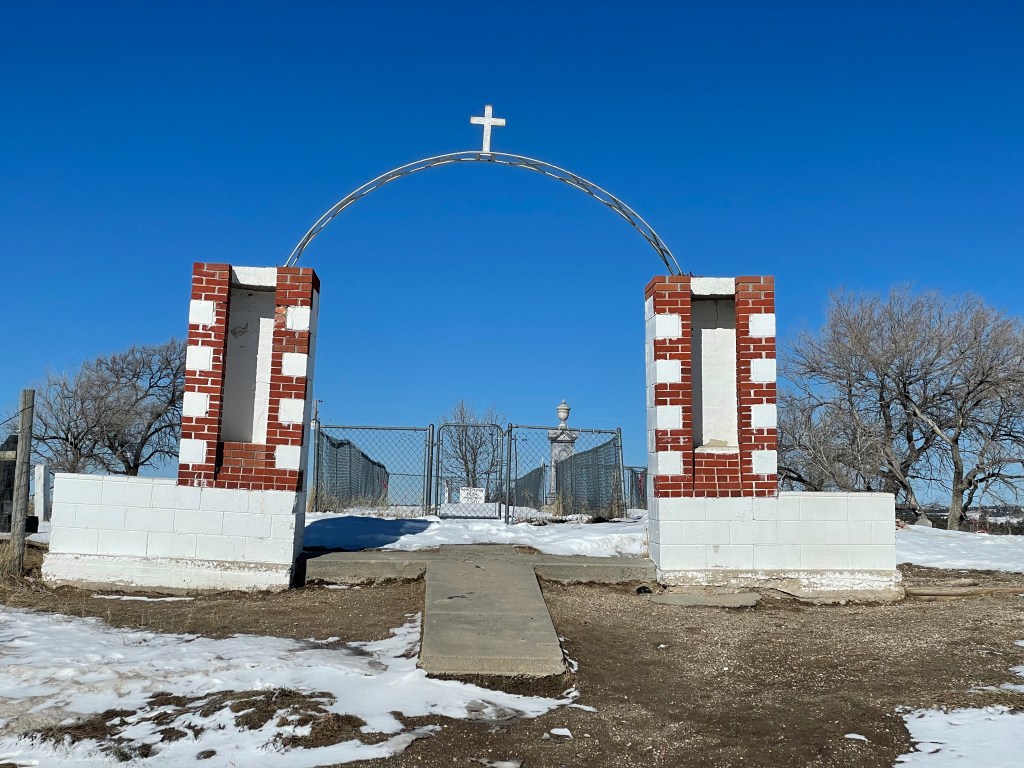
Living in South Dakota, Baker said, it’s been easy for him to help connect the family with various tribal and historical groups. The first group Baker reached out to on the family’s behalf was the Rosebud-based Sicangu Treaty Council, a group of Sicangu descendants of the original signatories of the Fort Laramie Treaties. The council passed legislation in support of the search on May 5 and referred the group to the Oglala Sioux Tribe, as the land Robinson is buried on is within the tribe’s reservation boundaries.
Robinson is believed to be buried on the 40 acres of land involved in the Wounded Knee Sacred Sites Act which passed through the United States Senate in early December. The Act would return the land purchased by the Oglala Sioux Tribe and Cheyenne River Sioux Tribe back into tribal fee status land. It was previously privately owned by a non-Native family in Wounded Knee.
The act will not impact the search for Robinson’s remains, advocates said.
From there, the issue was presented to various separate Oglala tribal legislative bodies until it was referred to the Si Tanka Oyate, a Pine Ridge-based group of descendants of the Wounded Knee Massacre.
Early talks with the group have gone well, Baker said.
Baker said he’s also spoken with members of the Cheyenne River-based Wounded Knee survivor descendants group, HAWK 1890, who have expressed their support for a search. One of those descendants is Wendell Yellow Bull, the great-grandson of Wounded Knee survivor Joseph Horn Cloud.
Oglala groups, such as the tribe’s legislatures and the Oglala Tribal Historic Preservation Office, still must approve the search, Baker said. He said the search would be as conservative and sensitive to the site as possible in order to not disrupt Wounded Knee burial sites, Baker said.
The search would occur in levels, Baker said. The first level includes ground-penetrating radar and cadaver dogs to identify potential sites, many of which have already been identified through the FBI’s investigation.
In each spot, searchers would insert a piece of rebar between 6 and 8 feet into the ground and pull out a hole the size of a mole. Cadaver dogs trained in differentiating ancient and modern remains would smell the odor emanating from the holes and signal whether or not an area contains remains placed less than 100 years ago. After the dog’s signal, searchers would use ground-penetrating radar to take an image of whatever is underground.
From the FBI documents, searchers know Robinson’s body is buried in a very unique manner that will make identification of his burial site easier, Baker said.
Si Tanka Oyate members have been interested for some time in a comprehensive, non-intrusive search of the massacre site in order to identify where the mass graves of children, known as the “babies gravesite,” would be. Some believe the gravesite is situated on top of a hill where most of the adult victims are buried.
Mapping also could reveal other historical sites, such as the AIM bunkers, foxholes and trenches from the 1973 occupation.
Identifying historical sites from the 1890 massacre and 1973 occupation also could open the door to potential programs for cultural preservation and aid efforts to have Wounded Knee formally designated as a national monument, said those advocating for the search for Robinson’s remains. They said the search also could uncover other gravesites like that of Buddy Lamont, who died during the 1973 occupation.
Lamont, 31 and Oglala Lakota, died during a shootout with the FBI on April 27, 1973. His body is known to have been buried near the massacre gravesites. Additionally, Frank Clearwater, Cherokee, is thought to be buried on the Rosebud Reservation. However, some sources indicate he was buried in Wounded Knee. Clearwater, 47 and an AIM member, was shot by law enforcement while participating in an AIM road block on April, 13 1973, and died over 10 days later from his wounds.
In the late 1990s, the Oglala Sioux Tribe accused the FBI of being involved with roughly 57 deaths on the Pine Ridge Reservation in April 1973 during the Wounded Knee occupation. In July 2000, the FBI issued a now archived statement attempting to debunk rumors of its involvement with the deaths. Robinson’s death is not included on the FBI list.
Search advocates said because of the unique positioning of Robinson’s remains as described in FBI documents, it should be easy to determine if an uncovered body is Robinson’s versus someone else’s. Robinson is believed to be buried vertically.
Ray’s life and legacy
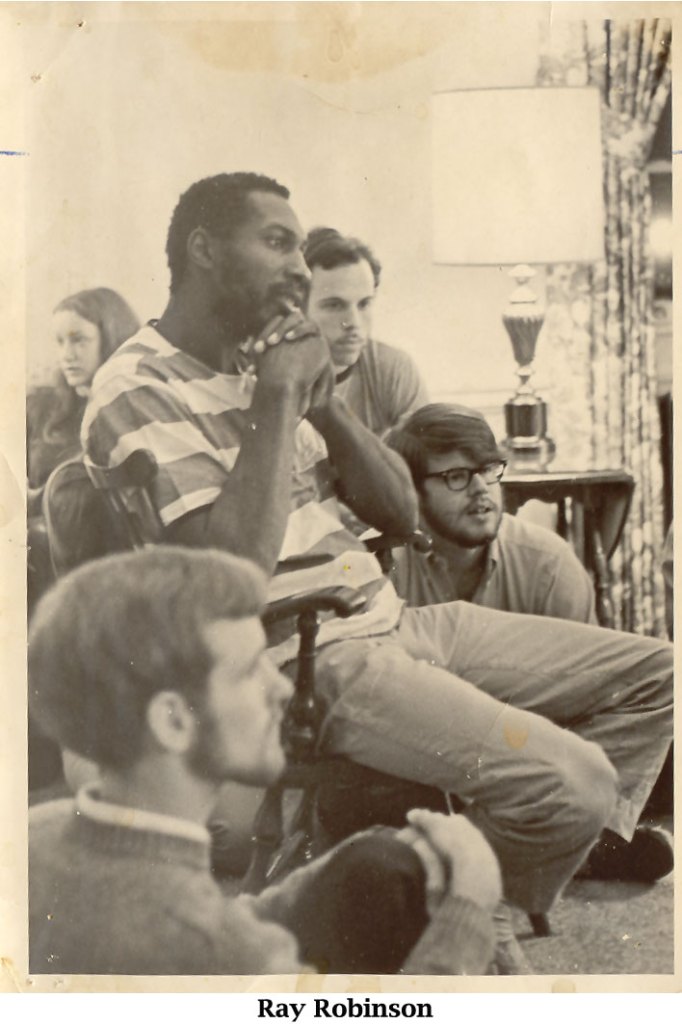
Robinson and Buswell-Robinson met in the summer of 1965 in Madison, Wisconsin. Robinson, 31 at the time, was in the area working for the National Committee to End the War in Vietnam, and Buswell-Robinson, who was 21 and born and raised in Wisconsin, decided she’d try her hand at volunteering with the movement at the state’s capitol, Madison.
She said she remembers their first interaction, when Robinson handed her a packet of leaflets to run across town to promote an upcoming demonstration, which she did, and then the two continued talking. About a year later, they married. From there, they demonstrated and organized across the country in New York City and Washington D.C., and in 1968, they moved to Alabama and started a family farm.
As an interracial couple, the family faced intense threats of violence in Alabama, said Buswell-Robinson, who is White. The Ku Klux Klan fire-bombed their home, and crosses were burned in their front lawn. On one occasion, a local law enforcement officer threatened them. All of that racism and violence only pushed them to work harder and organize more, Buswell-Robinson said.
Robinson got his start in activism by joining the Committee for Non-Violent Action, she said. He participated in the 1963 March on Washington where he heard Dr. Martin Luther King Jr. deliver his “I Have a Dream” speech. Robinson continued his work through the southern United States for several anti-segregation demonstrations before coming back north where he met his wife.
Robinson and Buswell-Robinson decided to raise their family in Bogue Chitto, Alabama, where he had grown up and where he had experienced Jim Crow-era segregation as a child.
On their farm, they grew produce for the local Black Panthers Breakfast program for area schools and organized a clinic to help malnourished children.
Robinson’s advocacy has been recognized by the state of Alabama, which will induct him into the National Voting Rights Museum and Institute in Selma sometime in 2026.
Coming to Wounded Knee
In March 1973, Robinson was invited to attend a conference in Taos, New Mexico, to share information about the family’s work in Bogue Chitto. While attending, he learned about the American Indian Movement.
AIM and the Black Panthers have a long history of solidarity. AIM co-founder Dennis Banks credited the Black Panther Party as a direct inspiration for creating the AIM patrol in South Minneapolis in 1968. Banks also credited Black civil rights demonstrations in Alabama as an inspiration, and several Black activists attended AIM demonstrations, including Wounded Knee.
In Taos, an AIM member invited Robinson to go to Wounded Knee. The last time he and his wife spoke, Robinson called home to ask if she’d bring the family to help at Wounded Knee.
“I said, ‘I’ve got the kids and I’m not going to let the kids go from the frying pan into the fire,’” Buswell-Robinson recounted. “I didn’t want him to go, I wanted him to come home for the spring planting.”
After the occupation ended, Jannie Waller and two other Black activists who had traveled with Robinson to Wounded Knee pulled back into the Robinson family farm. Waller said she arrived after Robinson to Wounded Knee and when she asked about Robinson he was already gone.
Buswell-Robinson said she initially assumed her husband had been arrested, but when she reached out to others who took part in the occupation, they told her he had been killed and buried somewhere in the area.
“What happened to Ray was common knowledge in that community,” she said.
In October 1973, Buswell-Robinson traveled to South Dakota to ask Wounded Knee and Rapid City community members if they’d seen Robinson or knew where he was buried, but she never got any answers.
For a long time, she couldn’t accept that her husband was gone, she said.
“I had all kinds of fantasies,” she said. “Maybe he was kidnapped by the FBI or he lost his mind and was lost somewhere he couldn’t reach me. I would see people on the street who looked like Ray, I’d go up to them and … It’s just really messed up.
“I had this fantasy he’d show up on my front door step one day,” she said. “What we’d talk about, what had happened. It was all just a fantasy.”
If Robinson’s body were to be returned home, Buswell-Robinson said, her hope would be that it could bring some relief to her family that’s been “decimated” by his absence.
In 2014, the family was told by the FBI that Robinson had been killed at Wounded Knee, but other than that, the case is closed, leaving it up to the family and advocates to try and bring some sense of a closure.
Buswell-Robinson said she and many others involved aren’t interested in pressing charges against anyone still alive who may have been involved in his death, they just want to bring him home. If that’s not possible, she simply wants to know where he is buried.
“She (Buswell-Robinson) doesn’t want retribution,” Baker said. “She said that the people in this part of the country have already been through hell, and she doesn’t want to bring anymore hardships on anybody. She just wants her husband home, even if they don’t repatriate.”