

Mary Annette Pember
ICT
The Bad River Ojibwe people have defended their homelands against generations of threats to the environment and their way of life.
From the 19th century onward, when timber barons first set sights on the enormous stands of white pine in the region and government leaders sought to remove them from their vast land holdings, Ojibwe people have stood fast with their ancestors’ vision of a reciprocal relationship with the earth.
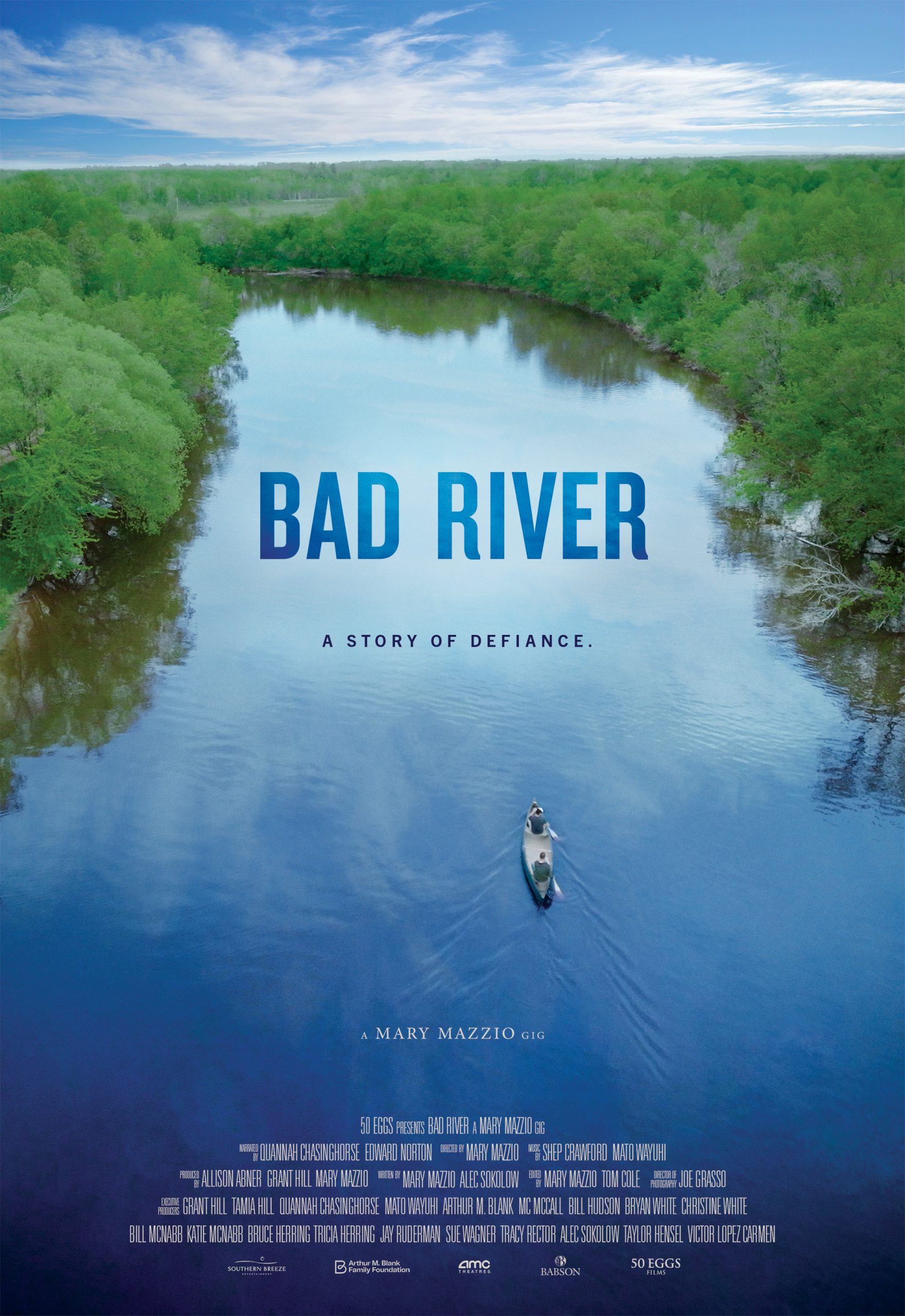
Now a new documentary film, “Bad River: A Story of Defiance,” tells the story of how resistance has shaped this small tribe, the Bad River Band of Lake Superior Chippewa, in northern Wisconsin.
SUPPORT INDIGENOUS JOURNALISM. CONTRIBUTE TODAY.
The film sets out to tell the story of Bad River’s commitment to defending its homelands against the Enbridge company’s construction plans for an oil pipeline, but it also portrays a universal story of the history of Indigenous nations in the U.S. and the tribe’s generational battles to protect it lands and ways of life.
“Indian nations are in a constant state of siege,” Martin Seneca, a citizen of the Seneca Nation and a former director of trust responsibility for the Bureau of Indian Affairs, says in the film.
Directed and co-produced by Mary Mazzio, the film runs March 15-20 in select AMC Theaters across the country. The 87-minute documentary is narrated by fashion model and activist Quannah ChasingHorse of the Han Gwich’in and Lakota tribes and well-known actor Edward Norton. Filmmakers have stated that 50 percent of all profits will be donated to the Bad River tribe.
Ostensibly, the documentary chronicles the community’s fight to protect their lands and adjacent Lake Superior from the aging Enbridge Line 5 pipeline that runs through approximately 12 miles of the reservation.
More broadly, however, “Bad River” tells a universal story of Indigenous tenacity and survival.
The film’s executive producers are Mato Wahuhi, Oglala Lakota, who composed the score for and acted in “Reservation Dogs”; Taylor Hensel, Cherokee, a producer and director best known for “Reciprocity Project”; Victor Lopez-Carmen, Crow Creek Sioux and Yaqui, a former co-chair of the United Nations Indigenous Youth Council; filmmaker Tracy Rector, with the nonprofit Nia Tero; and screenwriter Alec Sokolow, who was nominated for an Academy Award for his work on “Toy Story.”
The film was produced by 50 Eggs Films.
Sustainable connections
Mazzio’s film presents a sweeping history of events and federal policies that forged Bad River’s tenacious commitment to defending its homelands and culture. That fierce defiance, we see, was borne out of relentless, hard-headed love for all that is Bad River.
Defense of their homelands has always been intensely personal for Bad River citizens.
Bad River, or Mashkiziibii (Medicine River), has an abiding, indelible quality for Ojibwe people. Central to their worldview and spirituality, and an example of their sustainable connection with traditional foods and ways, Bad River is more than geography.
It’s said that everything Ojibwe need to live healthy, happy lives grows in around Mashkiziibii. The river and land represent Ojibwe blood memory, according to Aurora Conley, a citizen of the Bad River tribe and a member of the Anishinaabe Environmental Protection Alliance.
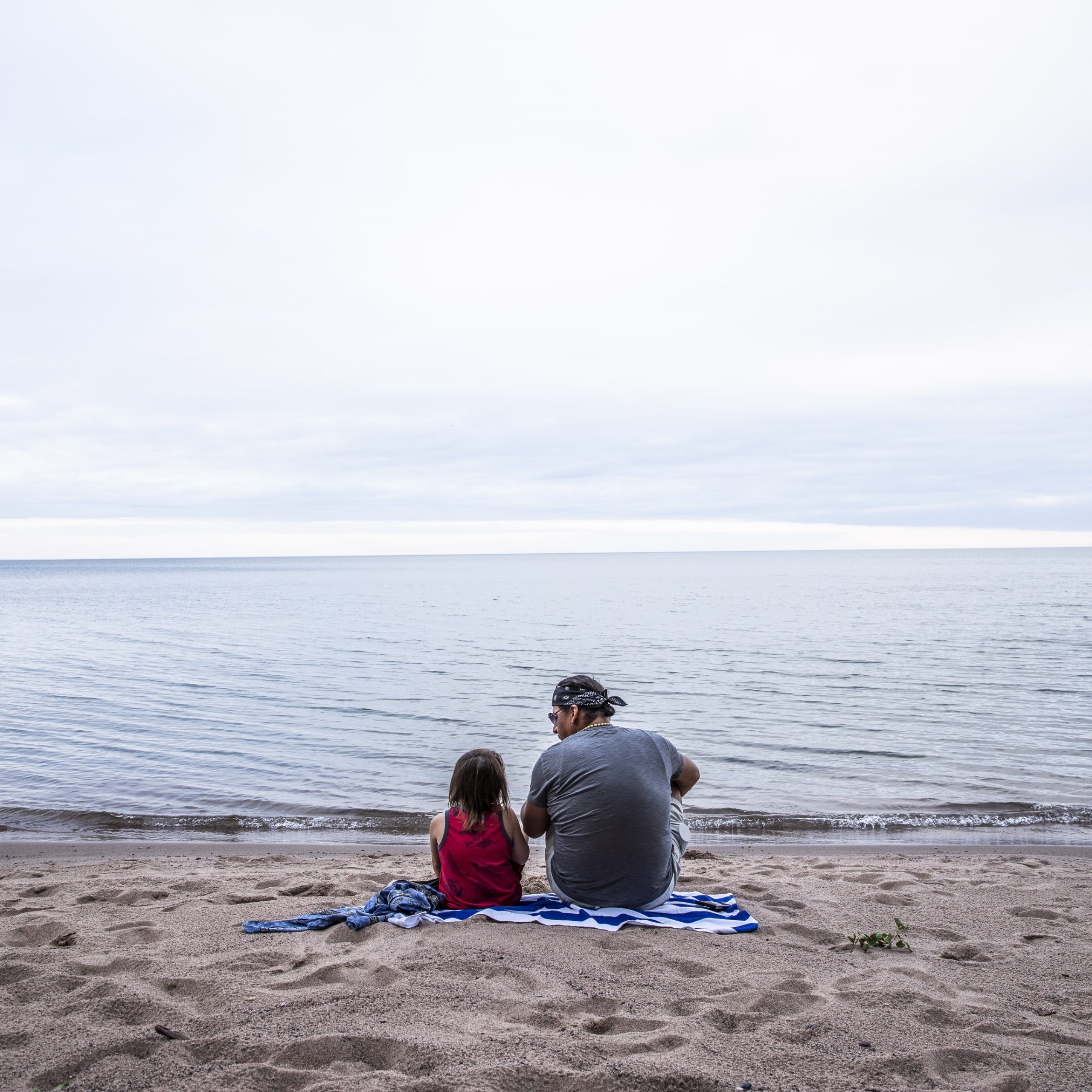
“The land is what makes us who we are here but it’s not so much the land we are trying to save as much as we are determined to keep ourselves strong,” Conley said in an earlier interview with ICT. She also appears in the documentary.
Indeed, for Indigenous nations throughout the U.S. and Canada, the Bad River vs. Enbridge fight represents the most recent in a long line of ground zero battles that stem from a cultural chasm between two worldviews. One vision measures the earth’s resources in terms of jobs and money; the other emphasizes stewardship of the land and water and a sacred responsibility to preserve both for future generations.
Former tribal Chairman Mike Wiggins Jr. spoke with ICT in a previous interview regarding the 2012 state-supported plan by Gogebic Taconite to build a 4.5 mile-wide, open-pit iron ore mine in the Bad River watershed.
“We are home and have been home for a thousand years, where the prophecies directed us to be,” said Wiggins, who appears in the documentary as chairman, though he was replaced by Robert Blanchard in 2023.
“It may be difficult for others to understand, but this is our ancestral homeland,” he said. “In Bad River, we are going to do what we can to protect ourselves for future generations of ourselves and other Wisconsinites.”
Bad River prevailed in the mine project. In 2015, Gogebic Taconite announced they were dropping plans for the mine, claiming the environmental challenges were too great.
More than 10 years later, the tribe faces a new threat to their environment, but the community’s stand and philosophy regarding their lands remains the same, virtually unchanged since Chief Buffalo led Ojibwe clan leaders to Washington, D.C., in the mid-19th century to oppose government plans to remove them to lands wests of the Mississippi.
A master of diplomacy and media relations, Chief Buffalo gathered nationwide support as the group traveled from northern Wisconsin to meet with President Millard Fillmore in the White House.
After smoking a pipe with the chiefs, Fillmore agreed with their request, resulting in the Treaty of 1854 guaranteeing Ojibwe rights to remain in their traditional Great Lakes homelands.
In her interview for the film, Bad River citizen and journalist Patty Loew describes Chief Buffalo’s effort as one of the most important acts of resistance in Ojibwe history.
“Ojibwe have been resisting ever since,” she said.
But as Stephanie Julian of the Bad River tribe notes in the film, “There’s always a threat.”
Indeed after 1854, the threats to land and culture by government and settler entrepreneurs grew greater and more frequent.
Sovereign rights
The latest fight pits the tribe against Enbridge.
The giant energy company is fighting to keep oil flowing through its 645-mile, oil-and-natural-gas pipeline. The line originates in Superior, Wisconsin, and travels east through Bad River before it runs through Michigan’s upper peninsula and Ojibwe lands, then under the Straits of Mackinac toward its final destination at a terminal in Sarnia, Ontario.
Enbridge first secured easements for its pipeline from the Bad River tribe in the 1950s, renewing them in the 1970s and the 1990s. Initially, the Bureau of Indian Affairs negotiated the 20-year easement agreement, for which Enbridge paid $3,800. All of this was conducted without tribal consent.
The easements expired in 2013, but this time, the Bad River tribe exercised its sovereign rights. The tribe balked at renewing the easements, and in 2017, the tribe’s governing body approved a resolution outlining their unwillingness to agree to new easements, noting that the lands, rivers and wetlands on tribal lands were considered sacred and that an oil spill would be “catastrophic.”
The tribe filed a lawsuit in July 2019, claiming Enbridge’s pipeline was trespassing on tribal lands and calling for an immediate halt to the flow of oil and removal of the pipeline. In the lawsuit, the tribe argues that it has the right not to renew pipeline easements as a matter of basic property rights.
“While the risk of a rupture or leak of Line 5 is significant along the entire reservation corridor, the circumstances just east of the location where the pipeline currently passes beneath the Bad River portend a looming disaster,” the suit says.
According to the lawsuit, the waters of the Bad River are carving away its banks and soils that conceal and protect the pipeline, and will soon expose it to damage.
“These circumstances represent an existential threat to the tribe, its reservation resources and its way of life and pose a dire threat to the treaty-protected rights of the Band and its members in the lands and waters of the reservation,” according to court documents.
The 2013 expiration of the easement agreement came just a few years after the widely publicized failure of an Enbridge pipeline in 2010 that spilled nearly a million gallons of oil into the Kalamazoo River system in Michigan.
According to data published by the National Wildlife Federation, Line 5 has leaked at least 29 times between 1968 and 2017, including a 2007 oil spill near Clearbrook, Minnesota as well as the 2010 Kalamazoo leak.
Enbridge officials are touting the project’s economic impact on local communities.
“The relocation project will create 700 direct construction jobs,” said Juli Kellner, spokesperson for Enbridge, in an email to ICT.
“An estimated $46 million will be spent specifically with Native-owned businesses, communities and training and hiring Native American workers who will make up 10 percent of the project workforce,” Kellner said.
During interviews with “Bad River” filmmakers, several tribal citizens noted that Enbridge has solicited tribal members for high-paying jobs in efforts to change their minds about opposing the pipeline.
“Enbridge is trying to win the hearts and minds of tribal members through short-term offers of money,” Wiggins told filmmakers. “Money divides everybody.”
Enbridge employed similar tactics during its Line 3 construction project in Minnesota. In 2018, the Fond du Lac Band of Ojibwe made the difficult decision to allow Enbridge to replace its pipeline through reservation land rather than pursuing a new route that potentially endangered a larger area of ceded territory.
As part of the agreement, Enbridge paid the tribe an undisclosed sum and tribal leaders agreed not to publicly oppose the project. Lines 3 and 5 are part of Enbridge’s massive 8,600-mile Mainline pipeline network that transports various grades of oil, including oil produced from tar sands, from Edmonton, Alberta, to the U.S Midwest and Ontario.
Mike Fernandez, chief communications officer for Enbridge, was also interviewed for the “Bad River” film.
“You have a vital resource and a tribal community saying we want to shut that down, we don’t care about the millions of people dependent upon 540 barrels of oil going through the pipeline on a daily basis,” Fernandez said.
Tribes and environmentalists say such claims are exaggerated. State and nonprofit studies have shown that “with an orderly shutdown and careful planning, there would be little to no noticeable impact,” on the economy or fuel prices, said Beth Wallace of the National Wildlife Federation.
Shortly after the Bad River Tribe brought its 2019 lawsuit, an Enbridge-owned helicopter crashed in a remote area of the reservation where the pipeline is located, slope 18. Tribal officials investigated the crash site and were shocked to see several feet of the pipeline exposed.
According to the tribe, Enbridge made two failed attempts to repair the line. When Enbridge made a third proposal for repairs, the tribe rejected the company’s plans.
“If we can’t get to the pipe, how can we establish if it’s safe?” Fernandez asked filmmakers.
“You could shut it down,” the interviewer suggests off camera.
Fernandez responded, “No, we can’t.”
David and Goliath
Remarkably, the small community of Bad River — with a population of about 7,000 occupying a bit less than 125,000 acres of land along the shores of Lake Superior — has managed to buffalo one of the world’s largest pipeline companies, the enormous Canada-based Enbridge.
Most recently, in June 2023, U.S. Western District Court Judge William Conley in Wisconsin gave Enbridge a deadline of June 2026 to shut down the pipeline and ordered the company to pay the Bad River Tribe more than $5 million for trespassing.
The judge’s order said a rupture on tribal land “would unquestionably be a public nuisance” but denied that the threat is imminent and said a shutdown would likely “spark at least temporary shortages and increased prices for refined gas, propane and butane in the Upper Midwest and Eastern Canada, creating hardships, especially for the poor and other economically challenged households.”
“Nevertheless, given the environmental risks, the court will order Enbridge to adopt a more conservative shutdown and purge plan,” Conley wrote.
His order gives Enbridge three years to “cease operation of Line 5 on any parcel within the Band’s tribal territory on which defendants lack a valid right of way and to arrange reasonable remediation at those sites.”
The company appealed the decision earlier this year in February.
In an unusual twist, Bad River also appealed Conley’s ruling, imploring judges to go beyond Conley’s order by shutting the pipeline down immediately. Appellate Judge Frank Easterbrook said the panel won’t issue a ruling for at least several months, but until then the small David-like community has scored a win against the Goliath-sized Enbridge.
And support for Bad River’s efforts is growing.
Thirty tribes signed a letter sent by the Native American Rights Fund on Feb. 28 to President Joe Biden, urging the U.S. to speak out against Enbridge’s trespassing on Bad River’s land. In the letter, leaders reminded the president of his administration’s stated commitment to tribal sovereignty and wrote that U.S. failure to refute Enbridge’s claims and actions effectively abdicates its trust responsibility to Bad River and all tribal nations.
This is not the first time tribes have banded together with other communities to stop pipeline development. In May 2021, the Bay Mills Indian Community in Michigan banished Enbridge’s Line 5 from their lands on the eve of a shutdown order issued by Michigan Gov. Gretchen Whitmer that sought to terminate the company’s 1953 easement to cross the lakebed under the Straits of Mackinac.
In 2018 and 2019, the line was struck by ship anchors in the Straits’ busy shipping lanes. Although no oil was spilled during these accidents, opponents note that Line 5 has leaked in other areas, releasing more than 1 million gallons of oil in various spots in the past 50 years.
Michigan’s 12 tribes have long opposed Line 5, claiming that a spill in the Straits of Mackinac would have catastrophic impacts on the environment, water, fish and wildlife, endangering tribal members’ abilities to practice their subsistence ways of life protected under the Treaty of 1836. The straits connect Lake Michigan and Lake Huron.
As in Bad River, Enbridge hired tribal citizens in Michigan as a means to win support, according to Bay Mills President Whitney Gravelle and other tribal leaders.
“It’s immoral of Enbridge to corner people who are struggling financially especially since the pandemic and offer them money to give up a piece of themselves as an Indigenous person,” Gravelle said. “That amount of money means nothing to the company.”
Michigan dropped its lawsuit in November 2021 after a federal court decided to retain jurisdiction in response to Enbridge’s claim that the state of Michigan had no jurisdiction.
Enbridge contends Line 5 is a federal matter, raising questions of U.S. law and commerce between two nations. Canada’s government supports Enbridge and has invoked a 1977 treaty barring official actions in either country that would impede cross-border “transmission of hydrocarbons.”
In response to Judge Conley’s June 2023 shutdown order at Bad River, Enbridge attorney Alice Loughran brought the same argument in the Bad River case regarding violation of the 1977 treaty.
Riyaz Kanji, attorney for the Bad River tribe, told Inside Climate News in a recent interview that prior treaties including the 1854 treaty overrule the 1977 pipeline treaty.
“It’s well established that tribal treaty rights can’t be abrogated,” Kanji said.
The U.S. State Department did not respond to Inside Climate News’ request for comment about potential arbitration between the two countries.
Looking ahead
As release of the documentary approached, Enbridge had begun a major public outreach effort, publishing an open letter to the Bad River Band that included an offer of $80 million to settle past disputes.
Enbridge has also indicated it hopes to schedule information sessions with tribal citizens.
Juli Kellner, communications specialist for Enbridge, said the company is working to resolve the issues.
“Enbridge worked with the filmmaker,” Kellner said, in an emailed response to ICT’s request for comments about the film. “We also continue to try to work with the Bad River Band on a reasonable and respectful solution to our differences while we move forward with a proposed project to relocate a segment of Line 5 around the Bad River Reservation.”
Kellner said the company has sought necessary permits for four years for the relocation project, and has proposed more than a dozen maintenance projects for Life 5.
“The proposed relocation project will reroute a segment of the Line 5 pipeline around the Bad River Reservation, send millions of dollars in construction spending into local communities, create over 700 family supporting union jobs, and keep affordable and reliable energy flowing that millions of consumers in the region rely on every day,” she said.
“It seems counterproductive to continue this dispute, when we should be working together to both protect the environment on the reservation and keep Line 5 operating safely until the pipeline is moved off the Bad River Reservation.”
At the conclusion of the “Bad River” documentary, however, tribal citizens are clear about the greater meaning in removing Line 5 from their lands.
They cite the recent trend of Indigenous communities turning to their languages and traditional ways of life to recover from the social ills such as addiction and mental illness brought on by assimilation. They refer to the wisdom and courage of Chief Buffalo in securing rights to remain in their homelands.
“Our people didn’t survive because of generational trauma,” said April Stone, a Bad River citizen. “We survived because of generational joy, innovation and ingenuity.”
The sustenance of spirit, connection to land and community, they say, far outweighs the short-term benefits of money
“We are not rich in monetary terms, but we know our culture’s rich strength and our resilience,” said Bad River citizen Caitlin Newago.
“I was always taught to be proud of that.”
This article contains material from The Associated Press.

Our stories are worth telling. Our stories are worth sharing. Our stories are worth your support. Contribute $5 or $10 today to help ICT carry out its critical mission. Sign up for ICT’s free newsletter.

