
Grace Finnell-Gudwien
Special to ICT
The Mayan people need the Melipona bees. Ecologically, medicinally and spiritually, this special species of bee has been sacred to Mayan people for generations.
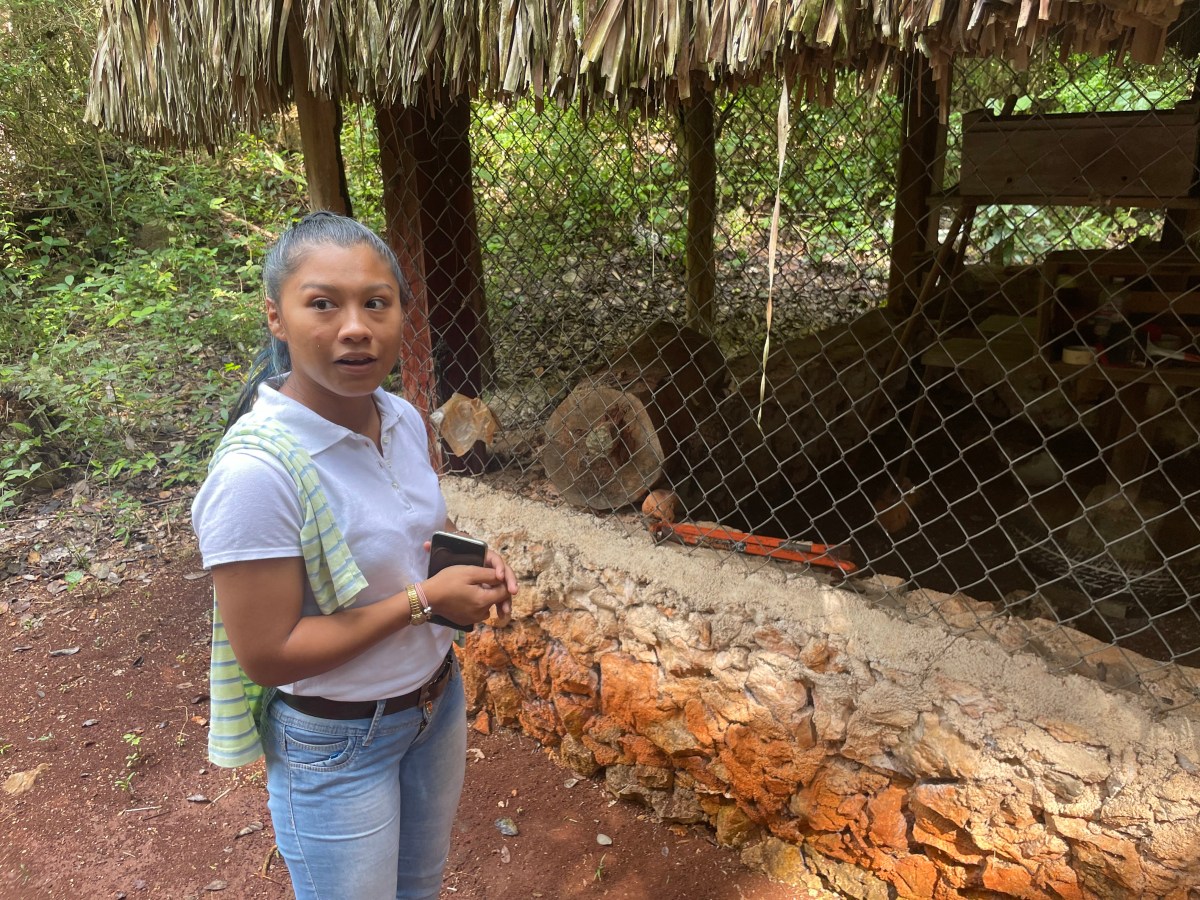
“There is a god for the bees that is located in Tulum,” said Ivana Carolina Canol Pech, a student studying tourism at the Mayan Intercultural University of Quintana Roo, Mexico. This god is named Ah Musen Kaab.
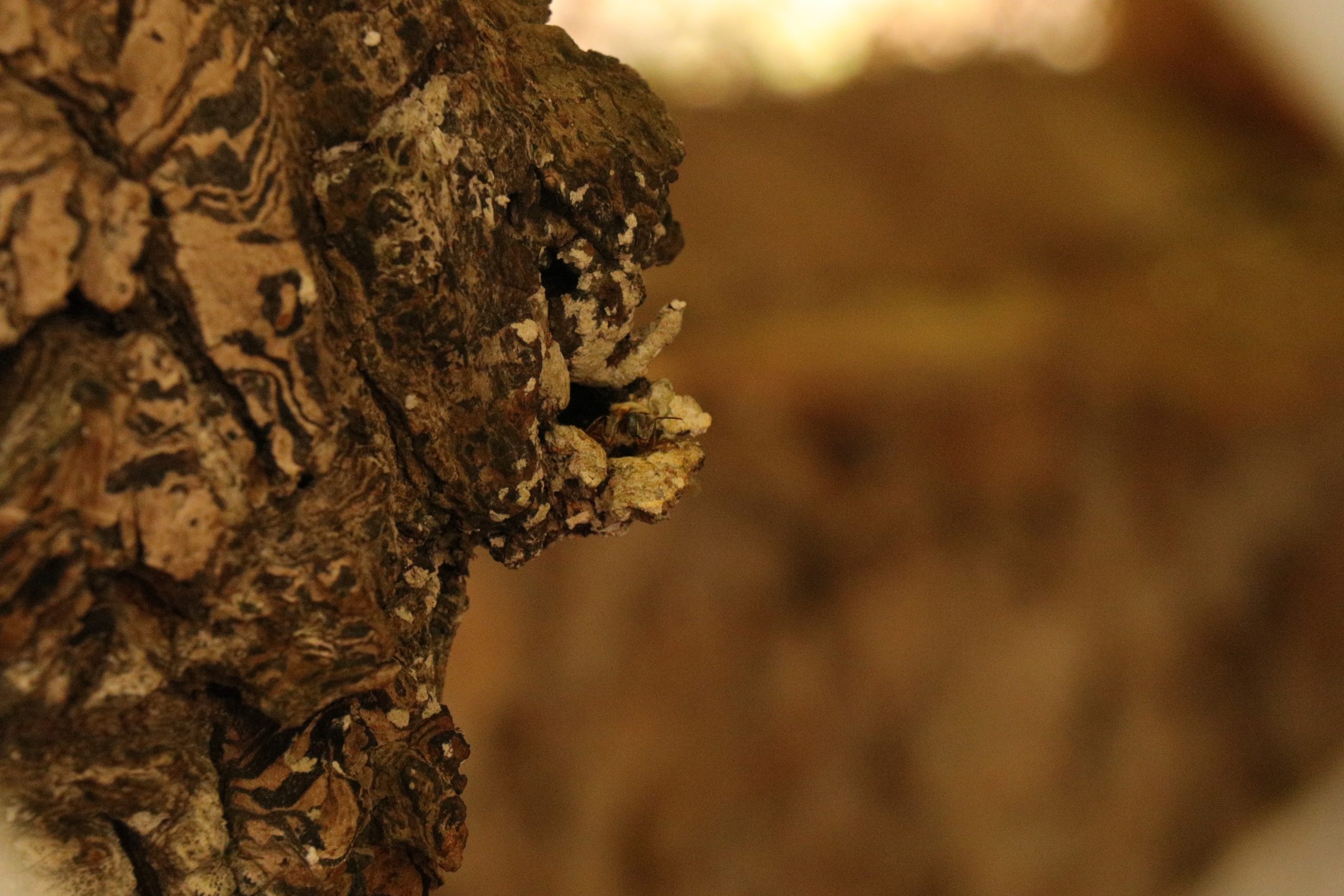
Melipona bees, called Xunan-Kab in the Yucatec Mayan language, are different from the bee species found in the United States, Pech said. Unlike American and European bees that typically live in box hives made by human beekeepers, the Melipona bees live in the trunks of fallen trees. Mayan families that keep Melipona bees provide them roughly three-foot-long tree trunks laying in their backyards and patios, typically in rural areas that are closer to the plants the bees like to pollinate.
Melipona bees are “highly selective” of what types of plants they pollinate to create honey, said Christian Canche, another tourism student at the Mayan Intercultural University of Quintana Roo.
“They do it (pollinate) in medicinal plants and trees,” Canche said. “So it’s a different type of honey.”
This special honey can be used to treat cuts and burns as well as sore throats, said Jaime Valle, a classmate of Pech and Canche. It can also be used as a face mask to prevent wrinkles and rejuvenate skin. During the pandemic, local communities used the honey often.
One way Mayan communities in southern Mexico – as well as Belize and Guatemala – use the honey is to make a fermented “somewhat hallucinogenic” drink called balché, said Stephen Buchmann, a bee biologist and University of Arizona adjunct scientist in the departments of Entomology and of Ecology and Evolutionary Biology. The honey is also used for treating eye issues such as cataracts and during childbirth, he said.
The high sugar content of all types of honey forces water out of and destroys bacterial cells, Buchmann said. Melipona honey is more watery than American or European bee honey, so the lower sugar content slightly lessens the honey’s antibiotic properties. However, lower sugar does not worsen the taste.
“It gets my vote for the tastiest honey in the world,” Buchmann said, “an intensely floral bouquet.”
Unfortunately, pesticides, deforestation and industrial agriculture are hurting the Melipona bees. Currently, the Mexican government is constructing the Tren Maya, an over 1,500-kilometer railroad that will travel all around the Yucatan Peninsula. While this train is creating millions of new jobs and working to preserve some land, it is also clearing forests throughout the region to build the railroad lines. This deforestation is displacing species – including plants needed for Melipona bees to pollinate – and impacting Mayan people’s close connection with the land.
“One you affect one, the other will be affected,” said Deysi Juárez, another Mayan Intercultural University of Quintana Roo student, about how impacting nature will also impact societal needs, tourism, and Mayan culture. Juárez said she and other Mayan people feel ownership of their land, and they felt forced to sell it to the government, who presented selling the land like it was the only option.
Industrial agriculture also hurts the Melipona bees. In 2011, a shipment of honey from the Yucatan was rejected by the European Union because it contained too much genetically-engineered (GE) pollen, according to a 2020 academic paper by University of Wisconsin-Madison faculty members Sainath Suryanarayanan and Katarzyna Beilin.
Suryanarayanan is the associate director of the Holtz Center for Science & Technology Studies, and Beilin is a professor in the Department of Spanish and Portuguese. The rejected honey was contaminated by GE soy plants grown by Mennonite farmers near the bee hives. The EU’s rejection of the honey sparked a resistance by Mayan beekeepers, nongovernmental organizations and activists to persuade the Mexican government to ban GE soy because it infringed on the Mayan people’s rights to culture. These resistance efforts led to a ban on GE soy in 2017, but the ban was lifted in 2019.
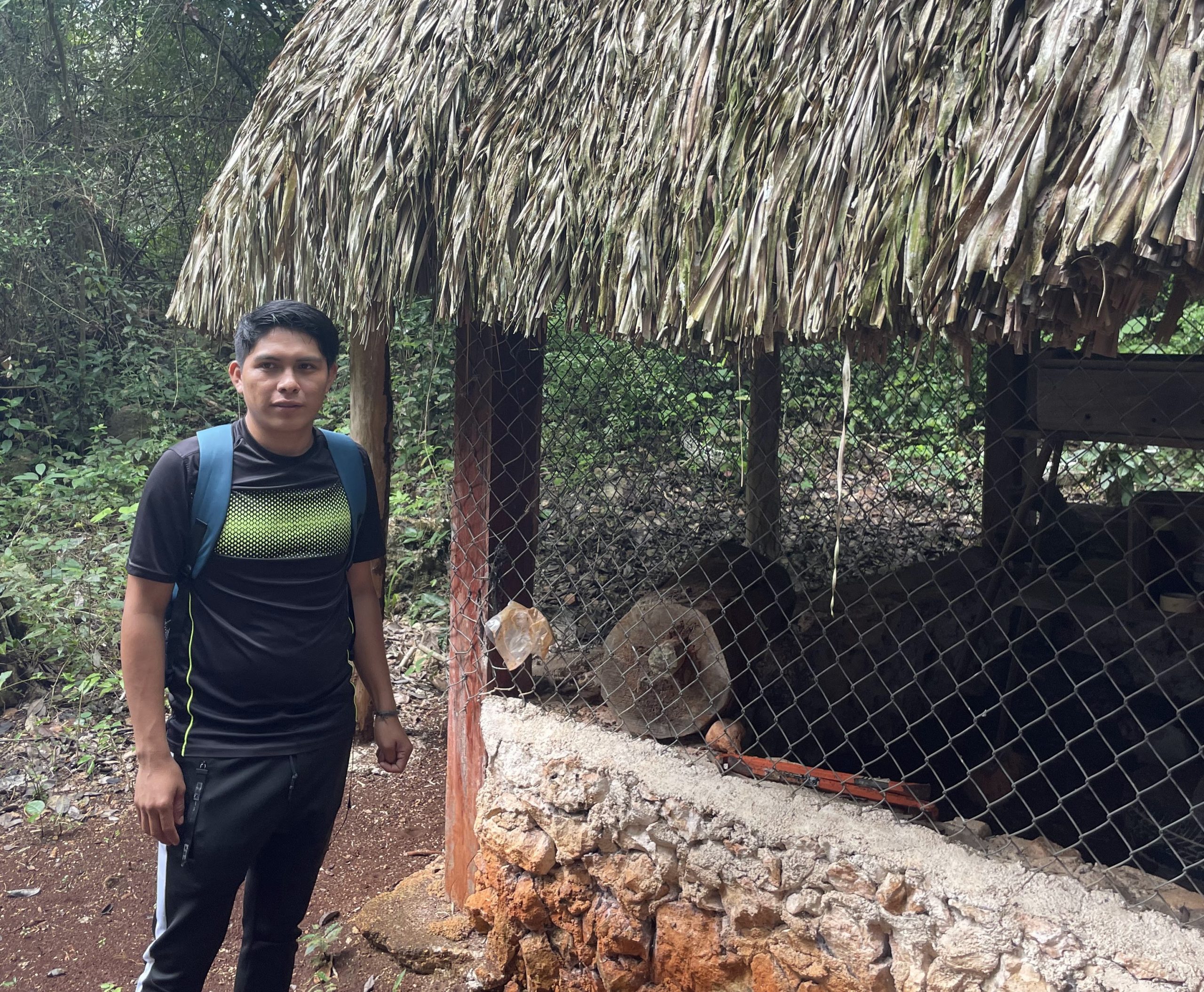
Issues of deforestation and industrial agriculture makes Melipona beekeeping in areas like the Mayan Intercultural University of Quintana Roo important for protecting the bees and Mayan culture. In the jungle at the university, students raise Melipona bees, allowing the bees to organize their hive as they naturally do, which is different from American and European bees.
“The difference is that they live in total harmony,” Pech said. “They don’t fight one another.”
In a Melipona hive, there are typically four to five virgin princess bees, Pech said. These bees wait until the current queen bee dies, then one of them will take her place to allow the bees to reproduce.
Every other bee has a role in the hive as well, Canche said. Some of the bees collect pollen, others clean the hive, and others guard the queen. A hive produces 1 to 1.5 liters of honey annually, compared to European bees’ 15 liters, Pech said.
Unlike European bees, Melipona bees do not sting, Canche said, so Melipona beekeepers do not have to fumigate the hives or wear protective clothing to harvest honey.
“All you need is a syringe and a knife,” Canche said.
Melipona beekeeping goes far beyond harvesting honey, though.
“We have certain beliefs in the Mayan culture that if we’ve been to a funeral or we’ve done a certain type of act of any kind that we can’t come close to them,” Pech said. Similar to when pets notice when their owner is ill or in a bad mood, the Mayan people do not want to transfer anyone’s negative energy from funerals or other upsetting situations to their bees. Canche said the Melipona bees are never exported to other parts of the world to further protect the bees and their relationship with Mayan culture.
“We have them here so they don’t go extinct and they can cultivate,” Canche said. The relationship between Mayan people, Melipona bees and the jungle is strong, and traditional Melipona beekeeping fosters this relationship.

ICT is a nonprofit news organization. Will you support our work? All of our content is free. There are no subscriptions or costs. And we have hired more Native journalists in the past year than any news organization ─ and with your help we will continue to grow and create career paths for our people. Support ICT for as little as $10. Sign up for ICT’s free newsletter.

