
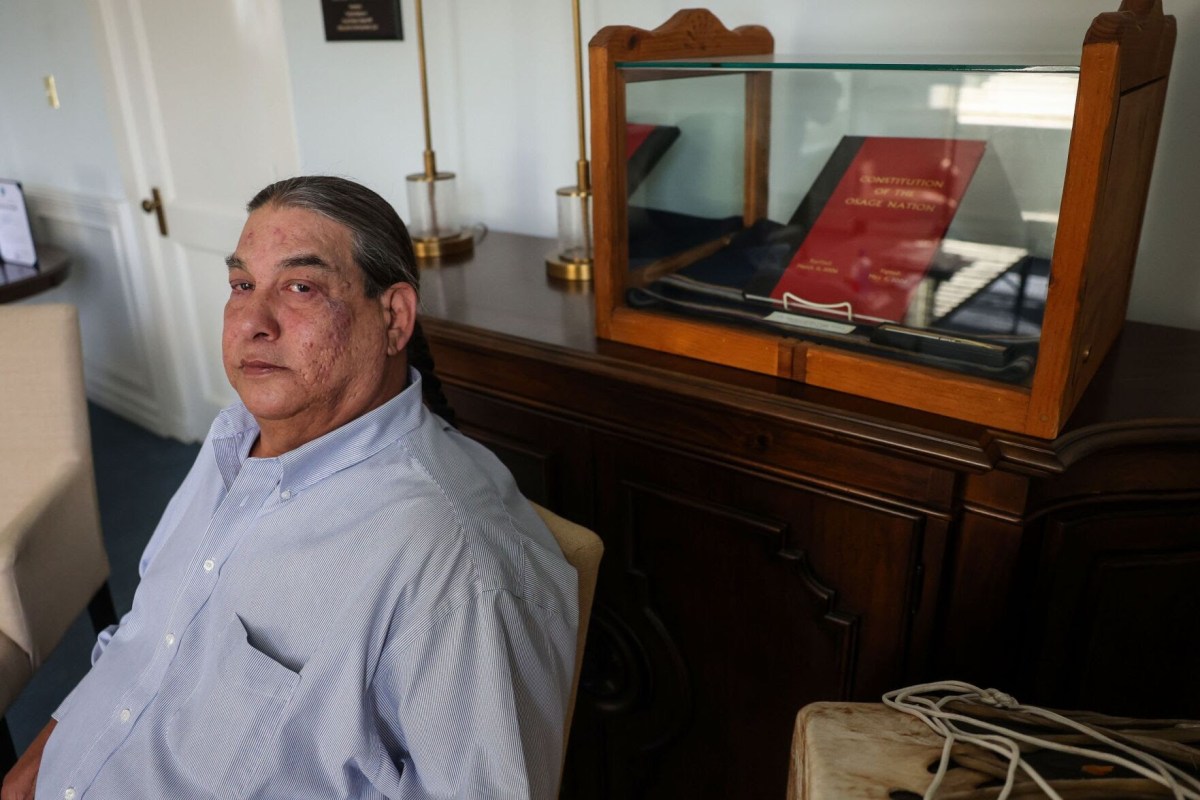
Felix Clary
ICT + Tulsa World
PAWHUSKA, Okla. – Since the release of “Killers of the Flower Moon,” non-Osage headright owners have been attending Osage Minerals Council meetings, standing up and asking how they can return the headrights to the tribe.
They’ve also been calling council members to inquire how to do this, according to Minerals Council Chairman Everett Waller. Waller said he must tell the owners that it is not easy to return the headrights to the tribe because of legislation in effect since 1984. He is hopeful the Osage Nation will be able to overturn the legislation.
Osage Nation mineral headrights are rights to ownership of land on the tribe’s reservation. Owning the land means owning any minerals, such as oil and gas, that come from the land. Mineral profits are paid to the headright owners.
Federal statute from 1906 provided Osage land would be allotted only to Osage Nation citizens. It also ensured mineral rights would be owned collectively by the tribe regardless of who owned the land, thus the creation of headrights for each of the 2,229 Osage citizens then on the tribal rolls.
Companies leasing Osage land to extract oil, gas, gravel or coal paid into a trust managed by the Bureau of Indian Affairs, which disbursed payments from the trust to headright owners. The list of owners was kept secret until 2009.
On June 19 that year, the now defunct Pawhuska newspaper, The Bigheart Times, published the list, excluding individual owners, under the headline “Non-Osage shareholders named in lawsuit.”
The BIA shared the list after Osage citizens attempted to sue the government for not being good stewards of the Osage Nation’s mineral money, and for withholding this information.
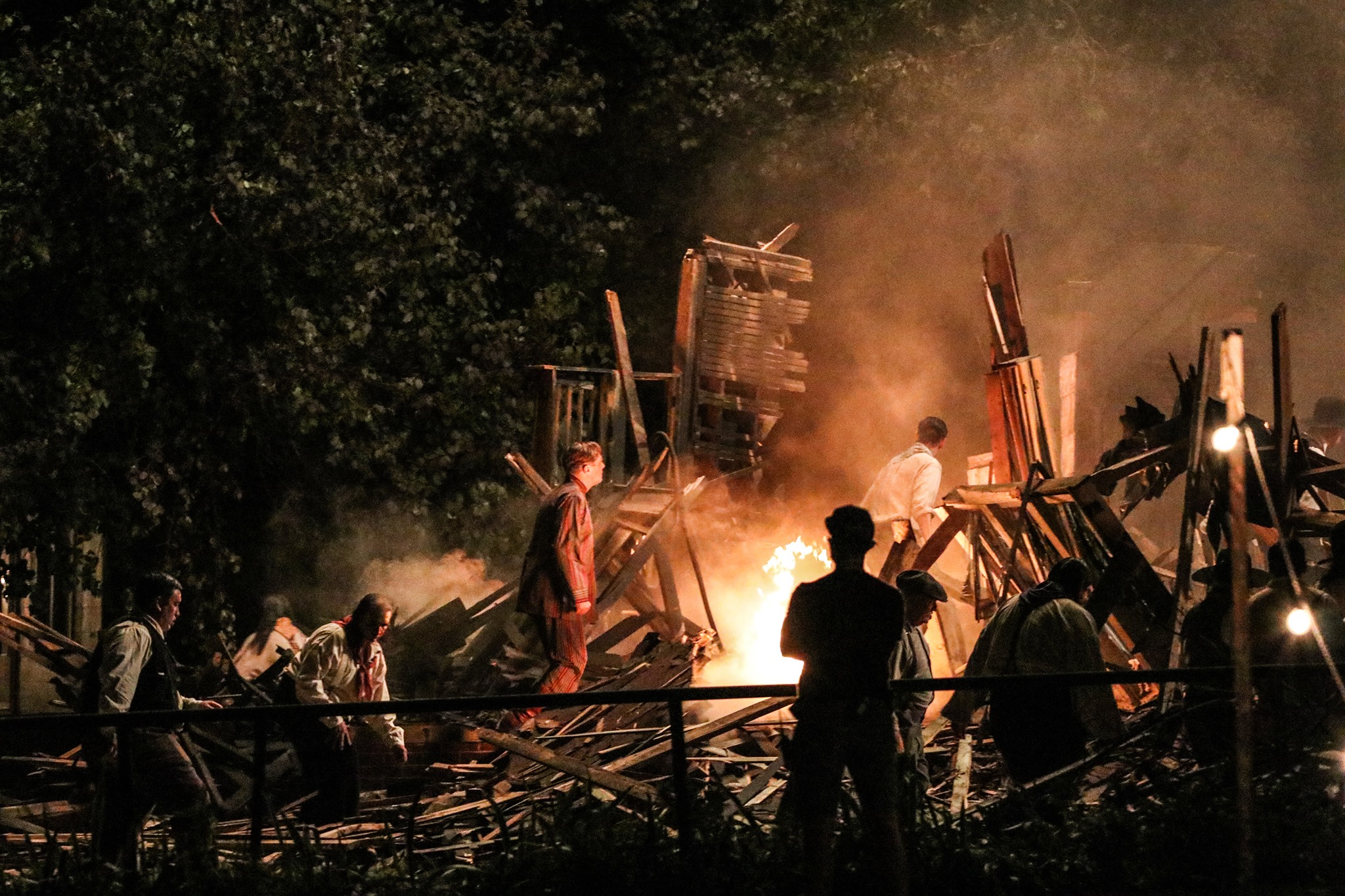
The list came back into national conversation as audiences saw the film “Killers of the Flower Moon.” The film frames the 1920s Osage Reign of Terror around the story of Ernest Burkhart and his wife Mollie, an Osage citizen in Oklahoma. Mollie sees wealthy family members murdered one by one because of oil profits.
White families like Burkhart’s commonly married into Osage families between 1921-1926, some hoping to inherit the Osage mineral headrights and profit off the land. As author David Grann wrote in his book, “Killers of the Flower Moon,” which inspired the movie, homicides often helped speed along the inheritance of those headrights.
After watching the Oscar-nominated film, many viewers asked: Who owns those 2,000 or so headrights today, and where are those millions of dollars in payments going?
Documentation shows about one-fourth of the headrights are owned by those with no ties to the Osage Nation, and the list remains mostly unchanged since being shared in 2009.
Waller said, to his knowledge, a list published in 2015 by Osage News is still accurate. The Osage Nation is working with BIA officials to ensure their list is up-to-date. BIA officials in Oklahoma and Washington, D.C., did not respond to requests for comment.
‘Not a simple issue’
One of few on the list willing to speak about Osage mineral headrights was the Oklahoma Historical Society.
Executive Director Trait Thompson told ICT and the Tulsa World that the nonprofit is not technically a headrights owner but is actively working with attorneys to find an avenue to transfer the headrights to the Osage Nation. He said there is “a bit of a complicated story because of the legalities. It’s not a simple issue.”
Like his brother Ernest, Byron Burkhart married an Osage woman, Lillie, who had her own allotment. When she died in 1967, Lillie’s will passed her house to the Oklahoma Historical Society to be created as a shrine to Chief Pawhuska, also known as White Hair. Lillie was among the chief’s descendants, and she specified in her will that the home be made into the White Hair Learning Center.
“She (Lillie) did that through the creation of a trust, so all of those headrights that she had, she put into the trust. The Oklahoma Historical Society was designated as the trustees of that trust,” Thompson said.
Today, the White Hair Memorial Center is a repository for Osage artifacts, documents, maps, annuity rolls, oral histories and photographs.
For years, Lillie’s will was contested by family members who were surprised the headrights weren’t bequeathed to them, Thompson said.
“I don’t know why Lillie decided to make the Oklahoma Historical Society the trustees. Newspaper articles from that time caught a quote from a few of her family members saying the news caught them off guard. That is why the will was contested,” Thompson said.
“Lillie was a wealthy woman, so I’m sure some of the family members would have liked to share in that wealth. I think she had her will redone within the last year of her life, and I don’t know her motivation.”
In 1984, after the contesting had ceased, the Historical Society was finally able to start operating the house bequeathed in Lillie’s will.
“The trustees do not benefit from the White Hair Memorial,” Thompson said, noting all funding from Lillie’s trust goes back into the operation and maintenance of that site.
Thompson said the Historical Society likely is encountering the same challenges as others interested in transferring ownership of headrights back into Osage hands.
“I don’t have any advice for them other than just examine it and see what the best thing to do is moving forward,” Thompson said. “The process of returning the headrights is pretty difficult because of legislation.”
Some names on the list
ICT and the Tulsa World made attempts to contact all those listed among non-Osage owners of Osage headrights. Most did not respond to interview requests. Many said they did not know they were mineral headrights owners, and that if they are receiving payments, they are unaware. Finding contact information was not possible for a handful of those listed.
A mental institution, Hissom Memorial, closed in 1994 after a lawsuit filed by parents of child patients alleged abuse. It’s a mystery where payments on those headrights might have gone after Hissom shuttered operations.
The Jack Drummond Trust may be among the more recognizable names because of Ree Drummond, the Pioneer Woman.
Ree Drummond stated in an ICT and Tulsa World email exchange that she and her husband, Ladd Drummond, “do not own, and have never owned, an interest in the Osage Mineral Estate, nor do they have an interest in any trust or organization that may own an interest in the Osage Mineral Estate.”
Ladd’s father, Charles Drummond, did at one time own several hundred acres of Osage land that he sold to Ted Turner, who later put the land up for sale. The Osage Nation won the bid to purchase the land back.
Alfred A. “Jack” Drummond bought his headright in the 1920s. A descendant has been reported saying he wishes to return his inherited headright to the Osage Nation.
Daniel J. Boorstin, who died in 2004, was a historian who grew up in Tulsa and became a librarian of Congress. ICT and Tulsa World were unable to contact a representative of his estate.
The list includes several energy companies, none of which responded to interview requests. There are also many banks, churches and religious groups.
Wells Fargo, the only bank to that responded to ICT and Tulsa World, said its staff reached out to the BIA and were assured they do not belong on the list of headright owners. Banks can only own headrights of the land that a branch is located on, and they do not have branches in Oklahoma. Some other banks on the list might find themselves in similar situations.
“Wells Fargo has a legacy of serving Native Nations with dedicated teams of employees focused on serving them,” a bank spokesperson said. “After an extensive review of our records, Wells Fargo has not found any indication that we own Osage Mineral Headright assets. As a financial institution, in our capacity as either an account agent or trustee, we may serve a few customers that own and receive Osage Headright assets.”
None of the universities listed would speak with ICT and Tulsa World about being included in the list of headright owners. The University of Oklahoma has not responded to an information request but told another publication its headright funds a scholarship for Osage students.
Fletcher vs. United States
In the 1920s, Osage citizens were allowed to give or sell their headrights to non-Osage people. The Reign of Terror led to legislation barring the practice, but many non-Osage people and organizations had already obtained headrights.
In 2002, four Osage citizens began filing lawsuits against the government for keeping the list of non-Osage owners private and for preventing headrights from being given back to the tribe.
William Fletcher, Tara Damron, Richard Longsinger and Kathryn Redcorn were the plaintiffs in Fletcher v. United States.
They won a case in the Fletcher series that required the BIA to make the list public, and it was published in 2009.
In 2011, they won a payout of $380 million for the damages done to the Osage Nation regarding loss of headrights income. The settlement was for the tribe, as the 2011 suit represented the Osage Nation as plaintiff.
The Fletcher series did not overturn 1984 legislation requiring a three-tiered system for returning headrights to the tribe.
First, the non-Osage owner of the headright must try to return it to the closest living descendant of the original owner. If that person cannot be found, then it must be given to “any other Osage” citizen. Only if the second prong fails can the headright be returned to the tribe itself.
This is the system the Osage Nation is hoping to overturn. Waller said the Osage Minerals Council hopes to share updated information soon in the effort to fight the 1984 legislation.
List of non-Osage headrights owners
Osage Minerals Council is working off this list of non-Osage holders of Osage headrights, which excludes hundreds of individual owners:
Adobe Royalty (Lawton)
Adobe Royalty (OKC)
Aladdin Petroleum Corporation
Archbishop of New York
Assemblies of God General Counsel
Assoc. of Mary Immaculate Oblate Fathers
Baptist Foundation of Oklahoma
Boatmen’s Trust Company
CEJA Corporation
FABCO Oil Company
Father Flanagan’s Boys Town
First Assembly of God-Kalamazoo
First Christian Church
First National Bank & Trust
First Presbyterian Church (Tulsa)
First Presbyterian Church of Chandler (Oklahoma)
First Presbyterian Church of Orange (California)
First United Methodist Foundation
Frank Phillips Foundation
Frost National Bank-San Antonio
Hissom Memorial
Houston Oil & Minerals Corporation
Immaculate Conception Catholic Church
Institute of American Indian Arts Foundation
Los Angeles Orthopedic Foundation
Martin Luther Homes of Colorado Springs
Masonic Homes of California
New Mexico Boys Ranch
Oklahoma Medical Research Foundation
Orange County Rehab Institute
Osage Indian Baptist Church
Roman Catholic Diocese of Tulsa
Seventh Church Christ Scientist
Shriners Hospital for Children
Sisters of St. Francis of Philadelphia
Southland Royalty Company
St. Joseph’s Orphanage
St. Luke’s United Church of Christ
St. Mary’s Roman Catholic Church in Barnsdall
Stanford University, Leland Stanford Jr. University
Tenneco Oil Company
The Estate of Daniel J. Boorstin
The Hefner Company
The Jack Drummond Trust
The Oklahoma Historical Society
The University of Oklahoma Athletic School Fund and Board of Trustees
Tulsa Boys’ Home
University of Texas board of regents
Vestrymen St. Paul’s Episcopal Church
Wells Fargo Bank

This story is co-published by the Tulsa World and ICT, a news partnership that covers Indigenous communities in the Oklahoma area.
Our stories are worth telling. Our stories are worth sharing. Our stories are worth your support. Contribute $5 or $10 today to help ICT carry out its critical mission. Sign up for ICT’s free newsletter.