Amelia Schafer
ICT + Rapid City Journal
RAPID CITY, S.D. – In the middle of the afternoon in her dorm room, Aniah Painte, a freshman at the Flandreau Indian School, woke up to a punch in the face.
“I woke up on the second punch and I felt blood,” Painte, 15, said recounting the Oct. 14 attack. “I saw all this blood running down my face.”
Painte had gone to her room to take a mid-afternoon nap and awoke to find herself being beaten by two other students who had broken into her room.
Two fellow students accused Painte, of the Mandan, Hidatsa and Arikara Nation, of stealing a THC vape from them and a few dollars. Painte told them they were mistaken and had the wrong person, but the girls wouldn’t listen.

“I thought they were my friends,” Painte said. “I kept telling them it wasn’t me, I didn’t have it.”
Widespread bullying and violence have gone unchecked at the Flandreau Indian School, a residential Bureau of Indian Education facility in eastern South Dakota, the Painte family said. Staffing shortages and a lack of communication allow for students to act out with no consequence, said Aniah’s mother Denise Painte.
After the incident, Aniah called her mother, who raced in from Rapid City to take her home. Aniah maintained she hadn’t stolen the vape and her mother had her drug tested, which confirmed she had not consumed marijuana.
When staff came, Aniah said they were more concerned with finding the vape than they were her injuries. The vape was not found in her room.
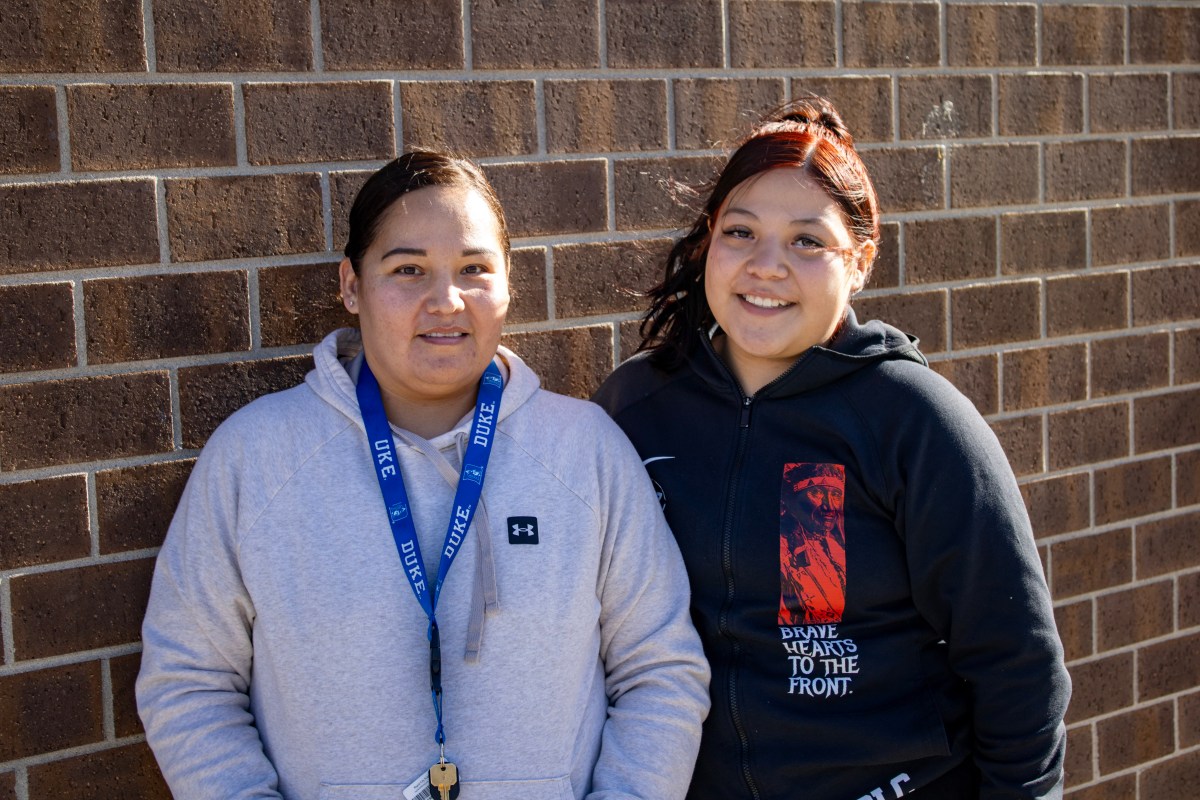
Aniah is now living back at home in Rapid City with her family members, who are concerned and alarmed with how the incident was handled.
In an interview with ICT and the Rapid City Journal, Aniah Painte said violence is common at the school. Students often participate in “fight rings,” where older students will pay younger students to fight each other for their amusement. She said staff rarely patrol the dorms.
“These girls need to be held accountable,” Denise Painte said. “I’d like to see how often (the school’s) safety procedures are reviewed and updated and how much training staff receives.”
The Flandreau Indian School is one of four remaining off-reservation boarding schools in the United States managed by the Bureau of Indian Education. The school first opened its doors in 1872 as a Presbyterian Indian Mission School until it was taken over by the federal government in 1877. Now, the residential school is a high school for grades 9-12.
Like many other schools across the nation, the Flandreau Indian School is currently struggling with staffing shortages. According to the school’s website, there are eight positions open: an art teacher, a transitional teacher, a business technician, an intermittent home living assistant, a regular home living assistant, a residential life manager, a school maintenance boiler operator and a substitute teaching position.
The Bureau of Indian Education did not respond to requests for comment.
“I would like to see the school be shut down until they have proper staffing,” Denise Painte said. “From day one they were telling me they were understaffed. The only way I was able to communicate with my daughter was because I sent her a cell phone. Whenever I call the school, no one picks up. It just rings and rings, and I leave messages that are never answered.”
Painte said the only time she was able to have a conversation with staff was when they coordinated her daughter’s return to Rapid City.
Violence and bullying aren’t the only issues at the Flandreau Indian School. Earlier this fall, the Lee Enterprises Public Service Team uncovered stories of students at the Flandreau Indian School being improperly prescribed psychiatric medications by staff with no medication training.
Denise Painte graduated from the Flandreau Indian School in 2002. Remembering a positive experience at the school, she chose to send her daughter there.
“It’s completely different now,” she said. “I went to Flandreau so I trusted them. I thought she’d be safe there.”
The Painte family filed a police report with the Moody County Sheriff’s Department, which is responsible for patrolling the school, but haven’t heard anything. When she went to pick up her daughter, Denise said police told her usually nothing comes out of reports like this and she’d need to file police reports in Arizona and Minnesota, where the two girls lived.
Moody County Sheriff Troy Wellman said the department is occasionally called to the school for student fights. A case report was generated from the incident, but as all parties involved are minors, the department was unable to provide the report.
“I want answers,” Denise Painte said. “How were those kids able to get a key from the staff? The staff were more concerned about where the vape was than my daughter’s safety. I want justice for my daughter.”
Physically, Aniah is okay, she said, but mentally she’s still recovering from the attack.
“It breaks my heart,” Aniah Painte said. “It was so cruel. They didn’t try to hear me out or anything. I didn’t deserve that.”

This story is co-published by the Rapid City Journal and ICT, a news partnership that covers Indigenous communities in the South Dakota area.
Our stories are worth telling. Our stories are worth sharing. Our stories are worth your support. Contribute $5 or $10 today to help ICT carry out its critical mission. Sign up for ICT’s free newsletter.