
Shondiin Mayo
ICT
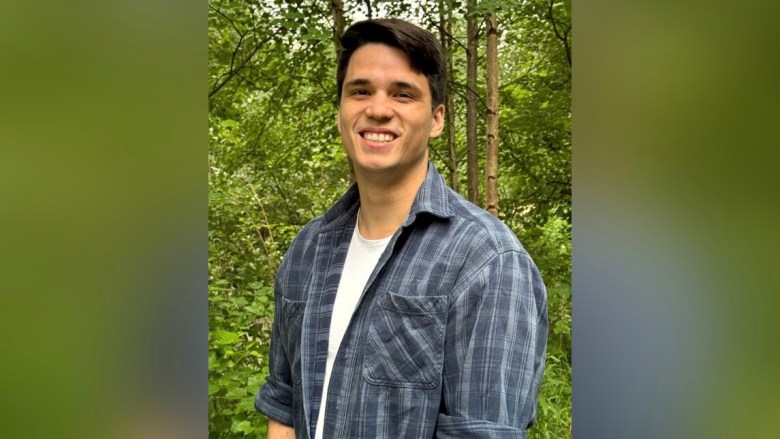
Brandon Kowalski hadn’t given much thought to holding political office until he got an unforeseen phone call from a former Alaska politician urging him to run for the Alaska House of Representatives.
The call from former Democratic state Rep. Grier Hopkins convinced him to run with three primary objectives: securing funding for schools, emphasizing subsistence lifeways, and fostering workforce development.
It was an important moment for Kowalski, Iñupiaq from Kotzebue traditionally known as Qikiktagruk.
“[I was] honored and kind of just humbled to be thought of and asked to step up into a leadership position like that,” he told ICT. “This is an opportunity to get more Native representation.”
Kowalski is now in the midst of his first campaign for the Alaska House of Representative District 36, Alaska House District 36, the largest geographic state House district in the U.S. that includes Fairbanks North Star Borough and Fort Yukon.
A Democrat, Kowalski is one of four candidates – including two Republicans and a Libertarian – on the Nov. 5 ballot for District 36, which came open when incumbent Republican Mike Cronk of Tok decided to run for the state Senate.
Kowalski is among several Indigenous candidates on the ballot in Alaska, including Democratic U.S. Rep. Mary Peltola, Yup’ik, who is running for reelection to Alaska’s sole congressional seat.
Nation’s largest geographic district
Kowalski, 30, also known as Putuuqti, has worked in the trades, and is a certified structural welder. He was raised in the rural community of Kotzebue above the Arctic Circle in Northwest Alaska until the age of 12.
He is the sole Alaska Native participating in the race. Other candidates vying for the position are James Fields, Libertarian; and Republicans Pamela Goode and Rebecca Schwanke.
The candidate that is voted in will face the enormous task of serving constituents in the state’s largest district.
As a result of redistricting, District 36 emerged as a vast region in Interior Alaska. It extends from the lower Yukon River communities, including Holy Cross, along the Yukon River to incorporate Koyukuk River communities such as Hughes. It further encompasses the Yukon Flats area and reaches the mountainous range of Eagle near the Canadian border. Additionally, the district includes areas from McGrath to the Upper Tanana region, covering Northway and extending down to Chitna.
Alaska, recognized as the least densely populated state in the U.S., hosts a variety of Indigenous populations, each with unique traditions and cultures. The district includes at least 41 Indigenous communities and organizations such as Doyon, Limited, and Tanana Chiefs Conference.
The election comes as rural Alaska is grappling with numerous challenges, including food insecurity and educational disparities.
Kowalski said he understands the population not merely through statistical data but through his cultural Iñupiaq principles. He believes that Indigenous values distinguish him from other candidates, enabling him to connect with a significant portion of his constituents. He wants to be a voice for his constituents.
“I think people with an understanding of that way of life and that kind of cultural view should be in that space, helping make those decisions, because otherwise we’re left out,” he said. “It’s critical to the wellbeing of our communities.”
Kowalski carries his uncle’s Iñupiaq name, “Putuuqti,” which refers to an individual who is considered a “driller,” such as someone working with a traditional bow drill.
The name carries significance beyond its literal meaning, as it embodies the legacy of the individual it honors. Kowalski is named in tribute to his uncle, who served as a prominent leader in the northwest region for many years.
‘Trust and belief’
Klowaski has received endorsements from several organizations, including the Fairbanks Central Labor Council, National Education Association-Alaska, and Planned Parenthood Alliance Advocates. Furthermore, he has secured financial contributions from local community members.
“I’ve been very fortunate to have the trust and belief … from the broader community in that way,” Kowalski said.
He has been working to advance his campaign by further engaging with the District 36 residents through digital outreach, mailing letters, and visiting local communities.
He said the campaign – though his first – has cemented feelings that will last a lifetime.
“The most humbling and touching moments have been from community members that have either sent letters or kind of stopped me to tell me, seeing a young person on the ballot gives them hope,” Kowalski said.

Our stories are worth telling. Our stories are worth sharing. Our stories are worth your support. Contribute $5 or $10 today to help ICT carry out its critical mission. Sign up for ICT’s free newsletter

