

Sandra Hale Schulman
Special to ICT
Sitting Bull once said, “If we must die, we die defending our rights.” And he did.
He is one of the most recognized and influential of Native leaders known from his role in the Sioux Wars, his leadership at the Battle of Little Bighorn defeating Gen. George A. Custer and his international appearances with Buffalo Bill Cody’s Wild West Show.
His remarkable story will be told in an all-star History Channel two-night documentary event executive produced by Leonardo DiCaprio’s Appian Way Productions on Tuesday, May 27 and Wednesday, May 28 at 9 p.m. Eastern time. Narrated by Mo Brings Plenty from “Yellowstone” and starring Kul Wičaša Lakota actor Michael Spears, who many remember from “Dances with Wolves” and “1923,” with a soundtrack by the late Robbie Robertson, Mohawk. It was co-directed by Christopher Nataanii Cegielski, Diné.
The series charts the life and legacy of the leader of the Lakota people from his origins as a warrior, his involvement defending Native lands, to his leadership in guiding the Lakota people through a pivotal time in American history.
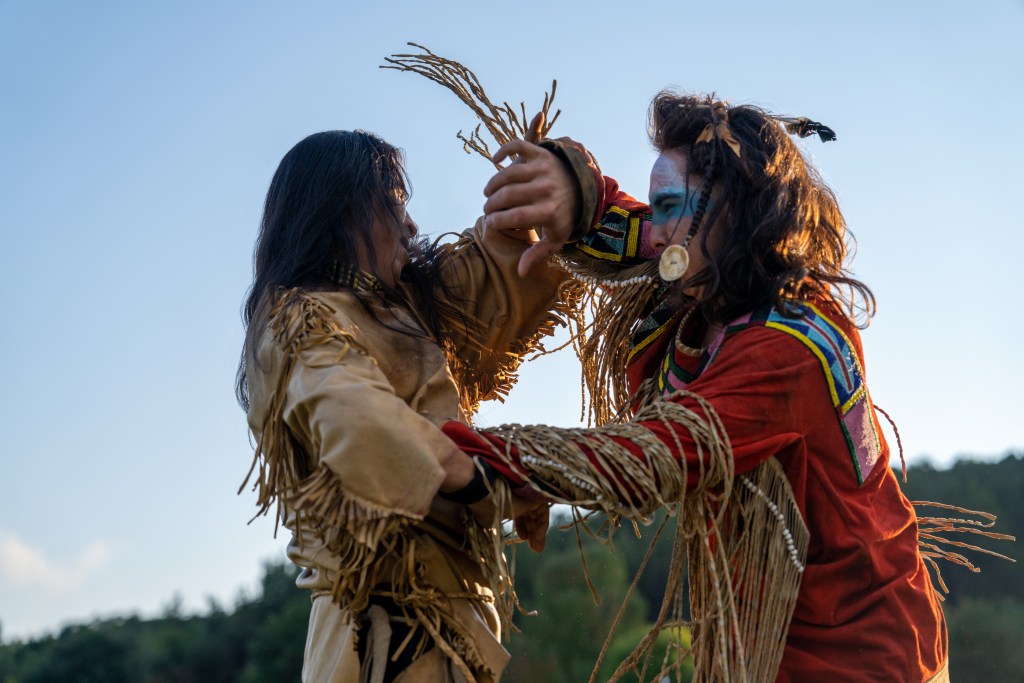
Told through historical interviews, dramatic scripted sequences, and additional rich archival material, “Sitting Bull’’ details the seminal moments and key figures, plus showing who Sitting Bull was as a human.

Spears used a lot of who he is as Lakota to approach the role. He touched up his Lakota language speaking skills since he teaches in the language and relied on what he grew up on.
“I reach back to my own career and growing up in Montana,” Spears told ICT from his home in Montana. “I depend on my teachings, what I learned from my father, my grandfather, my parents, all those tools that I had a lot to lean back on. To learn from all that.”
In Spears’ portrayal of Sitting Bull, he learned a few things about him along the way.
“I learned about his favorite song and learned some of the language that had to be translated from Lakota to English,” Spears said. “He was a man that is still present in our life ways. Learning about his childhood there were new facts that I thought were pretty amazing to me, and the relationship with Bloody Knife (a Sioux Native who was recruited to scout for General Custer and died at Bighorn) is to me specifically.”
One of the big scenes that may be difficult for the audience to watch is the Little Big Horn Battle triumph that tragically set the stage for the Wounded Knee Massacre. The same scenes that Spears learned quite a bit on Tatáŋka Íyotake, or Sitting Bull, as a leader.
“I grew up with the story being told to me from my grandfather, and from my father. I really worked hard to communicate all the nuance that is, ‘Tatáŋka Íyotake.’ He’s not just a war leader or a person in history that’s responsible for all these great deeds. He gave them incredible strategies. He was very spiritually grounded. He didn’t actually participate in a lot of the fighting part. He did a lot of the strategizing for the opportunities that went to the life ways of where to go, how to be,” Spears said.

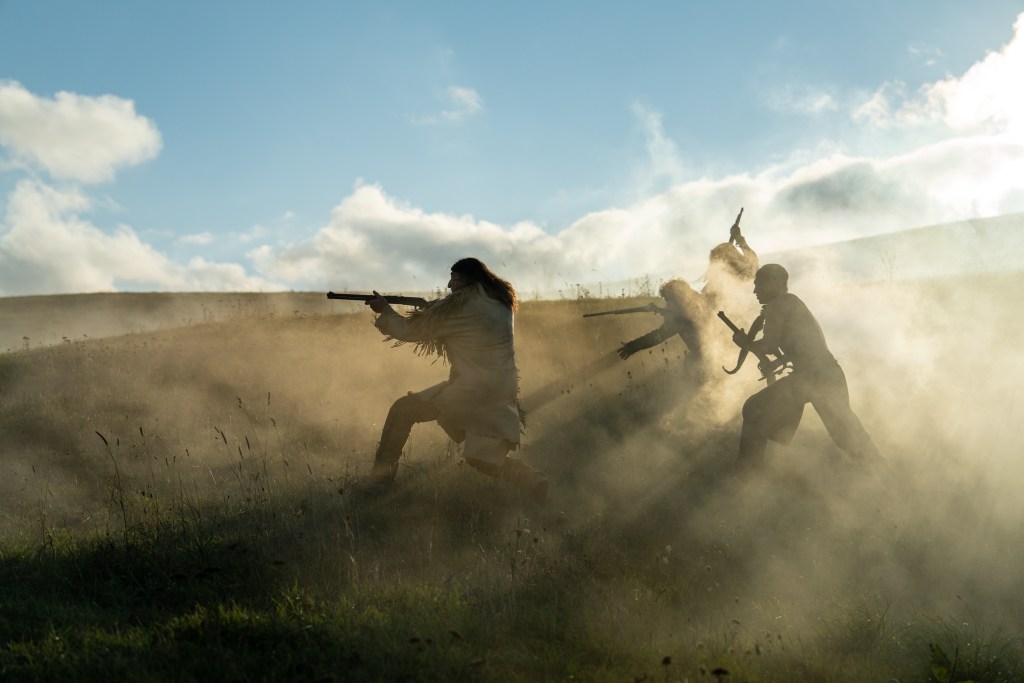
He continued: “(Sitting Bull) did this through prayer, wisdom, generosity, bravery, respect, and even forgiveness. Because he definitely had to forgive his friends and himself. I couldn’t imagine having to travel with Buffalo Bill Cody, who is one of the men responsible for killing so many of our relatives, the buffalo. It’s just incredible to see how he navigated such apocalyptic times.”
For such a complicated figure in history Spears says he welcomed everything that surrounded the show from the Native and Lakota producers, Indigenous narrators, his ventures, his childhood, everything that humanized him, especially the language.
“What fascinated me was not only the story itself, but the worldview of the Lakota, not just what we did as in the timeline of things, but why things happened and why this is what’s still happening today,” Spears said.

Spears will keep busy after “1923” and “Sitting Bull” with more projects in his future. He is attached to several scripts that he can’t specify but will start soon.
His family is something he heavily focuses on besides his career.
“My most prized project is raising my children. I have two young boys here in Montana that are still in school. I have four children altogether,” he said. “I’m also a student at St. Day Gleska University out of South Dakota and hopefully will be graduating in a year and moving on to what comes next, either teaching or developing my own immersion school. I hope to be able to continue to participate and teach and help the youth.”
For the Sitting Bull musical score, the creative team turned to Sebastian Robertson and his father, renowned musician from The Band, Robbie Robertson.
“We were thrilled by the prospect and dove right in,” Sebastian Robertson told Rolling Stone. “This was a complicated time in our lives as my dad’s health was declining. However, like for a lot of us, the art of music was an escape.”
Sebastian began the title theme on his own and then showed his father.
“Trust me when I tell you he was a tough critic,” Sebastian said. “The inspiration of this project, my heritage and honoring both my culture and my father, kicked me into the highest gear. He was thrilled with the demo. We batted ideas, guitar licks, and vocals back and forth until we were satisfied and sent it along to production. We nailed it.”
As one of the final projects that Roberston worked on before his death in August 2023, Sebastian finished it on his own.
“Still by my side and breathing wisdom and artistry into my final choices, my dad and I created what will always be one of my proudest and most memorable compositions,” he said. “Harnessing the words of his mother, our people, and the rhythm of our lives in all existences, we created our final piece of music together … or maybe, just maybe, there’s more to come. I love you, Rob. And I have the deepest of gratitude for the Sitting Bull team for making this happen.”

