

Sandra Hale Schulman
ICT
SANTA FE, New Mexico – In an event more dramatic than any fictional film could conjure up, AIM activist Leonard Peltier, in jail for almost 50 years, was granted clemency the week before a powerful new documentary by Native filmmakers premiered at the Sundance Film Festival in January.
At the start of the Indian Market in Santa Fe, the filmmakers of the “Free Leonard Peltier” documentary, Jhane Myers and Jodi Archamboult, and people involved with the decades-long cause, activists Holly Cook Macarro and Mark Macarro, president of the National Congress of American Indians, gathered August 14 at the Sky Cinema for a screening and panel discussion moderated by Mark Trahant, board chair for ICT’s parent company, IndiJ Public Media.
Deeply researched and painful to watch at times, the film charts the history of oppression and violence toward Native people in the 1960s that led to Peltier’s imprisonment.
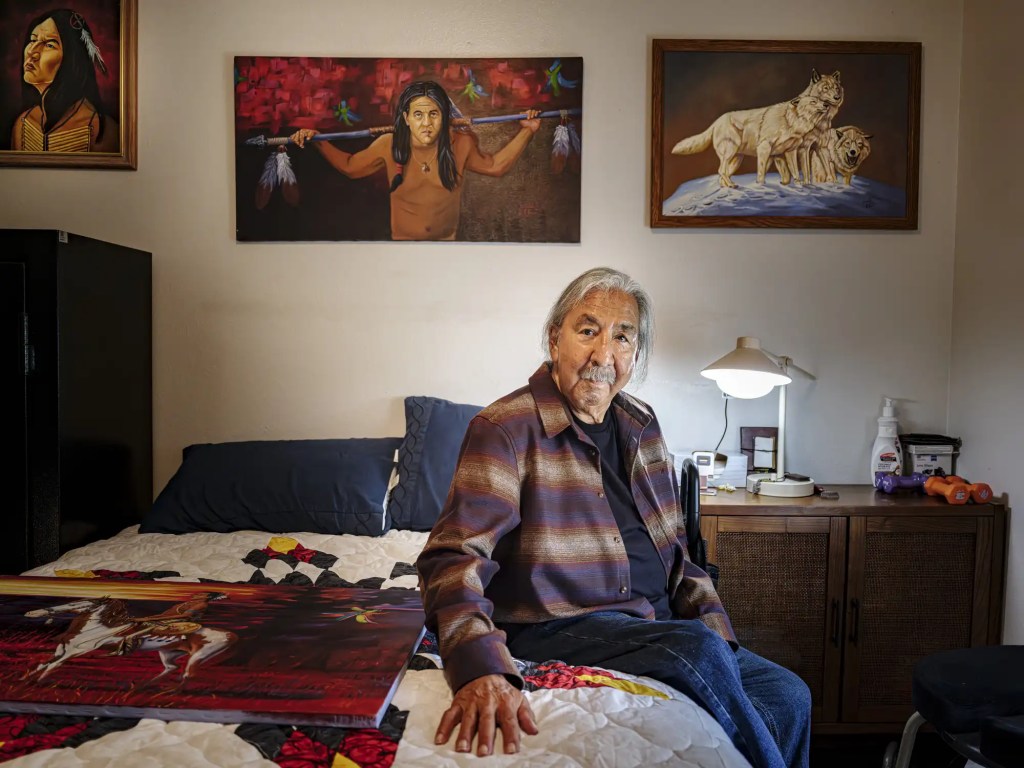
Peltier was born in 1944 on the Turtle Mountain Reservation near Belcourt, North Dakota, one of 13 children. He was sent 150 miles away to a boarding school, leaving at age 15 to return home, later moving to Seattle where he became an auto shop worker.
He began learning of the atrocities being committed back on the reservations and joined up with the newly formed American Indian Movement. During a shootout between the FBI and AIM members on June 26, 1975, he said he was in the area but didn’t kill the two FBI agents who died during the incident.
The film’s director, Jesse Short Bull, creates effective, non-graphically violent overhead AI shots of the day of the shootout in a grainy, slightly surreal effect as she was unable to acquire photos from the shootout. People and vehicles are reduced to small dots moving along roads and ridges, then shadowy figures shooting and running.
The film recounts the trial that found two of the three men arrested for the killings, Robert Robideau and Darrelle “Dino” Butler, acquitted on self-defense claims. However, Peltier later took the fall, his conviction largely based on an affidavit from alleged witness Myrtle Poor Bear, who later recanted her testimony, and a ballistics test that proved the shots did not come from Peltier’s gun, which was not exhibited.
Multiple lawyers, people at the scene, and Peltier himself are shown onscreen denying his guilt. Intense political pressure preceded Peltier’s 1977 guilty verdict, though his murder conviction was later changed to “aiding and abetting” and he was sentenced to two consecutive life terms. The killer was never found or convicted. Meanwhile, dozens of Native murders on the reservation during the conflict between AIM members and federal and tribal authorities never were investigated.
Decades of protests followed. Peltier visibly ages as each parole is denied and a photo of him allowed to be made public. His hair and trademark mustache grow gray. He steadfastly proclaims his innocence. He paints pictures of himself rising from buffalo heads.
His eyesight grows worse, and he eventually becomes blind in his left eye. His tiny cell is plastered with photos of his family growing up without him. Interview requests are turned down for decades.
At his parole hearing on June 10, 2024, he is quickly dismissed and denied in a closed-door meeting. Peltier says it is his “death sentence.”
Former President Bill Clinton said at one point he would pardon Peltier if he admitted his guilt, but FBI representatives protest against his release in Washington.
Nineteen-seventy-seven becomes 2025. A quietly building soundtrack uses drums and eerie chanting.
At the panel, Mark Macarro said, “I was at a meeting with former President Joe Biden and told him of the ballistics evidence and of Peltier’s advancing age and health issues. Biden replied he would ‘look into it,’ a move that opened the door to the clemency he would grant 16 minutes before his presidency ended on January 20, 2025.”
That day, Holly Cook Macarro was outside Peltier’s prison in Coleman, Florida, with fellow Peltier supporter Nick Tilsen of NDN Collective, awaiting word that may or may not come. When news of the clemency appeared on their phone screens, a collective gasp ensued, then hugs all around in disbelief, a moment that is stunningly captured in the film.
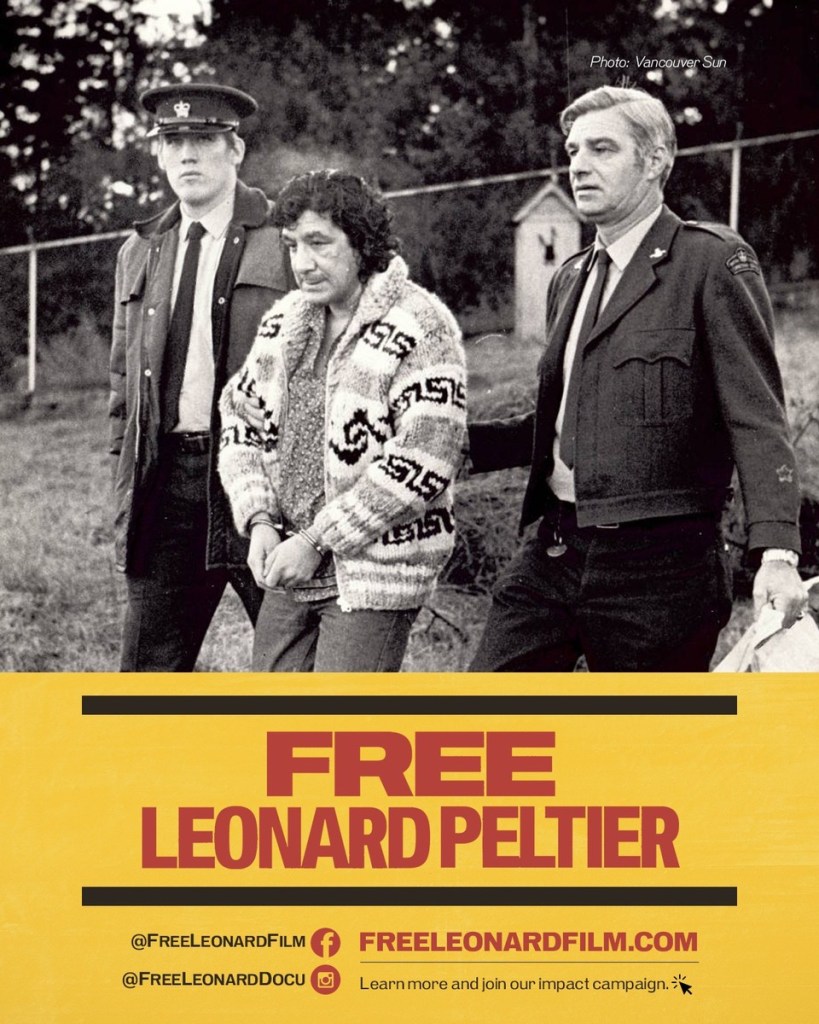
The audience in Santa Fe clapped as well, as a seemingly lost cause suddenly sprung to life.
The last shot shows Macarro and Tilsen walking toward the prison arm-in-arm to give Peltier the news.
After the credits roll, Peltier himself appears onscreen wearing a ribbon shirt in his new home on the reservation that the NDN Collective purchased for him. Looking strong and earnest, he pleads with viewers to keep the fight for Native rights going so his sacrifice wouldn’t be wasted.
Positive reviews have been pouring in. Variety said the film is “engaging, timelier than ever.” The Hollywood Reporter wrote the film “has its finger on the pulse.”
At the panel talk, Myers said they had to scramble to add the new ending before and after Sundance, and the team has been screening the film on reservations all spring and summer. The plan is to now have theatrical screenings, so the film qualifies for the Academy Awards next year.
The true story of the killings may never be solved, but a 50 year wrong has been made right. A freed 80 year-old Leonard Peltier lives quietly in his own home on the reservation he grew up in.

