

Greetings, relatives.
A lot of news out there. Thanks for stopping by Indian Country Today’s digital platform.
Each day we do our best to gather the latest news for you. Remember to scroll to the bottom to see what’s popping out to us on social media and what we’re reading.
Also, if you like our daily digest, sign up for The Weekly, our newsletter emailed to you on Thursdays. If you like what we do and want us to keep going, support and donate here.
Okay, here’s what you need to know today:
Acclaimed Ojibwe artist Jim Denomie – whose “metaphorical surrealism” works examined historical and contemporary events – died March 1 after a short battle with cancer. He was 66.
An active artist until the end, he participated in Miami Art Week in December 2021 with a solo exhibit at Untitled Art Fair, and was in a group show of Indigenous artists that closed in late February in Los Angeles at Various Small Fires Gallery.
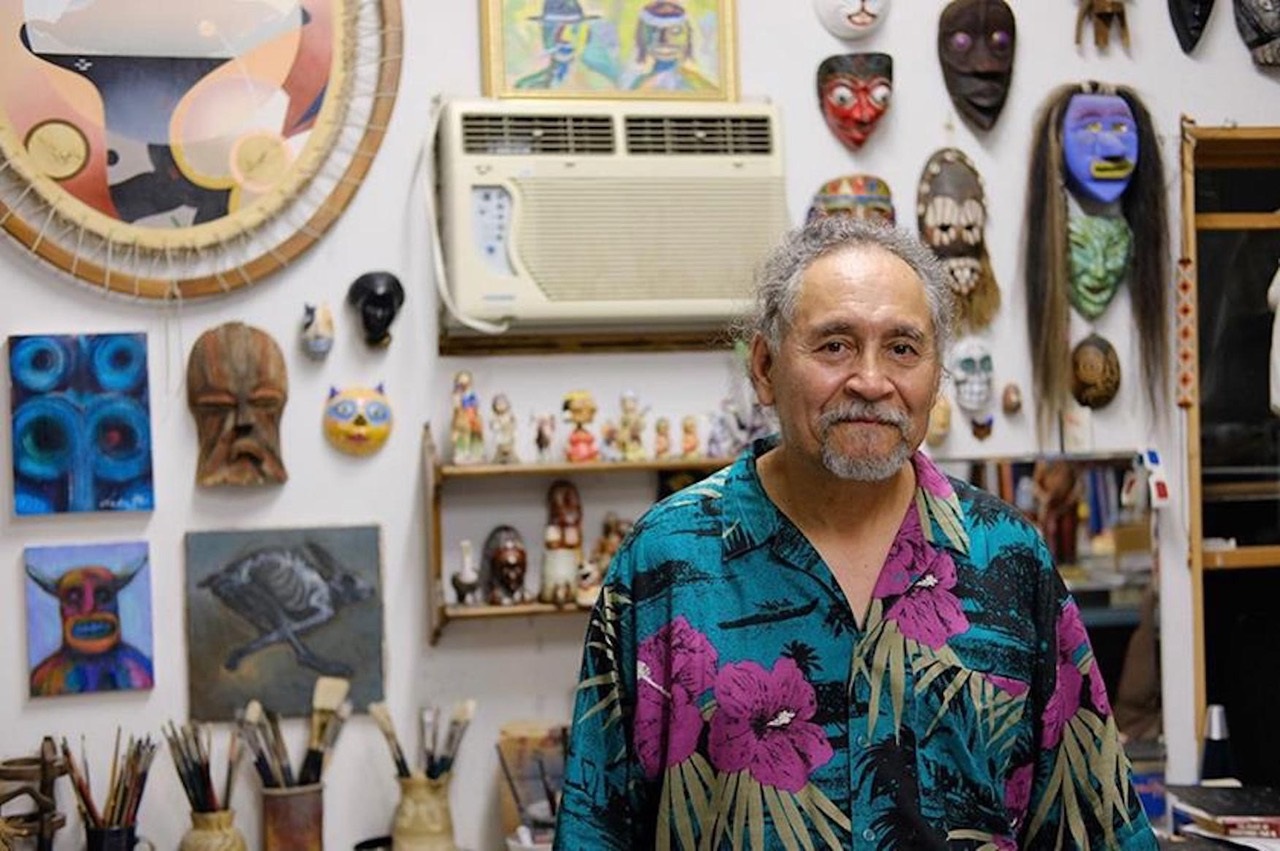
“Jim was undoubtedly one of the most important painters of his generation, offering a powerful and unmatched vision, one both deeply expressive of his Indigenous roots and compelling for art and non-art viewers alike,” said Todd Bockley, owner of the Bockley Gallery, which has represented Denomie since 2007.
“But it’s his generosity of spirit, his tireless support for artists, and his kindness to all that I’ll miss most.” READ MORE. — Sandra Hale Schulman, Special to Indian Country Today
—
SUPPORT INDIGENOUS JOURNALISM. CONTRIBUTE TODAY.
—
It was about 5:30 p.m. on Feb. 9, 1978, when 21-year-old Theresa Graybeal was carjacked in a Kmart parking lot in Modesto, California. The suspects: four young Native youths from Fresno — Billy Brown, Marlin Lewis, Douglas Stankewitz and Teena Topping.
It wasn’t Graybeal’s first brush with violence. Her brother, Bryan, had been shot and killed at a friend’s house only seven months earlier, when an argument between the friend’s parents escalated and a handgun was fired.
(Related: Monache man on Death Row maintains his innocence)
And Graybeal had apparently experienced a robbery or theft only a few days before being pushed inside her car and kidnapped.
“This is crazy. This is the second time in one week this has happened to me,” she said, according to one of the suspects. READ MORE. — Richard Arlin Walker, Special to Indian Country Today
A new United Nations report published in Berlin Monday could not be more clear: Climate change is already “causing dangerous and widespread disruption in nature and affecting the lives of billions of people around the world.”
Many tribal and Arctic communities are first in line. Or as the UN Intergovernmental Panel on Climate Change says: “People and ecosystems least able to cope are being hardest hit.”
A statement released by the Indigenous Environmental Network says the UN report demonstrates that “our addiction to fossil fuels has caused climate warming at a rate not seen in at least the past 2000 years.” This information “is not news for Indigenous peoples for this report merely reinforces what Indigenous peoples have been saying all along.”
The Indigenous network is also critical of the UN for continuing to “ignore its own science” by promoting carbon trading markets allowing continued fossil fuel expansion. READ MORE. — Mark Trahant, Indian Country Today
The Iditarod Trail Sled Dog Race begins March 5 in Anchorage but the road to the race has been fraught with obstacles: bad weather that derailed training plans, a pre-Iditarod race that was postponed, an unexpected illness that took a musher out of competition, and a moose attack during a training run that hospitalized several dogs from a rookie musher’s team.
As of Feb. 22, 49 mushers are scheduled to compete in the continent’s premier sled dog race. Among the competitors are five past Iditarod champions, several top Alaska Native mushers, and leading mushers from other prominent races.
Mushers and dog teams have been putting training, strategy and stamina to the test in a succession of winter races, before they begin the storied race that will take them over 1,000 miles of flatland tundra, treacherous inclines, blizzard-prone summit passes, steep gorge descents, and frigid river overflow. READ MORE. — Richard Arlin Walker, Special to Indian Country Today
—
Sign up here to get ICT’s newsletter
—
Coming up on the ICT Newscast, the author of the award winning book “#IndianLovePoems” joins us. Plus, a filmmaker’s new documentary tackles the missing and murdered Indigenous relatives crisis, and more details behind the interaction with police and sugarbush participants.
Watch here:
Under the lingering cloud of the COVID pandemic, darker clouds of war now hang over the world as the 2022 Winter Paralympics prepare to open March 4 in Beijing.
The Russian invasion of Ukraine has thrown a chill over the winter games, an international multi-sport event where top athletes with physical disabilities compete in snow and ice sports.
Indigenous athletes from North America are not believed to be represented at this year’s Winter Games, although many countries, including the U.S., do not track Indigeneity. More than a dozen Indigenous athletes from around the world competed in the Summer Paralympics in Tokyo in 2021.
Leading Team USA is Ukrainian-born skier Oksana Masters, a six-time Paralympian who will be on the hunt for her fifth Olympic gold, this time in Nordic skiing. Masters is the most-decorated athlete on the U.S. roster, with 10 Paralympic medals in both winter and summer games, including four gold medals in Nordic skiing, cycling and rowing. READ MORE. — Miles Morrisseau, Special to Indian Country Today
—
FOLLOW ICT ON SOCIAL MEDIA: FACEBOOK, TWITTER, INSTAGRAM, TIKTOK.
—
- Native-owned healthcare makes a difference in Alaska:Southcentral Foundation health system provides holistic care, specialized programs that acknowledge Indigenous culture
- Oceti Sakowin school dismissed: South Dakota lawmakers argued that it would address low education proficiency levels, high dropout rates and high rates of suicide among Indigenous youth.
- Increased focus on race in K-12 despite backlash: The new standards change the way Native histories are taught. In the coming years, students are more likely to study the state’s 23 tribes on their own terms and more in depth.
- Recovering from addiction in Klamath:Tayas Yawks, which means ‘medicine bag’ in the Klamath language, is an Indigenous, culturally-specific peer support organization that provides addiction support to anyone in the community.
- Monitoring the Arctic in Russian invasion of Ukraine: ‘Over 20 percent of (Russia’s) GDP right now comes from natural resources above the Arctic Circle in their area.’
- Native Lens: My relativescalled me home
- 169 potential gravesfound at site of former residential school in northern Alberta
- For the Harris sisters of Billings, ‘basketball really means everything to us’
We want your tips, but we also want your feedback. What should we be covering that we’re not? What are we getting wrong? Please let us know. icteditors@indiancountrytoday.com.

