
Greetings, relatives.
A lot of news out there. Thanks for stopping by ICT’s digital platform.
Each day we do our best to gather the latest news for you.
Okay, here’s what you need to know today:
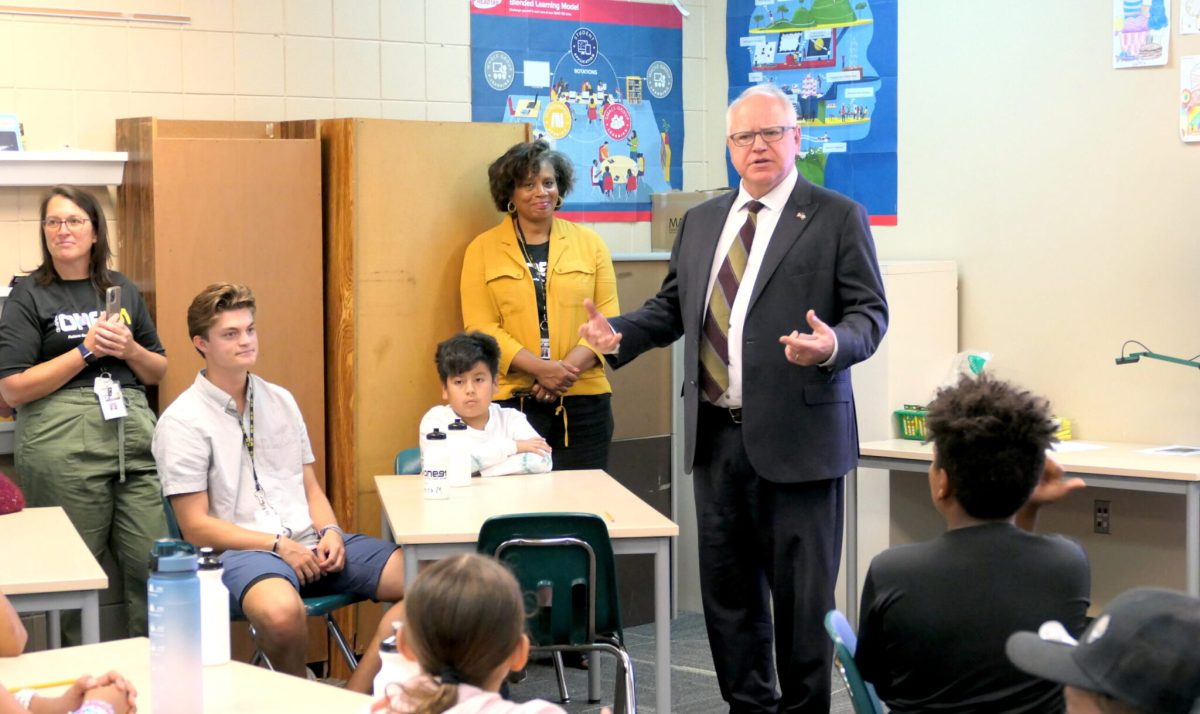
Minnesota Gov. Tim Walz has been chosen as Kamala Harris’ Vice President pick in her run for president of the United States.
Walz was among roughly a handful of serious candidates considered since President Joe Biden decided in July not to seek reelection and endorse Harris. Now, the governor joins Harris and the Democratic Party in a race against former President Donald Trump and JD Vance. Election Day is Tuesday, Nov. 5.
Democratic National Committee Chair Jaime Harrison said Harris received enough votes from Democratic delegates to become the party’s nominee for president. Harris will officially secure the nomination via a virtual roll call vote soon in what appears to be only a formality. The Democratic National Convention starts Monday, August. 19.
Walz could have significant ramifications for Indigenous people. READ MORE. — Kalle Benallie, ICT
SUPPORT INDIGENOUS JOURNALISM. CONTRIBUTE TODAY.
At 27 years old, Sicangu Lakota woman Caitlin Hein became the owner of two businesses in Rapid City all within the span of two-and-a-half years.
“I do take a lot of pride in being a woman-owned business and now I have two businesses, which is just crazy,” she said.
On August 1, Hein opened He Sapa Vintage in downtown Rapid City, only a brief walk away from her original store, Garbage Tale Vintage.
While Hein had dreamed of opening a second location, she said she didn’t imagine it would come this soon.
Three weeks ago, Hein was presented with an opportunity she said just felt right. E’lan’s Vintage Boutique in downtown Rapid City was closing, and the owner asked Hein if she’d be willing to take over the business and storefront. READ MORE. — Amelia Schafer, ICT + Rapid City Journal
For the fifth year, a thunderous roar echoed through Bear Butte State Park on the first Sunday of the annual Sturgis Motorcycle Rally. Streaks of red ribbons flew in the wind and more than 200 motorcyclists took off from the park to raise awareness for Missing and Murdered Indigenous Relatives.
Typically, riders make their way to the Crazy Horse Memorial for an afternoon of prayer and education. Due to construction this year, riders stopped in Deadwood instead for a documentary screening at Outlaw Square.
“I think this is going to be such a good way to end it,” said Prairie Rose Seminole, co-director of “We Ride for Her,” a documentary about the Medicine Wheel Ride. “Sturgis has a history of sex trafficking and there needs to be awareness made in this space. This allows us to not only bring awareness but claim the space. We belong here too. We’re changing the motorcycle culture to reflect who we are as Indigenous people.” READ MORE.— Amelia Schafer, ICT + Rapid City Journal
Nearly a century ago, Carey and Maud Melville, a couple from Massachusetts, embarked on a cross-country road trip with their three children in a Ford Model T. Their journey took them to Polacca, Arizona, where they visited a family friend, a Baptist missionary.
What was meant as a brief stop transformed into an extended stay as they were captivated by the Hopi lifestyle, embracing the art, food, and people that made their experience unforgettable.
During her research for an upcoming book, Hopi journalist Patty Talahongva made a stunning discovery: her great grandmother’s pottery, collected by the Melvilles in 1927. READ MORE. — Quindrea Yazzie, ICT
Sign up here to get ICT’s newsletter
Tribal leaders from the Havasupai Tribe and Navajo Nation were led to believe that Energy Fuels Resources, Inc., would give their communities two weeks’ notice before they started hauling uranium ore from Pinyon Plain Mine near the Grand Canyon.
However, that wasn’t the case when Navajo Nation President Buu Nygren and the Havasupai learned on July 30 that two trucks hauling uranium ore were already en route to the uranium mill in Utah.
“They snuck through the Navajo Nation,” Nygren said.
By the end of the day, Nygren was informed that two trucks carrying uranium ore from the Pinyon Mine had passed through the Navajo Nation and reached Utah. READ MORE. — Shondiin Silversmith, Arizona Mirror
Oscar Arana, Chichimeca, has served as interim CEO for over a year at the Native American Youth and Family Center and has worked at the organization for 14 years. On Wednesday, he stepped into his new permanent role as CEO.
“It’s a huge honor,” Arana told Underscore/ICT. “This is an incredible organization that I’ve been a part of for a very long time. It’s an organization and a community I care about deeply. So I’m really humbled that so many folks encouraged me to apply and that the board selected me.”
When former CEO Paul Lumley, citizen of the Yakama Nation, announced his departure in June 2023, the board of directors began a nationwide search for a new leader. While they searched, the board selected Arana to serve as interim CEO. Now, Arana will fill that role permanently.
“NAYA is in great hands with Oscar,” Lumley said. “He has done so much for the Native community.” READ MORE. — Nika Bartoo-Smith, Underscore Native News + ICT

- Youth leadership the focus of 2024 Canoe Journey: Elders passed on traditions to keep them alive for generations to come, as youth from over 100 Native nations took the lead at this year’s annual Pacific Northwest canoe journey.
- Billions in funding boosts lithium mining, stressing water supplies: The energy transition is driving demand for batteries; funding from the Inflation Reduction Act and other federal programs is helping to fill it.
- J.D. Vance’s ‘fake holiday’ and ‘two-spirit’ comments raise concerns: Native leaders speak out about the GOP vice presidential nominee’s perspectives on Indigenous issues.
- Ruling may leave unhoused Natives in the cold: Indigenous peoples experience homelessness at a disproportionate rate. Some advocates fear a recent Supreme Court Case will exacerbate the housing crisis for urban Natives across the country.
- NATO’s role in the Arctic Indigenous talk: Indigenous peoples of the Arctic are concerned about rising tensions between international powers.
- Minneapolis’ Native Americans, feeling validated by findings of police bias, want a place at the table.
- A Canadian gold mine spill raises fears among Alaskans on the Yukon River.
- In Anchorage protest, woman’s family says she is convicted killer Brian Smith’s third victim.
We want your tips, but we also want your feedback. What should we be covering that we’re not? What are we getting wrong? Please let us know. dalton@ictnews.org.


