Taylor Hanson
Special to ICT
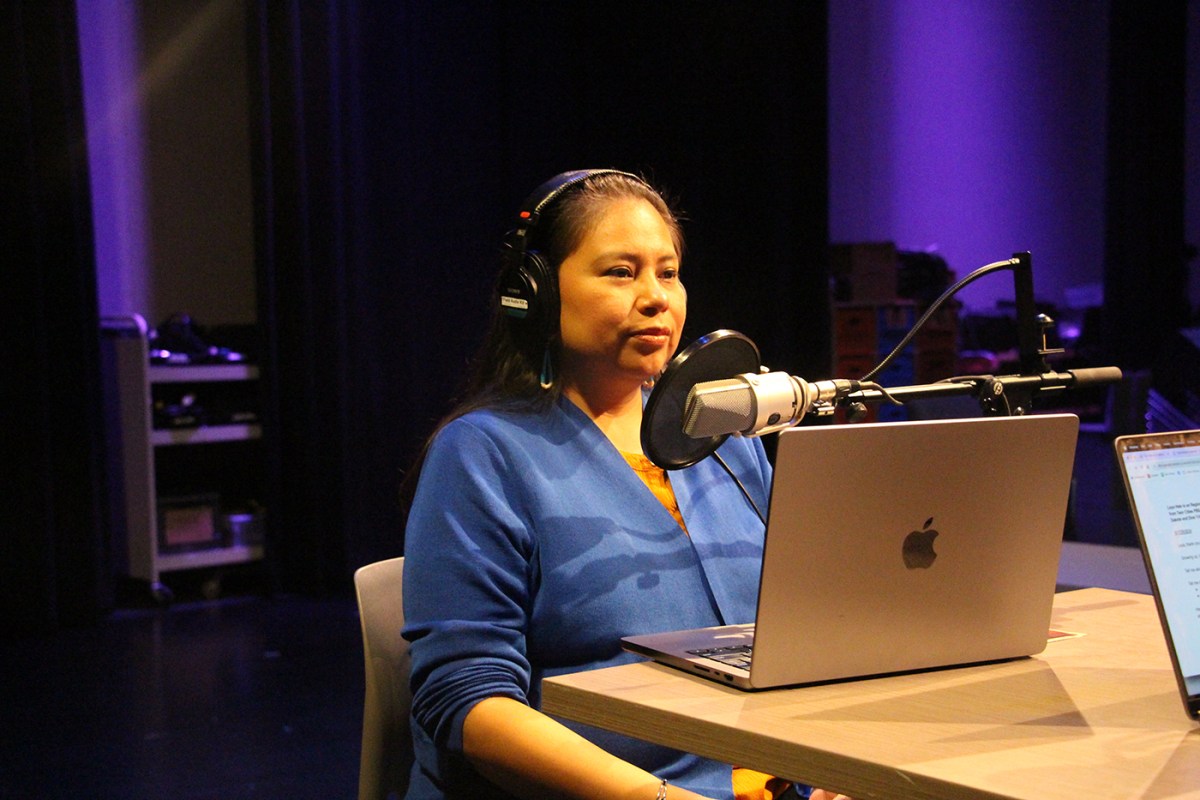
The studio felt dark and quiet, tinted by blue and purple lights, surrounded by black curtains. Two chairs with a microphone were set up in the room. Leya Hale was nervous. Usually, Hale is the one asking questions behind the camera. She’s not used to being recorded and the sound of her own voice makes her uneasy. She took a sip of her tea, then physically shook out the nerves in her body by flailing her arms. She laughed, the kind of laugh that makes everyone else in the room laugh with her. This is what she knows. She only had to tell the story.
The interview was for an episode of Twin Cities PBS’s new Minnesota Experience Podcast Series to go along with Hale’s newest project, “The Electric Indian,” a historical documentary following the life and career of Ojibwe hockey legend Henry Boucha.
Born and raised in southern California, Hale grew up in a Native community in Los Angeles not far from Hollywood. She comes from two tribes. On the maternal side of her family, she is Dakota and on the paternal side, Diné. She’s a producer and director for Twin Cities PBS. She spends her days finding stories about underrepresented groups around the Twin Cities. After 12 years at the station, she continues to look for new stories to tell, following in her father’s footsteps.
At age 8, Hale remembers taking a VHS camcorder and turning up the sound of the television to the 1950 Disney movie “Cinderella.” Along with her sister and cousins, they would record reenacted scenes from the fairytale, creating costumes from their wardrobes and props from their home.
In the summer months as a child, Hale’s father would take her and her older sister to the movie theater. She loved watching movies because they allowed her to disappear. But she rarely saw her people depicted on the big screen. And on the rare occasion when she did, it was through the lens of non-Native people.
Growing up, Hale’s father would tell her stories about their tribal group. Then she became a performer for her family dance group, the Eagle Spirit Dancers. It gave her a way to tell stories through a different type of medium. The group traveled to colleges, libraries and cultural festivals and shared their Native stories through song and dance.
“I think that was the birth of me falling in love with storytelling itself,” Hale said. “I wanted to figure out which medium I liked the best and I guess you could say that film was definitely something I was attracted to.”
Now, she goes to work every day in a studio where her storytelling can come to life. She walks through Twin Cities PBS’s offices and studios located in downtown St. Paul, Minn. Past TV studio sets, cubicles, glass doors that look into conference rooms and people. Lots of people. It’s a place where “Sesame Street” characters are painted on the walls – a constant reminder that PBS is mainstream and her responsibility is to represent Native perspectives through the stories she tells.
In production, she wants to lift up voices of diverse people – especially Indigenous peoples. Hale lives in west St. Paul where her community feels diverse, but the Twin Cities PBS staff is predominantly white. This only encourages her to create more art, which can be seen through her approach to filmmaking.
Click here to see other Indigenous profiles by Bethel University students.
Her days are filled with research, learning and exploring different topics to gain inspiration for films. Music is one of the main ways she finds inspiration. She creates a playlist of an artist she likes, then listens to it over and over again until she is completely lost in the soundtrack. It helps her develop character arcs. She constantly asks the question, “What journey am I going to take viewers on?” Once she finds the story, she searches for the perfect people to tell the story.
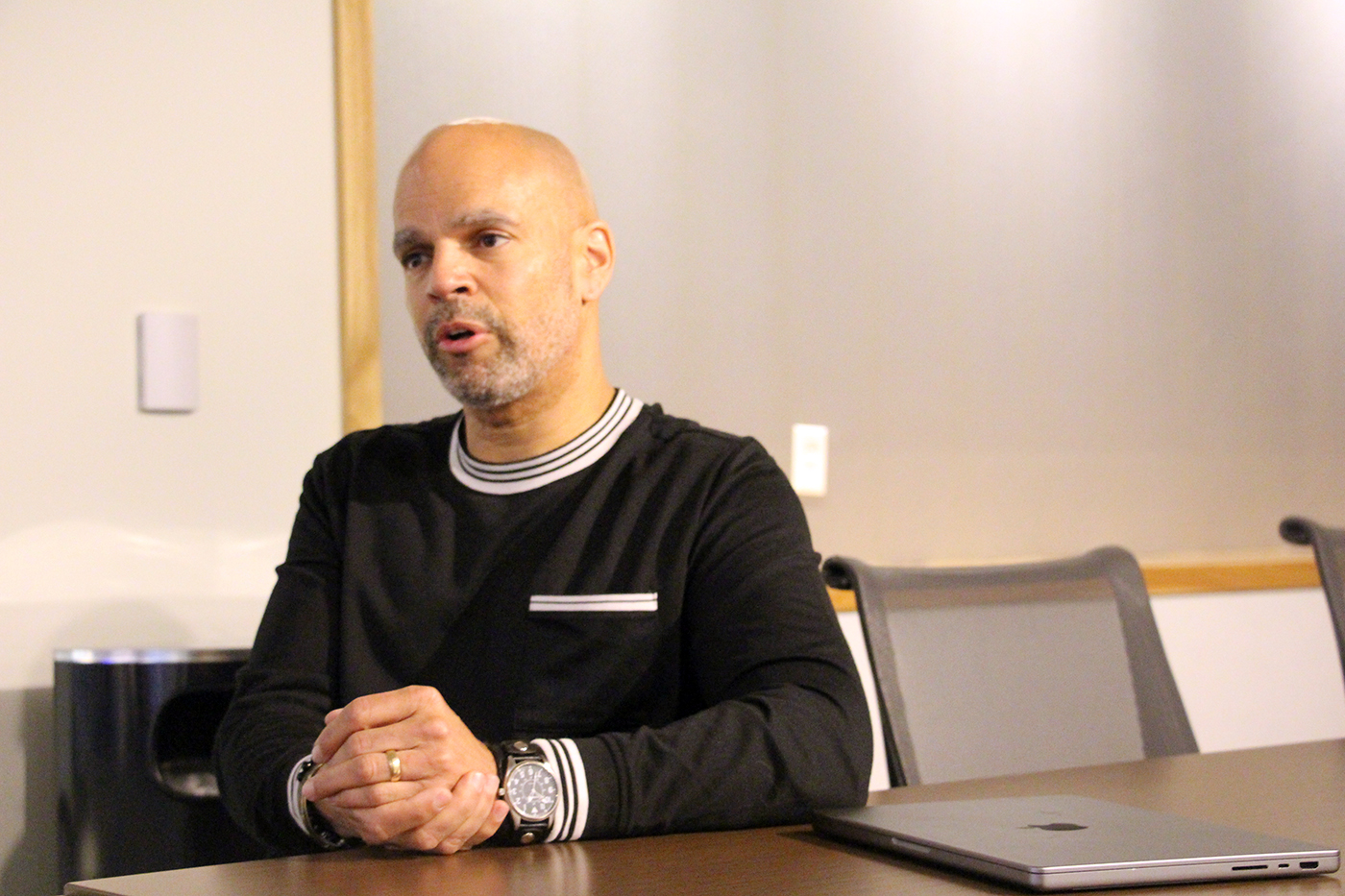
Daniel Bergin is an executive producer at Twin Cities PBS. He’s been working alongside Hale for about 12 years – from her first documentary, “The Past is Alive within Us: The US-Dakota Conflict,” to her most recent project, “The Electric Indian.”
“She has this approach to filmmaking that has this indigeneity to it,” Bergin said. “The storytelling, the structure, the style, it really feels like it’s coming from, and with, and for the community.”
Bergin says Hale’s good because she can create a safe space for her subjects. A space based on trust, where she invites people to share a story. And they know that in the end, she’s going to craft a narrative that is affirming and real and restorative.
In 2019, her film, “The People’s Protectors,” won the Upper Midwest Emmy Award for Outstanding Cultural Documentary, and in 2020 she was awarded the Sundance Institute Merata Mita Fellowship for Indigenous Artists. Although being honored for her work is gratifying and humbling, Hale says her goal as a filmmaker extends beyond recognition. She hopes to amplify the voices and stories of her community. She wants her work to contribute to a world where Indigenous people are seen, heard and valued.
“I am grateful for the opportunity to use my art as a vehicle for representation and to play a small part in the ongoing struggle for change,” Hale said.

Her stories bring injustices to light, ranging from the Missing and Murdered Indigenous Women epidemic to introducing Native legends and heroes to a new generation of audiences. Hale hopes her films raise awareness and foster conversations that bring about change while honoring the voices of her community.
The main problem Hale and Bergin face is figuring out what stories to tell. But Bergin trusts Hale’s instincts and he knows she’ll tell the right stories in their own time. She will tell stories for her family, for the Indigenous community, for the ones that are changing the world and ultimately for the little girl that never saw herself depicted on the big screen.
As she sits at the podcast mic and answers the questions about “The Electric Indian,” her nerves fade away. She smiles to herself as she scrolls through her notes. This is what she knows. She only has to tell the story.

Taylor Hanson, an organizational communications major with a journalism minor, is a sophomore at Bethel University in Minnesota. Her passion for journalism has led her to report for Bethel’s student news, The Clarion, and report on stories in India.
This story was part of a partnership between Bethel University’s journalism program and ICT editors Kevin Abourezk, Dianna Hunt and Dalton Walker.
Our stories are worth telling. Our stories are worth sharing. Our stories are worth your support. Contribute $5 or $10 today to help ICT carry out its critical mission. Sign up for ICT’s free newsletter.