
Nika Bartoo-Smith
Underscore Native News+ ICT
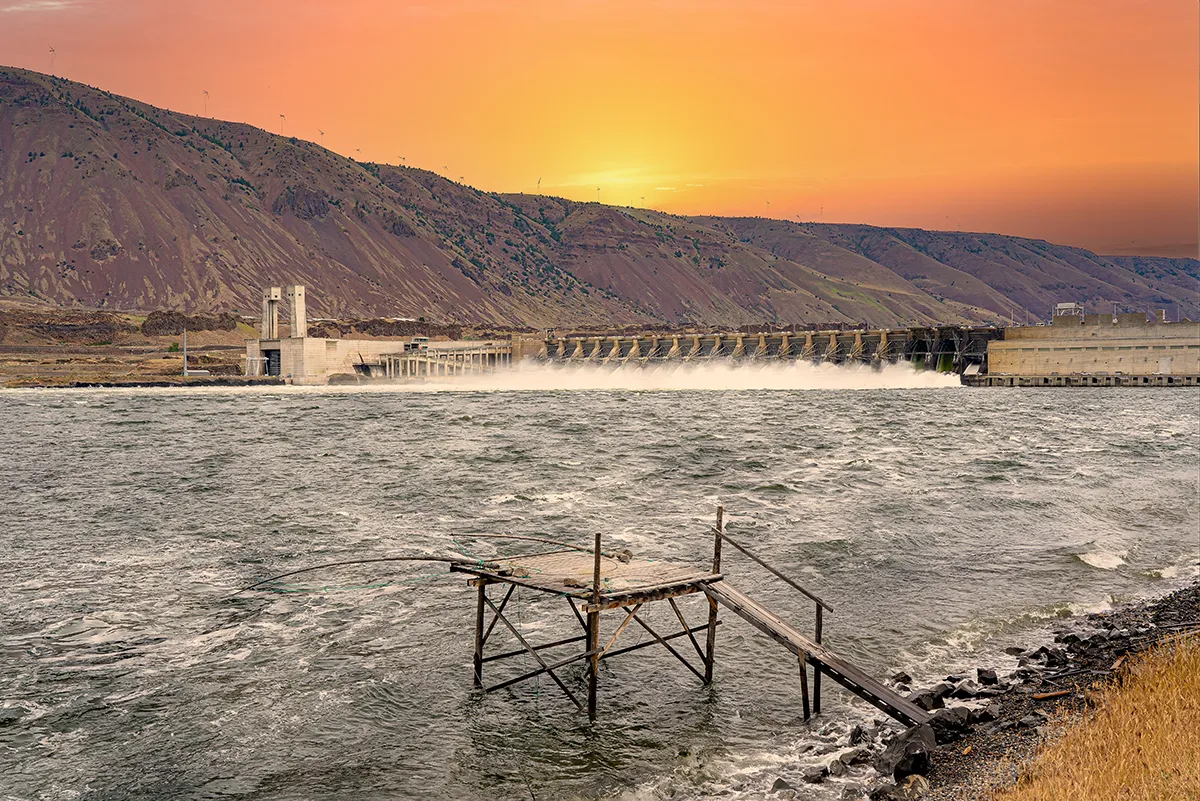
Portland, OR — United States District Court Judge Michael Simon issued a decision ordering federal agencies, including National Marine Fisheries Service, the U.S. Army Corps of Engineers, the U.S. Bureau of Reclamation and the U.S. Fish and Wildlife Service, to increase salmon protections on the Columbia and Snake Rivers. Protections include a spill increase, adding additional water flow, over the the eight dams on the lower Columbia and Snake Rivers, which allows juvenile fish to pass over the dams instead of through the turbines.
“Increased spill and improved reservoir operations will help more young salmon survive this migration season,” Jeremy Takala, Chair of the Yakama Tribal Council’s Fish and Wildlife Committee, said in a press release. “When salmon populations are this low, every year matters. These protections are urgently needed and will make a real difference in the river.”
This decision is being celebrated as a victory for improving endangered salmon and steelhead survival by plaintiffs and intervenor-plaintiffs which include conservation groups, Native nations and the states of Oregon and Washington.
The ruling also responded to all of the plaintiffs’ three main arguments for changes to operations. Simon ordered the defendants to increase spill but the request to lower reservoir water levels which would help fish travel faster was denied. The court ordered reservoir levels to remain at the 2025 operating level, and the request to make repairs at the McNary and Bonneville dams was declined.
“The changes to the hydropower system ordered by the court today are immediate and reasonable steps to prevent salmon extinction,” Amanda Goodin, a senior attorney at Earthjustice, the nonprofit law firm representing conservation, clean energy and fishing groups in the litigation, said in a press release. “Salmon need help now, and we’re encouraged the court has granted immediate, commonsense relief that will help protect imperiled Northwest salmon and steelhead.”
Historically, the Columbia River Basin was one of the most prolific salmon runs in the world. Now, over half of the distinct groups of salmon and steelhead in the basin are listed as threatened or endangered.
“The Court finds that the threats to the listed species are dire and immediate,” Simon stated in the released opinion.
The opinion went on to outline the impact to treaty and trust obligations as salmon and steelhead species are threatened by the dams. This case is critical to upholding the promises of the treaties for Native nations throughout the Columbia River Basin.
“Indeed, nothing less than the honor, reputation, and trust of the nation is at stake in that effort,” the opinion said.
“This ruling affirms that federal agencies cannot continue business-as-usual dam operations while salmon slide toward extinction,” Gerald Lewis, Yakama Nation Chairman, said in a press release. “For the Yakama Nation, salmon are a Treaty-protected resource, and the law requires meaningful action to prevent further harm and to ultimately see them recover.”
This decision is the latest in a decades-long legal battle, a series of lawsuits filed by plaintiffs over harm done to salmon and steelhead populations along the Columbia River Basin by federally-owned dams along the Snake and Columbia Rivers.
The legal battle was on pause when the Biden Administration signed the 2023 Resilient Columbia River Basin agreement, promising more than a billion dollars in federal funding for fish restoration efforts and tribal energy development. In June 2025, the Trump Administration ended the Resilient Columbia River Basin Agreement.
At the beginning of February, plaintiffs and the federal government returned to court.
“Long-term recovery will require durable, lawful solutions that fully honor treaty and trust obligations,” Chairman Lewis said in the release. “Today’s decision ensures that meaningful protections are in place now, while that work continues.”
This story is co-published by Underscore Native Newsand ICT, a news partnership that covers Indigenous communities in the Pacific Northwest.
