
Redhawk Native American Arts Council, in partnership with New York City Parks, brought indigenous culture to Sunset Park in Brooklyn, New York. As a way to honor Mother Earth, groups from a number of indigenous communities shared dances, stories, songs, and even some chanting with attendees.
“The message of today is about sharing our indigenous culture and how we connect with Mother Earth,” Cliff Matias, Taino/Kichwa, told the crowd. As the director of Redhawk Native American Arts Council, this isn’t the first event like this he’s helped organize.
Matias performed a hoop dance, before which he explained to the crowd how the five hoops represent the earth and the creatures we share this earth with. To him, the hoops are a “constant message of how we live our lives,” because he sends the hoops out and they come back, which is a metaphor for “what you put out in life is what you get back.”
[text_ad]
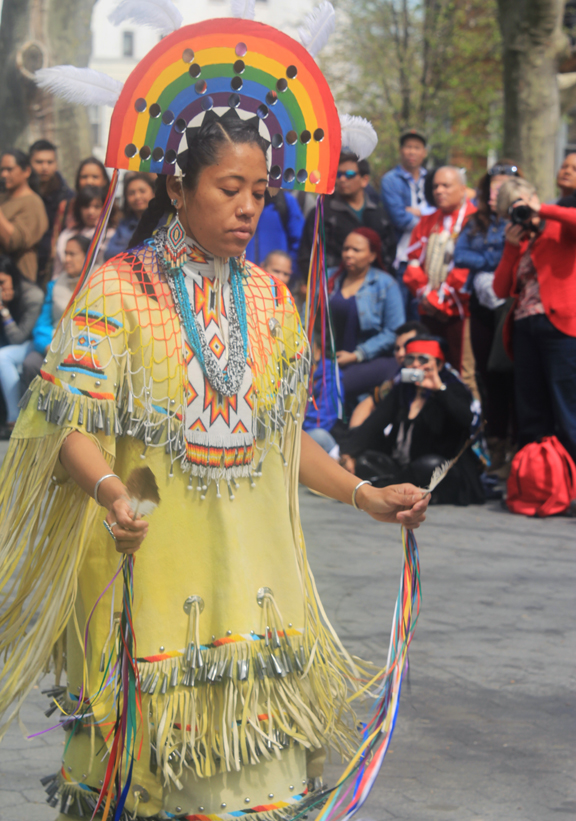
Attendees also got to see a Ladies Fancy Shawl Dance, which is a social dance, as well as a Jingle Dress Dance, which is a healing dance. The ladies’ dresses sound like falling rain, which is meant to heal the earth. Another rain-related dance performed was the Apache Rainbow Dance.

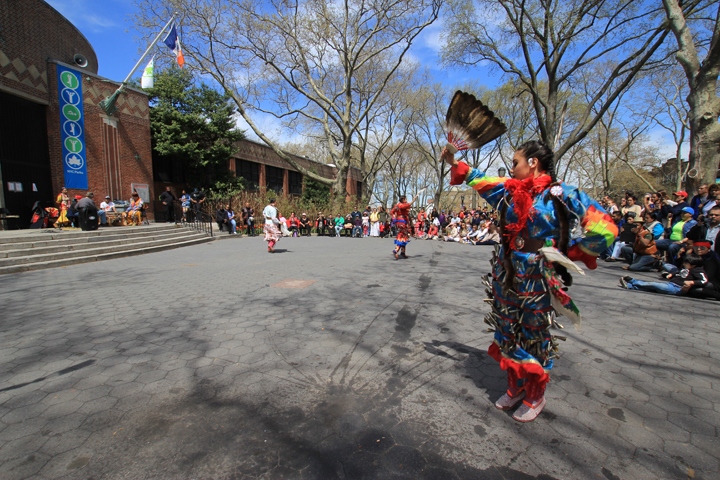
“One of the things we are most grateful for is water,” Gia Watson, who performed the dance explained, because Apaches live in dry climates, water is an important part of life, so thanks is given to the Creator when it does rain.
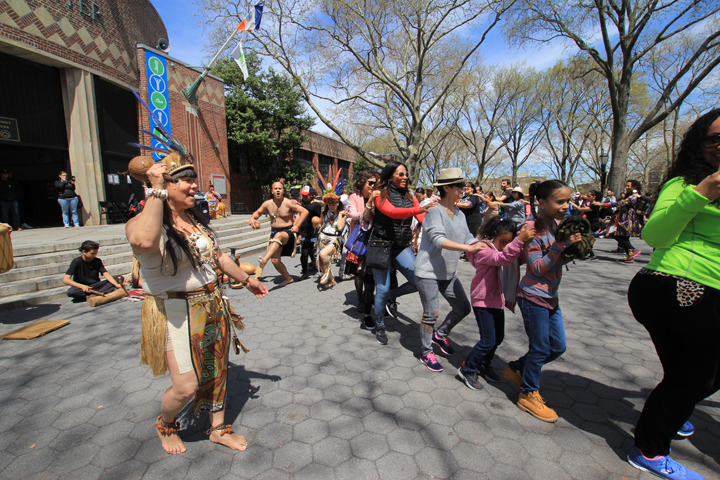
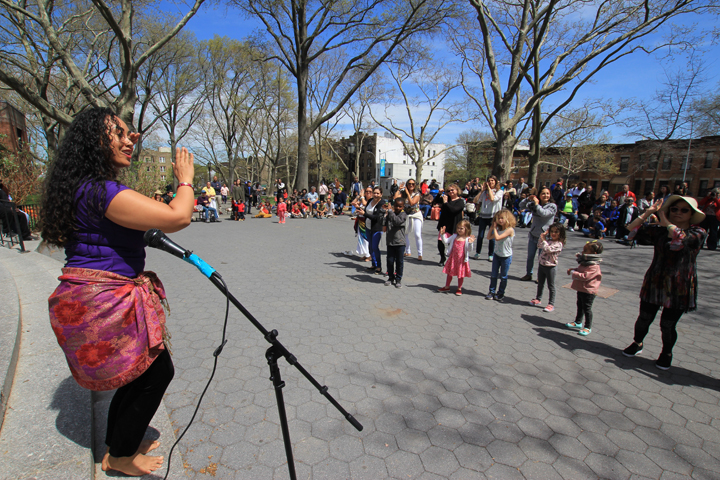
There were a number of performances, including one from the Taino group, Guata MaCua Boriken, and Native Hawaiian chants, as well as a hula demonstration that a number of attendees participated in.
Seeing all of these dances performed in one place, and sharing indigenous culture is important because there was a time it couldn’t be done.
“It was illegal until the 1920s for indigenous people to assemble and dance, it was considered an act of war,” Matias told the crowd as he introduced a dance that originated in Peru.
The Scissor Dance was a crowd favorite. The two warriors battle and challenge each other using fancy footwork and what many in the crowd pointed out to be early breakdancing.

Throughout the event, a petition was passed around to get New York City to change Columbus Day to Indigenous People’s Day. About 2,600 signatures were acquired the first two days, which is a good start toward the goal of one million.
“This is supposed to be the most progressive city in the world,” Matias noted, so why does the city continue to celebrate the “atrocities he perpetuated… the attempted genocide of an entire people.” He also said the petition is not meant to be anti-Italian, a more suitable Italian to celebrate could certainly be found, like Leonardo da Vinci.
“A fact often forgotten is that this land we are standing on is Lenape land,” Matias reminded the crowd and thanked representatives from Nanticoke for attending. “Government officials want you to forget who this land belonged to.”
The day of sharing indigenous culture ended with a Round Dance that most of the crowd participated in.