Help ICT make strides in 2024. Our goal is to raise $150,000 by the end of the year with generous contributions from funding partners and collaborators like you. We’re thankful for your support, and we’re thriving because of it. DONATE TODAY!
Sandra Hale Schulman
Special to ICT
The latest: A reservation artist leaves a parting gift, a major museum opens in a hot spring locale, and a new album draws from Indigenous collaborators
ART: Reservation doctor/artist retires after 36 years
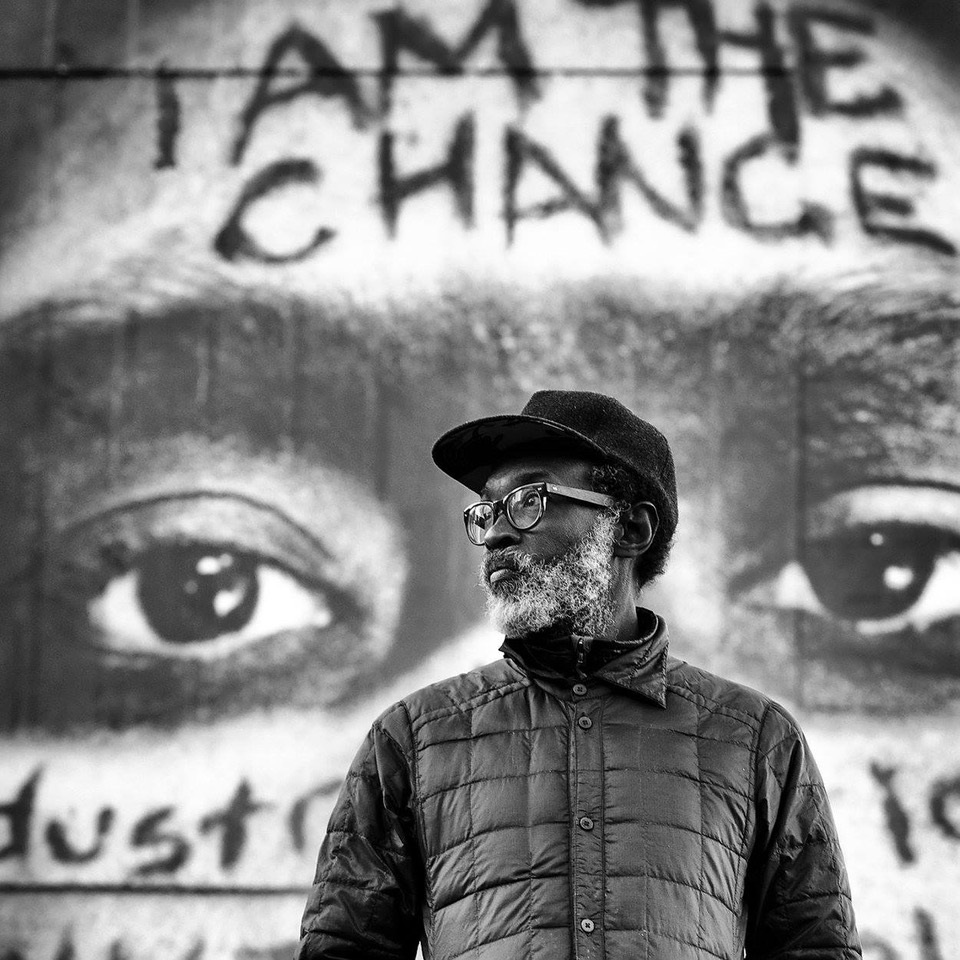
Physician/artist Chip Thomas, who goes by the moniker, jetsonorama, recently spoke at The Convening in Cincinnati with FotoFocus and Creative Time about his longtime work on the Navajo reservation — and the parting gift he has left there.
Thomas, who is African-American and Lumbee, retired from his position as clinic doctor for the Navajo Nation after 36 years, but not before leaving one last installment of his powerful photographic murals.

He estimates he has done more than 200 of the murals, with astonishing images of weathered faces, children at play, animals, and activists with slogans written on their bandana-wrapped faces.
His parting gift is a small building wrapped in a photo showing a flock of ewes and rams. He calls it “Sheep is Life.”
Thomas arrived at the reservation after graduating from medical school, initially thinking he’d stay just two years of his four-year obligation to the government, which paid for his schooling in exchange for his promise to work four years in a health shortage area.
“I didn’t think I would do the entire four,” he said. “But after two years, I realized I was looking forward to being there another two. Then it became 36.”
While Thomas was on the reservation, he spent his days off making art for himself and the community he was serving. He built a home darkroom for his photography, and began doing shows and galleries around the U.S. with black-and-white photographs he had taken on the reservation.
“I was influenced by the photo-documentary style of Life magazine in the ‘80s,” he said. “But it felt like an incomplete conversation with the people. Doing the street-art projects changed that, as the conversation became more immediate with the Navajo community.“
Thomas got the idea to create murals from his photos after seeing street artists in Brazil.
“That was the missing link because it brought together documentary photography as well as street art,” he said.
His first piece went up in June 2009, an image of a boy at his great-grandparents’ home playing with a balloon. His hands are in a prayerful position as the balloon ascends, he said.
Related stories:
—Agua Caliente Band thrives with new spa and cultural center
—Unsilenced stories of enslaved Indigenous people
He then expanded his work with a range of photographs. Some murals are visible from busy roads, others are in extremely remote locations. After he gets the mural up, he takes an atmospheric photo, which becomes another art form in itself.
“I’d say more people know me for the documentation of the work than for the actual work, but the objective of the work is for it to be seen by people out on the Navajo Nation,” he said. “But harsh weather wears them away. There’s a conceptual component to the work. It’s not meant to be permanent. I’d say I’ve done over 200 of them.”
He has now retired to Flagstaff, where he said he is “trying to figure out what comes next.”
“In truth,” he said, “I’m in an interesting space now. I need to figure out a way to maintain my creative flow. It would be nice to make new work as opposed to just recycling what I’ve done in the past. That’s not very exciting, nor is it very jazz-like.”
MUSEUMS: California tribe opens cultural museum
On the site of the deep 12,000-year-old mineral hot spring, the Agua Caliente Tribe of Cahuilla Indians has opened the second part of its major downtown Palm Springs development.
The first development, the Spa at Sec-He opened in the spring, featuring state-of-the-art wellness treatments and mineral water baths.
Now comes the Cultural Plaza and Agua Caliente Museum, which opened in early November with five different exhibit areas dedicated to the story of the Agua Caliente people. It examines the native flora and fauna of the canyons to ancient artifacts unearthed during construction of the museum itself, one of the world’s largest Indigenous archaeological recovery sites.
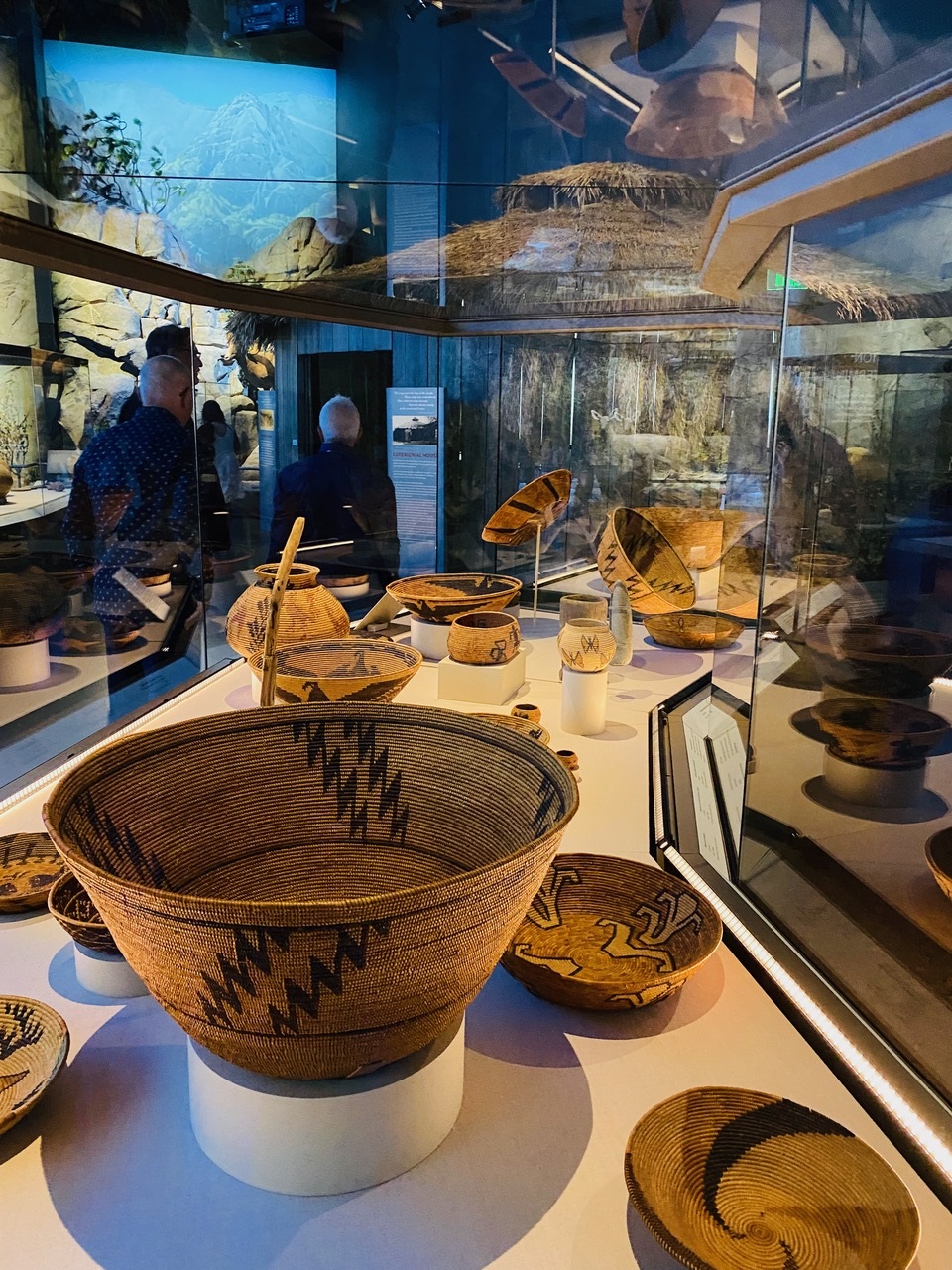
During a private tour of the museum with ICT, tribal Chairman Reid Milanovich explained the importance of the tribe telling its own story in the 10,000-square-foot space. All 500 tribal members have their name on a wall in the lobby.
Visitors are greeted by a bronze fox sculpture in the entrance.
“It is very important when the guests and visitors first walk in here to see the fox sculpture that alludes to our clan,” Milanovich told ICT. “It’s part of our history. Next is the animated video of the creation story, then into a recreation of the homeland canyons and waterfalls with the native animals – coyote, bighorn sheep, fox and many birds.”
From there the exhibit features pottery, arrowheads, and elaborate baskets with images of snakes and people. The next room showcases the enormous growth during the 1900s of the tribe, its businesses and its properties. It highlights the all-women tribal council that made lucrative real estate lease deals, the start of tourism centered around the original hot spring bath house, and ventures into casinos.
The tribe was given real estate in a checkerboard pattern across the Coachella Valley and now lease out the town’s major locations, including the property that now houses the Palm Springs Airport and the Mount San Jacinto Aerial Tramway.
The well-stocked gift shop features Native-made art, books, jewelry, and clothing.
“One thing I’m very excited about this museum is that every face and every voice you hear in this museum is someone from our community,” Milanovich said. “These are all tribal members, and they’re talking about this specific canyon. It’s not hearing someone else tell our story. This is a fantastic moment.”
MUSIC: Canadian band releases new album
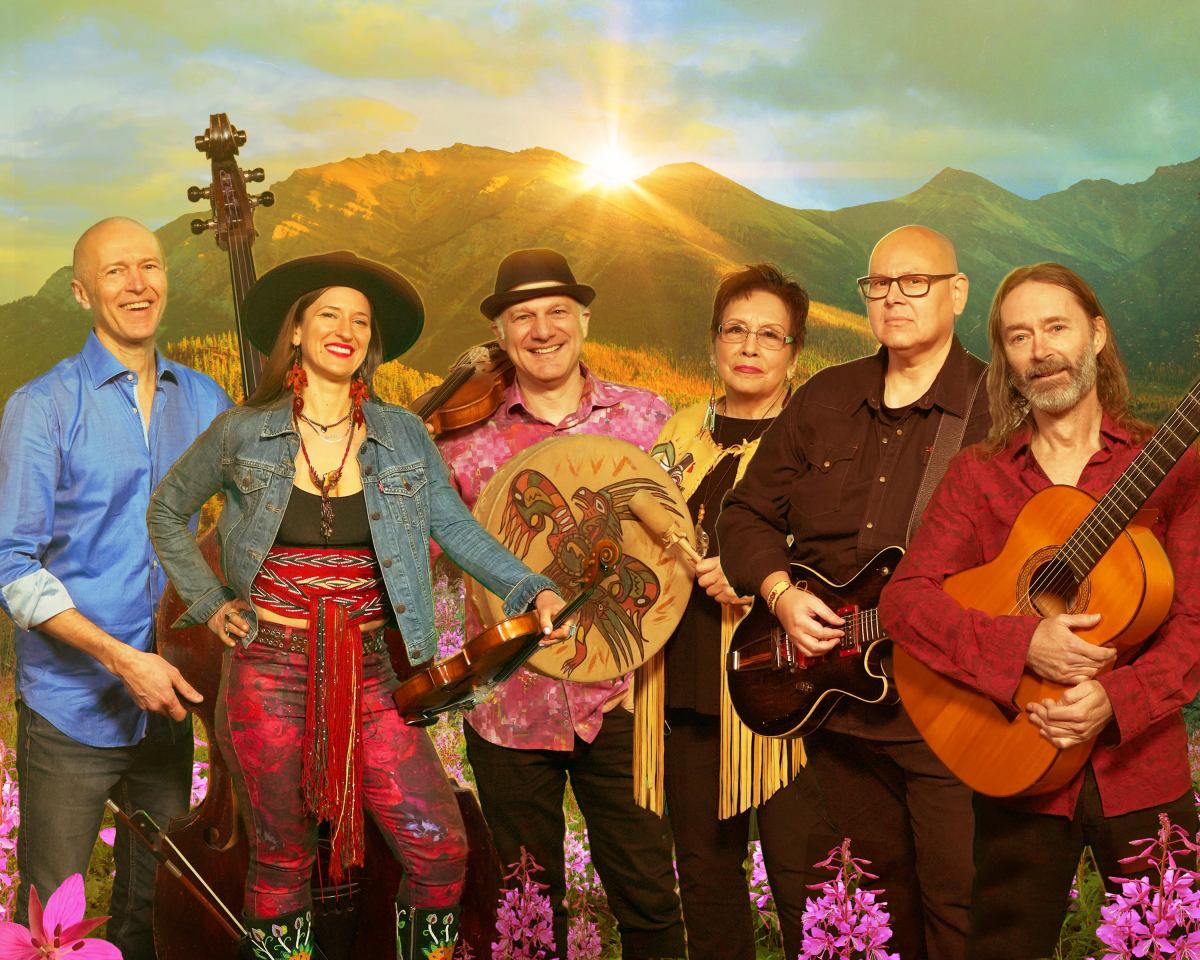
The roots band Sultans of Strings have pulled together a powerful group of artists to create “Walking Through the Fire,” an album with First Nations, Métis, and Inuit artists from across Turtle Island.
Sultans of String, a fiercely independent band that tries to lift up those around them, has exposed many of their collaborators and special guests to new audiences through their shows at JUNOfest, New York City’s legendary Birdland Jazz Club, the Celtic Connections Festival in Glasgow, and in London’s Trafalgar Square.
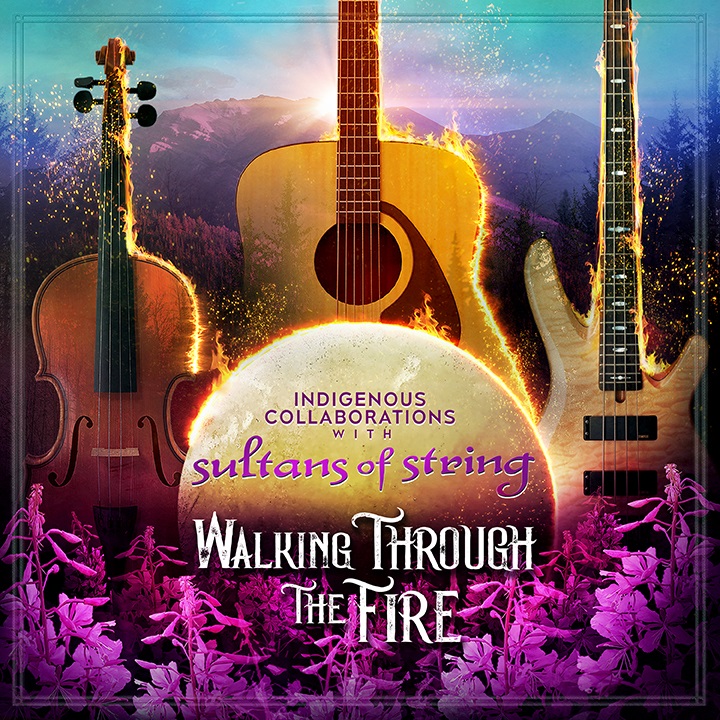
The album was released Sept. 15 and the band launched a tour on Sept. 28.
Artists Crystal Shawanda, Leela Gilday, the powwow group Northern Cree, and a dozen other Indigenous artists contributed to the new release.
Indigenous art director Mark Rutledge explained how the title and cover art emerged at a time when massive forest fires in Canada were bringing smoke and destruction all the way down to North America.
“You’ll see the burnt-out husks of trees and the ash and the charcoal on the landscape,” he said in a statement. “But fireweed is the first plant after a forest fire that emerges, and you’ll see rivers and fields of magenta within the barren landscape, and those nutrients are going back into the soil for the next generation of trees and flowers and regrowth.”
He continued, “The other side of fear is growth and potential with collaboration between non-Indigenous and Indigenous people. When we drop the word reconciliation on people, there’s a large group of people who don’t understand what that means. And when you don’t understand something, you are fearful of it. But if we go through the same experience together, we walk through that fire together, and we come out together on the other end and have that unified experience together, that’s the power in this album.”
The nine-time Grammy-nominated Northern Cree powwow group welcomed Sultans of String to their annual powwow for one of the collaborations.
“When you’re collaborating with mainstream music,” explained Steve Wood, drummer and singer, “it shows that we can work together to bring out the very best in who we are as human beings, and we can bring out something very beautiful.”

Our stories are worth telling. Our stories are worth sharing. Our stories are worth your support. Contribute $5 or $10 today to help ICT carry out its critical mission. Sign up for ICT’s free newsletter.