

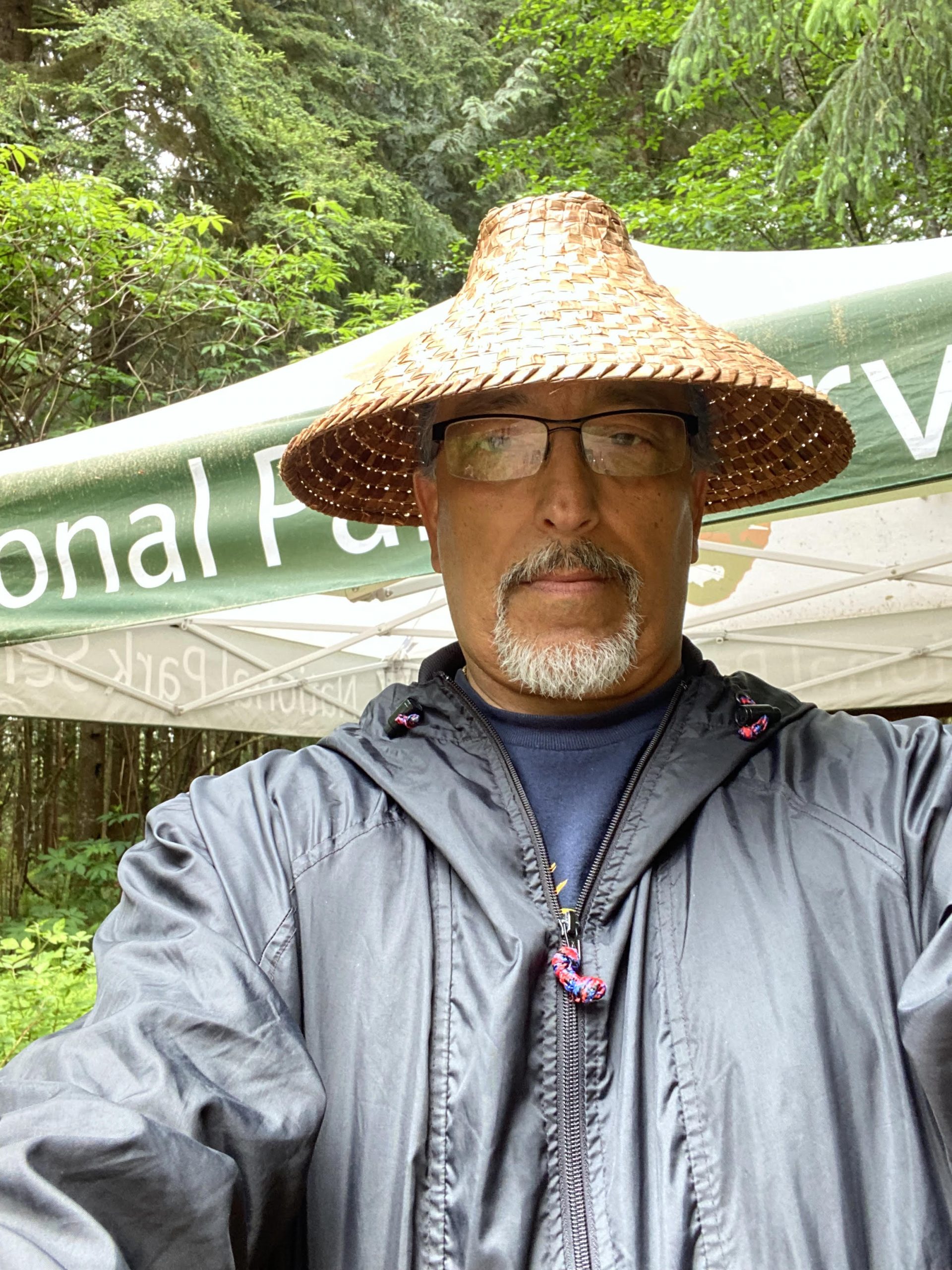
From pilot to repatriation
Raimund Combs has been around the military for most of his life.
A self-described “military brat,” the Tsimshian man spent nine years in Germany when he was younger and grew up on military bases across the country as his father was an Army sergeant.
“It kind of gave me a little bit of a taste of different cultures, different people, different places,” Combs said. “So maybe it made me versatile for lack of a better term, and adaptable.”
Combs served in the United States Army as a Blackhawk Helicopter pilot, achieving the rank of Chief Warrant Officer 2 for five years before a year of service in the North Carolina Army National Guard.
He went on to pilot various versions of helicopters as a Lieutenant in the Coast Guard, Border Agent in the United States Border Patrol and Federal Agent with the Federal Air Marshal Service.
While in the Coast Guard in 1993, Combs took part in rescue missions in what was dubbed “Storm of the Century.” He recalled a horn going off in the middle of the night and jumping into action, saying he was the first airborne aircraft during the storm.
“So in the middle of the night, the horn goes off, it was probably two or three in the morning and you have to wake up in your flight suit, jump in your boots, run out to the helicopter, get a briefing what’s going on and get airborne and get flying,” Combs remembers.
One of his biggest takeaways from his time in the military that he maintains to this day is attention to detail; an important trait for a helicopter pilot.
“I think that stuck with me because you know when I’m driving the heads on a swivel when I’m walking my heads on a swivel,” Combs said. I’m always aware of my surroundings.”
Through his training, he also learned to become sure of himself and to be decisive.
“You have to be decisive as a helicopter pilot in the military. You can’t be fumbling around thinking ‘Oh golly, gee, I don’t know what I should do,’ because lives might be at stake,” he added.
Related:
— Honoring Native veterans
— Army medic, traditional practitioner, veteran pays it forward
— Oglala Lakota elder reflects on military service
— Code Talkers integral to victory
Over the years, Combs’ attitude has shifted a bit when it comes to the military. He said he wasn’t raised with his culture and has spent his adult life learning about and immersing himself in it.
“If I had knew then what I know now about U.S. policy regarding Indigenous Americans, Native Americans, I may not have ever even joined the military to be honest,” Combs told ICT.
“In my mind, the United States flag is the flag of my oppressor, the oppressor of my peoples for 200, almost 250 years now and counting; the oppression continues, the attack on sovereignty continues. The attack on ICWA [Indian Child Welfare Act] continues. The attack on Native lands and theft of Native lands and desecration of Native lands continues,” Combs said later in the interview. “Those are all truths that need to be told and I’m just a small part of maybe telling one of those stories so far.”
Today, Combs is a first-year graduate student at the University of Montana. In his graduate school work, he is helping digitize and repatriate the university’s Native collection in accordance with the Native American Graves Protection and Repatriation Act.
It’s very enriching work for him and he is also learning more about and getting into work involving boarding schools. The ultimate goal for Combs in his work is to somehow be part of Interior Secretary Deb Haaland’s Truth and Healing Commission on Indian Boarding School Policies should the bill pass.
Combs wants to continue to uncover and educate the broader public on the truth of the nation’s history.
“I’m looking to be a substantial part of the unveiling of some of the truths as I said it of this nation and particularly those tens of thousands of Native kids that never came home.” — Kolby KickingWoman ICT
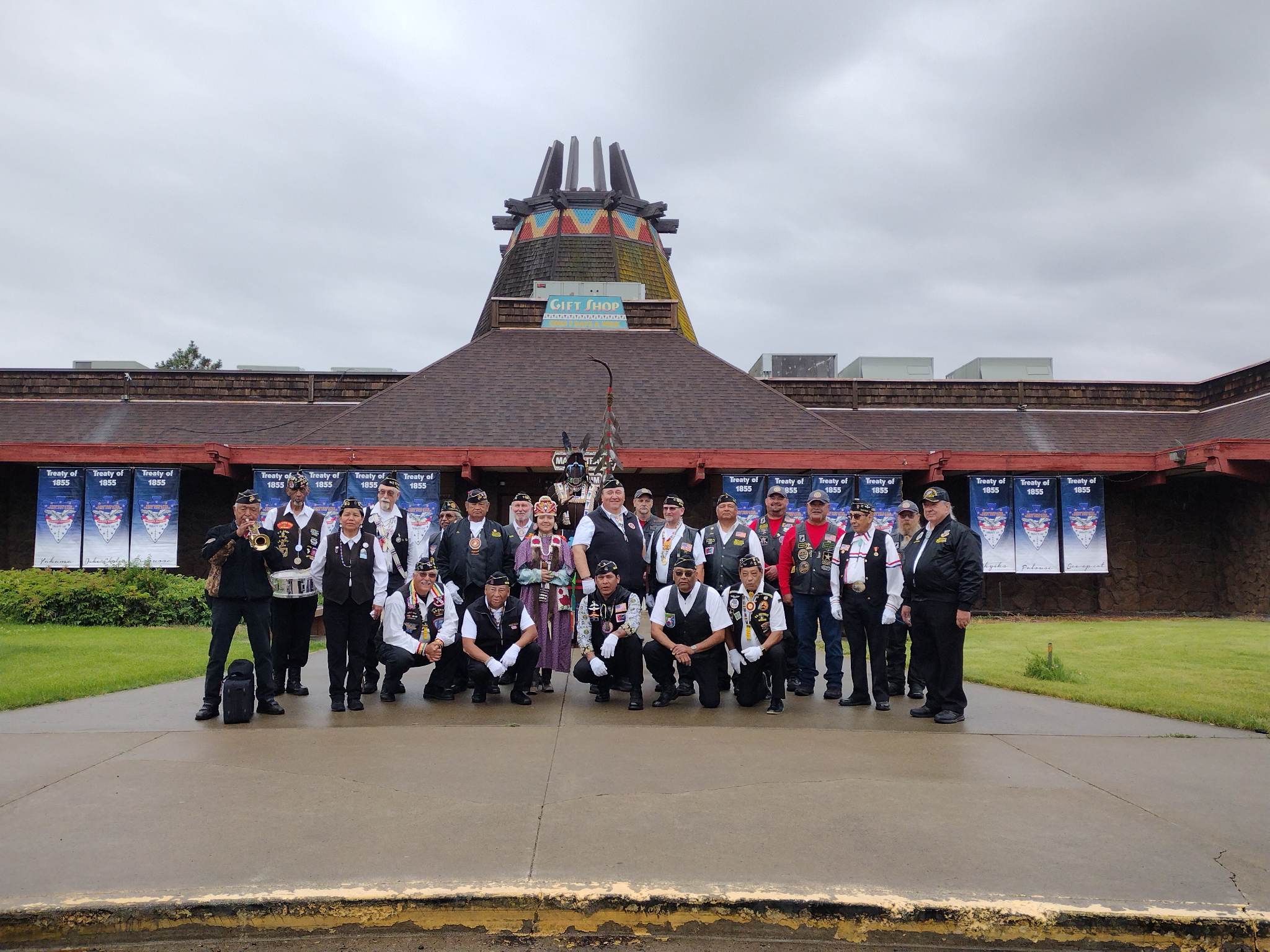
Since the end of World War I in 1919, Nov. 11 has been recognized across the United States as a day to honor Veterans. Native veterans often hold a special place in the hearts of Native community members.
In southern Washington, the Yakama Warriors Association is made up of both Native and non-Native veterans, committed to supporting one another and honoring veterans in the community.
Founded in 1991, the association currently has an estimated 100 members. Around one-quarter are active in the association, according to multiple members.
The group has a number of events happening to honor Veterans Day this weekend, including multiple flag raising events, a veterans honor meal and the Yakama Nation Veterans Day Powwow.
Spiritual growth
A Vietnam era veteran, Stanley Miller, Yakama, has served as chaplain for the Yakama Warriors Association since 2008.
Miller enlisted in the Marine Corps in 1972, following in the footsteps of his older brother, who received a purple heart from his time serving in the Army during the Vietnam War.
“I had to be different,” Miller said. “He was Army, so I joined Marine Corps.”
Miller served for three years, stationed in San Diego.
In 1991, Miller helped found the Yakama Warriors Association, as a group of camaraderie and a place for Native veterans to share their experiences with others who may understand. At the time of its founding, the association was meant for Native veterans only but not long after, it opened up to non-Native veterans from the community as well.
“I didn’t only serve for my family, but I served for my people,” Miller said. “Growing up I always heard from my elders that we have to protect our Indian land. As Indian people, what I was taught from my elders and my parents, that Indian veterans are held at high prestige. All veterans, not just Natives.”
Miller’s brother originally served as chaplain for the Yakama Warriors Association. When he passed in 2008, members elected Miller to take his place.
“I was nominated to be the chaplain and step into his shoes,” Miller said. “I was taught not to turn nothing down. When someone asks you to do something, you step forward.”
As chaplain, Miller performs blessings during funerals, oftentimes blending Christianity and Indigenous traditions, he said.
When the Yakama Warriors Association attends a veteran’s funeral, Miller says a prayer followed by a folding of the American flag to gift to the family. The veteran is then honored with a rifle salute and playing of the service song that correlates to the branch they served in.
“As the chaplain I feel it’s helped me grow in my life. Spiritually, it makes me stronger,” Miller said.
Finding community
Victor Wood, commander of the Yakama Warriors Association, served in the U.S. Navy from 1969 to 1973. During his four years, he toured to Vietnam on the USS Midway, Fighter Squadron 161.
When his ship landed in San Francisco in 1973, Wood returned home to White Swan. There, he worked construction, for the White Swan Lumber Company before working in the school district for 31 years.
Hoping to connect with other veterans, Wood originally thought about joining the American Legion. However, they were not friendly to Vietnam veterans in the years directly following the war, Wood said.
Wood helped his dad sell rodeo stock supplies and in 1995, as they sold supplies for the Yakama rodeo, a tribal member asked Wood to join the Yakama Warriors Association.
“I never felt like a veteran until I got involved with the Yakama Warriors Association,” Wood said. “The way the Native community honors their veterans is just so heartwarming and sincere.”
Now, Wood has served as commander, also known as head warrior, of the Yakama Warriors Association off and on for the past 20 years.
As head warrior, Wood helps organize events and often speaks during funerals and other engagements. Beyond attending funerals, the association also speaks during school assemblies, attends parades, helps organize the Veterans Day powwow and does some travel.
For Veterans Day 2022, the Yakama Warriors Association traveled to Washington D.C. to take part in the dedication ceremony for the National Native Veterans Memorial.
Beyond supporting current members, one of Wood’s main goals is to get younger veterans to join the association.
“I think a lot of our patriotism from the younger people is not as strong as it used to be,” Wood said.
An internal conflict
As a child growing up in farm country in Washington, Mary Diavolikis, Yakama, would run to the end of her driveway many evenings to wave at military trucks passing by. She knew from a young age that she wanted to join the army.
The week after graduating high school, Diavolikis shipped out to Fort Jackson. She served for a total of three years, in places such as Texas and Germany. For some of that time, she served as a multi-channel radio operator.
Now, Diavolikis is a maintenance worker for Yakama Nation Tribal School.
As a Native veteran, Diavolikis often finds herself conflicted in thinking about serving the U.S. military.
“When I was little, that’s all I really wanted to do is be in the service,” Diavolikis said. “Stepping back, I see more of the things that have happened to our people.”
Diavolikis’ aunt and uncle are both survivors of the Indian boarding school system. As a Native person, she is often confronted with the horrors the United States government inflicted upon Native people and the lasting implications today.
“There’s a lot of conflict in my mind about serving for this country,” Diavolikis said. “But on the other hand, I served to keep our rights as Native people.”
In 2011, Diavolikis joined the Yakama Warriors Association, where she currently serves as secretary for the group.
One of her favorite ways that the Yakama community honors veterans is during the yearly Yakama Nation Veterans Day Powwow. During the second night, veterans are called forward following grand entry and given a chance to introduce themselves and tell a bit about their time in the service.
Though she struggles with her own internal conflict about serving this country as a Native person, Diavolikis is proud of her journey and has found a strong, supportive community within the Yakama Warriors Association. She encourages other veterans to do the same.
“I am honored to have served this country for my people,” Diavolikis said. “We need people to keep carrying on what we do.”— Nika Bartoo-Smith Underscore News + ICT
This story is co-published by Underscore News and ICT, a news partnership that covers Indigenous communities in the Pacific Northwest.

Our stories are worth telling. Our stories are worth sharing. Our stories are worth your support. Contribute $5 or $10 today to help ICT carry out its critical mission. Sign up for ICT’s free newsletter.

