
Join ICT and IndiJ Public Media’s 2024 End of Year Campaign in honor of Mark Trahant’s 50-year legacy in Indigenous journalism. Help us reach our goal of $75,000 by Dec. 31 to celebrate and amplify Indigenous voices. Donate here!
Deusdedit Ruhangariyo
Special to ICT
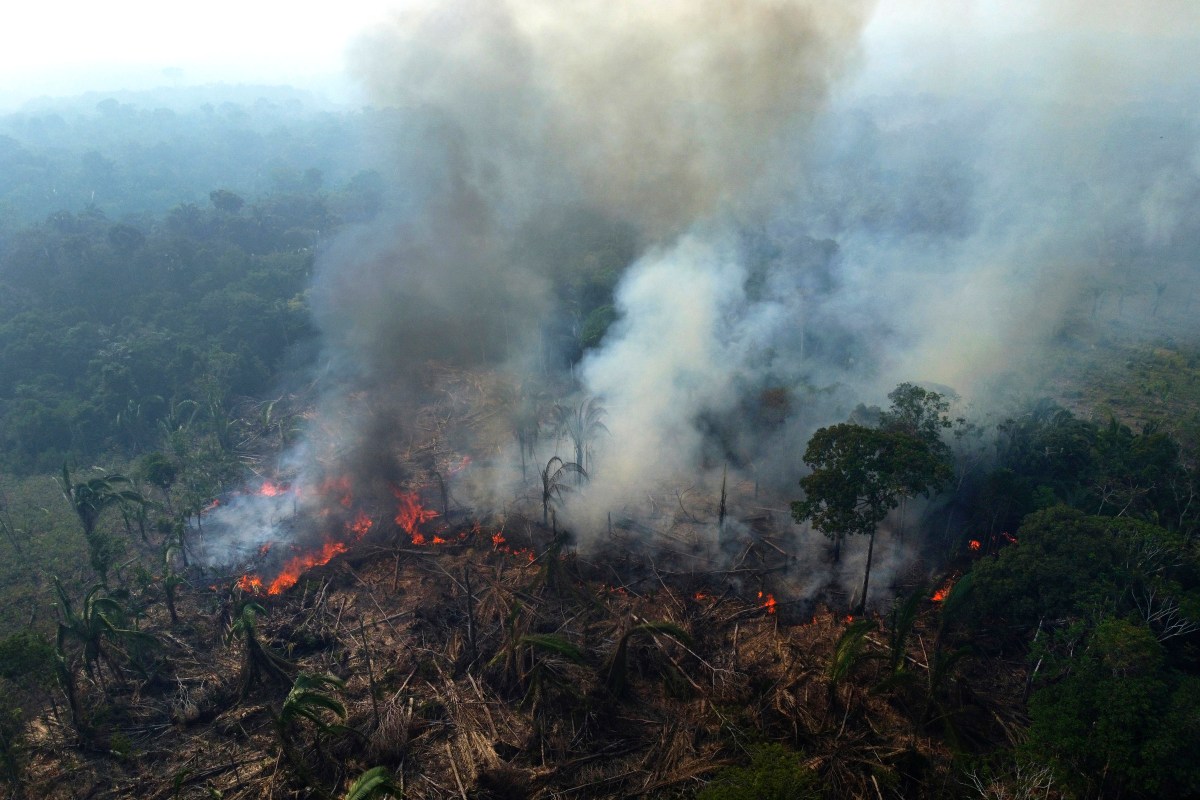
Around the world: Wildfires devastate Indigenous territories in the Brazilian Amazon, Indigenous enterprises take center stage at Boorloo Trade Fair, and Volkswagen sells Xinjiang plant amid allegations of Uyghur forced labor.
BRAZIL: Wildfires consume Indigenous lands
Amid sprawling soy fields and cattle pastures, the Xingu Indigenous Park and Capoto/Jarina Indigenous Territory, cloaked in lush rainforest, stand out as vibrant green oases in Brazil’s Mato Grosso state, Mongabay reported on Nov. 29.
The Xingu Indigenous Park and Capoto/Jarina Indigenous Territory, home to around 7,500 Indigenous residents across 18 groups, span 3.3 million hectares – or more than 8 million acres, an area larger than Belgium – and serve as critical sanctuaries for wildlife. Despite decades of protection, these territories are increasingly under siege from encroaching development and environmental pressures.
From 2002 to 2023, Xingu Indigenous Park lost 15 percent of its primary forest, equaling 368,000 hectares (900,000 acres), with 2016 being the most devastating year due to widespread fires. Meanwhile, Capoto/Jarina saw an 8.3 percent loss, or 46,300 hectares (114,000 acres), during the same period, with severe forest degradation peaking in 2017, 2020, and 2022. While deforestation rates dipped in 2023, the trend reversed dramatically in 2024, with vast areas consumed by fire.
In Capoto/Jarina, NASA detected 483 fire alerts between January and November 2024, marking the highest number since 2012. These fires, exacerbated by two years of severe drought driven by climate change and forest degradation, are a growing threat. Fires originally set by farmers or land-grabbers to clear land now frequently spread uncontrollably, threatening the rainforest’s integrity.
“There have always been Indigenous people in the region, using fires and clearing forests to survive. But the rainforest was balanced, and the fires never spread. With today’s drier climate, fires tend to get out of control,” explained Divino Silverio, a professor at the Federal Rural University of Amazonia, according to Mongabay. This worsening climate has disrupted critical Indigenous rituals like the Quarup and made traditional land practices increasingly challenging.
The reserves, once surrounded by rainforest, are now encircled by soybean fields, corn plantations, and cattle pastures, with deforestation and fire edging closer to their borders. “Inside our area, it’s all forest. Outside of it, it’s all farms. There are farms everywhere you look,” said Puiú Txukarramãe, a cacique from the Kayapó Indigenous people.
Plans to pave the MT-322 highway and construct a bridge over the Xingu River pose another existential threat. The road currently requires an Indigenous-operated barge to cross, helping regulate access. However, a paved road and bridge would enable easier entry for land-grabbers, miners, and organized crime, accelerating deforestation and resource exploitation. Indigenous leaders are already witnessing land speculation as these developments progress.
“This is the biggest problem we’re facing right now,” said a source from Funai, the federal agency for Indigenous protection, according to Mongabay. Concerns include forest fragmentation, animal displacement, and the disruption of village life.
A proposed railway project, the Ferrogrão line, adds to these fears. Connecting Mato Grosso to Pará and intersecting with the MT-322, the railway would facilitate agricultural transport but at the cost of further deforestation and environmental degradation.
Soy farming’s encroachment brings additional threats. Pesticide runoff, excessive water extraction, and upstream deforestation jeopardize river ecosystems vital to Indigenous communities.
Despite these challenges, Indigenous groups continue to resist, advocating for their land, culture, and environmental integrity amid mounting external pressures.
AUSTRALIA: Indigenous businesses take center stage
The Boorloo Convention Centre buzzed with activity during the Indigenous Business Trade Fair, organized by Supply Nation, bringing together over 80 small and emerging Indigenous-owned businesses for a dynamic showcase, the National Indigenous Times reported on Nov. 28.
The Indigenous Business Trade Fair brought businesses together to network, share ideas, and build community connections. Held on Whadjuk Noongar land, the event highlighted the innovation and resilience of Western Australia’s Indigenous businesses.
Indigivision was one of the standout participants. The company uses advanced drones to support sustainable land care and development. Founder Lance Morich, supported by Samuel Vale, shared how cultural teachings shaped their vision.
“We were always taught to listen to the Djirda (birds) for guidance and wisdom,” said Morich, according to National Indigenous Times. This philosophy inspired their drones, named after birds like Warlitj (Eagle), Karrak (Black Cockatoo), and Djidi Djidi (Willy Wagtail).
As an Aboriginal family business, Indigivision aims to grow wealth within their community. Director Tiffiny Vale explained, “Our land, culture, and people are resources to address humanitarian needs and prepare for the future.” Starting the business wasn’t easy. They faced challenges with procurement, supply chains, and policies. “Finding help for these processes was difficult,” Vale said, according to National Indigenous Times. Despite this, they’ve reached important milestones, like working on Aboriginal heritage projects and community reforms.
The Wunan Foundation also stood out at the event. Based in East Kimberley, it empowers Aboriginal people to live fulfilling, independent lives. Deputy Chair James Elliott highlighted their ventures, including the Lily Lagoon Resort. “We acquired the resort to create career opportunities in hospitality,” said Elliott, according to National Indigenous Times. The resort also supports community programs and offers training.
Elliott noted that COVID-19 brought challenges but stressed the importance of exposure through events like the trade fair. “We need better representation from the Kimberley region to promote our businesses,” he said.
The Indigenous Business Trade Fair celebrated the creativity and resilience of Indigenous businesses. It provided a platform for connection and collaboration. Events like this are crucial for fostering economic and cultural growth, benefiting both businesses and their communities.
CHINA: Volkswagen sells plant tied to forced labor
German automaker Volkswagen announced it has sold its operations in northwest China’s Xinjiang region, a location tied to allegations of widespread human rights abuses against Uyghurs, Radio Free Asia reported on Nov. 27.
Volkswagen has sold its joint-venture plant in Urumqi, Xinjiang, a region where China has faced allegations of widespread human rights abuses against Uyghurs. Activists and experts accused Volkswagen of enabling Uyghur forced labor at the plant, which was operated with Chinese state-owned SAIC Motor Corp.
In its announcement, Volkswagen cited “economic reasons” for the decision to pull out of Xinjiang, home to around 12 million predominantly Muslim Uyghurs. “While many SVW [SAIC-Volkswagen] sites are being, or have already been, converted to produce electric vehicles based on customer demand, alternative economic solutions will be examined in individual cases,” the company stated, according to Radio Free Asia. The same rationale was applied to its test tracks in Turpan and Anting (Shanghai).
The plant was sold to Shanghai Motor Vehicle Inspection Certification (SMVIC), a subsidiary of state-owned Shanghai Lingang Economic Development Group, for an undisclosed amount.
This decision follows controversy over Volkswagen’s 2023 audit of the Urumqi plant, which declared no evidence of human rights violations. However, Adrian Zenz, a senior fellow at the Victims of Communism Memorial Foundation, analyzed a leaked copy of the audit and deemed it unreliable. Zenz noted that the audit failed to adhere to international standards and used questionable methodologies.
“The audit’s flaws show it was unsuited to meaningfully assess forced labor,” Zenz said, calling Volkswagen’s exit “a huge victory for the Uyghurs.” He added, “This step was long overdue, according to Radio Free Asia. Sadly, it took public pressure to expose the audit’s deficiencies.”
Despite the sale, Volkswagen extended its joint venture with SAIC until 2040 to introduce new electric vehicles for China’s growing market.
The news coincided with a G7 Foreign Ministers’ statement expressing concern over human rights abuses in Xinjiang and Tibet. The statement urged China to honor its international human rights obligations.
However, Rushan Abbas, chairperson of the World Uyghur Congress, criticized the G7’s response. “The genocide persists, conditions worsen, and concrete actions remain lacking,” she said, according to Radio Free Asia.
Abbas called for stronger measures to hold China accountable for forced labor and other abuses, stating, “Awareness demands action. We urge G7 nations to move beyond rhetoric and lead in addressing these violations.”
Volkswagen’s withdrawal marks a significant moment but highlights the ongoing need for corporate and governmental accountability in tackling human rights abuses.”
My final thoughts
My final thoughts are in Indigenous territories in the Amazon where wildfires in the Xingu Indigenous Park and Capoto/Jarina Indigenous Territory are devastating the Amazon.
Much of this destruction comes from human activity beyond Indigenous control. Agribusiness, unregulated land clearance, and infrastructure projects increase the risk of uncontrollable fires. These activities have replaced sustainable practices with ones that harm the land.
Indigenous peoples have long used fire responsibly. They clear small patches of forest for agriculture or ceremonies in harmony with nature. “There have always been Indigenous people in the region, using fires and clearing forests to survive. But the rainforest was balanced, and the fires never spread,” said Divino Silverio, a professor at the Federal Rural University of Amazonia. Climate change, driven by deforestation and industrial land use, has disrupted this balance. Degraded lands now dry out faster, making fires spread more easily.
The difference between Indigenous-managed areas and the surrounding land is clear. Inside reserves, traditional practices prevent fires from spreading and protect biodiversity. “Inside our area, it’s all forest. Outside of it, it’s all farms,” said Puiú Txukarramãe, a Kayapó leader. Outside the reserves, large-scale deforestation for farms and pastures leaves the land vulnerable to fire and drought.
Despite their success in managing land sustainably, Indigenous communities are often excluded from decision-making. Plans to pave the MT-322 highway and build a bridge over the Xingu River highlight this.
Indigenous groups warn these projects will increase deforestation and fire risks. They are already seeing land speculation, illegal logging, and more fires along reserve borders.
The solution is to empower Indigenous communities to manage their lands. Their knowledge, paired with modern fire prevention strategies, can reduce wildfires. Systems like the barge regulating access to MT-322 show how local management can protect the environment.
Governments must support Indigenous leadership in land management. This includes legal protections, funding, and integrating traditional knowledge into climate strategies. Wildfires in the Amazon are not inevitable. They are a result of neglecting those who know the land best. Empowering Indigenous communities is essential to protecting the rainforest and mitigating climate disasters. The time to act is now.

Our stories are worth telling. Our stories are worth sharing. Our stories are worth your support. Contribute $5 or $10 today to help ICT carry out its critical mission. Sign up for ICT’s free newsletter.
