The Grandfather
In Native culture, the American chestnut was once king. So deeply entwined was its relationship to Native people in the eastern United States that archaeological records and oral histories reveal that tribes from southern Canada to Georgia, from Maine to the Ohio River Valley and beyond, actively managed their forests to favor and encourage its growth.
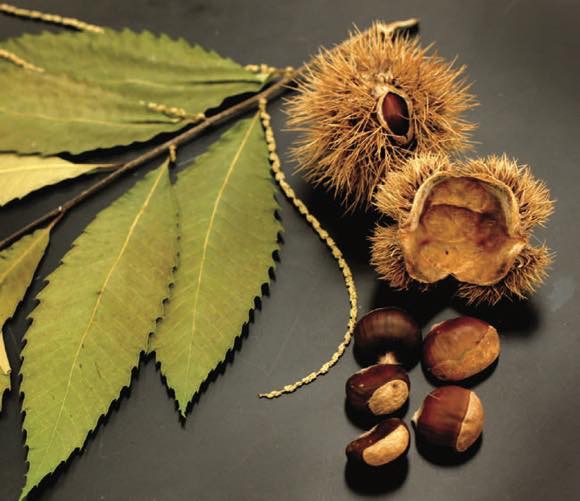
Reaching heights of up to 12 stories and 14 feet in diameter, it was a towering indigenous giant known by tribes as the “Grandfather of the Forest.” Spreading its canopy over 200 million acres, it had a lifespan of approximately 600 years and provided food, shelter, medicine, tools, implements and more to Native communities for thousands of years. Its presence emerges in stories and legends from every Native linguistic group east of the Mississippi.
Among the Haudenosaunee, for example, the story of Hodadenon: The Last One Left and the Chestnut Tree is both fable and allegory: After a boy named Hodadenon unwittingly uses up his uncle’s last chestnut, he sets out to find more. During his journey he must battle snakes, bears, panthers and the Seven Sisters, who oversee the forests. Successful in his mission, Hodadenon returns home and hands out chestnut seeds among all his people—with the admonition to “plant them all over, so that they can be shared with everyone.”
“For many tribes, trees are a part of their origin stories and teachings,” says Dr. Mike Dockry, a member of the Citizen Potawatomi Nation and a research forester with the U.S. Forest Service Northern Research Station in Minnesota. “And from this story you can see how the people felt a strong relationship and connection to this tree. It doesn’t get any more traditional than that.”
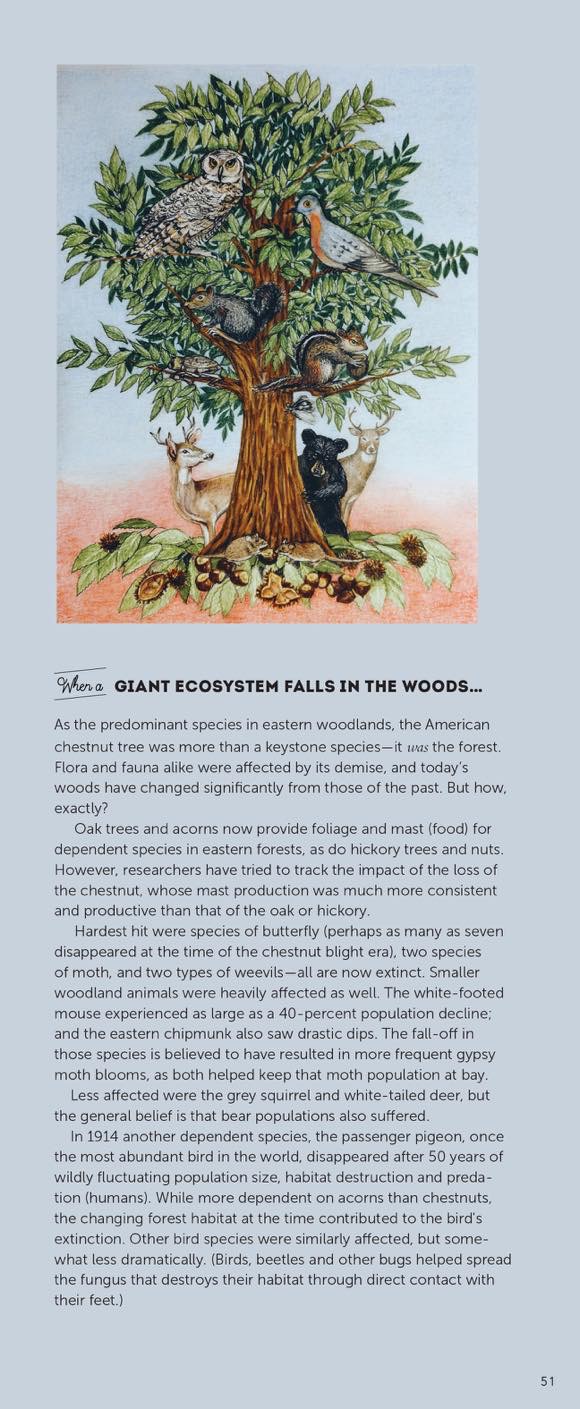
Fast growing and rot resistant, the American chestnut is known scientifically as Castanea dentata. It is considered a “keystone species” upon which thousands of other species—including humans, animals, birds, insects and other plants—had come to depend. By the late 1800s, the chestnut also sustained the economies of non-Native communities, most notably in rural Appalachia. Settlers depended on the tree’s nuts as a food source for themselves and their livestock; as a cash crop for chestnut vendors in the cities; its lumber for houses, barns and fencing; and its tannin for tanning hides and leather.
After surviving all threats for over 40 million years, however, the Grandfather tree fell victim to an invasive fungus from Asia in the early 1900s. Within 40 short years, it had all but disappeared from the American landscape.
Today, 100 years after the first signs of blight appeared, the American chestnut is poised to make its comeback. But the story of its fall from grace—along with the century-long struggle to bring it back from the precipice of extinction—provides both a metaphor for indigenous survival and new promise for other trees in the American forests that are also under threat.
Plant them all over, so they can be shared with everyone. – Haudenosaunee Chestnut Story
The Stowaway
At first, there was little cause for concern.

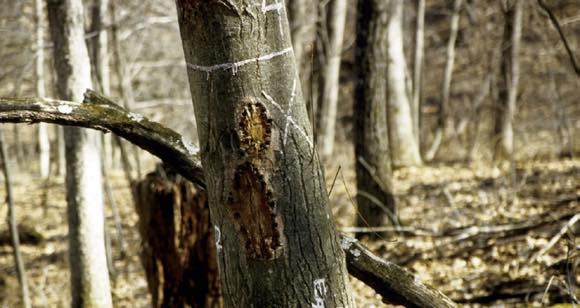
In the summer of 1904, several American chestnut trees in the Bronx Zoo in New York appeared distressed, having developed odd looking orange spots and cankers accompanied by rings of dead bark. Puzzled, Hermann Merkel, the zoo’s chief forester, sought assistance from William Murrill, an expert on fungi and the assistant curator at the New York Botanical Garden. By early 1905, he had isolated and identified the perpetrator—a fungal pathogen from Asia named Cryphonectria parasitica (C. parasitica). But it was already too late.
Having hitched a ride on Asian chestnuts imported by a New York nursery in the 1870s, the fungal adversary had quietly taken hold before anyone realized its threat. By the time Murrill had isolated it, C. parasitica was on the verge of devastating the entire chestnut population in America’s eastern forests.

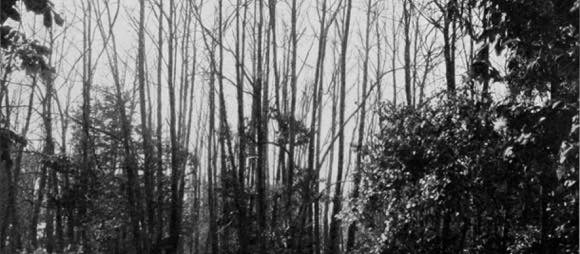
One by one, and then by the hundreds, all 2,500 of the ancient trees in the zoo’s famed grove became infected and were killed off in short order by the deadly blight. Just as quickly, it swept through surrounding states and beyond, signaling the beginning of what some scientists call one of the “worst ecological disasters to ever hit the world’s forests.” In the end, experts estimated that the blight wiped out approximately four billion chestnuts. The domino effect was so great that other “co-species” also went extinct with the disappearance. (See sidebar.)
Today, there are a few stands of chestnuts in western states outside the chestnut’s natural range, including Wisconsin, California, Washington and Oregon; these had been planted by early pioneers. And though these populations are protected by strict prohibition of shipments of chestnuts from the east to prevent infection, the blight has begun cutting a path of destruction in the Wisconsin grove.
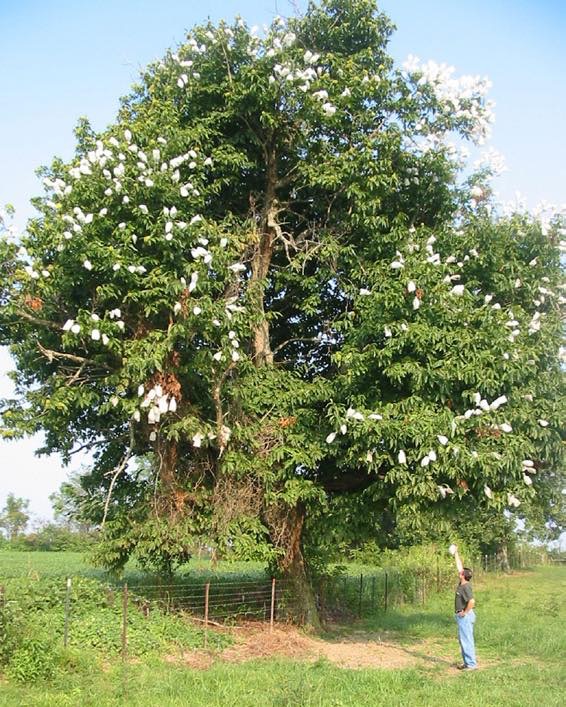
Because the fungus does not attack the tree’s root system, the American chestnut has been declared “functionally extinct,” as it can still grow stump shoots. Since the tree grows so fast, its bark has a tendency to split, which facilitates spore access. This means that chestnuts are only able to reach about 20 to 30 feet in the wild before being attacked again and destroyed by their nemesis, C. parasitica, which lingers in American forests to this day. Now finding itself in reduced circumstances, the once-magnificent chestnut has now been reclassified as an “understory shrub.”
The catastrophic effects of the blight led to federal legislation in 1912, enacted to protect the nation’s plants and agriculture from further harm by other invasive pests and diseases. But by 1946, the year in which Nat King Cole released the holiday classic The Christmas Song, which features “chestnuts roasting on an open fire,” the tree was already gone.
The Revivalists
The desperate race to save the American chestnut began almost as soon as the threat appeared in 1904. From the start, it became clear that stopping the spread of the fungus, which was moving at a clip of about 60 miles a year through the American landscape, would be impossible. All immediate efforts to contain the blight—fungicides, pruning and inoculations—did nothing to stop its rampant spread, and in fact, seemed only to hasten its onset, as inoculations inadvertently spread the disease.
The deadly fungal spores are carried by animals, birds, insects, rain and wind. They enter through cracks in the chestnut’s bark where its filaments grow and colonize rapidly, devouring and choking off the tree’s access to nutrients. The pathogen’s key weapon is oxalic acid, a toxic compound that kills the tree’s cambium, a crucial layer of tissue between the bark and the stem that creates new cells. Afterward, the necrotic fungus feeds on the dead tissue.
By 1906, Murrill told The New York Times that the American chestnut was “doomed to destruction,” instructing the public to clear cut any remaining healthy trees for their commercial value before the fungus could destroy them. That turned out to be a dubious recommendation, as clear-cutting healthy trees also removed any chance of determining whether some of them may have possessed a natural resistance to the blight.
In subsequent years, an epic crusade to save the American chestnut ensued. Generations of scientists, researchers, tree experts, chestnut enthusiasts and volunteers raced to create a blight resistant tree. The initiative also led to fierce competition and debate over what constitutes the most “acceptable” solution to a problem that has stymied the best scientific minds for over a century.
“There’s no silver bullet,” says Ruth Goodridge, communications manager for Asheville, North Carolina-based The American Chestnut Foundation. “This is a huge project and the science is very complex. We are using all of the methods that are currently on the table, and we hope the research we’re doing will help with other endangered species.”
The nonprofit organization has been at the forefront of the battle to restore the chestnut since its founding in 1983. TACF’s scientists have used traditional breeding methods, including grafting and hybridizing the tree with its blight resistant Asian kin. Both of these methods have proved time consuming and unpredictable at best, producing mixed results with no definitive, large-scale success.
Some of the earlier crossbred trees, for example, survived for longer periods. But they, too, eventually succumbed to the blight’s powerful grip. They died at slower rates, but they still died. Or they survived the blight but were sterile and unable to reproduce. Or their nut kernels disintegrated in their shells.
Additionally, Goodridge points out that current forest conditions in the eastern United States are very different than in colonial times—due, in part, to the enormous amount of deforestation that was done to settle farms and build cities. Moreover, there have been changes in the climate and environment. In short, returning an organism as complex as the chestnut to the forest is not as easy as it looks.
“The genetics are extremely complicated,” says Goodridge. “There’s also the issue of where to plant, how to manage those forests, what kind of soil is suitable, how it will interact with other species. We are studying all aspects of restoration.”
Other researchers also tried hypovirulence. In this procedure, a virus is introduced into the fungus to stop it from killing the tree. However, introducing yet another biological pathogen into the environment with potential hazards of its own is less than ideal and it has not fully contained the fungus. While hypovirulence has been more successful in fending off blight in European chestnuts, it has proved to be far more difficult, labor intensive and uncertain in the United States.
“We’re now thinking about forest management in a much more ecological way,” says Goodridge. “So we’re really lucky, because this tree is very flexible in regards to light levels, canopy cover, water usage and regional adaptability.” More recently, cutting-edge genetic technology has offered new hope for an embattled species.
It became clear that stopping the spread of the fungus, which was moving at a clip of about 60 miles a year through the American landscape, would be impossible.
“You might think of it as versions of software, or an iPhone,” says William Powell, director of the Council on Biotechnology in Forestry at the SUNY College of Environmental Science and Forestry in Syracuse, New York. “Over the years, many, many different varieties and methods have been tested in the effort to produce a chestnut that can coexist with C. parasitica—because the fungus is never going away. But those efforts proved to be far more difficult than anyone anticipated 100 years ago.”

Dr. Powell and his research partner, Dr. Charles Maynard, have dedicated their professional careers to pioneering study and restoration of the American chestnut. Rather than focusing on traditional genetic breeding, the SUNY-ESF researchers have focused on helping the tree neutralize the effects of oxalic acid—the lethal ingredient in C. parasitica‘s chemical cocktail.
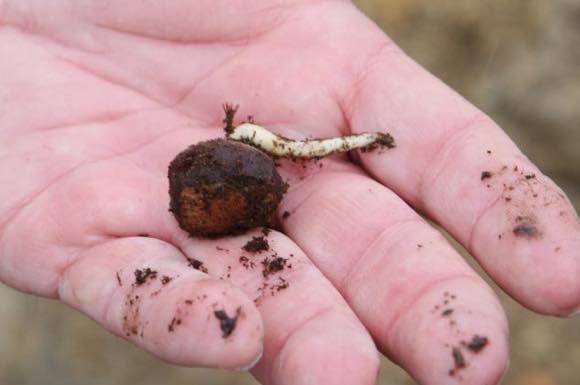
To do this, Powell and Maynard turned to newer, more technologically advanced methods of transgenic modification. Under their approach, a single gene—in this case, an enzyme called oxalate oxidase (also found in grains, bananas and strawberries)—is transferred to the American chestnut’s genome. The enzyme breaks down the deadly oxalic acid into hydrogen peroxide and carbon dioxide, rendering it harmless to the tree.
Proponents say that this method differs from the “hit and miss” approach that comes with conventional crossbreeding, which transfers tens of thousands of Asian genes that also pose unknown threats and consequences from potential mutations. In addition, proponents say, the precision of transferring only one gene adds a measure of security when dealing with risk assessment in genetic engineering. And Powell says the trees in this study are 100 percent American chestnut, containing all of the species’ original 38,000 genes.

“It’s not missing any of its genes—the only difference is the one extra gene that gets rid of that acid, which is key to the chestnut’s ability to fight against fungal infection,” says Powell. “We do a lot of testing to make sure this version does not become an allergen or a toxin to plants, animals or humans, including studies of the tree’s effects on water, leaves, decomposition, bumblebees and the nutrient content of the nuts.”
The saplings are currently under federal review by the U.S. Department of Agriculture, the Environmental Protection Agency and the Food and Drug Administration, and are expected to receive approval in the next few years. Thus far, these chestnuts have not shown any demonstrable difference from their indigenous forebears but for one major exception: They are fully blight-resistant.
“In 100 percent of our studies thus far, we have seen no difference or impact whatsoever on the ecosystem,” says Powell. “And they are able to fend off blight.”
The Watchers
After centuries of losing their lands, forests, traditional crops and plants to war, forced removals, deforestation, invasive pests and diseases, many tribes are continuing their own work in rebuilding and revitalizing their indigenous ecologies. Across the country, Native communities are engaged in active forest conservation and preservation of their traditional plant species, both wild and domesticated. They are also creating their own heritage seed banks, crop production and sustainable agriculture as part of a push toward self-reliance, traditional wellness and food security. Many tribal leaders see these efforts as priorities in the 21st century.
Consequently, Native scientists, forestry experts and tribal conservationists have been watching the developments with the American chestnut with an eye toward what the future may hold for other endangered species in their communities.
“At one time New York had the highest density of chestnut trees in the country, and they were crucial to the Haudenosaunee culture and their way of life,” says Jay Toth, tribal archaeologist for the Seneca Nation of Indians. “But unfortunately, only our grandparents remember them now. So it’s definitely on our radar and we hope to assist in whatever way we can to help in restoring this important species to our territories.”
Toth and his small staff have also been working to reintroduce pawpaw trees (the only fruit tree native to North America) and white oaks to Native communities in New York. For the Seneca and many other eastern tribes, however, the possibility of restoring the American chestnut is equivalent to the return of a long lost relative.
“The chestnut was and is of major cultural significance to not only the Cherokee Nation, but also our tribal neighbors and friends throughout the eastern United States,” says Pat Gwin, senior director of environmental resources for the Cherokee Nation of Oklahoma. “We called it ‘The Bread Tree’ because we ground the nuts and used it as flour for breadmaking, but it had a variety of other uses, as well. We have a special kinship with it and we are always interested in any efforts that may help us with saving these ecosystems.”
Gwin says that the Cherokee Nation is also working on a variety of projects and studies with traditional plants from both the original Cherokee homelands in Georgia, as well as Oklahoma species that were adopted after the Trail of Tears. “We believe that when you have an opportunity to intervene on something’s behalf in order to save it, then that’s what you should do,” he says.
Recently, for example, Gwin and his colleagues have been working on restoration efforts for the Ozark chinquapin. A close relative of the American chestnut, it is also now under grave threat from C. parasitica. Unlike the American chestnut, which is still able to sprout shoots in the wild, the fungus attacks the chinquapin’s root system—thereby killing off the tree entirely. This poses an immediate threat of full extinction for the chinquapin, another heritage species among Native communities.
Gwin says that the Cherokee Nation’s crossbreeding efforts with the Ozark chinquapin have produced a hybrid that is 99 percent blight-resistant. He does not, however, rule out the use of transgenic modification to address the growing threat of invasive pests and pathogens currently ravaging American forests.
“Look, the agricultural history of man is selecting traits that we wish to pass on and encourage, whether it’s corn, beans or potatoes—all of which have been genetically modified by human intervention, for thousands of years,” he says. “So, as a realist, my view is that if we rule out genetic modification, which lives on the same plane as genetic selection and animal husbandry, then we are guaranteeing the eventual extinction and starvation of a very large percentage of the planet. Under the right conditions, it’s just another tool in the toolbox.”
For the Seneca and many other eastern tribes, however, the possibility of restoring the American chestnut is equivalent to the return of a long lost relative.
For Dockry, who has been with the Forest Service for nearly 20 years and regularly consults with tribes in managing their natural resources, any discussion about conservation efforts in American forests needs to include an indigenous perspective.
“As Native people, we bring an important point of view in terms of indigenous knowledge to the conversation,” he says. “Therefore, we believe that a diversity of perspective can only help make better decisions about the future, so getting tribes involved in the research and discussions is important.”
Dockry has worked with tribes from both North and South America and has written extensively about indigenous forest management. He says many tribes believe that the threats to their forests should be considered in the same way that one would think about a family member who is in trouble. For example, is clear-cutting an endangered tree the best solution for its survival? Perhaps not.
“In terms of forest management, tribes think of these trees as living beings and when you think about it this way, you wouldn’t ‘liquidate’ a relative because they’re sick,” he says. “They believe these pests and diseases are here for a reason and that maybe they are symptomatic of our broken relationship with our surroundings and with each other. And chestnuts are a key example of this: What is this blight trying to teach us? Because Native communities understand that invasive species are not going away. So the elders believe that we need to learn what we’re being taught.”

Take the emerald ash borer. A beetle native to eastern Asia, it is thought to have been brought into the United States in the 1990s and now threatens North America’s entire population of ash trees, estimated at around nine billion. Bark beetles, meanwhile, have gained a foothold in the western United States, which has become hotter and drier in recent years. That’s bad news, as the beetles thrive in warmer climates, and experts say they are currently destroying an estimated 100,000 pine trees a day. These are only two of a growing number of tree species that are currently listed as “vulnerable” or “endangered” by the federal government.
And yet, for all the problems endured by the American chestnut in the last 100 years, it has managed to survive long enough to provide a path toward renewal—both for itself and other species.
The Survivor
Today, somewhere deep in the American forest grows a tiny chestnut sprout. It is a hint of a once mighty giant, a clonal survivor of a 40 million-year-old legacy emerging from the forest floor to try once again to beat back its pernicious enemy. Eventually, however, even the sprouts and their root systems will die out and all the old Castanea dentatastock will become extinct. But these shoots and leaves have managed to survive long enough to be of service, to provide a bridge toward the future.
After the new stock have received regulatory approval from the federal government, Dr. Powell of SUNY-ESF says there are plans to plant their saplings close to the survivors of the old Grandfathers, in the hopes that they will mate with each other and that their offspring will again repopulate the forest as they once did.
“The old trees preserved the genetic diversity of the original population,” says Powell, who works closely with the American Chestnut Foundation. “But these trees are not blight-resistant and therefore are on a slow march to extinction. So we do want to cross our blight-resistant American chestnut trees with as many of these survivors as possible, that way we can rescue the genetic diversity of local adaptations before they are lost. The current trees can’t be saved, but their offspring can if they inherit the blight resistance.”
Powell says that this can be accomplished in several ways. These include planting blight-resistant trees near the survivors in the wild to allow cross pollination; grafting branches from the new stock onto the survivors; hand pollinating the survivors; and cultivating conservation orchards with survivors and new trees planted together.
Taken together, this century-long quest to save the chestnut represents five generations of scientists, botanists, forestry experts, ecologists, researchers and volunteers from around the world. They have all worked toward a common goal—returning the beloved tree to its place in the American wilderness.
There is an unbelievable emotional attachment to this tree,” says Goodridge. “People really do want to do what’s right in bringing it back because it’s a part of our heritage.”
For Native people, however, the return of the Grandfather provides a metaphor for the legacy of survival against all odds.
“Trees have a deep connection to Native culture,” says Dockry, a member of the Citizen Band of Potawatomi. “We’ve depended on them to survive for thousands of years. And, like the forests, we are still here in spite of enormous changes around us—social, political, environmental—we survived. It’s now our turn to help bring them back.”