Sandra Hale Schulman
Special to ICT
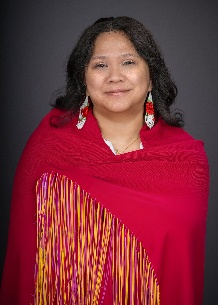
Author Rae Rose was at Standing Rock with her friend and relative, Indigenous activist LaDonna BraveBull Allard, as water protectors gathered to protest the Dakota Access Pipeline. Born and raised in the Coast Salish Territory of Washington state, Rose traveled to the camp to assist in the medical tents, advising on the sometimes clashing eastern and Indigenous medicines.
Rose has contributed to “Last Real Indians,” the “South Seattle Emerald” and “Mazaska Talks”; she wrote the South Dakota short story for the anthology “The Haunted States of America”; and articles for the documentary series “Facing the Storm: An Indigenous Response to Climate Change.”
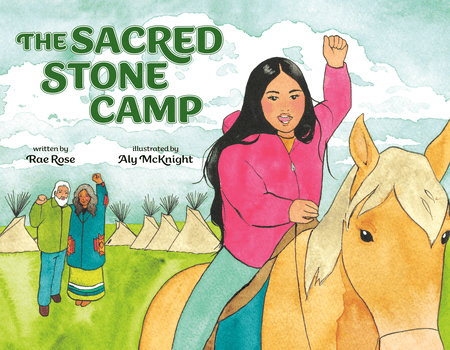
Now in a tribute to Allard, who died in 2021, Rose pens a heartfelt story, “The Sacred Stone Camp,” on sale now, of how the events unfolded through a young girl’s eyes as she is guided and protected by her unci (Lakota word for grandmother) LaDonna and others in the community. The story has lush water color illustrations by Aly McKnight, the water color embracing the importance of water in all things.
The story is especially relevant with the upcoming 10th anniversary of the founding of the Sacred Stone Camp – which was the name of the protest camp established along the route of the Dakota Access Pipeline – and the 10th anniversary of the pipeline protests in April 2026 that made front page news the world over.
In the story, water protectors gather to defend the water and the land against a black snake that threatens the rivers that millions of people depend on. Although the pipeline is still operating, protests against it and new pipelines are ongoing.
The title comes from a real place where the Cannonball River and the Missouri River came together forming perfect circular rocks. Those rocks looked like cannonballs so that is where the Cannonball River got her name.
But LaDonna explains to young LaDonna: “Because of the dam, the two rivers can no longer meet in that sacred way, but I wanted to name this camp after those sacred stones. I want everyone to remember the beautiful way those rivers came together before they were stolen away by the dam. The Black Snakes have been attacking other tribes for longer than I have been alive. My family has been trying to stop this sneaky DAPL Black Snake for a very long time too. If this Black Snake is not stopped, it will poison the
Cannonball, Missouri and Mississippi rivers that millions of people depend on.”
“I married into her family in 2003,” Rose told ICT. “She was a really big influence in my life and reconnection with my culture and community. I went to the campsite. She called me out there to help out. I would drive up there and help in the medical tents. I decided to tell this from a child’s point of view after discussing the story idea with Penguin Books. I chose to create a child that was representative of LaDonna and of her grandchildren and the children in her life. Little LaDonna is a mix of her grandkids and the stories she told me about her childhood.”
The story starts as the community gathers in prayer to start the journey on horseback to setting up the camp with tipis for shelter, food preparation and medicine. Rose says she wanted to capture the hope that LaDonna and the community brought forward for a better tomorrow.
“The pipeline did go through, and many others after that, unfortunately,” Rose says. “But out of seven major pipelines, we’ve stopped four of them, so we have seen some progress. That’s why I wanted this to be a book to be a conversation starter. I feel like our victories get hidden. This is showing the positive aspects and the stories in the community. I wanted to put something out that shows stepping forward is important, and we are being heard and seen.”
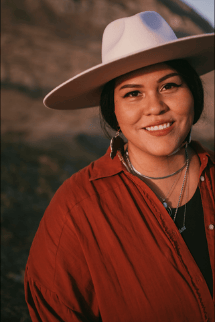
The publisher helped connect her with Ally McKnight, an accomplished illustrator whose art features vibrant colors and Indigenous stories. McKnight, Shoshone-Bannock, grew up in a small farming community in northern Nevada.
“One thing they asked me to change in the book is the opening where it says ‘The land is sacred to the people. The people are sacred to the land.’”
“They wanted me to cut that out, but I said, ‘No, that is the teaching. That’s the teaching I want.’”
As a special nod to LaDonna, Rose is starting the book tour at LaDonna’s grave.
“She’s the first person I want to share this with. I’ll be up in Standing Rock from the sixth of October until the ninth. I’ll talk at the university there, the bookstore, the visitor center. I have some books to give them and lots of family to see. That’s the most important place to start.”