
Kolby KickingWoman and Jourdan Bennett-Begaye
ICT
The powwow trail criss-crosses the United States, taking powwow goers to the tribal lands of a countless number of tribes, including college campuses.
Over the years, powwows at colleges and universities have grown exponentially, and attracted non-students and vendors outside of their region.
One vendor, Valerie Martinez of LV Native Designs in New Mexico, told ICT that from her experience in selling at a variety of powwows across the country, once Gathering of Nations is done the next big powwow to watch is the Stanford University powwow.
“There’s a lot of good powwows, but Stanford, that just stands out in my mind,” Martinez said due to the weather and area.
Whether the school is in the city, in a rural area, private or public, or a tribal college and university, Native students come together at their respective educational institutions to put on powwows of their own as a way to provide a space for the Native community.
From Dartmouth College in New Hampshire to the University of Montana in Missoula to the University of New Mexico in the Land of Enchantment; these powwows have become staple stops on the proverbial powwow highway.
Predating Gathering of Nations Powwow
One of those is the Nizhoni Days Powwow hosted by the University of New Mexico’s Kiva Club, a student organization on campus to promote higher education among Native American students in the university. The main campus for the university is in Albuquerque.
The student organization was started in the 1950s, according to Alysia Coriz, Kewa Pueblo, who was the former Kiva Club president from 2015-2020.
The current Kiva Club representative didn’t immediately reply to ICT’s request for a comment.
It began as a social club to bring together Native students, primarily Pueblo students, together, Coriz said. The powwow came from that community.
“It’s always known as the after party, after [Gathering of Nations],” she said referring to the powwow taking place the immediate Sunday after.
Coriz said that the student powwow predates the Gathering of Nations.
“So as we started to build our community, we found that in order to effectively support community that’s attending and visiting Albuquerque, we wanted to make sure that they had a safe space,” she said. “It’s always been a free powwow, always been a community feed to help make sure that people always have a meal that we can share together, and that it’s been a no contest powwow as well. And so it’s always just been about good vibes, good community.”
The student powwow became more important to host with the high prices spectators, dancers and powwow goers experienced at the Gathering of Nations, she said.
“I think it’s always been a great way to combat some of the capitalistic energy that Gatherings has always brought, especially in terms of admission fees, contest powwows, and understanding how how commercialized the powwow culture has been through Gathering the Nations so Kiva Club has always tried to bring wholesome energy to the people and always to our visitors,” she told ICT.
While the current presidential administration is wiping out diversity, equity, and inclusion initiatives across the nation and with the self-dubbed “largest powwow in North America” closing its final chapter, student powwows show they will stand the test of time like the Nizhoni Days Powwow.
“I’m from Santo Domingo Pueblo, and unfortunately, we didn’t grow up with powwows. We have our own traditional dances, but powwow culture is something that can belong to everybody,” Coriz said.
Perhaps one of the crucial pieces of powwows, despite who is hosting, are the vendors who enrich the experience and that powwows help.
“My family, where we are artisans, grew up on the arts and crafts vendor circuit, and powwows are a really great way to support, financially and economically, our people,” Coriz said. “Our vendors are out here hustling every single day, and how else [can we] give that space for them.”
She continued: “And that’s where we get to meet all kinds of different people.”
Powwows are places for Native people and people to learn about voting, travel, exchange ideas, songs or rez jokes, snag and everything, she said.
“I think for building a space like that in the face of anti- diversity, equity, inclusion, it’s about community,” Coriz emphasized. “It’s about bringing together people safely and comfortably so that they can enjoy who they are and who their identity brings them to be and just the freedom to express themselves in whatever way they have.”
The Ivy League way
Both the Dartmouth College Powwow and Kyiyo Powwow in Missoula have been going for more than 50 years.
Adria Brown, Chickasaw Nation, works at Dartmouth as the director of the Native American program. The program supports a little more than 200 Indigenous students from the lower 48, Alaska and First Nations from Canada.
She told ICT the powwow first started in 1971 and the program facilitates a student committee who build it out to what they want it to be and select a theme each year. Brown said it’s a celebration of Indigenous cultures and communities.
“So this year, they chose a theme, and it’s ‘Honoring the women who carry us,’ and it’s really thinking about the matriarchs in our communities, aligned with also it being Mother’s Day weekend,” Brown said. “So they are in every part of the planning, from the design, to selecting drums and our head staff; into the nitty gritty.”
The school also holds a luau for its Native Hawaiian students the same weekend, held a day after the powwow concludes.
With a reach across the New England Region, Brown said the powwow has become a mainstay in the community and Native and non-Native folks alike look forward to the weekend. It also helps create a sense of “home away from home” for Indigenous students while also providing an outlet to learn about tribal communities in the area.
“It’s really this great opportunity to kind of learn more from Northeast Indigenous communities, as well as be able to bring your own culture and community on campus,” she said. “That goes a long way in helping this campus feel more and more inclusive of different Indigenous cultures and help people feel more at home here.”
Big Sky country
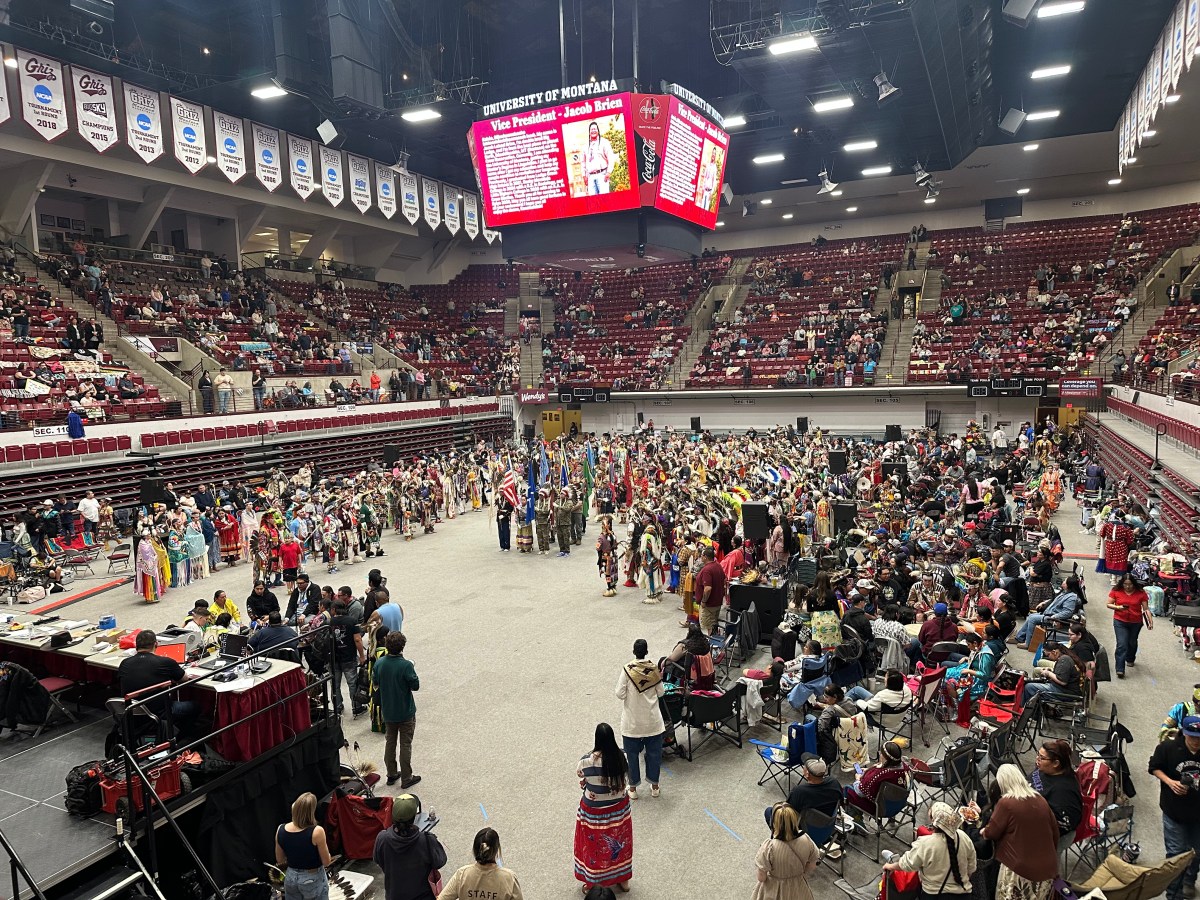
In Missoula, Montana, the Kyiyo Powwow has been going just a few years longer than Dartmouth’s. Held in mid-April at the University of Montana, Jacob Brien said the powwow is a good opportunity to show off the school.
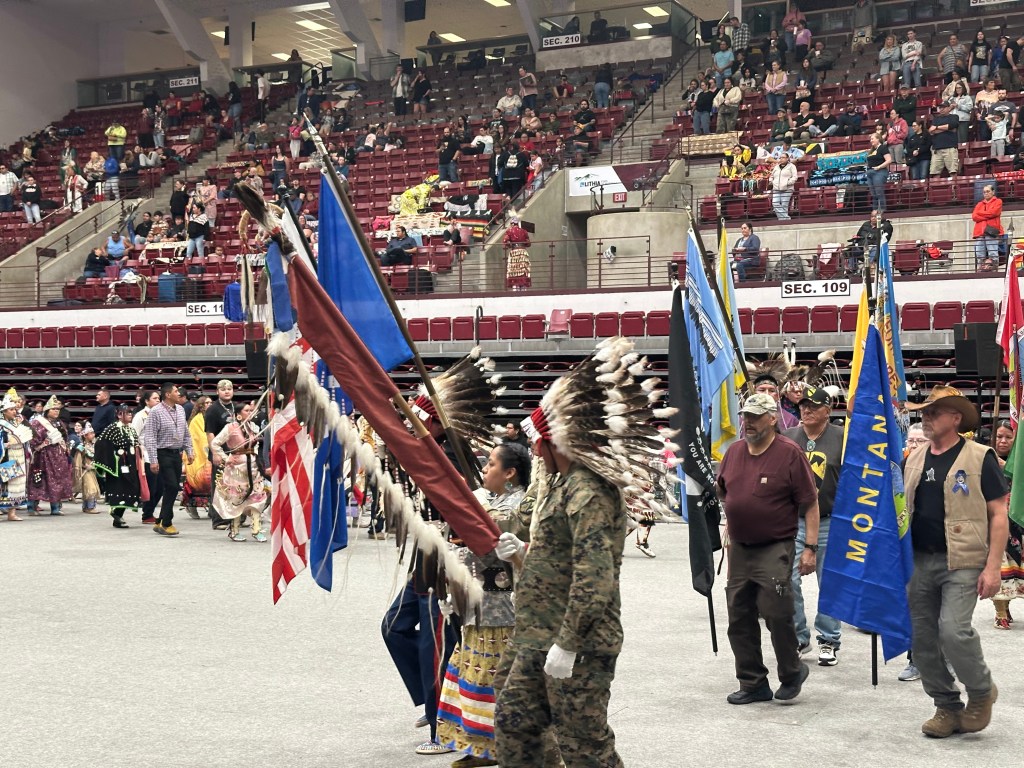
Brien, Apsáalooke, served on this year’s committee as vice president and is a first year graduate student working on a masters of linguistics degree. He said college powwows are important because beyond being a good time, they allow Native youth a peek at college campuses.
“Maybe they dance, or they sing, and they go to the powwow and say, ‘Hey this is a pretty good campus,’” Brien said. “I think it just brings more Indians to [the] school and they can see what they do there. I think it’s a form of what is that, I guess just showing off the school. Young Indians out there can just kind of get a glimpse of college and if they like it, maybe they’ll go.”
For future students who consider being part of the powwow committee, Brien’s advice was to remember that school comes first and that it’s important to be organized; noting that being on the committee can be hard at times.
“If you can get all your things together, you can be orderly and organized, you’ll have a fun time.”

