
Sandra Hale Schulman
Special to ICT
Robert Redford charted a diverse path through the film industry as an actor, producer and founder of the Sundance Film Institute and Festival. He was a champion of Indigenous stories, never shying away from the hard truths.
He died Tuesday, September 16, at his home at Sundance, Utah.
Born Charles Robert Redford Jr. on August 18, 1936, he studied art before turning to acting — landing at the American Academy of Dramatic Arts. During a career that spanned five decades, Redford became an Oscar-winning director and activist. Redford elevated independent film, building the Sundance Film Festival from the ground up. It began as a training ground for new filmmakers in the scenic mountains of Park City, Utah – where Redford initially planned to open a ski resort – and then soon transformed into the most important independent film festival in the world.
“For me, the word to be underscored is ‘independence,’” Redford told the Associated Press in 2018. “I’ve always believed in that word. That’s what led to me eventually wanting to create a category that supported independent artists who weren’t given a chance to be heard. The industry was pretty well controlled by the mainstream, which I was a part of. But I saw other stories out there that weren’t having a chance to be told, and I thought, ‘Well, maybe I can commit my energies to giving those people a chance.’ As I look back on it, I feel very good about that.”
On a personal note, I met Redford in Nashville, Tennessee, in 2001. He was in town directing “The Castle,” when he was honored for both his movie career and political causes by the Freedom Forum First Amendment Center at Vanderbilt University and the Nashville Independent Film Festival. They presented Redford with the 2001 Freedom in Film award. I sat in the front row with my sister, awed by his presence and inspired by his brave words.
I also attended Sundance in 2017 when the film “Rumble: The Indians Who Rocked the World” premiered as I had been a consultant on the folk singers segment. I did not see him that week, but the energy of the festival, even during a blizzard, was electric as so many important films premiere there.
Praise for Redford has been pouring out from colleagues and those whose careers he supported.
The Sundance Institute said in a statement: “We are deeply saddened by the loss of our founder and friend Robert Redford. Bob’s vision of a space and a platform for independent voices launched a movement that, over four decades later, has inspired generations of artists and redefined cinema in the U.S. and around the world. Beyond his enormous contributions to culture at large, we will miss his generosity, clarity of purpose, curiosity, rebellious spirit, and his love for the creative process. We are humbled to be among the stewards of his remarkable legacy, which will continue to guide the Institute in perpetuity.”
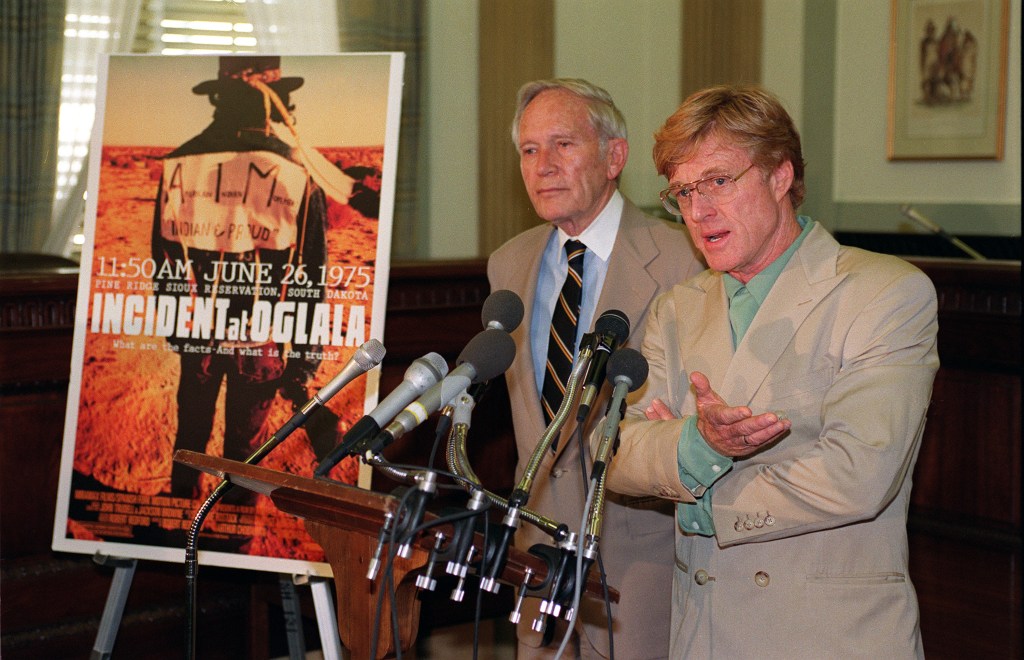
Film producer Jhane Myers premiered her latest film, “Free Leonard Peltier,” in January at Sundance. She told ICT: “It’s with great sadness to wake to the news of Robert Redford’s passing. His accolades are many, filmmaker, actor, philanthropist, humanitarian, active land steward and activist, but it all sums up to a true visionary. He is defined through his allyship as he promoted and championed underrepresented filmmakers, through his landmark Sundance Institute, such as myself to authentically tell our own stories. He made it possible for so many Native filmmakers to enter the studio world as directors, producers and writers to redefine our narratives and history. He had stellar support and advice for us as we tackled the new documentary ‘Free Leonard Peltier’ as his own ‘Incident at Oglala’ was groundbreaking for its time.”
“I’m grateful to have worked with him on ‘Words from A Bear,’ the N. Scott Momaday (Kiowa) documentary for American Masters here in one of his hometowns, Santa Fe, NM. He entered our set with a sweep of his hair and a flash of his boyish grin, we knew a star had arrived. Journey well and fly high Mr. Redford. Creator just added a well-earned new star to continue to watch over us all.”
Bird Runningwater, director of Sundance’s Indigenous Program for two decades, said in a parting statement: “During my 20 years at the Sundance Institute, I’ve tried to imbue my work with inflections of my own Cheyenne and Mescalero Apache cultures. I’ve always believed our artists needed a culturally grounded support model in order for their stories to become their strongest and to make the long journey to the screen. It seems to have worked, launching so many careers and creating a body of work that previously didn’t exist.”
“When I arrived at the Institute in 2001, Sundance had already supported two generations of artists through the work of the first two Native Program staffers, Stephen Lewis and Heather Rae. They built a sturdy community supporting the early works of the founders of a Native American film movement.”
“This investment built on the earlier work of our founder, Robert Redford, extending from when he personally supported Native filmmakers before he started the Institute. He also made sure to include Native filmmakers at the founding meetings of the Institute and in our first labs. Thanks for everything Bob. We all owe you so much for the family of #Sundance that you created.”
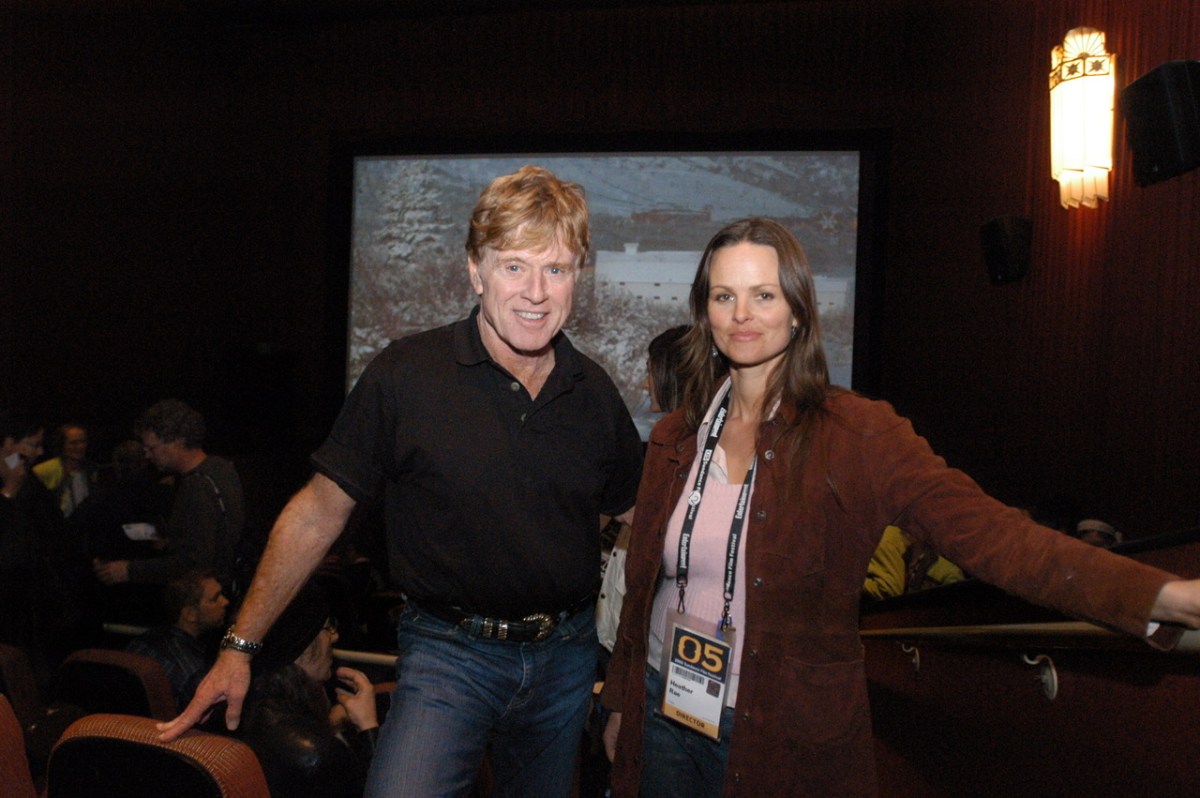
Heather Rae, director of “Trudell,” said: “It’s hard to explain, but also important to explain, how important Bob Redford was to me. And to so many of us. He changed something in the world for storytellers; he created something extraordinary in the space that Sundance presents for artists. He was an incredible storyteller himself. But of the most generous spirit. I met my husband at Sundance. We premiered the #TrudellFilm at Sundance, a pivotal moment for me as a filmmaker. Bob came to that screening. He was a person of high notoriety that saw people. He saw artists …. I love his children 🧡🧡 I am holding Bob’s family in my heart. All who loved him … what a legacy and I’m so grateful to have been so impacted by the grace of this legacy.”
Actor Ethan Hawke who appeared in “Reservation Dogs” said in a post: “Robert Redford, our ultimate champion of independent film, relentless advocate for authentic storytelling and fiercely passionate environmentalist. Robert’s legacy remains ingrained in our culture, transformed by his artistry, activism and the founding of Sundance Institute and Film Festival.”
“Rumble” film producer Stevie Salas told ICT: “When I was a kid watching Robert Redford in films even though he was playing different characters, I always felt like I was watching someone who might understand the way I felt about life and the earth. When I first met him I felt like he was a friend. I never got to work with him but I know he helped a lot of my friends out and I’ll always be grateful to him for that.”
Sterlin Harjo, director of “Reservation Dogs,” told an amusing story on social media of an encounter with Redford on set: “RIP Mr. Redford. My career and path as a young man was defined by his commitment to supporting independent cinema and especially his commitment to empower Native film and storytellers. I went to the Sundance Filmmakers labs at 23 years old. The support from Sundance made me feel like I belonged in an industry that most times felt so unreachable. He personally taught me things about story, shooting, and editing that I take with me today.”
“One day I was sitting outside of my editing trailer smoking an American Spirit and a dirt bike came pulling up. It was Redford. He was wearing a bandana and looked like an all-around badass. He walked up to me and started talking to me about my script. Then he said, ‘Oh, you’re smoking my brand. Can I get one?’ I said, ‘Of course,’ and I gave him a cigarette and offered him a light. He said he’d save it for later and put it behind his ear. Then he rode off on the dirt bike and disappeared behind a mountain.”
“The next day I was at lunch, and someone slapped a pack of American Spirits down on my lap. It was Redford. I offered to take one out and give him the pack. He said, ‘Oh, no. Take the whole pack. I want you to go back to Oklahoma and tell them all what a generous guy I am.’”
“So. Oklahoma, I wanted to tell you — Bob Redford was one of the most generous men I’ve ever met. Journey Well.”
Actor Gene Brave Rock, who appeared in the first season of “Dark Winds,” told ICT: “The world has lost not only an extraordinary artist but also a visionary whose legacy will forever ripple across film, storytelling, and the human spirit. I had the profound privilege of meeting Robert Redford while working as a cast member of ‘Dark Winds’ and later within the art community of Santa Fe. Those encounters left me deeply moved, not just by his talent, but by his humility, wisdom, and genuine passion for the stories that shape us.”
“Robert Redford’s presence was unmatched, he carried a quiet power that elevated everyone around him. His artistry was never confined to the screen; it lived in the landscapes he cherished, in the communities he uplifted, and in the storytellers he inspired. His legacy reminds us that storytelling is not simply entertainment — it is a force that can heal, awaken, and transform.”
“Robert Redford will be greatly missed, yet his spirit endures in every story that dares to be told with honesty and courage. Thank you, Robert, for everything you’ve given to cinema, to art, to humanity. Your work, your vision, and your heart will never be forgotten.”

