

Sandra Hale Schulman
Special to ICT
The latest: Native film free streaming, classic song revamped, Rising Buffalo photos
FILM: FNX launches with a gala
First Nations Experience (FNX) is the first and only national broadcaster dedicated to Native American and Indigenous content. It hosted a red carpet gala and concert to celebrate the official launch of the Indigenous-led streaming platform at the Agua Caliente Casino Resort in Rancho Mirage, Calif., on May 1. The event featured Native actors, performers and creators who are reshaping media representation and accessibility across the U.S.
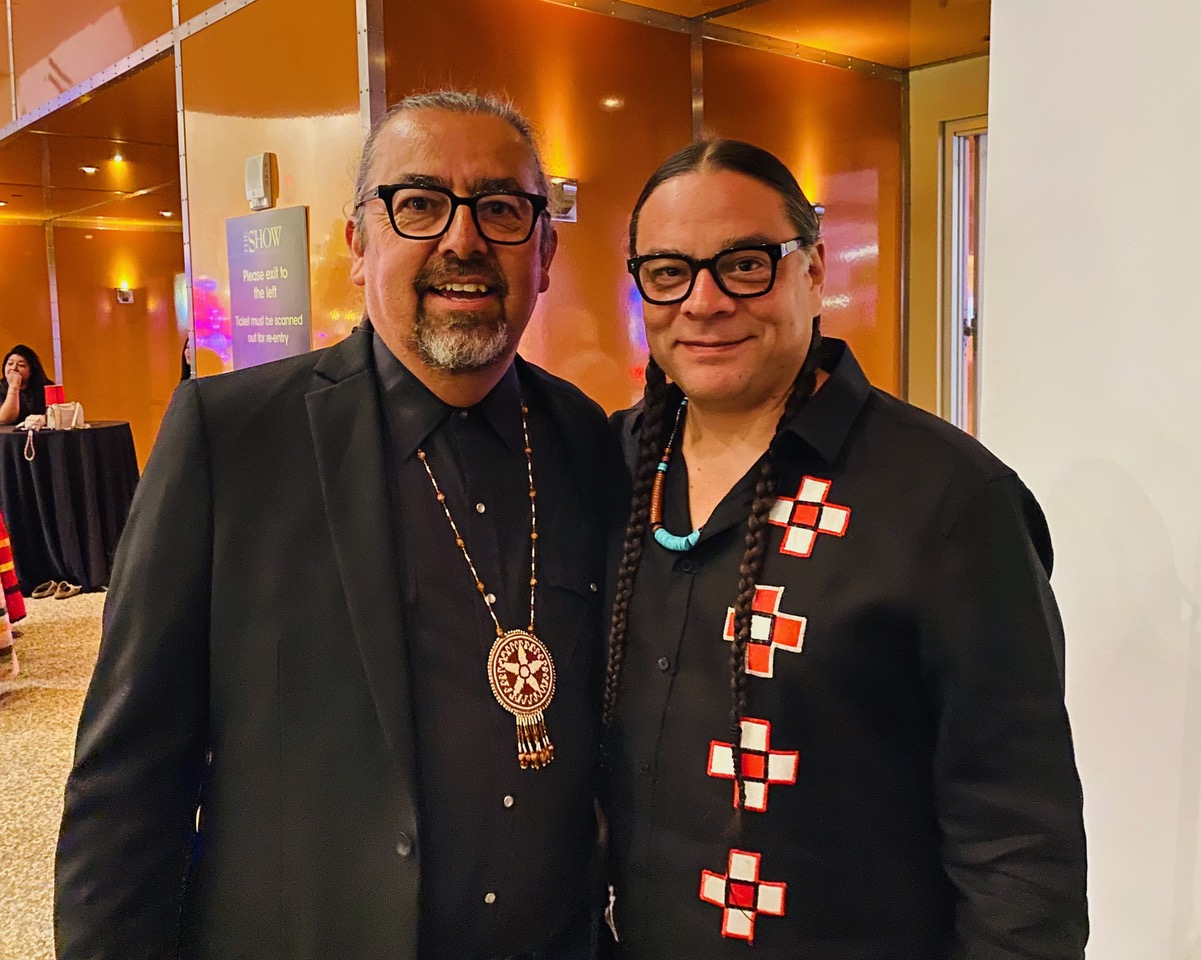
Gala guests included Chef Sean Sherman (“The Sioux Chef,” James Beard Award winner) who dished out some Indigenous cuisine; FNX leadership, tribal leaders, Native actors Jessica Matten and Eugene BraveRock from “Dark Winds,” Ruth Ann-Thorn, host and producer of “This Is Indian Country,” and Cahuilla art star Gerald Clarke.
Performers included The Halluci Nation (formerly A Tribe Called Red) with dual DJs onstage against a backdrop of a free form video with lucha libre wrestlers and cartoon animation. JR Redwater, a Native stand-up comedian, told some raunchy jokes; ShanDien Sonwai LaRance – Cirque du Soleil hoop dance artist, and Electric Turquoise Dance Troupe.
Backed by the Yuhaaviatam (pronounced “Yu-HAH-vee-ah-tahm”) of San Manuel Nation, FNX is the only national Native and Indigenous television network in the U.S. operating through the PBS system. FNX features documentaries, films, news and music celebrating Native cultures around the world.
Miccosukee filmmaker Montana Cypress has a feature short film he directed, “Lumbeeland,” on the network.
“What is awesome about having a streaming app now, because it’s the only place to see some great films from other Native filmmakers,” Cypress told ICT. “Now we’ll have a place to put up that work on the streaming app where it’s available to everyone, not just live on the festival circuit and for free. The films will have life after the festival to have more eyes on them so that people can see these works from all areas that are unique and cool. I have ‘Lumbeeland’ up there now, and we’re in talks to put up the gator wrestling film I made.”
Cypress showed a sneak peek of a comedic film he is making about the casting of the Indian for the pollution awareness commercial in the 1970s that became known as the Crying Indian. It’s fiction, but clever, and gives a new backstory to the controversial commercial.
MUSIC: Keith Secola cruises onto “Dark Winds”
Crossing genres and borders, the celebrated Native American Music Hall of Fame inductee Keith Secola, Anishinaabe, has his hit song “NDN Kars” featured in a pivotal scene in the finale of “Dark Winds” Season 3. He recorded a new version of his hit song “NDN Car” that’s looser and more acoustic for the series that keeps its drum- and chant-driven spirit. Overall, the song has been streamed hundreds of thousands of times online.
Now Toronto-based Ishkōdé Records, a label committed to uplifting Indigenous voices across Turtle Island, has signed Secola to its roster. Secola is the label’s first signed artist based outside of Canada. It signals a meaningful step in uniting Indigenous musicians across borders and generations.

A seven-time Native American Music Award winner, Secola blends rock, folk and blues and traditional Indigenous instruments and storytelling. “NDN Car” is his most famous work next to the sing-a-long classic “Frybread.”
“Keith Secola is a masterful storyteller whose songs carry truth, humor, resistance, and pride. … His voice is timeless and unmistakably authentic, a force celebrated and uplifted across generations. We are deeply honored to welcome Keith to the Ishkōdé Records family,” the label said in a statement.
Secola says ‘“NDN Car” is about the richness of being poor. “Even with disparity and hardship, survivors can restore our identity through artistic expression which is forever resistant. We can transcend oppression by affirming our cultural pride and rebel against oppression which causes our fragmentation.”

“NDN Car” is the most requested song on tribal radio stations, and it has been heard in the soundtrack of “Dance Me Outside,” and a 2020 remix by The Halluci Nation. The use in “Dark Winds” reinforces the song’s enduring humorous relevance as identity, sovereignty and resistance.
ART: Can’t keep a good buffalo down
Bridging performance and self-portrait, the exhibition Zig Jackson: The Journey of Rising Buffalo shows the everyday experience of Native American life and culture, with one photographer’s focus on community, sovereignty and respect for the land. The exhibition opens at the George Eastman Museum May 10 through Nov. 9.
Zig Jackson, known as Rising Buffalo, Mandan, Hidatsa, and Arikara Nation, is the first Native American photographer to receive a John Simon Guggenheim Fellowship in Photography. Raised on the Fort Berthold Indian Reservation in North Dakota, Jackson was taken from his home when he was eight and placed in St. Joseph’s Indian School in Chamberlain, S.D.
He survived and later graduated from Intermountain Indian School in Utah, where he discovered his passion for photography and the universal issues facing Native Americans. Jackson is now a professor emeritus at the Savannah College of Art and Design in Georgia.
“The George Eastman Museum is proud to host Zig Jackson’s first solo exhibition to be held on the East Coast,” said Jamie M. Allen, Stephen B. and Janice G. Ashley Curator in the Department of Photography, who co-curated the exhibition along with Curatorial Associate Louis Chavez. “We are excited for visitors to learn about Jackson’s work and how his photographs have contributed to discourses about Native American history and visual representation.”
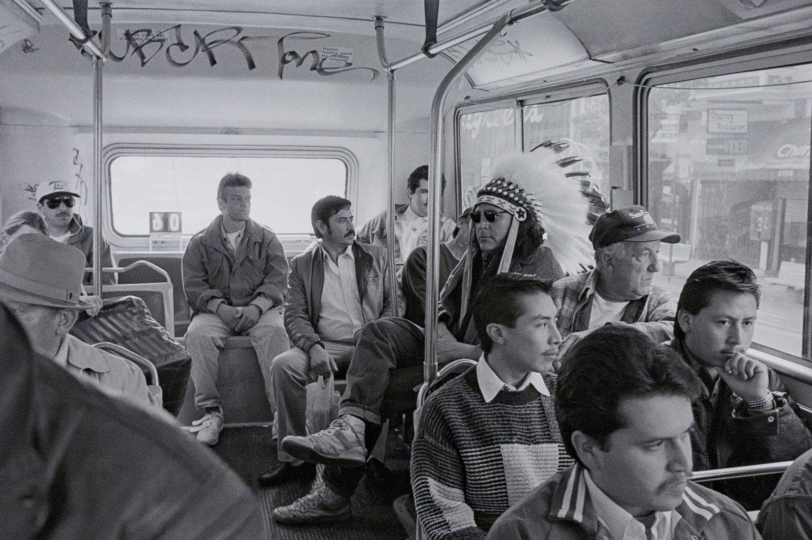
Jackson uses memories and reflections, documenting public and private life on the reservations. His images, mostly in black and white, contemplate family structures, substance abuse, veteran’s issues, homelessness and connection to natural resources. His images are simultaneously playful and somber, such as in his best-known work “Indian on the Bus” in which he dons a headdress and casually sits with the other plain clothed people on their commutes.

Our stories are worth telling. Our stories are worth sharing. Our stories are worth your support. Contribute $5 or $10 today to help ICT carry out its critical mission. Sign up for ICT’s free newsletter.

