

Sandra Hale Schulman
ICT
The latest: Choctaw artist’s winning exhibit, top Indigenous movies to rent, author works with troubled youth.
ART: Portraits in beauty at Blue Rain
The art of Karen Clarkson never fails to impress with her sweet, powerful, endearing portraits that capture beauty, innocence and deep emotions in lush, vibrant color.
A recent show at Blue Rain Gallery in Santa Fe and Durango, Colorado, showcased new work of women and children in traditional garb holding blankets, dolls and baskets that carry meaning. A familiar sight at SWAIA and on magazine covers, Clarkson has won multiple awards for her work.
“I find each painting is truly a journey of revelation that allows me to communicate feelings that are ever present, and which propel me forward,” Clarkson says. “I want my audience to see this in all its beautiful complexity, whether it be hope, love or determination.”
“I began my artistic journey by creating portraits of people I admired. I taught myself to draw by using old photos of my family and their ancestors as references. This led to many discoveries about my Choctaw heritage. In choosing my subjects, I first consider what they should convey; I’m not interested in painting beautiful women just to show how attractive they can be. I am drawn by women who show their beauty through determination, culture and sense of purpose.”
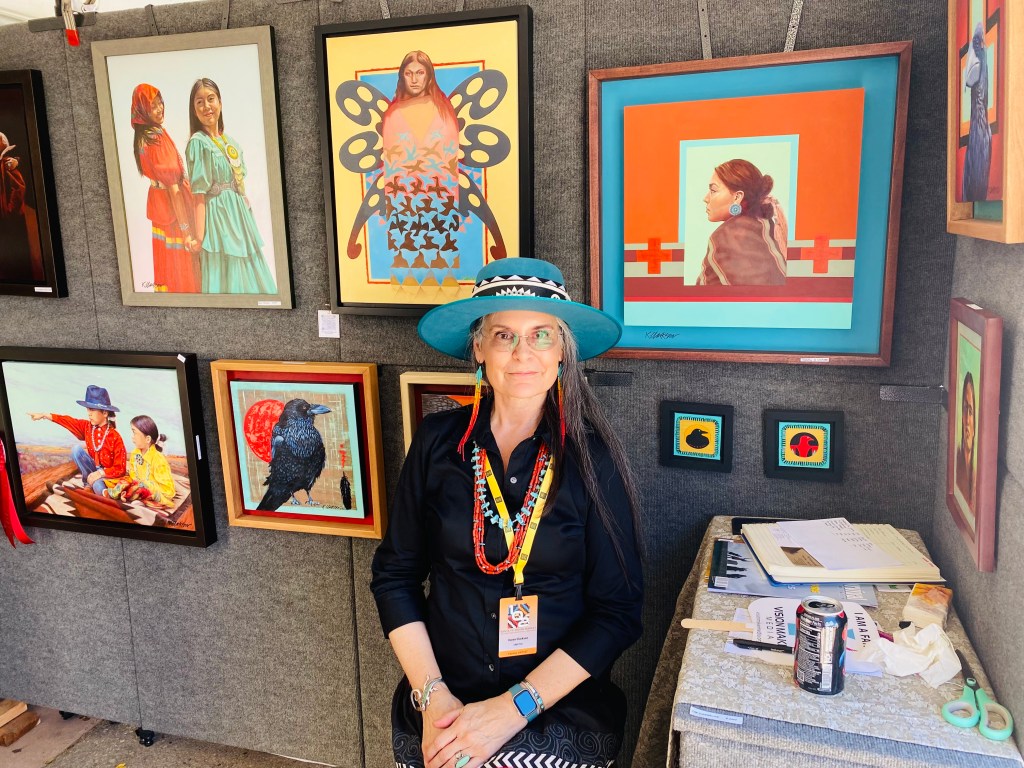
Some of Clarkson’s new portraits are interactive works with embedded QR codes that link viewers to information about the issues in the paintings. She is not overtly political, but she addresses the many pressing issues Native women face, while showcasing the complexity that makes them relatable.
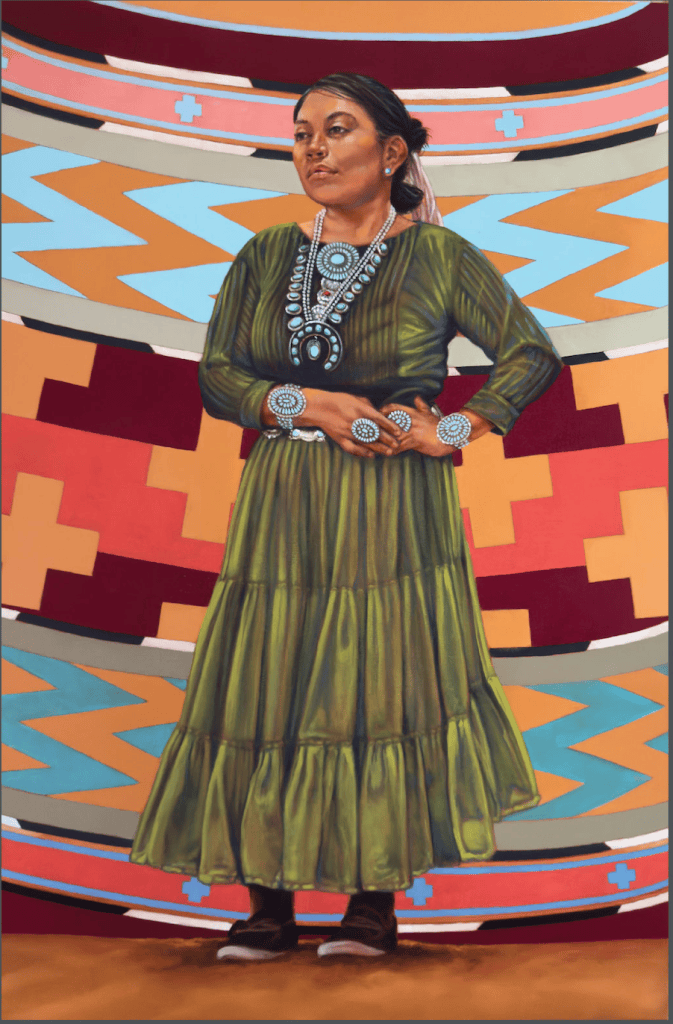
Clarkson’s work adds yet another dimension to the understanding of Native culture, revealing the inner character of her subjects as well as showcasing their beauty. Her growing list of awards – among them the Arizona Governor’s Choice Award in 2024; the Grand Award, Indigenous Collection, Santa Fe Indian Market, Sept 2021; Best of Show, Choctaw Nation Indian Arts Show, in 2013, 2015, and 2016, and many others – attests to the appeal of Clarkson’s work. She was especially honored when she was selected to supply the cover image for Native American Art magazine’s commemoration of the 100th anniversary of Indian Market.
“My desire to communicate what is important to me remains the most important component of my art,” Clarkson says. “To sense the humanity in another person and to be able to convey it through art opens a whole other world and a new mode of communication. It is bringing the intangible into focus and making room for change.”
FILM: Winning films to screen for communities
In a move that prioritizes collective impact through collaboration, five critically acclaimed Indigenous-led documentaries are joining forces for a shared impact screening tour launched late September through November 21.
The Indigenous Impact Alliance’s global-screening tour brings together the award-winning films to amplify Indigenous stories through a distribution strategy that is focused on aligned efforts. These films tackle crucial issues facing Indigenous communities while celebrating resilience, healing and cultural resurgence.

The group offers communities an opportunity to curate their own screening experiences and choose which of the films to screen based on their specific needs and interests. This audience-led approach ensures accessibility and cultural relevance while empowering local organizations to contextualize screenings within their own communities.
Making the screening tour available beyond North America will connect international audiences, provide crucial context and foster cross-cultural understanding of Indigenous issues and experiences.
The tour prioritizes in-person, scheduled events, ensuring broad accessibility while maintaining the powerful communal experience of shared film viewing, discussion, and lead to action and engagement.
The five participating documentaries are:
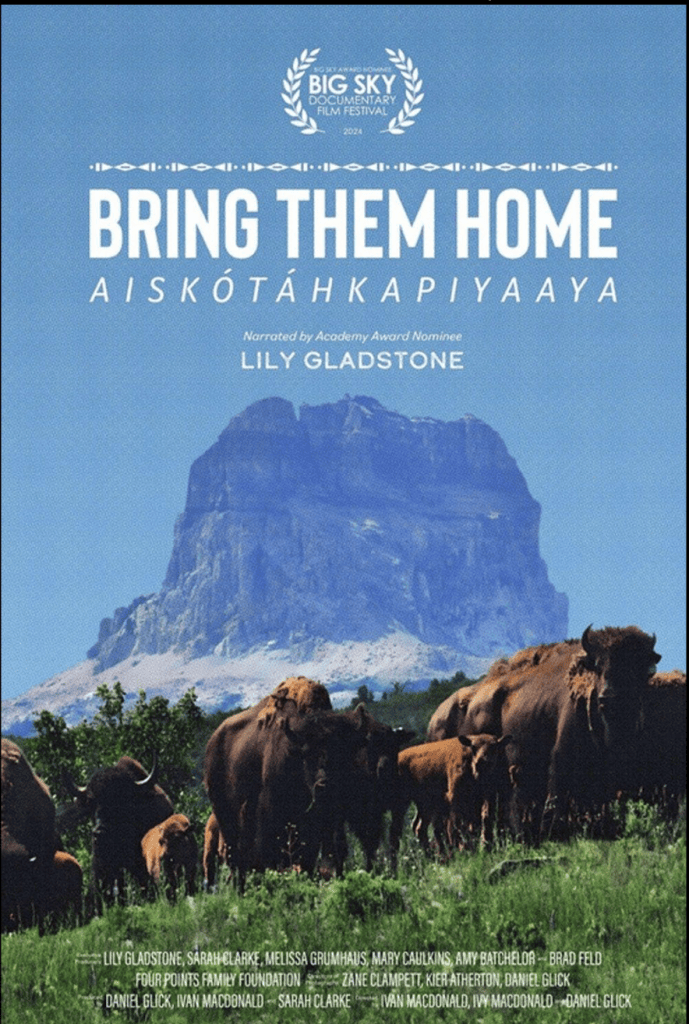
- “Bring Them Home” tells the story of a small group of Blackfoot people and their mission to establish the first wild buffalo herd on their ancestral territory since the species’ near-extinction a century ago, an act that would restore the land, re-enliven traditional culture and bring much needed healing to their community.
- “Remaining Native” is a coming-of-age story told through the perspective of Ku Stevens, a young Native American runner navigating college athletics while the memory of his great-grandfather’s 50-mile escape from an Indian boarding school begins to connect past, present and future.
- “Sugarcane” is a groundbreaking Oscar-nominated investigation that exposes a shocking cover-up of cultural genocide perpetrated by the church and government, and illuminates the enduring love, beauty and courage of an Indigenous community.
- “Singing Back the Buffalo” tells the story of Indigenous visionaries, scientists and communities rematriating buffalo to the heart of the plains they once defined, signaling a turning point for Indigenous nations, the ecosystem, and our collective survival.
- “Yintah,” meaning “land,” is a feature-length documentary on the Wet’suwet’en nation’s fight for sovereignty. Spanning more than a decade, the film follows Howilhkat Freda Huson and Sleydo’ Molly Wickham as their nation reoccupies and protects their ancestral lands from several of the largest fossil fuel companies on earth.
Learn more about the Indigenous Impact Alliance at the link.
BOOKS: Devilish tales of youth
Brandon Hobson’s new book, “The Devil is a Southpaw,” is a powerful novel that speaks to troubled youth and the prison system they end up in.

What inspired Hobson to write this book and how did he find his voice in writing it?
“The book was inspired by my experience working with incarcerated youth in Oklahoma,” Hobson told ICT. “As well as thinking about the generation, institutional and racial trauma against Native youth, I also knew I wanted to include my artwork, and in this case, I was thinking about how an unreliable, unhinged narrator who is riddled with obsessive jealousy and envy against a Cherokee artist might draw and paint things to illustrate his anxiety.”
“The erratic prose and prolix sentences are also supposed to show the narrator’s aggression early on. But I also wanted to push the idea of what a novel can do, particularly by using several different forms (letters, interviews, drawings, etc).”
How has incarceration in the news, along with the roots of trauma, impacted his own life or the lives of those he knows?
“Working with incarcerated youth was difficult and challenging,” Hobson says, “but it was also rewarding in a way that ultimately left me feeling more empathy for anyone incarcerated. We seem to be living in a time when being merciful and empathetic toward others isn’t as common as it should be, but maybe there’s hope that will change. We have to keep hope and become more forgiving of others.”

