

Sandra Hale Schulman
Special for ICT
From Depression-era rancherias to mysterious caves to inherited powers, Mary Hatcher either has a curse or an ability to change destinies.
She’s a Native Pomo woman and the lead character in a haunting new novel by Greg Sarris, an accomplished author, university professor and tribal leader currently serving his seventeenth term as Chairman of the Federated Indians of Graton Rancheria.
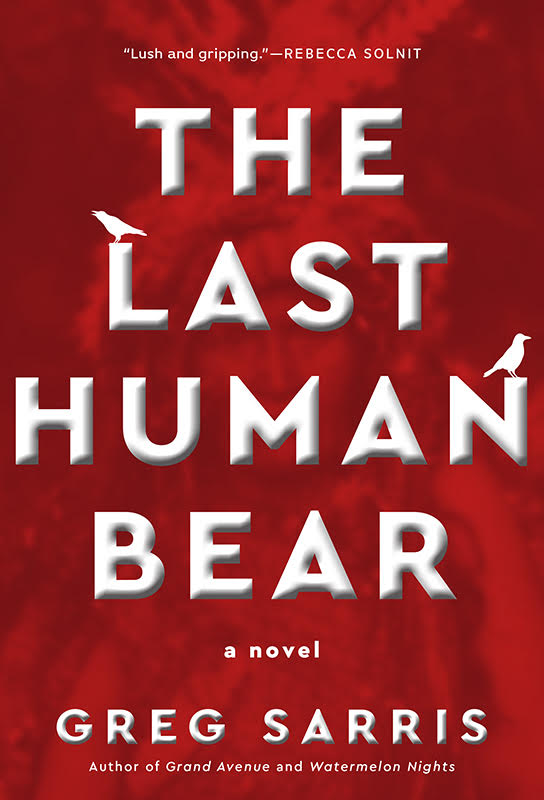
In “The Last Human Bear”, out this month, Sarris brings an intimate knowledge of his tribe’s territory with stories by – and about – elder women who inspired his work of historical fiction.
The story follows Mary Hatcher, a young girl branded in tragedy and endowed with supernatural secrets from her Coast Miwok elder stepmother, Saturnia. Hatcher grows up an outcast among her own people, rumored to be a tolik — a poisoner, a shapeshifter and the last of her kind. A mystery to herself, Hatcher traverses through Native, Mexican and white societies, fighting off prejudice and poverty to win independence.
So how did Sarris put his voice into telling the story of a young girl?
“I heard a lot of the old people, particularly women, telling stories,” Sarris told ICT. “One story they told a lot about was about this woman who could poison people (and to) stay away from her, which made me even more curious. I started writing and this woman came pretty easily as if I were channeling her although I don’t want you to think that it was anything psychic. Her spirit just came very easily to me.”
Sarris has seen firsthand how tribes have become reduced to having just a few Native language speakers and traditional culture bearers, so in his story he depicts a girl navigating those worlds amid a background of the 1930s.
“I knew two or three older people in this area who were the last to speak their language,” Sarris said. “And as I used to tell my students, ‘imagine being the last person speaking English.’ In the story, Mary is struggling with her past while living with an older woman who’s trying to teach her ancestral knowledge that she is skeptical about. ‘What am I gonna need all that for?’ she asks.
“It positions her at odds with the Indian community who’ve been colonized with Christianity and they began to turn this ancient knowledge into evil she doesn’t want to be pegged with, yet she feels it in herself by the time she’s even begun to rationalize it.”
Sarris says Hatcher is already trapped because it’s all been planted in her, even if just verbally, and the novel is also an homage to memory of land and place and a connected relationship with all things as she navigates this world.
“She’s basically passing it on now to the reader,” he says.
Sarris explained that secret societies existed in the absence of centralized religion before colonial contact. He says the most powerful was the women’s Human Bear, a society where the women would get together at night and wear a bearskin while traveling to hunt and find things – such as objects and herbs – for the tribe to use. The women could kill enemies with the strength of a bear.
“We didn’t have what Plains Indians had – organized warfare,” Sarris said. “We were subtle. If you violated somebody, their spiritual guides would take care of that. The ethnographers classified us as a culture predicated on black magic and fear, when in fact, I would argue that it was predicated on profound respect for all of life.
“When Christianity came in, the brutal colonization changed things and it became associated with devil worship and evil and poison. The Saturnia character teaches Mary that herbs and everything alive have a power and you need to sing to them even if you are making a basket.”
Because the Native and Mexican populations suffered through poverty, discrimination and abuse, many turned to Christianity and the promise of a better after-life. They turned away from their nature-based beliefs and some Natives claimed Mexican heritage, pursuing better treatment.
Beyond writing, a tribal legacy
Sarris, who lives and works in Sonoma County, California, keeps his own connections strong through his books including, “Keeping Slug Woman Alive,” “Watermelon Nights,” “How a Mountain Was Made,” and “Becoming.”
His book “Grand Avenue”, which is about urban California Indians, was made into an HBO series starring A Martinez and Tantoo Cardinal. Sarris credits the Sundance Film Institute and Robert Redford for getting that series made as he was told the mainstream film industry would never make this film.
Sarris is an elected member of the American Academy of Arts and Sciences, a member of the Board of Trustees of the Sundance Institute, a former board chair of the Smithsonian Museum of the American Indian and a member of the Board of Regents for the University of California.
Sarris helped guide his tribe into building the tribe’s Graton Resort & Casino which opened in 2013.
“I had never been in a casino, I mean what did a Ph.D in modern literature from Stanford University know about casinos?” he asked. “So I learned and I helped the tribe and I learned a lot about politics. It isn’t as if I went down a rabbit hole, it’s more as if I had fallen into the Grand Canyon.
“It’s done a lot of good because in 12 and a half years we’ve given $130 million dollars to charity that has to do with environmental stewardship and social justice,” Sarris said. “We were the largest tribal contributor to the Democratic Party (in California) during the 2024 cycle, and we have provided over $2.5 million for tuition for all California Indians to the University of California.”
Sarris says he has been able to parlay his life experience and education into books and politics.
“I think that’s really important and I don’t think that education means you have to sell out,” he says. “As I like to say they need our stories so education should be about dialogue but now I’m trying to find my way out after 34 years. I will step down after this term so I can go back to writing because I’ve written some books and I love writing and it’s what I’m looking forward to in my older age.”

