
Asian American and Pacific Islander
Heritage Month
National Museum of the American Indian
Hawaiian Voyaging and Dance
Sat-Sun, May 13-14. 10 am-5:30 pm EDT. Free. In-person in Washington, D.C.
Culture demonstrations, such as basic knot-tying techniques used in the construction and operation of a canoe, focus on the importance of voyaging for Native Hawaiian communities. Hawaiian dance group Halau Pua Ali‘i ‘Ilima (the Royal ‘Ilima Blossom), who will present a selection of hula kahiko (traditional dance) and hula ‘auana (contemporary dance) under the direction of Kumu Hula Vicky Holt Takamine and Kumu
National Museum of the American Indian
Youth in Action: “Ho’olale I Ka’ai A Ka U’i”
May 1-31. Free. Online
“Ho‘olale i ka ‘ai a ka u‘i” is a Hawaiian proverb that roughly translates to “what the youth can do.” This special Youth in Action program was filmed in Hawai‘i and showcases what Native Hawaiian youth are doing to protect their traditions. The program has four segments: voyaging and wayfinding, hula as resistance, heiau (sacred space) restoration, and food sovereignty. The Indigenous student filmmakers from Hawai‘i Tech Academy who filmed the program—Emma Morita, Mia Bella Platkin, Anica Brewer, Kiara Haid, and Andrew Twelker—will share their experiences at the end of the program.
Pacific Heartbeat and PBS
Available on PBS channels, PBS app and/or PBS Passport
Pacific Heartbeat is a US public television series of critically acclaimed documentaries that provides an authentic glimpse into the Pacific Islander experience. Creative and beautifully told stories about arts, culture and intimate human stories, the series features a diverse array of programs intended to draw viewers into the heart and soul of Pacific Island culture. Among the works airing/streaming/on Passport are The Healing Stones of Kapaemahu; High Tide, Don’t Hide; Loimata, The Sweetest of Tears; Family Ingredients and Waterman-Duke: Ambassador of Aloha..
Los Angeles Asian Pacific Film Festival
May 4 – 13. In-person in Los Angeles. See below for Pasifika film listings
CAAMfest
May 11-21 In-person in San Francisco. See below for Pasifika film listings.
FILMS AND FESTIVALS
Online and Hybrid
Cascadia International Women’s Film Festival
May 11-21. Tickets. Online encore screenings
Bones of Crows Narrative feature. Canada. Marie Clements. In English, French, Cree. Featuring Grace Dove, Graham Greene, Angus Macfadyen A sweeping epic film told through the eyes of Cree Matriarch Aline Spears as she survives a childhood in Canada’s residential school system to continue her family’s generational fight in the face of systemic starvation, racism, and sexual abuse. She uses her uncanny ability to understand and translate codes into working for a special division of the Canadian Air Force as a Cree code talker in World War II. The story unfolds over 100 years with a cumulative force that propels us into the future.
MisTik Narrative short. Canada. Jules Arita Koostachin. In English, Cree. Feauring Tapwewin Sol Koostachin-Chakasim, Pawaken Jacob Koostachin-Chakasim, Asivak Abraham Koostachin. The story of Cree twins NiiPii (Water) and SiiPii (River), in a post-apocalyptic world, who carry the last of the healthy trees on their backs, with the hope of saving what is left of the world they once knew–but where will they plant them? Part of Short Film Showcase II.
First Nations Film and Video Festival
Last Days! May 8-10. Tickets. In-person in Chicago and online.
Some special films shown online, and in-person feature films and numerous shorts shown in various venues in Chicago. There is a problem with the website. To access the online program go to the festival’s Facebook page and scroll down to find a post that links to online screenings. FNFVF presents two annual festivals, on May 1-10 and on Nov 1-10.
Online films, Tues, May 9
The Spirit Remains Documentary feature. Canada. Brian Francis (Mi’kmaq), Melanie Line Richard. Fifty years after the expropriation of their lands to make Kouchibouguac National Park, the film follows the affected families in their healing journeys. Formerly living to the rhythm of the seasons, the tides and the weather, these Acadian people had to adapt to a new lifestyle and to an expropriated status. A story of human resilience, connection to nature and their relationship with the Indigenous Mi’kmaq people.
Blueberry Land: Epgomanegati Documentary. Canada, US. Brian Francis (Mi’kmaq). A glimpse into the unique past of Mikmaw participation in the annual blueberry harvest in Maine, a long-standing tradition in which many hundreds, if not thousands, have participated.
In-person films in Chicago
Mon, May 8
Oaklands Totem Documentary feature. Canada. Carey Newman, Cody Graham (Kwakwak’awakw, Coast Salish). Indigenous Master Carver Carey Newman is carving a totem with students of Oaklands Elementary school when Covid-19 shuts down the program. The totem is completed when school resumes with new restrictions. Preceded by Tough Love dirs. Ryan H. Craig, Michael T. Sekaquaptewa (Yakama), Rescue Mission dir. Larry Dean Humphrey (Sioux) and Heads Up dir. Andrew Genaille (Sto:lo)
Wed, May 10
Beans Narrative feature. Canada. Tracey Deer (Mohawk). Twelve-year-old Beans is on the edge: torn between innocent childhood and reckless adolescence; forced to grow up fast and become the tough Mohawk warrior she needs to be during the Oka Crisis, the turbulent Indigenous uprising that tore Quebec and Canada apart for 78 tense days in the summer of 1990.
Indigenous Film & Arts Festival – Monthly Series
Mémère Métisse/My Métis Grandmother
Wed, May 10, 7-8:15 pm MDT. Free online with registration.
Mémère Métisse Documentary. Janelle Wookey (Métis). All her life, Cecile St. Amant concealed her Métis heritage. Now her granddaughter, a filmmaker, lovingly leads her to a new way of thinking, letting us share the journey through her camera’s eye as she tries to coax Cecile not only to accept, but to take pride in her Métis heritage. The film presents an insightful exploration of contemporary pressures that can undermine cultural identity.
Followed by a live Zoom discussion with Mervyn Tano, president of IIIRM. Presented in partnership with the International Institute for Indigenous Resource Management and the Denver American Indian Commission.
Hot Docs Festival
LAST DAY May 9. Tickets. Streaming online in Canada.
Altamaako’tamisskapi Natosi: Before the Sun Feature documentary. US. Banchi Hanuse. Follows the story of Logan Red Crow as she prepares to make history by joining the men’s competition in Indian relay at the Calgary Stampede, and demonstrates the closeness of family and their supportive world view. Preceded by The Scissors.
The Rebellion of the Flowers A group fo women from different Indigenous nations in Argentina march to Buenos Aires to occupy the entrance of the Ministry of the Interior building to claim justice in their territories and end the imposition of government and corporate decisions over their lands and the fate of their peoples. The building together of this community in its waiting, and the frustration of a minister who does not show up, are all part of the story.
We Are Guardians Feature documentary. Brazil. Edivan Guajajara, Chelsea Greene, Rob Grobman. In the Amazon rainforest in Brazil, a kaleidoscope of characters and perspectives intersect–including those of Indigenous forest guardians, scientists and illegal loggers–to provide a fulsome portrait of the causes and harms of deforestation. The stakes are high as Marçal Guajajara from Arariboia territory and activist Puyr Tembé from the Alto Rio Guamá region lead the fight to protect their forests.
You Can Go Now Feature documentary. Australia. Larissa Berendt. Celebrated Aboriginal artist and provocateur Richard Bell, who describes himself as an activist masquerading as an artist, is known for his confrontational and humorous work, a reputation that has propelled him to the forefront of Australia’s contemporary art movement.
DOXA Festival
May 4-14. Tickets. In-person in Vancouver
May 15-24. Tickets. Online in Canada.
Powerlands Documentary feature. US. Ivey-Camille Manybeads Tso (Diné) The filmmaker began making a film about her home, Dinétah, and the Navajo Nation’s struggle against resource colonization at the hands of the mining, oil and gas industries. Along the way, she discovered that her people were not alone. From Dinétah to Colombia and Mexico to the Philippines, Indigenous resistance movements across the globe are combating the destructiveness of resource extraction and the environmental racism being perpetrated by multinational corporations like Glencore, Peabody and BHP.
Kaatohkitopii: The Horse He Never Rode Documentary feature. Canada. Trevor Solway. The filmmaker reflects on the life and legacy of his late grandfather Sonny, a life-long rancher of the Siksika Nation in Treaty 7 territory, now known as southern Alberta. Beginning with his formative memories of early morning chores on the farm, Trevor narrates Sonny’s story, their enduring relationship, and his grandfather’s influence on his life.
Twice Colonized Documentary feature. Lin Alluna. Inuit lawyer Aaju Peter is determined to bring Indigenous voices to the European Union through the creation of a permanent Indigenous Peoples’ forum. Twice Colonized, also the title of Aaju’s forthcoming book, follows her journey to make this happen and the events that inspired it. In the face of personal tragedy and wider colonial violence, Aaju becomes even more determined to bring opportunities to Arctic Indigenous peoples and her family.
FILMS AND FESTIVALS
In-Person
76th Cannes Film Festival
May 16-27. Tickets. In-person in Cannes, France. The schedule for screenings will be posted on May 13.
Un Certain Regard Competition includes
The New Boy Narrative feature. Australia. Warwick Thornton (Kaytetye). Featuring Kate Blanchett, Wayne Blair (Batiala, Mununjali, Wakkawakka), Deborah Mailman (Bidjara, Māori). Set in 1940s Australia, this is the story of a nine-year-old Aboriginal orphan boy (portrayed by newcomer Aswan Reid) who arrives in the dead of night at a remote monastery, run by a renegade nun (Blanchett). There his presence disturbs the delicately balanced world in a story of spiritual struggle and the cost of survival.
Out of Competition
Killers of the Flower Moon Narrative feature. US. Martin Scorsese. Featuring Leonardo DiCaprio, Robert de Niro, Lily Gladstone (Blackfeet, Nimiipuu), Tantoo Cardinal (Cree, Métis), Nathaniel Arcand (Plains Cree), JaNae Collins (Fort Peck Assiniboine and Sioux) Jillian Dion (Plains Cree, Métis, French Canadian descent), Tatanka Means (Oglala Lakota, Omaha, Yankton Dakota and Diné descent). Based on David Grann’s best-selling novel, the film is set in 1920s Oklahoma and depicts the serial murder of members of the oil-wealthy Osage Nation, a string of brutal crimes that came to be known as the “Reign of Terror”.
Bard Graduate Center
Film: Weaving Worlds
May 24, 6 pm EDT. Free with registration. In-person in New York
In this compelling and intimate portrait of economic and cultural survival through art by the late Navajo filmmaker Bennie Klain, viewers are taken into the world of contemporary Navajo weavers and their struggles for self-sufficiency. Highlighting untold stories and colorful characters involved in the making and selling of Navajo rugs, Weaving Worlds explores the lives of Diné artisans and their unique—and often controversial—relationship with reservation traders. This is event is part of the programming for “Shaped by the Loom: Weaving Worlds in the American Southwest” at BGC Feb 17-July 9. A gallery tour of the exhibit is offered on Thursday, May 11, 12:30-1:10.
Los Angeles Asian Pacific Film Festival
May 4-13. Tickets. In-person in Los Angeles
The festival, a program of VC Media in Los Angeles includes several feature films as well as specific Pasifika programming under its theme “Pacific Cinewaves.” This year emphasizes the region’s Indigenous artists with VC’s Armed with a Camera Fellowship for Emerging Media Artists-Class of 2023 being comprised of filmmakers of Pasifika descent. Their films are being presented as the festival’s Opening Night.
Opening Night:
Armed with a Camera, Vol 2023. Opening night. Free/pay what you can. In-person. Six films. From a kitchen in Utah to the ‘āina of Hawai’i, the ties that bind the filmmakers together as children of the moana are ancestral connection, family and a little food for the soul.
Indigenous features
Gaga Narrative. Taiwan. Laha Mebow (Atayal). In Mandarin, Tayal, with English subtitles. In an Indigenous village in Taiwan, the family of elder Hayung is withering. With Hayung’s passing, the traditions he kept carefully, including his spiritual dedication to Gaga, are being forgotten. Water is scarce, and a contentious election affects the village and the entire family. But with a snowfall, the first in a very long time, the broken family starts mending and repairing.
My Partner Narrative. Hawai’i (US). Keli’I Grace (Native Hawaiian). Edmar and Pili, assigned to work as partners on a school project, are from feuding friend groups with much more in common than they know. Edmar and his friends struggle with limitations as working-class Filipino immigrants, while Pili and his friends face cultural erasure and dispossession as Native Hawaiians. A touching tale of high school crushes, cultural preservation and more.
The Wind & the Reckoning Narrative. US. David L. Cunningham. Based on The True Story of Kaluaikoolau: As Told By His Wife Piilani, the film brings to life the story of a legendary Hawaiian hero. Koʻolau (Jason Scott Lee) contracts leprosy and vows to never be separated from his family and taken to the leper colony by the sheriff and the Provisional Government. This feature film is a treat as it is mostly told in ʻŌlelo Hawaiʻi, the original language of the Kanaka Maoli.
Whetū Mārama / Bright Star Documentary. Hawaii, New Zealand/Aotearoa, Rapanui, Tahiti. Aileen O’Sullivan, Toby Mills (Ngāti Hinerangi). Through archival footage and intimate verite and interviews, this stunning film documents the brilliant knowledge of Pasifka ancestors, passed on to Nainoa Thompson from Hawaii, Mau Pialug from Satawal and Sir Hekenukumai Ngaiwi Puhipi, Hek Busby, from Aotearoa / New Zealand. In their in leadership to teach the wayfinding ways of traditional star voyages, they keep the practice alive for generations to come.
Short Film Programs. Free/pay what you can
INDIGENOUS NOW! Maui Adventures: Capturing the Sun Jus G. When the days are too short for life to survive, a Hawaiian boy fights the sun in order to slow it down and save his people. The Break Conrad Lihilihi. A woman’s growing success begins to unearth deep insecurities and trauma which leads to deadly circumstances. The Retrieval Aree Kapa. If it’s already yours, it’s not stealing, right? Eyes and Ears Tahuaroa Ohia. To six-year-old Ben, the world is full of loud noises and frightening images. As Ben struggles with everyday life, his mother searches desperately to find a way to help her son. Street Lights Te Mahara Tamehana. A story of redemption, forgiveness and love between three generations. The Politics of Toheroa Soup Tiana Trego Hall. A story about family, food and me. Wherever You Are, Wherever I Am Kay Chan. We can come together, we can always connect. As the Water Darkens Tiare Ribeaux. While navigating between survival and her connection to the land, a weaver experiences a transformation when she finds out her drinking water has been poisoned by fuel leaking into Oahu’s watersheds.
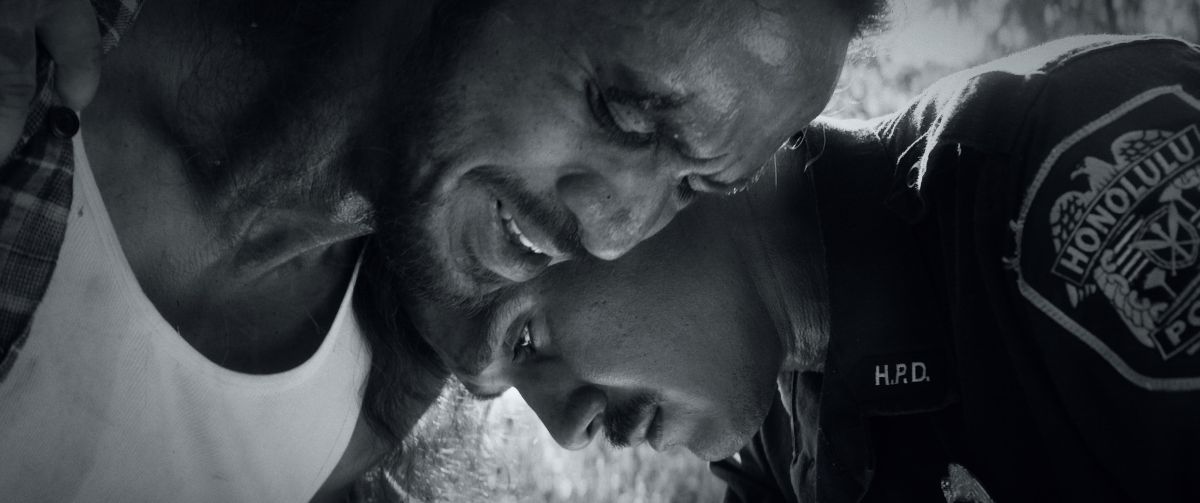
Pacific Cinewaves Shorts This year’s shorts program goes from Hawai’i, Aotearoa/New Zealand, the Marquesas Islands and back to Carson, CA; each story gently connected to each other with a nuanced thread of migration and diaspora. Inheritance Erin Lau. A struggling nature photographer is forced to confront the pain his family has carried for generations. Find Where I Belong Kahu KAIHA. Elvis, a homeless teenager must find courage to leave the street life in order to return to his birth island. A Tale of Two Sisters Angelique Kalani Axelrode. Blending narrative and movement based storytelling, two sisters overcome tension in their relationship; inspired by the mo‘oleloof Hi‘iakaikapoliopele. Ka Kahea: An Invitation into Sacred Space Justyn Ah Chong. A group of women heed the calling to make kapa for unearthed ancestral remains. The Voyager’s Legacy Bailey Poching. In 1970’s Auckland New Zealand, an immigrant family endeavors to give their story a fairytale ending. Follow Me Home Derek Felipe, Fa’avae Fa’avae, Michael Gray. When a young Pacific Islander boy, in search for his identity, grows up in a neighborhood clothed by gang violence and the tragic loss of his brother, he finds peace, passion and purpose in a career in fashion. E Mālama Pono, Willy Boy Scott W. Kekama Amona. A Native Hawaiian police officer is forced to choose between supporting his family, upholding the law, and doing what is morally right…or Pono.
CAAMfest Pacific Showcase
May 11-21. Tickets. In-person in San Francisco
Pacific Showcase is presented in collaboration with CAAM’s National Multicultural Alliance (NMCA) partner, Pacific Islanders in Communications (PIC). PIC supports, advances, and develops Pacific Island media content and talent that results in a deeper understanding of Pacific Island history, culture, and contemporary challenges.
Kāinga Narrative compilation. Angeline Loo, Ashka Sylvie, Ghazaleh Golbakhsh, Hash, Julie Zhu, Michelle Ang, Nahyeon Lee, Yamin Tun. Pan-Asian women’s confronting and comforting stories of becoming and being “at home” in Aotearoa/New Zealand. From the producers of the Māori and Pasifika compilations, Waru and Vai.
Family Ingredients Two episodes of the PBS series that showcases Hawi’I’s small town communities celebrate Hawaiʻi roots – from the rural island of Molokaʻi to the west and north shores of Oʻahu and the Kauaʻi.
Pacific Voices Shorts E Malama Pono, Willy Boy Scott W. Kekama Amona. A Native Hawaiian police officer is caught between his duty and his principles when he is sent to evict a settlement of unhoused Kānaka Maoli. Pō’ele Wai Tiare Ribeaux.A weaver navigates between survival and her connection to the ‘āina (land) when a mysterious rash grows on her body. After the Endling Daniel A. Kelin II. Told through the shadow puppets of Kānaka Maoli artist Meleanna Meyer, a Hawaiian tree snail struggles to survive as the very last of his species. The Last Rodeo Alison Week, Liz Barney. At the final rodeo competition of the season, a fifth-generation wahine paniolo (Hawaiian cowgirl) and her daughter question what is the best path forward.
EXHIBITIONS, CONVENINGS, TALKS, EVENTS
Counterpublic
Apr 15-July 15. Installations and performances in St. Louis and interactive.
Counterpublic is an exhibition in St. Louis that weaves contemporary art into the life of city for three months every three years in order to “reimagine civic infrastructures towards generational change.” These dynamic installations, performances and art pieces, curated by Risa Puleo, are grounded in the place–St. Louis. For the Native American artists participating this year, this has led to reflections on the role played by St. Louis (“Gateway to the West”) in the expansion that seized Native lands and overturned Native occupancy both locally and further west, contextualizing histories, now seen through Indigenous perspectives. The creative projects are described in detail on the website
New Red Order (Adam Khalil, Zack Khalil, Jackson Polys) “Give It Back: Stage Theory” Using the archives of St. Louis institutions, NRO investigated multiple timescales, from ancient Cahokia to the deployment west from St. Louis for the Indian Wars. They review these cases as a collection agency, pursuing debts due based on the timescales and the damages. In collaboration with St. Louis Art Museum’s New Media Program.
Cannupa Hanska Luger (Mandan/Hidatsa/Arikara, Lakota). “Future Ancestral Technologies: Roaming” Using the Instagram app, viewers are invited to view buffalo roam through virtual space on their mobile phones and on the AR platform (accessed through the QR code on the website) they can interact with several Midéegaadi (buffalo in the Hidatsa language). Interaction augments the herd. In collaboration with Fabricatorz Foundation.
Raven Chacon (Diné). “Music for 13 Paths” In the State Streets neighborhood Chacon subdivided the 12-note musical scale into 13 divisions, hand-tuning 13 chimes which were played by 13 performers moving through the neighborhood, ending with a compelling gathering in Benton Park, a setting to reflect on the implications for St. Louis as a launching place for the actualization of Manifest Destiny.
Anita Fields (Osage, Muscogee) and Nokosee Fields (Osage, Cherokee, Muscogee). “WayBack” A project connecting present day to ancestral Osage homelands. At Sugarloaf Mound (which is an ancient site sacred to Osage, and part of which was purchased by the Nation in 2007), forty platforms are installed, with Nokosee Fields’ composition for wind instruments playing. The platforms, modeled after those found at Osage events in Oklahoma, their present-day home, will be taken to Tulsa after the exhibit and distributed to members of the Nation.
Jaune Quick-to-See Smith (Confederated Salish and Kootenai Tribes). ”State Names Map: Cahokia” Exploring St. Louis’ history of trade from the days of Cahokia, an ancient center of a vast Indigenous trade network supported by the Mississippi River, this piece looks beyond the flattened space of maps to see the vastness of Indigenous life, including this map and a trade-like canoe made of the wood of the Osage orange tree. In collaboration with Monaco, an artist-run gallery in the States Streets neighborhood.
New York City Ballet
“Copland Dance Episodes”
May 12, 14, 20 mat., 24, 25. Tickets. In-person in NYC
NYC Ballet’s Resident Choreographer, Justin Peck, has collaborated with acclaimed painter and sculptor Jeffrey Gibson (Mississippi Choctaw, Cherokee descendant) on a new ballet to reimagine Aaron Copland’s music in a modern-day context.
Whitney Museum of American Art
“Jaune Quick-to-See Smith: Memory Map” | Events
May 18-19. In-person in New York and online via Zoom.
“Clocking Out: Time Beyond Management”
Wed-Sun, May17-28. In-person in NYC. Works by 24 artists and collectives including Victor Masayesva, Jr., Sky Hopinka, and Karrabing Film Collective. Curated by Fellows in the Whitney’s Curatorial Studies Program, the exhibit explores how time is represented, lived and contested in the catastrophic present. Consult the website for the Whitney Museum for more information.
“Walter Annenberg Lecture: Jaune Quick-to-See Smith”
Thurs, May 18, 6:30-7:30 pm EDT. In-person: tickets required. Online: free with registration
For more than five decades Jaune Quick-to-See Smith (Confederated Salish and Kootenai Nation) has produced pointed and often humorous works employing a rich visual vocabulary inspired by modern art historical movements like Pop and Abstract Expressionism and potent symbols of her own culture and identity, such as horses, bison, and canoes, to challenge the mainstream narratives and visual languages of American culture. For this program, Smith joins Adam Weinberg, the Whitney Museum’s Director, for a conversation about her life and work.
“Sharing History for the Future: A Convening with Jaune Quick-to-See Smith”
Fri, May 19, 11 am-8 pm EDT. Free. In person in New York and online. Registration required.
This event is a large gathering of members of the contemporary Native American arts community–artists, curators, and scholars–for conversations about the ongoing and overarching concerns in Smith’s work, including land, sovereignty, and Indigenous knowledge and identity.
11-11:30 am Welcome
- Adam Weinberg, Alice Pratt Brown Director, Whitney Museum
- Jaune Quick-to-See Smith (Confederated Salish and Kootenai Nation), artist and curator
- Joe Baker (Delaware Tribe of Indians), artist, curator, co-founder and Director, Lenape Center
- G. Peter Jemison (Seneca Nation, Heron Clan), artist and founding Director, American Indian Community House Gallery
11:30-1:00 Education
- Lara Evans (Cherokee), Vice President, Programs, First Peoples Fund, and former Program Director, Institute of American Indian Arts Artist-in-Residence Program
- Kendra Greendeer (Ho-Chunk), Ph.D. candidate in the Department of Art History at the University of Wisconsin–Madison; 2022–23 Paul Mellon Guest Predoctoral Fellow, Center for Advanced Study in the Visual Arts, National Gallery of Art; and Collections Manager, Little Eagle Arts Foundation
- Alicia Harris (Assiniboine), Assistant Professor of Native American Art History, the University of Oklahoma
- Lou Cornum (Diné/Bilagáana), Assistant Professor of Native American Studies, New York University
- Moderator: Chelsea Herr (Choctaw), Jack and Maxine Zarrow Curator of Indigenous Art and Culture, Gilcrease Museum
1–2 pmLunch Break
2–3:30 pmCurating
- heather ahtone (Chickasaw), Senior Curator, First Americans Museum
- Dorene Red Cloud (Oglala Sioux), Curator of Native American Art, Eiteljorg Museum
- Jeremy Dennis (Shinnecock), Lead Artist and President, Ma’s House
- G. Peter Jemison (Seneca Nation, Heron Clan), artist and founding Director, American Indian Community House Gallery
- Patricia Marroquin Norby (Purépecha), Associate Curator of Native American Art, The Metropolitan Museum of Art
- Moderator: Candice Hopkins (Carcross/Tagish First Nation), Executive Director and Chief Curator, Forge Project
3:30–4 pmCoffee Break
4–5:30 pmAesthetics
- Joe Baker (Lenape), artist, curator, co-founder and Director, Lenape Center
- Andrea Carlson (Grand Portage Ojibwe), artist and co-founder, Center for Native Futures
- Joe Feddersen (Okanagan/Sinixt), artist, writer, curator, consultant, and member of the Colville Confederated Tribal Arts & Humanities Board
- Chaz John (Winnebago Tribe of Nebraska/Mississippi Band Choctaw/European), artist
- Jolene Rickard (Tuscarora), Cornell University, Associate Professor, artist, and former Director of American Indian & Indigenous Studies Program (AIISP)
- Marie Watt (Seneca), artist
- Moderator: Laura Phipps, Assistant Curator, Whitney Museum of American Art
6–6:30 pmClosing Reading
- Natalie Diaz (Mojave), poet
- Heid E. Erdrich (Ojibwe), poet
6:30–8 pmCelebration
Minnesota Museum of American Art
“Elevating Native American and Indigenous Voices in Arts Institutions”
Free. Online.
A “fireside chat” exploring the ways in which Native American and Indigenous voices can and should be elevated and prioritized in American arts institutions. Recorded live on Nov 15, 2022
- Kate Beane (Flandreau Santee Sioux-Dakota, Muscogee Creek), MMAA Director
- Patricia Marroquin Norby (Purépecha), Associate Curator, Metropolitan Museum of Art
- Scott Shoemaker (Miami Tribe of Oklahoma), Program Officer, Arts and Cultures, Margaret Cargill Foundation
Abrons Art Center
“Kinstillatory Mappings in Light and Dark Matter”
May 11, 6 pm. Free. In-person in NYC
The ceremonial fire gatherings produced by Emily Johnson and Karyn Recollet continue, centered on Indigenous protocol and knowledge with guest artists and activists.
Seneca Art & Cultural Center
“WAMPUM/OTGOÄ”
March 25-Sept 16. Tickets. In-person at Ganondagan State Historic Site, Victor, NY
An exhibition featuring 18 important objects from the Musée du quai Branly-Jacques Chirac in Paris, four wampum belts from the Rochester Museum and Science Center, and the work of five contemporary Haudenosaunee artists. Each month highlights one of the contemporary artists featured in the exhibition.
Sat, May 13. G. Peter Jemison (Seneca, Heron Clan)
National Museum of the American Indian
“Native New York” Children’s Festival
Sat-Sun, May 13-14, 11 am-5 pm EDT. Free. In-person in New York City.
This year’s Children’s Festival highlights the exhibition “Native New York” Hands-on activities include corn husk dealmaking with cornstalk fibers. Participants can learn how to do traditional Tuscarora beadwork, listen to Haudenosaunee stories, and learn about lacrosse. Visitors can test their balancing skills by walking across a beam like a Mohawk iron worker, and dance with the Boys and Girls Club of Shinnecock Nation.
Heard Museum
“Making Spirit Rangers”
May 17, 12 pm-1 pm MST (3-4 pm EDT). Free online with registration. EVENT POSTPONED. NEW DATE TBD
Spirit Rangers was created for Netflix by an all-Native writer’s room and largely Native voice cast. Kodi, Summer, and Eddy Skycedar, Chumash/Cowlitz siblings share a secret. They are “Spirit Rangers” who help protect the land and spirits of the national park that they call home in California.
Speakers
- Karissa Valencia (Santa Ynez Chumash), showrunner & creator
- Raye Zaragoza-Tohono O’odham, Mexican, Taiwanese, Japanese heritage, musician
- Ehren Kee Natay (Navajo), music producer
- Nicolette Ray (Acoma Pueblo), storyboard artist
ANCESTRAL KNOWLEDGE and TALKS
Language, Maya Visual Cultures,
Indigenous Astronomy
Cultural Survival: “Grassroots Indigenous Language Exchange and Convening“
May 7-13. May 8-10. In-person in Oaxaca, Mexico.
May 11-12. Hybrid convening on Zoom (travel days, May 7 and 13)
In light of the Decade of Indigenous Languages, and aimed at addressing the problem of language loss, this exchange and convening is being held
- to share knowledge about the initiation and management of language programs, including managing personnel, budget, infrastructure and fundraising
- to establish self-determined agreements and foster a network of contacts working in the field of language revitalization.
Go to the website to see the agenda for the in-person and hybrid sessions. Simultaneous interpretation in English, Spanish and Russian is being provided.
Organizations include
- Colmix- Colectivo Mixe, Mexico
- Proyecto de Desarrollo Rural Integral Vicente Guerrero, A.C., Mexico Colectivo Nemuk, México
- Instituto Superior Pedagógico Intercultural Quilloac, Ecuador Reguardo Inga de San Miguel de la Castellana, Colombia
- Alcaldía del Común de Izalco, El Salvador
- Kumandin Language Group, Russia
- Itelmen language group, Russia
- Yuchi Language Project, US
- Spokane Language House, US
- Salish School of Spokane, US
National Gallery of Art: Mellon Lectures
“Vital Signs: The Visual Cultures of Maya Writing”
Sundays, April 16-May 21. Free with registration. In-person in Washington, DC and livestream.
A series of lectures by Stephen D. Houston of Brown University make up the 72nd A. W. Mellon Lectures in the Fine Arts at the National Gallery. “Maya writing of ancient Mexico and Central America represents a system of script and picture that never quite split apart yet never quite fused. In clouding such boundaries, text and image confound the idea of representation, and thus question distinctions among written records, depiction, and life itself. Recent decipherments of glyphs bring these views to the surface, allowing worlds long silent to disclose their secrets.”
Although most of the lectures of this six-part series are concluded, the remaining two are available to either attend or live-stream. It is likely that the series is being taped to be available online in the future.
Sun, May 14, 2-3 pm EDT. “Up, Down, and Around: The Meaning of Movement” …The ancient Maya…created many arrested scenes, captured mid-stride but implying journeys short and long. Hieroglyphs described that flux, focusing on horizontal and vertical paths that, in mythic and cosmic form, gave pattern, meaning, and certainty to human acts. Lecture 5. (for a contemporary community dance see the video “Dance of the Macaws” on the Met site)
Sun, May 21, 2-3 pm EDT. “Past Laughter: The Edges of Empathy” Most kingdoms and states are lacking in laughter. To poke fun at authority is to question its power…Yet the ancient Maya rejoiced in ridicule, if enigmatically. Hieroglyphs and images affirm that ancient Maya humor was filled with near folkloric tales showing what needed–and still needs–to be probed and deflated. Lecture 6.
Metropolitan Museum of Art
“Lives of the Gods: Divinity in Maya Art”
Ongoing webpage with audio and video links. Exhibition took place at the Met: Nov 21, 2022-April 2, 2023
In Maya art, the gods are depicted at all stages of life: as infants, as adults at the peak of their maturity and influence, and as they age. The gods could die, and some were born anew, serving as models of regeneration and resilience. In Lives of the Gods: Divinity in Maya Art, rarely seen masterpieces and recent discoveries traced the life cycle of the gods, from the moment of their creation in a sacred mountain to their dazzling transformations as blossoming flowers or fearsome creatures of the night. Remaining online are Images with audio discussions of some of the objects, and two videos: “The Dance of the Macaws” and the panel discussion, “Art of the Maize God.”
The Astronomical Society of Edinburgh
“Indigenous Australian Astronomy”
May 19, 2:30 pm EDT. Free. Online.
For AborIginal people of Australia the night sky played a significant part of their lives from navigation to spiritually connecting them to worlds beyond. Dr. Pete Kuzma will be speaking about Aboriginal connections to the Great Southern Skies and what is currently being done in Australia to promote Indigenous astronomy to the public.
AWARDS and HONORS
Forge Project and Momus
2023 Estuaries Art Criticism Residency
The 2023 Estuaries International Indigenous Art Criticism Residencies will be led by Dr. Leuli Eshraghi (Samoa) and Candice Hopkins (Carcross/Tagish First Nation). The following are the 2023 cohort whose projects are described on the website..
- Drew Kahu’āina Broderick (Kanaka ‘Ōiwi)
- Shándíín Brown (Diné)
- Napatsi Iola Qiluyak Joy Folger (Inuk)
- Tristen Harwood (Ngalakan, Nunggubuyu)
- Nadia Jackinsky-Sethi (Alutiiq)
International Council of Museums (ICOM)
The Director of the Museum of Contemporary Native Art in Santa Fe, Patsy Phillips (Cherokee), has been appointed a member of the US Board of Directors of the International Council of Museums.


