
Amelia Schafer
ICT
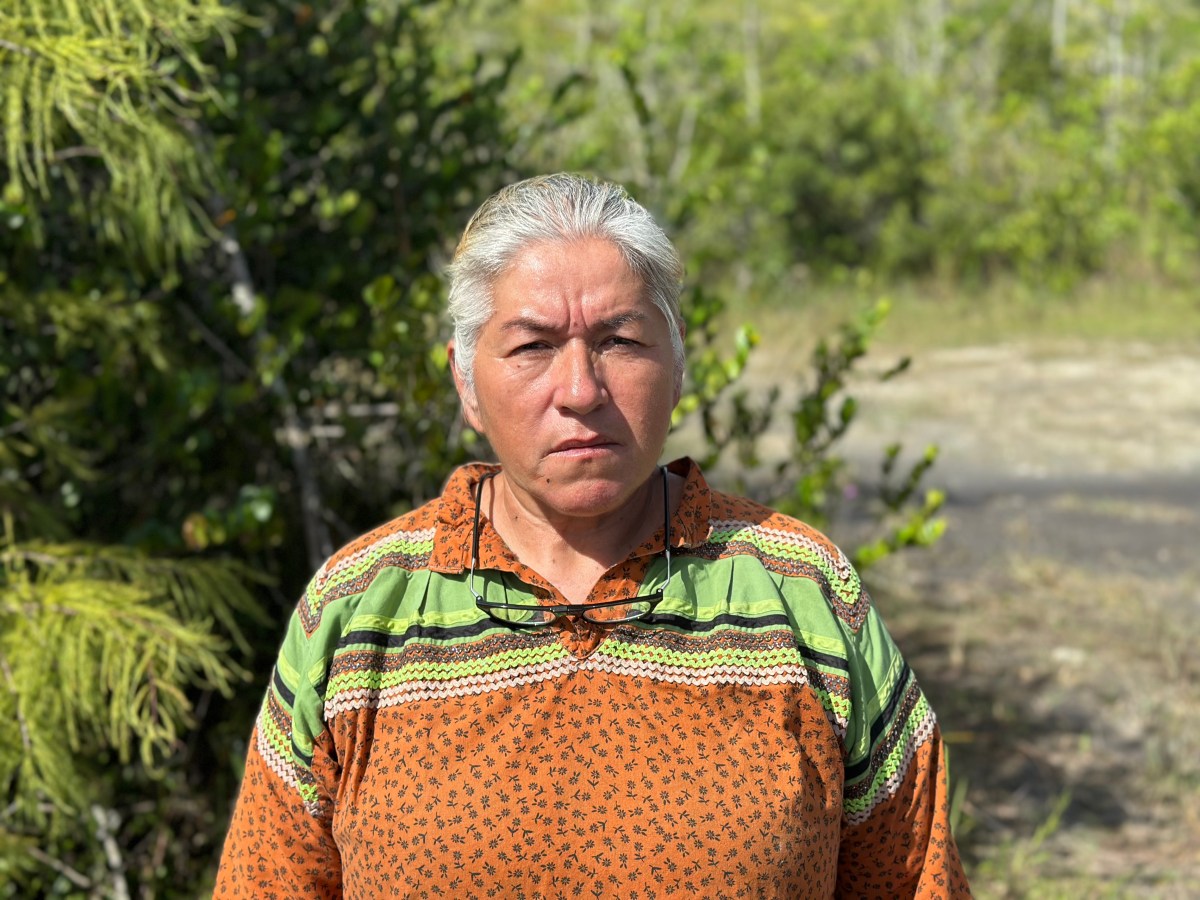
MICCOSUKEE RESERVATION, Florida — Betty Osceola stands tall wearing a bright orange Miccosukee patchwork shirt, her gray hair tied back in a braid. It’s sweltering in the Florida Everglades, swarming with aggressive mosquitos and bogged down by heavy humidity. But it doesn’t stop the Miccosukee woman from standing up for what she believes in. Nothing could.
Behind her is what’s been dubbed Alligator Alcatraz, President Donald Trump’s newest move to crack down on illegal immigration.
The site, a gated facility marked by a large blue sign, is heavily contrasted by the natural greenery, pink wildflowers, panther families and dozens of singing birds and frogs.
Osceola has spent more than a month praying over the facility, coming out every day for whatever amount of time she can, because for Miccosukee people like her, the Florida Everglades are much more than what some have described as a desolate swampland. It’s a refuge, a safe space, a home.
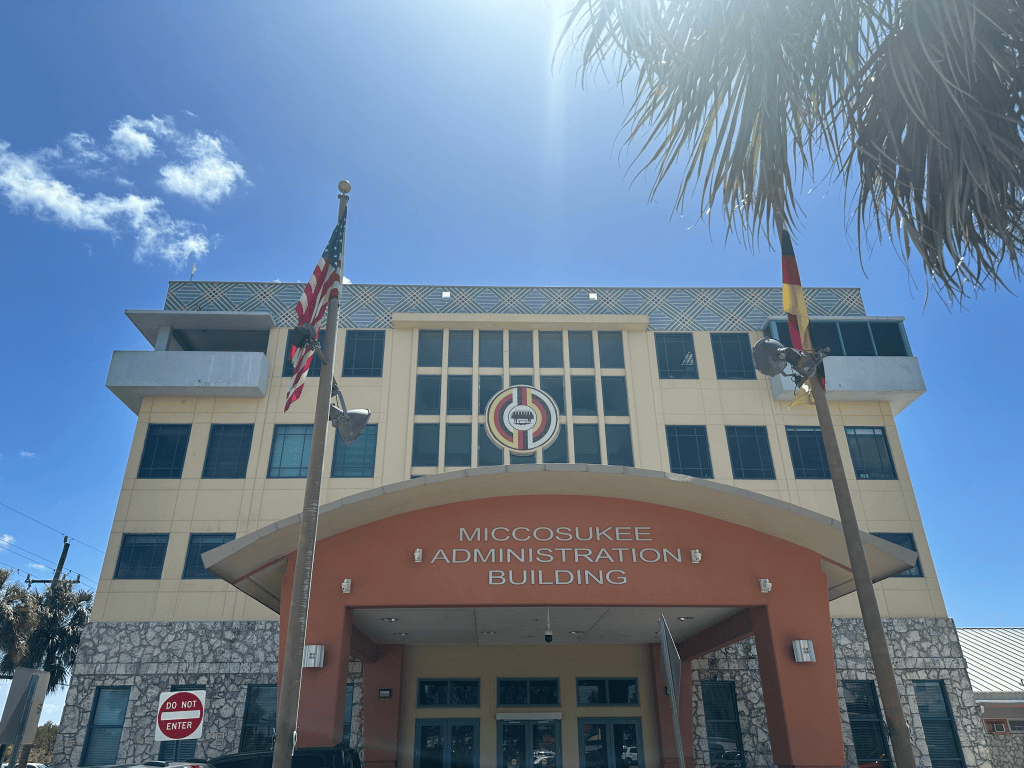
That home is threatened by the development of an immigration detention center in the heart of the Everglades, tribal officials said.
In July, the Miccosukee Tribe announced that it had joined nonprofit environmental group Friends of the Everglades and the Center for Biological Diversity in a lawsuit against Homeland Security Secretary Kristi Noem and other government officials and agencies in seeking to shut down the site.
On Thursday, Aug. 7, after a two-day hearing, U.S. District Judge Kathleen Williams issued a temporary restraining order declaring that the government must pause all construction on the facility. Williams’ order allows the facility to continue operating and holding detainees, but workers will be barred from adding new infrastructure for the next 14 days.
The tribe and the nonprofits are suing the Department of Homeland Security and the U.S. Immigration and Customs Enforcement, alleging the organizations have violated the Environmental Protection Act, National Historic Preservation Act and Administrative Procedures Act. The parties accuse DHS of not completing necessary environmental surveys, failing to provide notice to nearby residents, and failing to engage as federally required with the tribe as the site contains potential cultural artifacts and burial sites.
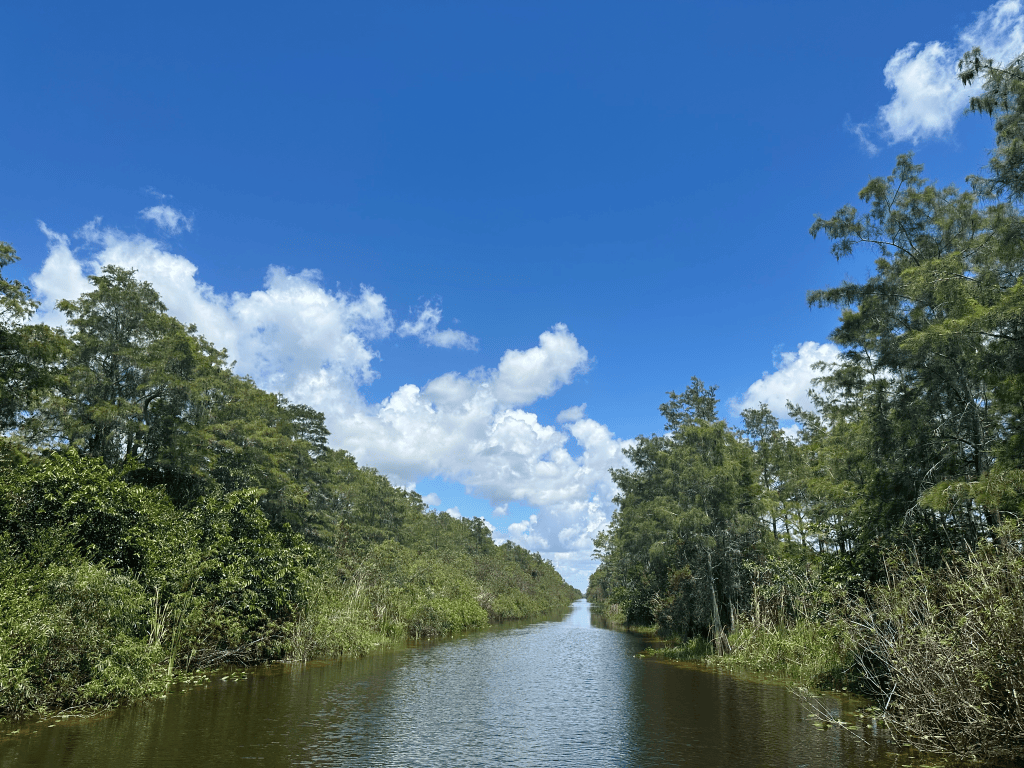
“Any time you put something that is unnatural in that kind of environment it is going to do big damage,” said Lucas Osceola, the tribe’s assistant chairman.
There are 15 camps within 10 miles of the site, 11 of which are within three miles of the detention center, he said, and the Miccosukee Reservation is just a 10-minute drive from Alligator Alcatraz. Several tribal members live less than three miles from the detention center. One historic camp, the Panther-Osceola camp, is just 1,000 feet from the detention center, according to court documents filed by the Miccosukee Tribe.
“I got offended for my people because when they said nobody lives out here, I’m like, okay, we’re in 2025 and we’re [Natives] still not people,” said Betty Osceola, who lives in the Big Cypress.
On Aug. 4, U.S. District Judge Rodolfo Ruiz, a Trump appointee, ordered that federal and state officials in Florida must produce agreements by Aug. 6 showing which government agency or private contractor is responsible.
Two days later, a different federal judge, Williams, heard arguments about stopping the construction of Alligator Alctaz over a disregard of environmental laws.The Miccosukee Tribe had asked Williams to issue a preliminary injunction to halt operations and future construction. Her temporary restraining order followed the next day.
The development has come at the expense of negating nation-to-nation conversations with the local Miccosukee Tribe, which has used the Everglades as a refuge and gathering space for centuries.
While the site isn’t on trust or tribal land, it’s a place the Miccosukee and Seminole have a sovereign right to access.
According to a 2020 court filing, the Miccosukee have the right to access the Everglades National Park, Big Cypress National Preserve (where the site is located) and the greater Everglades area.
These rights are guaranteed by several documents, including the tribe’s federal Indian reservation codified rights, the enabling acts of both Everglades National Park and the BIg Cypress, the tribe’s leased-land agreements, and permits to use land along the Miccosukee Reserved Area.
“We’re in an area where we lived historically before the Big Cypress Preserve was ever a Big Cypress Preserve, before Florida was ever Florida,” Betty said. “These are our ancestral territory lands as well.”

The Everglades and the Big Cypress National Preserve, where the site is located, were a refuge for Seminole and Miccosukee people during the Seminole War, which the nations see as one continuous conflict. Today, it’s a place where Miccosukee and Seminole people gather traditional medicines, practice ceremonies and live.
Several endangered species live in the Big Cypress and the larger Everglages, including the bonnetted bat and Florida panther.
“At nighttime with all those stadium lights going on, it’s so bright it impacts those nocturnal animals,” Betty said. “There’s a family of panthers in this area, there’s bears in this area, there’s a place, one of the few places that you still see fireflies. So all that light that’s going on is disrupting their habits.”
The tribe is currently conducting studies regarding light, sound and water pollution, Lucas Osceola said.
The detention center’s development comes on the heels of significant strides made one year ago in nation-to-nation relationships regarding the Everglades.
In August 2024, the tribe and National Parks Service signed a historic costewardship agreement. The agreement allows for the cooperative administration of wildland fire and prescribed burn operations, hydrology and water resources, and visitor services in the Shark Valley area. The agreement also acknowledges Miccosukee citizens’ rights to traditional fishing and plant gathering within park borders.
“We care about our environment,” Lucas Osceola said. “It’s a very delicate ecosystem that we have here in the Everglades, and we have to make sure that we’re taking care of it, not just for us, but for all of South Florida, including the wildlife.”
While federal officials have said the site is temporary, its impact won’t be, Lucas said.
“I would like for anybody that can reach out to reach out to their congressmen or representatives to let them know that the environmental impact that Alligator Alcatraz has is not going to just affect our generation, but all future generations,” Lucas said. “That’s where the tribe is coming from. We are here to make sure that we protect South Florida for all future generations to come.”
An interfaith vigil is held every Sunday outside of the detention center at 5-6 p.m. Eastern Standard Time.

