ICT is working to shape the future of journalism and stay connected with readers like you. A crucial part of that effort is understanding our audience. Share your perspective in a brief survey for a chance to win prizes
Joaqlin Estus
ICT
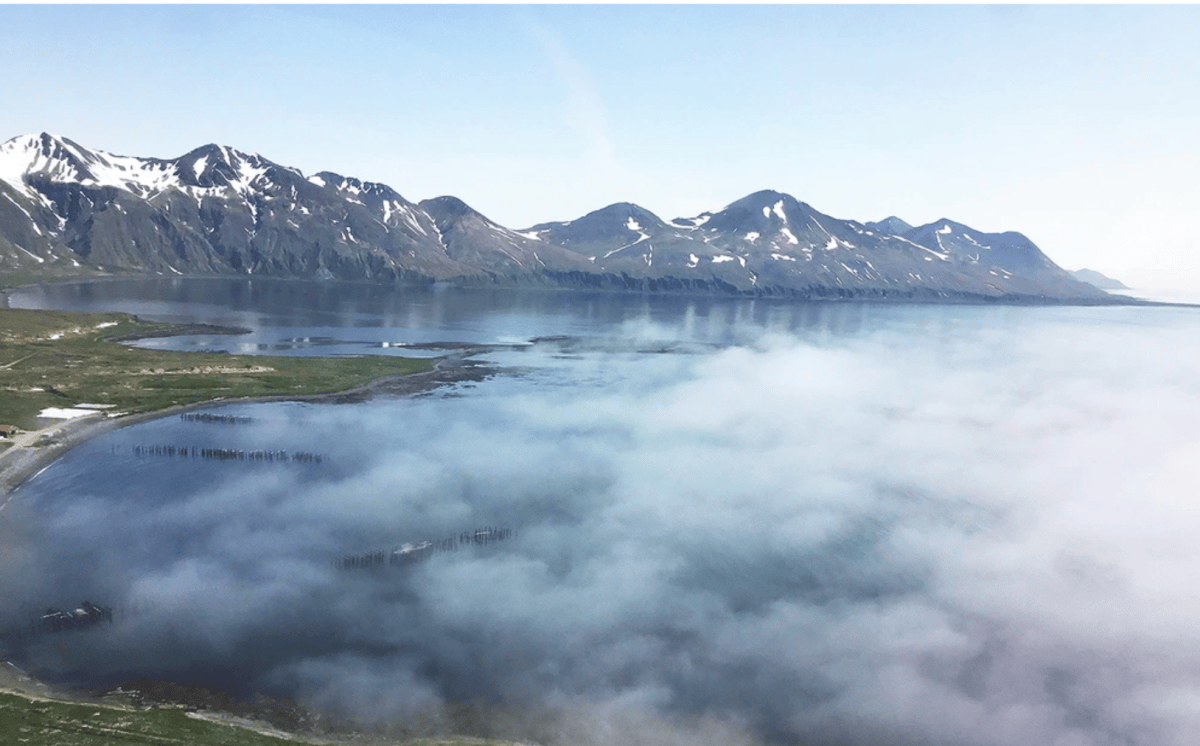
ANCHORAGE, Alaska — Attu villagers historically have experienced more than their share of troubles. Attu is one of the Near Islands, so named because they are the Aleutian Islands nearest to Russia and Asia, a full 1,100 miles – roughly the distance between Rapid City, South Dakota and San Francisco – west of the Alaska mainland. Russian fur traders brought death to Attu by massacre and disease in the 1700s. The population of the Attu and nearby islands dropped from an estimated two to five thousand to about 100. By 1942, Attu’s population was 47.
In 1936, Smithsonian anthropologist Ales Hrdlicka took the remains of 68 individuals from gravesites in the villages of Attu and Shemya and a former village site on Agattu. He was gathering human remains, especially skulls, from around the world in an attempt to prove his bogus theory that physical differences would show the superiority of the White race.
Barbara Riley Asher, a descendent of an Attu villager, said she’s sure he took her ancestors without permission. “It had to have been. They would not have been given them voluntarily. So it had to have been people who went and dug them up. That in itself is disgraceful.”
Most people don’t know that Japan occupied American soil during World War II, when Japanese soldiers took over Attu. They saw it as a strategic location for controlling sea lanes in the North Pacific. The United States battled and defeated the Japanese on Attu in 1943.
First, though, in 1942, the Japanese killed the White schoolteacher and took 46 residents as prisoners of war. By the end of the war, almost half of the imprisoned Attuans had died in Japan of starvation and malnutrition. Survivors were not allowed to return to Attu, which is now abandoned.
Asher’s mother survived the prisoner of war experience. Then, as an orphaned teenager, she was placed in a boarding school. Asher said her mother never talked about being a prisoner of war. However, Asher believes the trauma was behind her mother’s binge drinking.
Now, after five years of negotiations and effort, the human remains taken 87 years ago by Hrdlicka finally were returned from the Smithsonian to their respective village sites during a mid-August trip. First, Helena Schmitz, advocate for the repatriation and founder of the nonprofit Attu Forever, traveled to Washington, D.C., to pick up the remains.

“There’s nothing that can prepare someone to do this type of work… It’s very overwhelming. It’s just that you have grief. You have joy, you have all the feelings, and you just also have that confusion,” she said. “You have the anger that this happened to deal with. So it’s a compilation of everything all at once. So that’s why it’s overwhelming.”
After she and Smithsonian staff wrapped her ancestors in muslin, the packages traveled by plane and van to Homer, a town in Southcentral Alaska, where they were loaded aboard the U.S. Fish and Wildlife Service vessel Tiĝlax̂.
Four representatives of Attu Forever, and six representatives of the federally recognized Atka tribe came on board midway across the Aleutian chain. The repatriation process for the return of these human remains had to go through the federally recognized Atka tribe because Attu is not a federally recognized tribe, in part because their home village no longer exists.
Asher was one of the Attu Forever representatives on the voyage. She said, “It was a great honor to be part of the repatriation of remains, and if you look at the map of Alaska and see where we had to go to repatriate these remains to these three different islands, people would be amazed at the distance we had to travel. But it was important to do this because we had to honor ancestors by burying them where they originally came from,” she said.
The group spent a day each at the three islands. Steve Delahanty, refuge manager for Alaska Maritime National Wildlife Refuge, which sponsored the sea portion of the trip, said, “I was very happy and honored that we could be a part of it… my main emotion really was gratitude. I think I felt we were honored to be able to help with the healing, I guess, a little bit. It doesn’t fix, it doesn’t make up for all the past bad things, and it doesn’t guarantee a rosy future, but it’s still one step in the healing journey, and I felt gratitude that we could be a part of that.”
One of the ship’s crew members checked the ground at Attu for explosives left from the WWII battle fought there. Then the men dug graves. Asher said cedar was burned over each of the grave sites, followed by a reading of scriptures and a prayer.
After the reburials, the ship traveled to Atka, where Asher said villagers hosted a picnic and three women performed traditional songs and dances to celebrate the return of the ancestors.
Schmitz said, “I hope that this story really helps other Indigenous committees that are struggling with being able to repatriate their loved ones’ remains from the Smithsonian or other institutions.
“This repatriation working historically is the longest or the longest traveled amount, 7,500 miles, that’s a long repatriation project. And if we can do that, then I know others can do it as well. And there may be a lot of different barriers that they face. But I just hope that this story helps those communities continue their work to not give up, to just be persistent and consistent,” she said.
Attu Forever’s next goal, Schmitz said, is to gain federal recognition for the descendants of Attu villagers.

ICT is working to shape the future of journalism and stay connected with readers like you. A crucial part of that effort is understanding our audience. Share your perspective in a brief survey for a chance to win prizes.