

By Joaqlin Estus
ICT
The U.S. Supreme Court ruled in 2020 that Alaska Native corporations are tribes but not federally recognized sovereign tribes. Since then, both tribal and business leaders have tried to sort out what the ruling means for corporate and tribal rights and responsibilities.
The issue stems from the 2020 Coronavirus Aid, Relief, and Economic Security Act in which Congress allocated $8 billion for tribes. The Treasury Department set aside $500 million of that for Alaska Native for-profit corporations.
Tribes, some from Alaska and some from the Lower 48 states, sued saying Native corporations don’t meet the definition of federally recognized tribes, which have inherent sovereignty. Tribes argued the corporations shouldn’t get the money because their main purpose is to make profits, not provide social services. They also expressed concern that recognizing the corporations as tribes would lead to pressure from corporations to assume more tribal rights.
But the corporations do meet the definition of tribes in the Indian Self Determination and Education Assistance Act, which was cited in the CARES Act. So the Supreme Court sided with the corporations. The Department of Treasury issued the $500 million to corporations, which distributed it for COVID relief.
SUPPORT INDIGENOUS JOURNALISM. CONTRIBUTE TODAY.
The corporations were formed after the Alaska Native Claims Settlement Act of 1971 transferred title to 44 million acres and nearly $1 billion to them to make profits to distribute to Native shareholders. The corporations were also authorized to foster cultural and language preservation, and dispense scholarships. Some have taken on other responsibilities, such as advocacy on behalf of their shareholders.
For example, Ahtna, the Alaska Native corporation for the eastern interior region has advocated for subsistence for its shareholders both before the boards of fish and game and in court.
For their part, federally recognized tribes have inherent sovereign rights and responsibilities. Under the U.S. Constitution and a large body of law, court rulings and regulations, they are eligible for federal funding, services and certain protections. Tribes in Alaska have those same rights even though most do not have a land base as do tribes in the lower 48 states.
At the National Congress of American Indians mid-year conference in June in Anchorage, several tribes introduced a resolution calling for closer scrutiny of legislation concerning tribes. The idea was that monitoring such legislation would ensure Congress does not inadvertently allot money meant for federally recognized tribes to other entities.
Alaska Native corporations saw it as an attempt to exclude them from federal benefits. The resolution was tabled.
See related: Tempers flare over definition of tribes, Alaska Native corporations – ICT
Speaking at the Alaska Federation of Natives convention, Sheri Buretta, Alutiiq, board president for the Native regional corporation Chugach Alaska, said, “this issue was very harmful to our community. In the midst of a global pandemic, we were attacked by these tribes questioning our status. At 50 years after the (Alaska Native Claims) Settlement Act, the danger that this lawsuit put onto our people and our organizations and our corporations was devastating.”
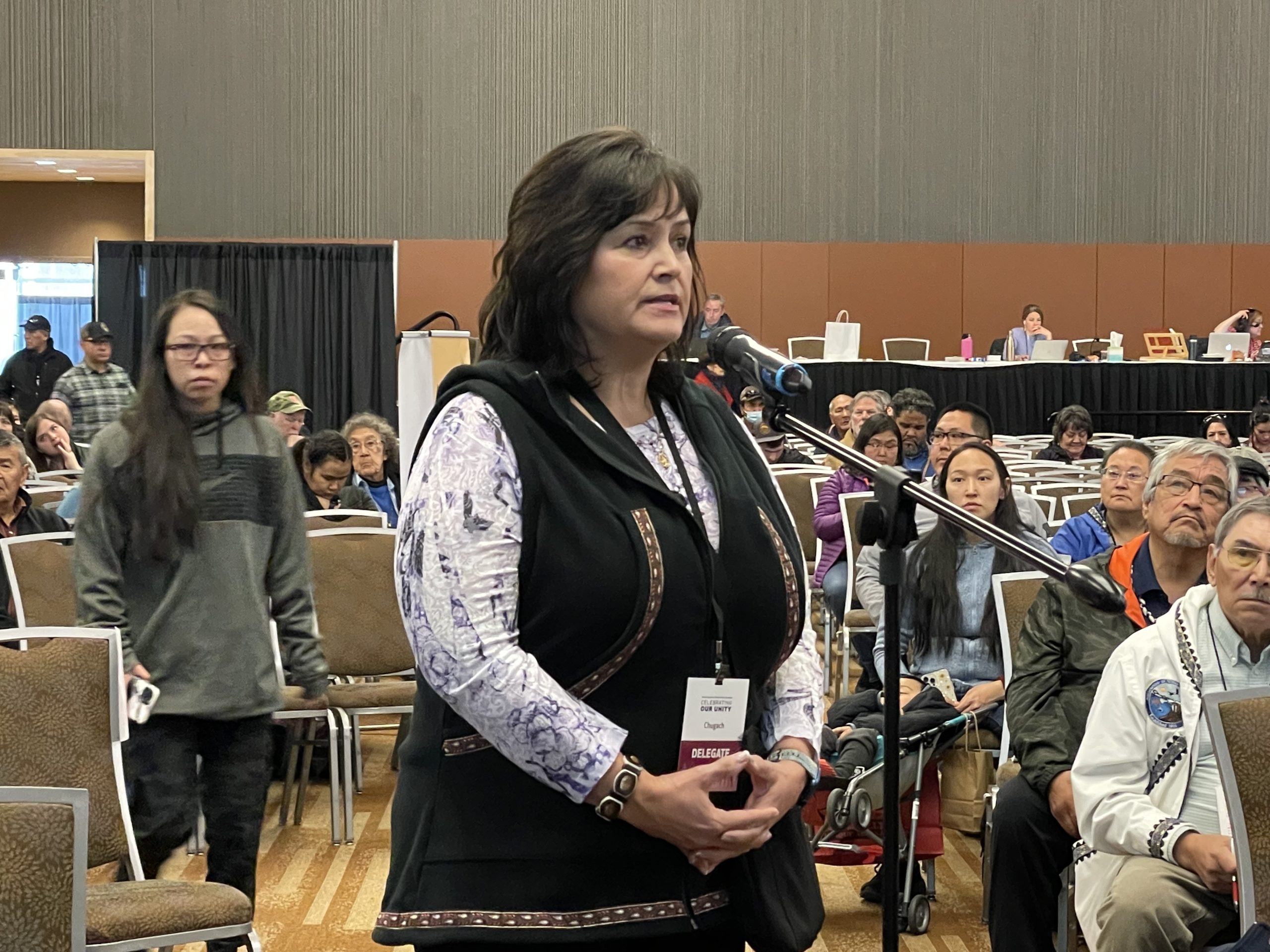
“This should bring awareness that we have to become educated and we have to stand together because we can’t allow outside organizations to influence our people and to affect us the way that this lawsuit did,” Beretta said.
On Oct. 22 delegates to the Alaska Federation of Natives convention united on the message that Alaska’s “unique self-governance” should not hinder the flow of federal dollars to Alaskan entities nor their rights to benefits such as consultation. The Alaska federation convention is the state’s largest gathering of representatives of tribes, non-profit Native organizations, and Alaska Native for-profit corporations.

Richard Chalyee Éesh Peterson, Haida and Tlingit, is president of the Central Council of Tlingit and Haida Indian Tribes of Alaska. He said, “For whatever reason, our Indigenous people across Turtle Island, North America, have been pitted against each other, and especially here in Alaska through the recognition of sovereignty and ANCSA (the Alaska Native Claims Settlement Act). So we’ve been pitted against each other. We need to start working together. We need to stop fighting over scraps, and we need to start demanding and advocating and building and getting more for our people, and by working together, we’re gonna do that.”
The newly adopted AFN resolution urges “the federal government, NCAI and other tribal entities to respect Alaska’s unique model of Indigenous self-determination that provides critical services to our Alaska Native people that were promised by the federal government, just as Alaska Native people respect the right of the Lower 48 Tribes and Native Hawaiian Organizations to determine their own models of Indigenous self-governance.”
The resolution also said, “delegates to AFN recognize that Alaska Native corporations are not sovereign governments nor are they seeking sovereignty.”
Sign up for ICT’s free newsletter.
Mike Williams, Yup’ik, is chief of the Akiak tribe and the Alaska region representative to NCAI. Speaking of the statements respecting tribal sovereignty, he said, “I think that’s something, a huge statement to make by the Native corporations and also the support by Native corporations to continue to enhance, advance our tribes. And so I think it’s one step further.”
Williams said, “we have a lot of work to do with lands and trust issues, Indian Child Welfare Act, tribal courts, violence against women, and many other services that the tribes can provide. But we need the support of our Native corporations.” He said discussions among Native corporations and tribes will continue in December.
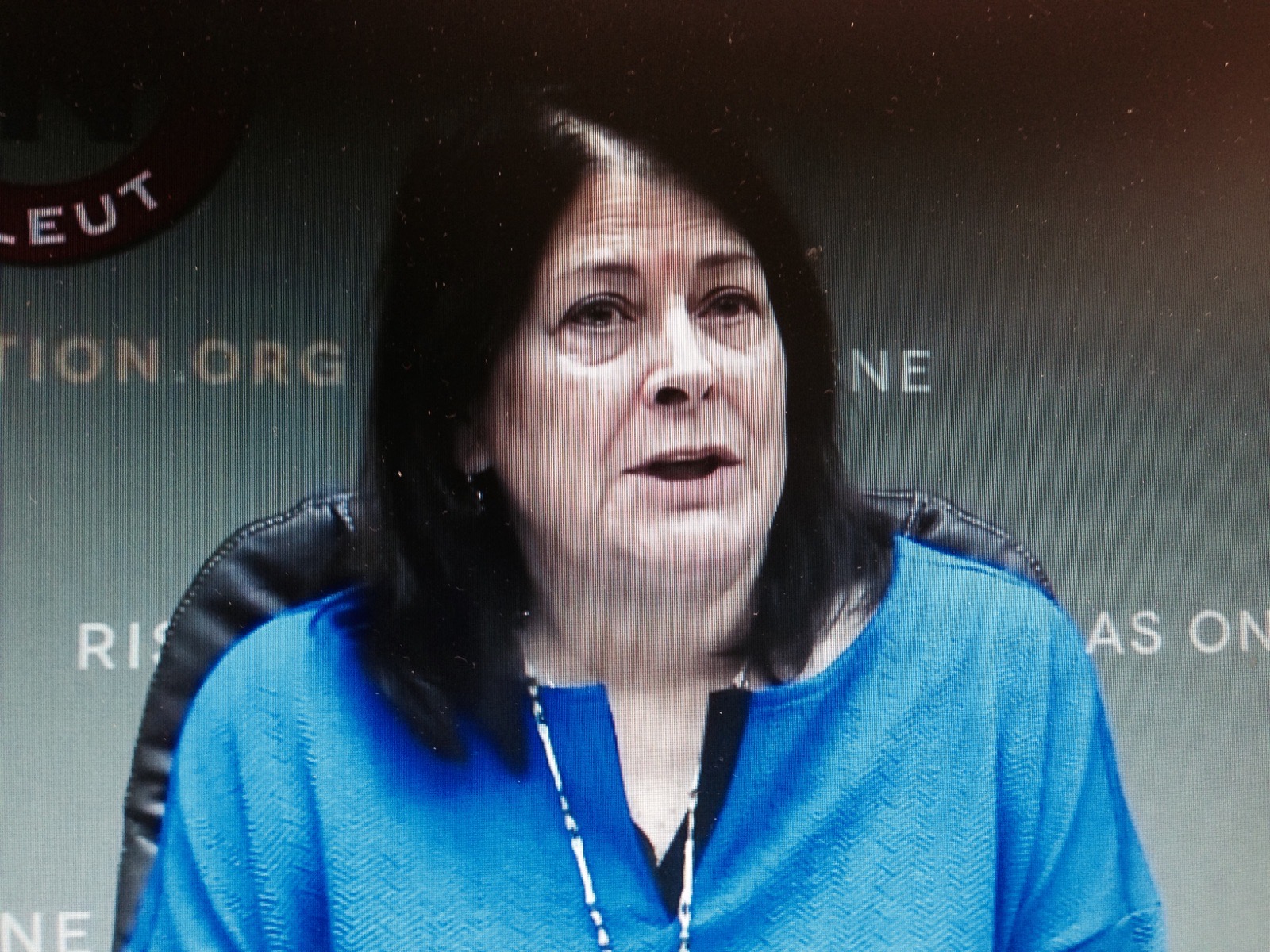
Julie Kitka, Chugach Eskimo, is AFN’s president. She said the resolution makes it clear that corporations’ relationships with their shareholders differ from those of tribes to their citizens.
“The corporations aren’t asking for authority over the members,” Kitka said. “The corporations aren’t asking to set up tribal courts and be able to do marriages and divorces and child custody. That is not what the corporations are asserting. The corporations know that is a responsibility of federally recognized tribes, not of the corporations. So they have different areas (of responsibility).”
Kitka said the debate was about trying to create unity in the state. “We solve our own problems,” she said. “We identify our own issues, but we come together and we don’t let outside forces impact or determine our future.”
This was the first year AFN held its annual convention in person since the start of the pandemic. Kitka estimates up to 5,000 people attended, making it the state’s largest gathering of Alaska Natives.

Our stories are worth telling. Our stories are worth sharing. Our stories are worth your support. Contribute $5 or $10 today to help ICT carry out its critical mission. Sign up for ICT’s free newsletter.

