
By Joaqlin Estus
ICT
Considering it is the largest state in the U.S. and home of 229 federally recognized tribes, Alaska has a government system that can be confusing.
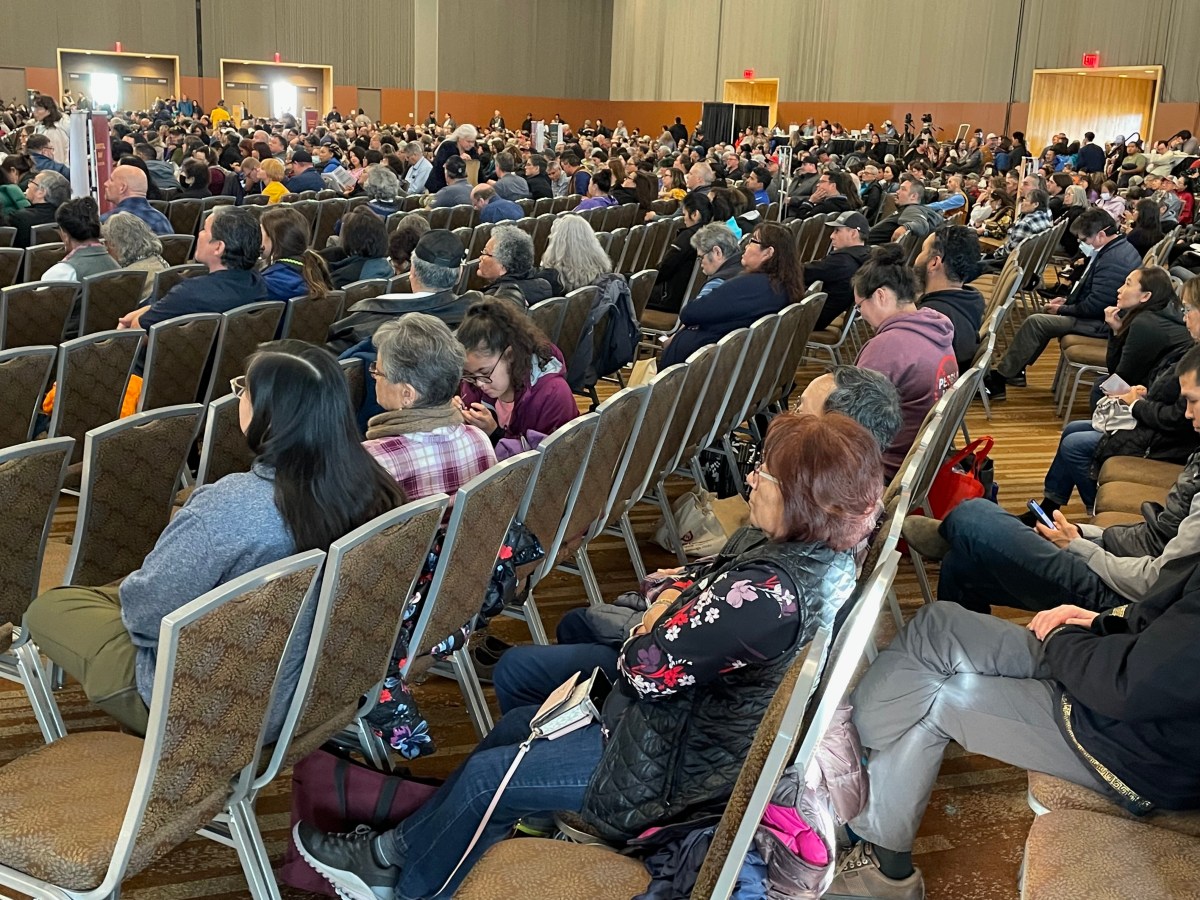
A panel discussed the respective roles of such entities as Alaska Native corporations and regional nonprofits and how they work with tribes during the 2022 Alaska Federation of Natives convention on Oct. 21. It gave them a chance to each describe what their organization does for the people they serve.
The Alaska Native Claims Settlement Act transferred title to 44 million acres of land and nearly $1 billion to for-profit Native corporations to make profits and issue dividends to shareholders. Alaska has 12 regional corporations and some 200 village corporations. Shares were issued to Alaska Natives alive when the act was signed on Dec. 18, 1971. Shares can be inherited or gifted, and some corporations have issued shares to younger generations.
See related: Tempers flare over definition of tribes, Alaska Native corporations – ICT
SUPPORT INDIGENOUS JOURNALISM. CONTRIBUTE TODAY.
Tribes have inherent sovereign rights and responsibilities under the U.S. Constitution. This has been upheld by a large body of law, court rulings and regulations. As a result, tribes are eligible for federal funding, services and certain protections. Tribes in Alaska have those same rights even though most do not have a land base as do tribes in the lower 48 states.
Alaska also has regional non-profit organizations serving Alaska Natives with health and social and other services.
Seerelated: Tempers flare over definition of tribes, Alaska Native corporations – ICT

Dr. Pearl Kiyawn Brower, is president and Chief Executive Officer of Ukpeagvik Iñupiat Corporation, a village corporation with more than 2,900 shareholders. She said her corporation has come up with ways to benefit shareholders while also making a profit.
“We partner throughout our community in a lot of different ways in order to connect science to us as Indigenous and Inupiaq people,” Brower said.
“So we actually work with our school district. And we are doing a lot of things in regards to ice coring, to having stations actually on the shore-fast ice. And our students are able to work directly with scientists who are coming up to our community and working.
“I think what’s really exciting about that is there’s a lot of cross-sectional learning, right? You have the scientists coming up from other parts of the world, and then you have our Inupiaq students and they’re each able to learn from one another.”
Utquiagvik corporation also sponsors science fairs and a monthly get-together, “Soup and Science,” where they share traditional soup and have scientists discuss their work. The corporation also has partnered with the Ilisagvik tribal college to develop a new college campus.
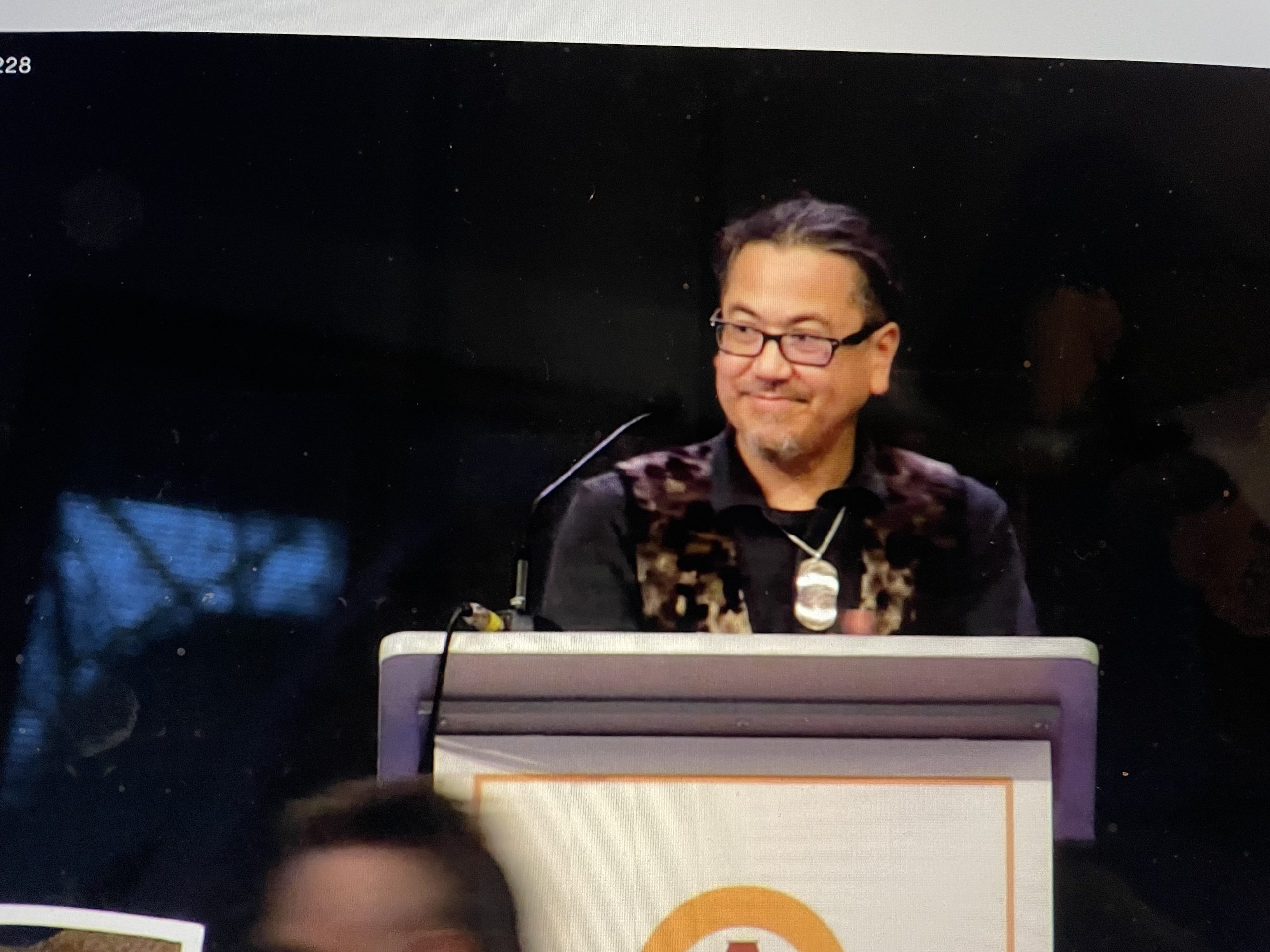
Joe Nelson, Tlingit, is board chair for Sealaska Corporation and co-chair of the Alaska Federation of Natives. He said cultural preservation has been a priority through the corporation’s nonprofit arm: Sealaska Heritage Institute. “If we only had a dollar in the bank left at Sealaska, every board I’ve interacted with over the years, that dollar would go to Sealaska Heritage Institute because that investment is an investment in us in the long term.”
Sign up for ICT’s free newsletter.
He said the Institute stepped up to build an art campus when everybody in the educational system was stretched trying to survive a pandemic.
“We’re on the map, not just as the Auke Kwan in the capital city, but really striving to be the northwest art capital of the world,” Nelson said. “And there are totems, at least 10 of them right now in all of our communities, that are being worked on right now by master carvers. But the condition was they had to have an apprentice or two with them.”
He said Sealaska’s 24,000 shareholders are spread across the country and the corporation and its family of entities share one common purpose: “to strengthen our people, our culture, and our homelands.”
Ken Johns, Athabascan, is board chairman of Ahtna Inc., which is the for-profit corporation for the eastern interior region of Alaska and has 2,000 shareholders. He said in addition to working to create profits, Ahtna has taken on the fight to protect Indigenous rights to gather and share food from nature.
“Ahtna has been ground zero for the fight against subsistence,” Johns said. The fight has been heated in his region because of the easy road access for nearly half the state’s population.
“All the major highways go through our region,” he said. Moose, caribou, Dall sheep, the Copper River fisheries and spectacular scenery are big draws.
“Since the 1990s, we have been fighting, not only through the game boards and fish board, but in (the) court system. And we have, monetary wise, we have spent probably, I would safely say, four to five million dollars fighting in court just to be able to provide for our subsistence needs in our area.” Johns said the pressure on fish and wildlife resources is growing and other regions will soon face the same issues.

Brian Ridley is the Chief of Tanana Chiefs Conference, a regional nonprofit organization that provides health and social services to 20,000 tribal members living in 39 communities in interior Alaska.
He said 80 percent of Tanana Chiefs Conference work is health care.
“A few years back, we asked our elders kind of priorities and, and kind of what they were looking for,” Ridley said. “And the overwhelming thing that they asked for was care closer to home. And so, some of you might know, we built the first chief Andrew Isaac Health Center in Fairbanks. And then here recently we built an expansion where we doubled that.”
They built a sub-regional clinic as well. The chiefs conference also runs an Elder nutrition program.
“When I think about this, it’s interesting to me because I remember being a kid growing up in my village of Eagle back in the ‘80s, and hoping grandma would take me to the elder meal.
And that was our big excitement back then,” Ridley said.
He said Tanana Chiefs Conference also provides home care and chore and respite services for elders and caregivers, as well as end-of-life aid.
Then, there are the federally recognized tribes. They manage social services, Indian child welfare, public safety and justice, among an array of other governmental programs.

Chalyee Éesh Richard Peterson, Haida and Tlingit, is president of the Central Council of the Tlingit and Haida Indian Tribes of Alaska, which has 35,000 enrolled citizens.
He said upholding customs, traditions, and their people’s way of life so “our citizens have every opportunity to be the best versions of themselves, that’s what the tribe’s role is. And of course, we have partnerships.” Those partnerships help make running water, schools, and other services available, he said
“We have to really be willing and able to partner with anybody and everybody from government-to-government state and federal levels. And we do that. We’ve been the backbone for so long, and the partnership that all these entities run to,” Peterson said.
“I’m incredibly thankful that we’ve been able to develop healthy or healthier relationships with our corporations,” he said. “And I think if our tribes and our corporations can work hand-in-hand with our governance and our right to govern, and the bringing to the table the lands and the resources, being mindful that we’re the same people … tribes and corporations are tools for us.
“We need to work together so that we are building the better path forward for our children. So that one day a millennia from now, the children and the people of that time refer to the ancestors and about how they got it right, and they mean us. And that’s what I strive for, to honor my ancestors by hopefully being the ancestors our future generations need. “

Our stories are worth telling. Our stories are worth sharing. Our stories are worth your support. Contribute $5 or $10 today to help ICT carry out its critical mission. Sign up for ICT’s free newsletter.

