
Miles Morrisseau
ICT
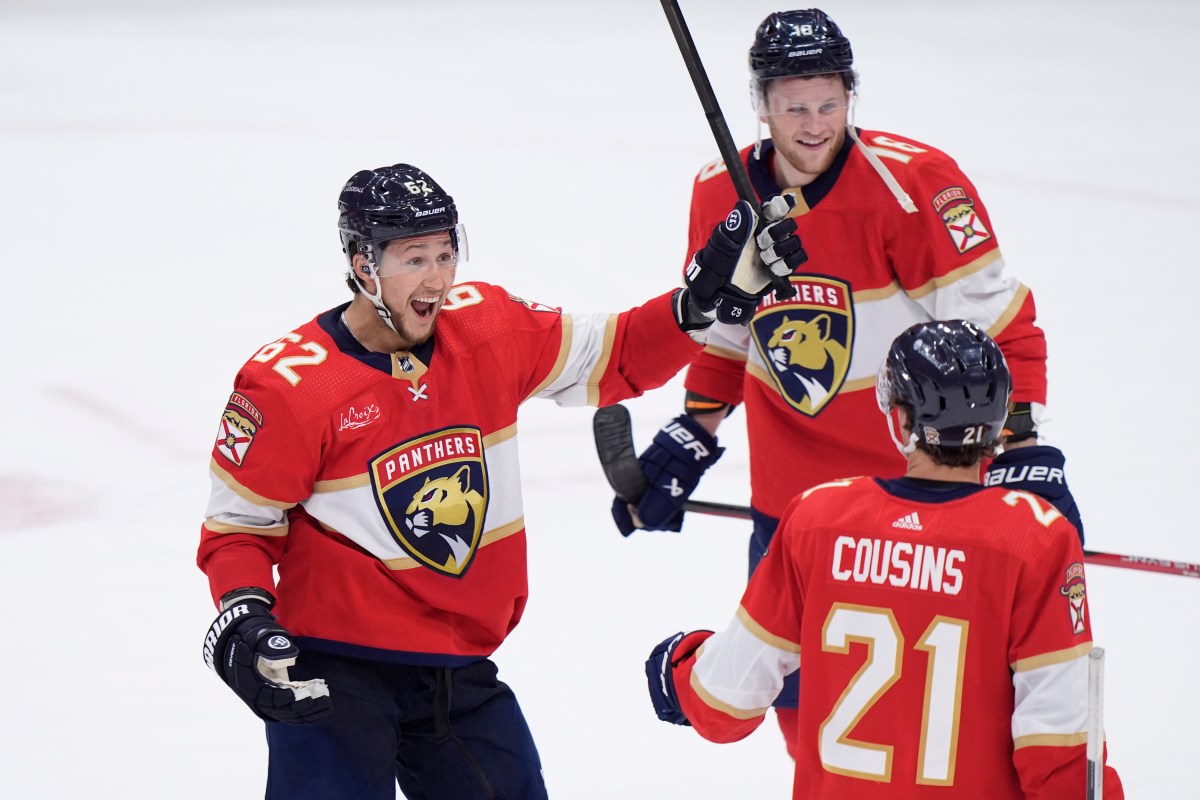
The first round of the NHL playoffs began with a handful of Indigenous players with a shot at winning the National Hockey League’s most coveted prize, the Stanley Cup. At the end of the first round of the playoffs only one player remained, Brandon Montour, Six Nations of the Grand River, star defenseman for the Florida Panthers.
Following their 4-1 series win over state rival the Tampa Bay Lightning, the Panthers had a chance to put up their skates and await the wrap up of round one of the NHL playoffs. It was another solid playoff performance for Montour who had a goal and two assists to go along with his team leading time on ice of 23:26.
Their challenger was decided in extra time in the maximum amount of games. The Boston Bruins defeated Original Six rival the Toronto Maple Leafs in a game seven showdown that was won in overtime on a goal by Bruins star, David Pastrnak. Connor Dewar, Metis Nation, had a solid series for Toronto but the league’s longest Stanley Cup drought continues.
The Washington Capitals were swept by the league leading New York Rangers, the recipient of the President’s Cup for most points during the regular season. T.J. Oshie, Anishinaabe, would not be challenging for another cup this season.
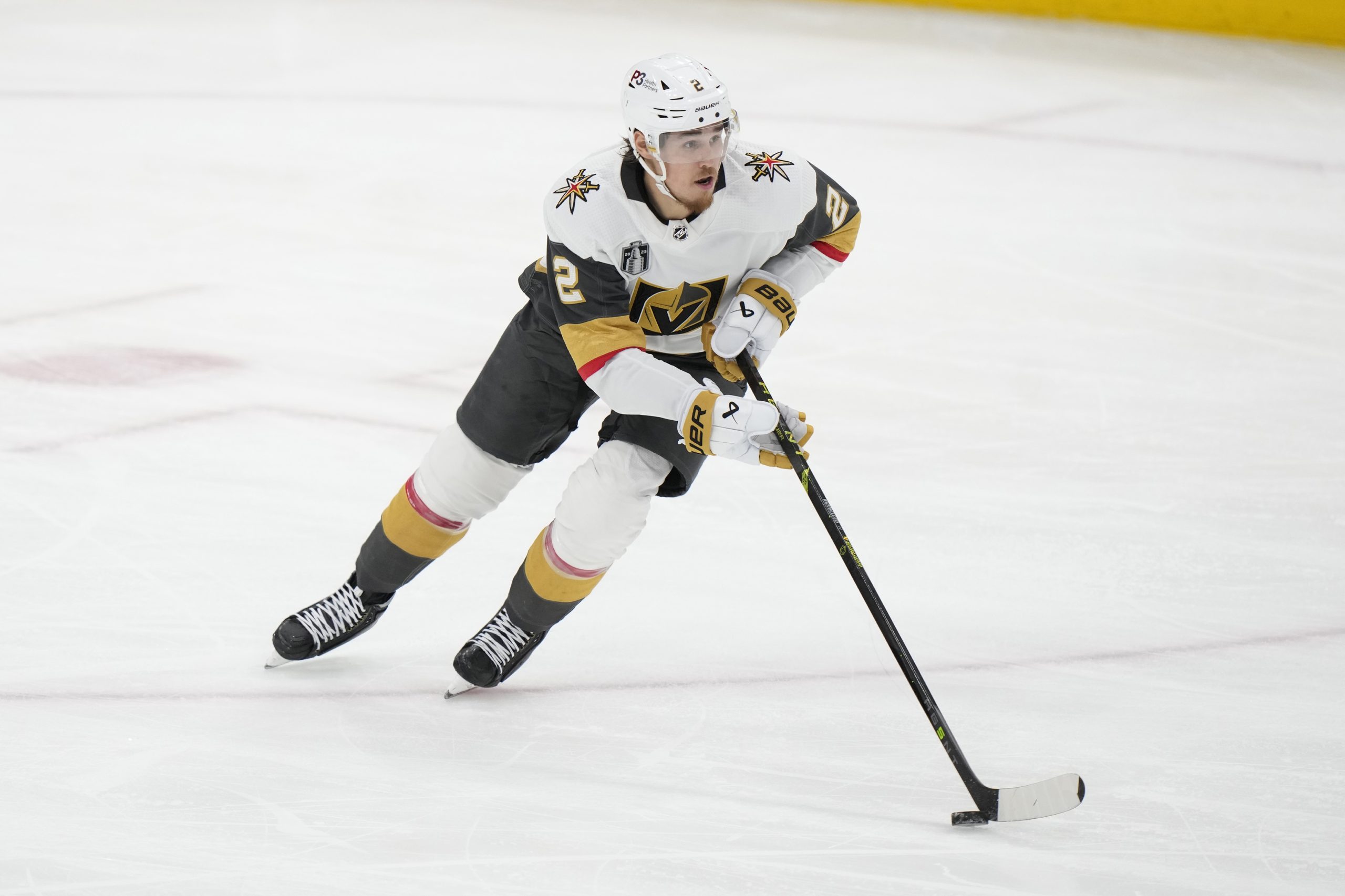
Last year’s Stanley Cup champions, the Vegas Golden Knights went down fighting to the Dallas Stars in a seven-game series. It was the first championship for the Knights and it was also the first time a Dakota Nation citizen lifted the cup.
Zach Whitecloud, Sioux Valley Dakota Nation, took the Cup home this past summer as a member of the Knights. Whitecloud joined an exclusive club of Indigenous players to win it all.
It is a long road for any team to win the Cup, the physicality of the games is doubled with every player trying to finish their checks and star players willing to throw punches.
In recent years the game of hockey like most other professional sports has been dominated by analytics. It would be interesting to run the numbers on the probability of an Indigenous player winning a Cup and more specifically winning the first Cup for a franchise.
Despite the few Indigenous players that made the NHL, the comparative number that won the Cup is incredible.
Clarence “Taffy” Abel, Ojibwe, was on the roster when two of the Original Six won the championship for the first time. Abel played for the New York Rangers when they won the cup in 1928 and when Chicago won the cup in 1933.
Chicago won another cup in 1938 and then went on a 23 drought before winning the cup again in1961. Pierre Pilotte, Innu, led the team that year as captain. The hard-hitting defenseman was known as the “Heart of the Blackhawks” and won three Norris awards as the league’s top defenseman.
The Toronto Maple Leafs long drought is notable by the fact that George Armstrong, Mohawk, was captain for their last four Cup wins.
In 1967, the NHL expanded beyond the Original Six teams and it would be a number of years before the first of the new teams won the Cup.
In 1974, the Philadelphia Flyers became the first expansion team to win a cup, its most famous Indigenous player, Reggie Leach, Ojibwe, did not play that year. Leach played on the team that won in 1975 and the team that lost in 1976. The Riverton Rifle won the Conn Smythe Trophy in that loss, the only non goalie to win that award on the losing team. He also set the unbroken record for most goals in the playoffs.
Bobby “Chief” Taylor, Metis, did play on that 1974 squad as a backup goalie and earned rings in both of Flyers’ Cup wins.
Beginning in 1980, Bryan Trottier, Metis Nation, won all the Cups for the New York Islanders and the first two Cups for the Pittsburgh Penguins in 1991 and 1992. Jamie Leach, Ojibwe, was a member of the 1991 Penguins team but did not play enough games to get his name on the cup. He would get his Cup the following year. Jamie is the son of Reggie Leach and Reggie and Jamie Leach are one of a small pair of father and son duos to win the Cup
Grant Fuhr, Enoch Cree Nation, was the goaltender in the first of five Stanley Cup victories for the Edmonton Oilers beginning in 1984.
In 1989, Theo Fleury, Metis Nation, was a key player of the first and only cup won by the Calgary Flames.
1996 was the year the Colorado Avalanche won the Stanley Cup for the first time and Chris Simon, Ojibway, Wikwemikong Unceded, was a big part of that team.
Jordan Nolan, Garden River First Nations, and Dwight King, Metis Nation, raised both Cups won by the Los Angeles Kings in 2012 and 2014.
2018 T.J. Oshie, Anishinaabe, won the first and only cup for the Washington Capitals.

In 2019, the St. Louis Blues won their first Stanley Cup with Craig Berube, Cree descent, behind the bench as head coach and last year Whitecloud lifted the first Cup for the Vegas Golden Knights.
Hockey Indigenous, www.hockeyindigenous.com is a national Indigenous-led non-profit organization whose overall goal and mandate is to provide a whole new generational direction toward Indigenous Youth and Community Empowerment. It tracks Indigenous representation in all levels of hockey and the legends of the game who won the league’s biggest prize.
The site lists other Indigenous cup winners including Joseph Benoit, Metis from St. Albert, Alberta, won a cup in 1946 with the Montreal Canadiens.
Max Bentley, Metis, was part of one of the dominant Leafs team he was a member of the club when they won in 1949, 1950 and 1952. Norm Maracle, Tyendinaga Mohawk was a back up goalie for 1998 Stanley Cup winning Detroit Red Wings, Maracle earned a ring but did not get his name engraved on the cup.
Montour has continued to lead for Florida equalling his point total in round one with a goal and two assists in the Panthers dominant victory over the Bruins in game 2 of their series.
It is a long way to a Cup to lifting the Cup but the analytics suggest that the Florida Panthers may have the extra something to take them all the way.

Our stories are worth telling. Our stories are worth sharing. Our stories are worth your support. Contribute $5 or $10 today to help ICT carry out its critical mission. Sign up for ICT’s free newsletter.
