
Joaqlin Estus
Indian Country Today
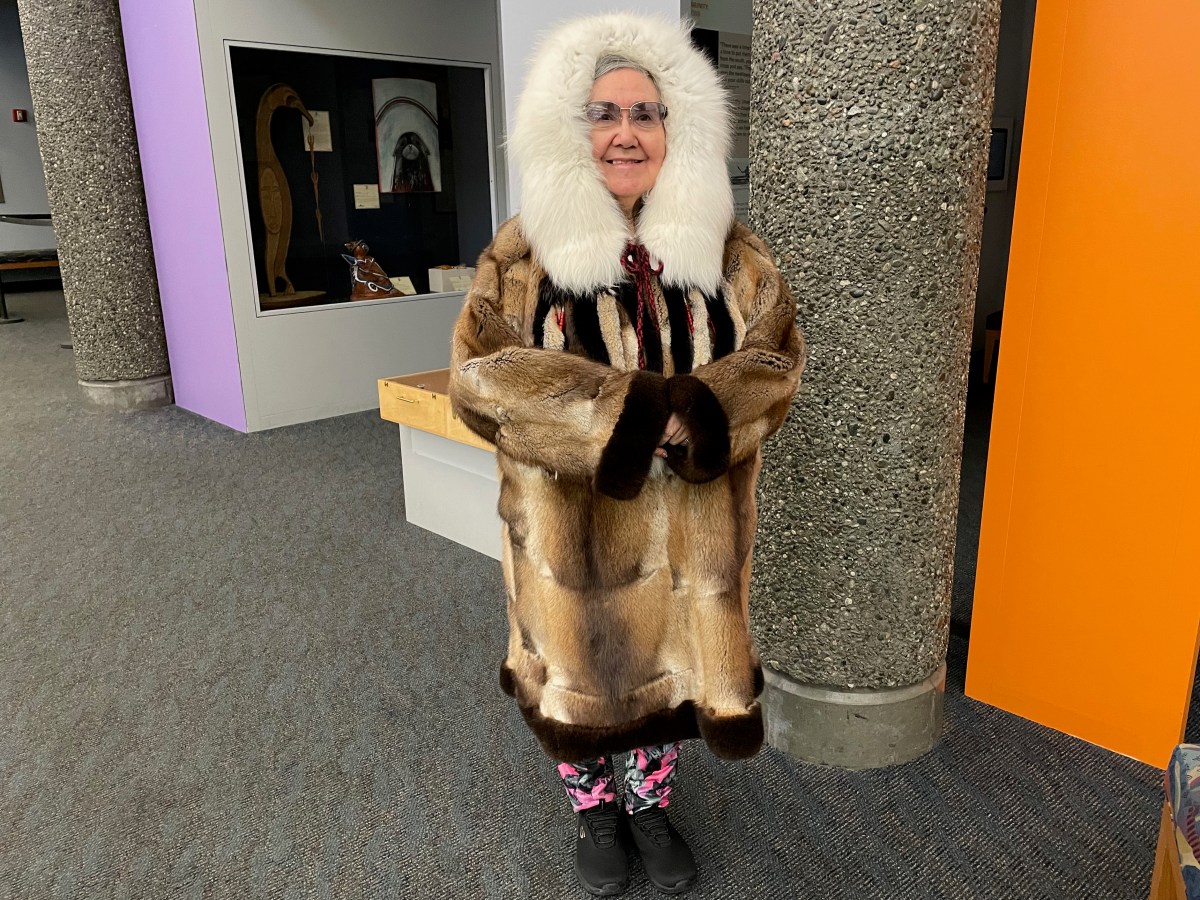
ANCHORAGE, ALASKA — Margaret Nakak, Inupiaq and Yu’pik, got her start sewing fur at an early age. Pointing to a picture of her toddler sister in her mother’s arms, she said, “My aunt, my mother’s sister, made me a muskrat parka when I was a girl that age. I would always observe her sewing and it was embedded in my mind. And so presently sewing is just natural to me. It just happens.”
Later she went to a missionary school where on Saturdays older girls showed beginners how to make dolls wearing fur parkas and mukluks (boots) using tiny, tight stitches.
“And that’s where I learned a lot of my expert sewing skills was at St. Mary’s mission during our Saturday sewing classes.”

Nakak makes parkas using several kinds of fur: mink tails, beaver, fox, sea otter, wolverine and wolf.
She gets some of her skins from trappers and hunters, and some from commercial vendors.
Traditionally, “with all the skins and furs that were caught by the hunters in a family group, first they’re taken off the animal and then the skin and the fur is stretched on a frame as far as it can go to get the most to make out of it. And it’s scraped clean with an ulu, the lady’s knife,” Nakak said. “It’s scraped clean of oil, meat, and blood very carefully, very carefully. And so sooner or later, it dries. When it dries all the women in the household had to take turns, softening that by hand.”
Watch: Margaret Nakak talks fur sewing
She shows how women took the fur and kneaded it, pulling, wringing and crumpling the skin to soften it.
To make one full-length parka it took 40 muskrat pelts, some of which were torn. To keep the repairs and patches invisible from the fur side, the patchwork is done by hand.
“The important thing in patching is you have to find the same color and the fur going in the same direction. Very important. You can’t put the fur sideways or upside down and the color has to be the same,” Nakak said.
After patching and repairing, she cut out the pattern for the parka and she and five students started sewing. From the first step of repairing the pelts to completion, it took them six months to sew the full-length muskrat coat.
Nakak shows a photo of her grandparents in muskrat parkas.
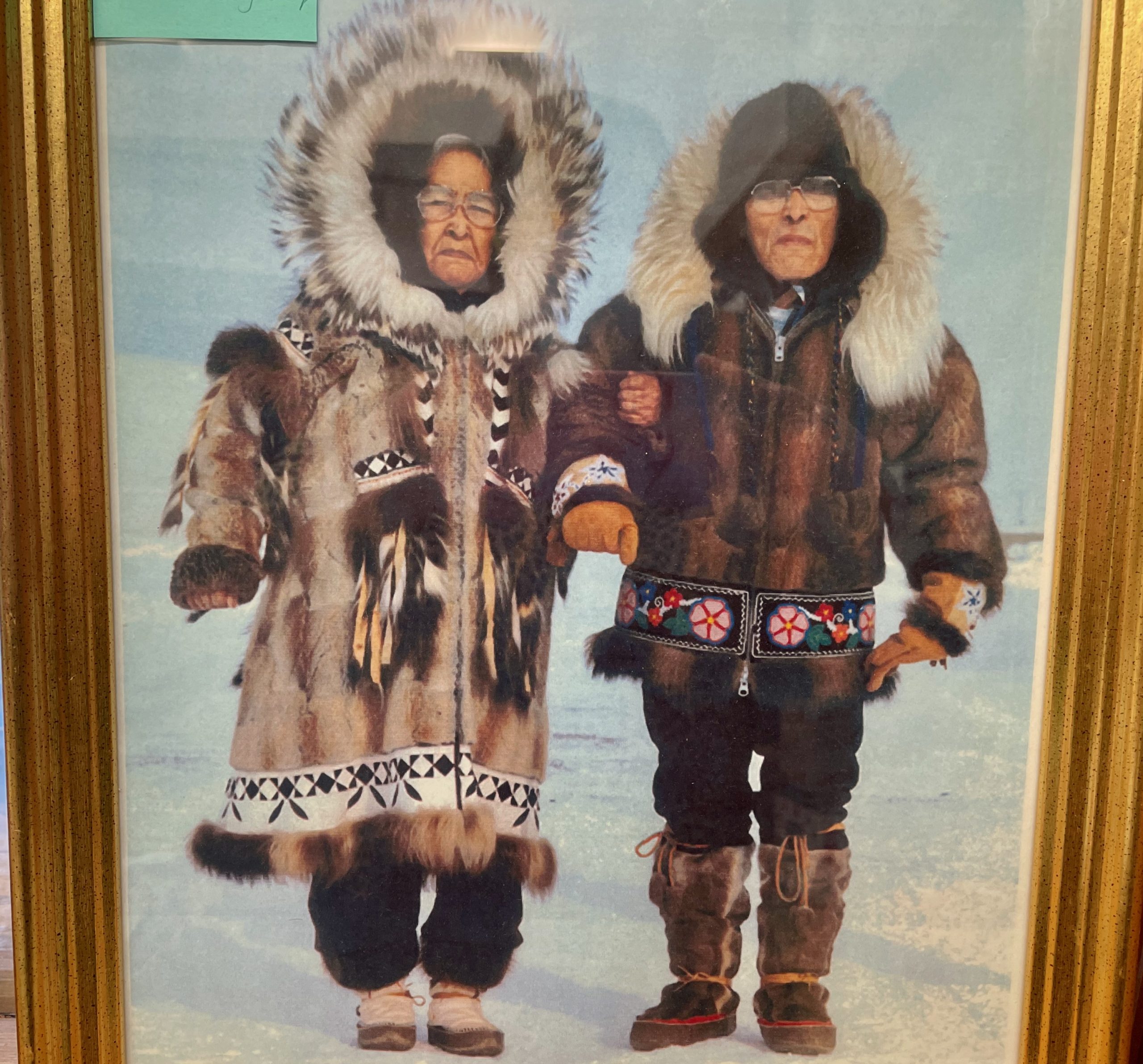
“See, originally everything was fur, but nowadays, most, I’d say 95 percent of the parkas are covered with fabric, although they have a fur ruff of wolverine, beaver cuffs and wolverine and beaver (trim). And of course these are caribou boots and seal skin soles on the bottom. So originally everything was fur, but nowadays it’s mostly a combination of fabric and fur.”
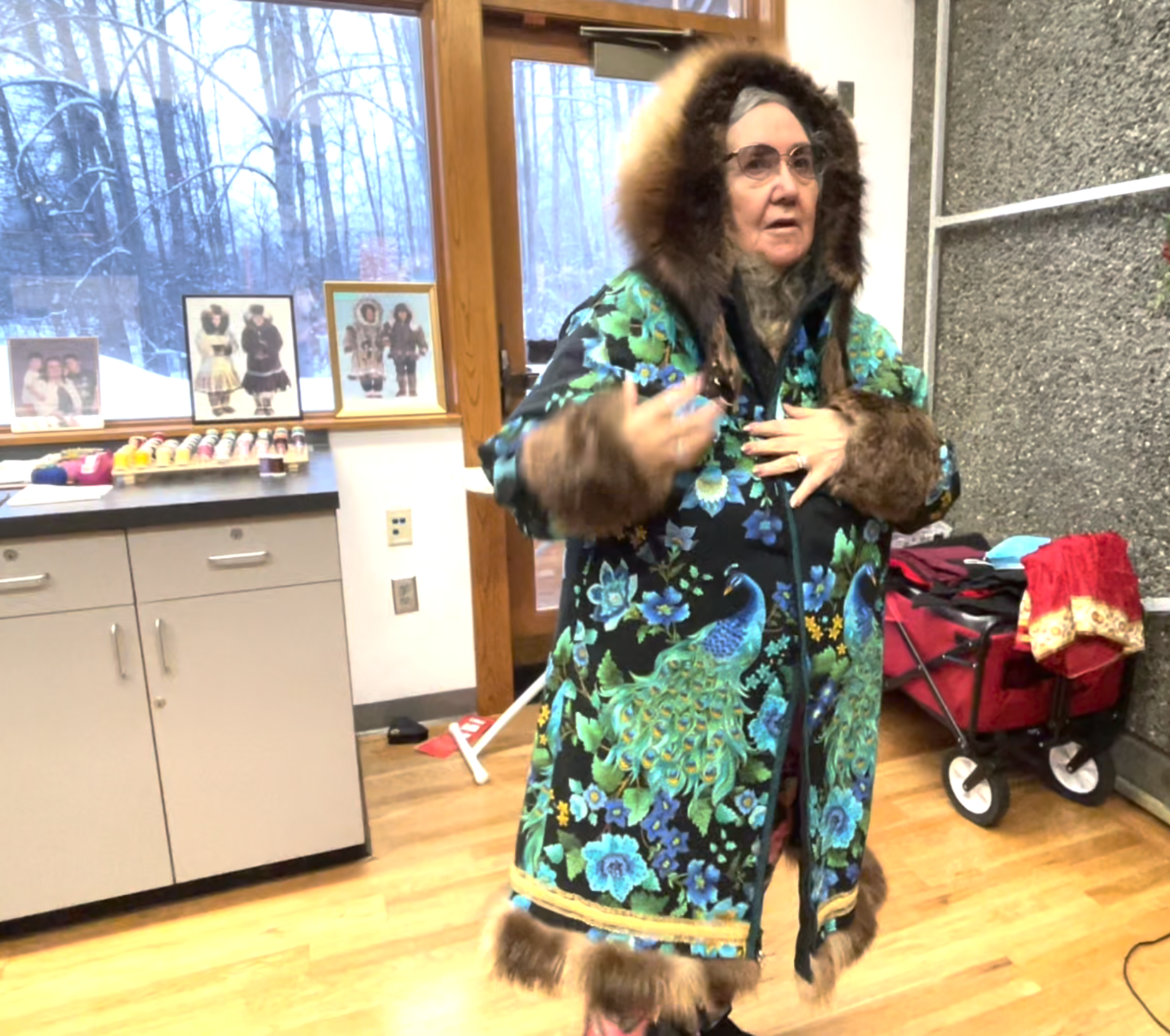
Nakak’s Anchorage winter coat is made of a down liner with a fabric cover. The bright blue and green fabric shows the image of her favorite bird, a peacock.
“This has a wolverine ruff and you can see the claws right here (on the front). And what I like about it is this yellow part on the crown (of the hood ruff). The cuffs are beaver, very soft and smooth. And the bottom cuff down here is also wolverine. And it’s alternating with the light and dark, light and dark. Alternating all the way around,” she said.
Another favorite is a parka she made for her son using a fur ruff made by her aunt Esther Frankson. The parka’s got a royal blue velvet cover. When the hood is flipped up over the head, it forms a tunnel of fur. Sea otter — the warmest and densest of all furs — is closest to the face. Wolverine, which sheds frost better than any other fur is next. At the outer edge of the hood is wolf skin. With its long hair it’s good at cutting the wind.
At first glance, it seems like you could make a ruff just by wrapping a pelt around the shoulders. But ruffs are made of dozens of pieces of fur turned to one side so the fur radiates out, for a sunshine or starburst effect.
“My son’s grand aunt from Point Hope named Esther (Frankson), she made this ruff and I purchased it from her to put on her grand nephew’s hood. And she passed away and so this is very, very precious and very special to both my son and I because his aunt was very close to us. It’s very special,” Nakak said.
Parkas and other winter gear showed off both hunting and sewing abilities.
“When you see a family with many different furs on their garments, it is the hunter’s report card. It says that the family has a very good hunter-provider for the family to be able to have all those different furs on their garments,” Nakak said.
And it shows the family has someone with the patience and skill to painstakingly sew the garment.
Nakak is 76 and has been demonstrating and teaching fur sewing at the Alaska Native Heritage Center in Anchorage for 22 years. She teaches weekly classes to help keep the ancient tradition of fur sewing alive.

Our stories are worth telling. Our stories are worth sharing. Our stories are worth your support. Contribute $5 or $10 today to help Indian Country Today carry out its critical mission. Sign up for ICT’s free newsletter.

