

Miles Morrisseau
ICT
When the whistleblower broke the news that hundreds of Indigenous children were dying from the “criminal disregard” of the Canadian government, the story was denied by the government, the churches and Canada’s most famous poet.
It was over 100 years ago, when Dr. Peter Bryce, the leading medical expert on Indigenous peoples reported that children were dying by the dozens and ultimately hundreds at residential schools and other government and church-run institutions for Indigenous children.
Bryce had served as the Chief Medical Officer for Canada’s Department of Interior and the Department of Indian Affairs and when his own reporting was ignored he quit the government and blew the whistle on the government when he self-published his findings in “A National Disgrace” in 1922.
He had visited 15 schools operated by the government in partnership with one of the churches — Catholic, Anglican, United and other orders that were in charge. He discovered an unconscionable amount of death that occurred in the schools. He wrote in that report that “24 percent of all the pupils [who] had been in the schools were known to be dead,” he also noted one school on the File Hills reserve where 69 percent of students who had attended the school since its opening in 1889 were dead by 1907.

Bryce’s words would go unheeded and shouted down by the country’s most powerful institutions: the government and the churches. He had also felt the ire of Duncan Campbell Scott renowned as one of Canada’s Confederation poets who was appointed the head of the Department of Indian Affairs in 1913. Scott stood against efforts to improve the survival rate of the children in the schools stating the high mortality rate, “Does not justify a change in the policy of this department, which is geared towards a final solution of our Indian Problem.”
The Indian Residential School system would continue until the late 1990s. In addition to the schools’ abuses and death in other institutions that were run by the government and the churches have come to light.
Now, over a hundred years after Bryce’s detailed and first hand accounts were published there are still loud and influential voices that deny these atrocities.
One of the English-speaking world’s most well-respected journals, The New York Times continues to promote voices of residential school denialism, “There’s, so far, no evidence of any remains of children buried around residential schools,” Thomas Flanagan told the Times in an article published on Sept. 20.
Flanagan was the darling of the anti-Indigenous rights movement for years and a paid expert for the governments of Canada and provinces who were fighting against Indigenous land claims. During a speaking engagement in February 2013, he was asked to clarify his position that child pornography was “just pictures.” His response was captured on video and posted to YouTube, “It is a real issue of personal liberty to what extent we put people in jail for doing something in which they do not harm another person,” reported the Globe and Mail. His distinction between child-porn content creators and child-porn consumers did not go over.
He was dropped by Alberta’s Wild Rose Party, one of Canada’s most right-leaning political parties, the federal government issued a statement calling his words, “repugnant” and soon his high-profile speaking engagements were being cancelled.
Flanagan is the lead voice for the Times article promoting the voices of Indian Residential School Denialism and challenging the true death count of the children who never came home. “Nobody disputes that children died and that the conditions were sometimes chaotic. But that’s quite different from clandestine burials,” he told the Times.
On Sept. 26, Leah Gazan, member of parliament introduced a bill that would make “Residential School Denialism” a hate crime in Canada. The representative of Winnipeg Centre is of Lakota descent and when speaking to Canada’s House of Commons related the harms caused by this rhetoric.
“Survivors and their families deserve to heal from this intergenerational tragedy and be free from violent hate. We cannot allow their safety and well-being to be put further at risk,” Gazan told the house. “All parliamentarians must stand firm against all forms of damaging hate speech, including the denial of the tragedy of residential schools in Canada. At a time of increasing residential school denialism, including from some parliamentarians, I note that survivors, their families and communities need protection and a platform to share our history.”
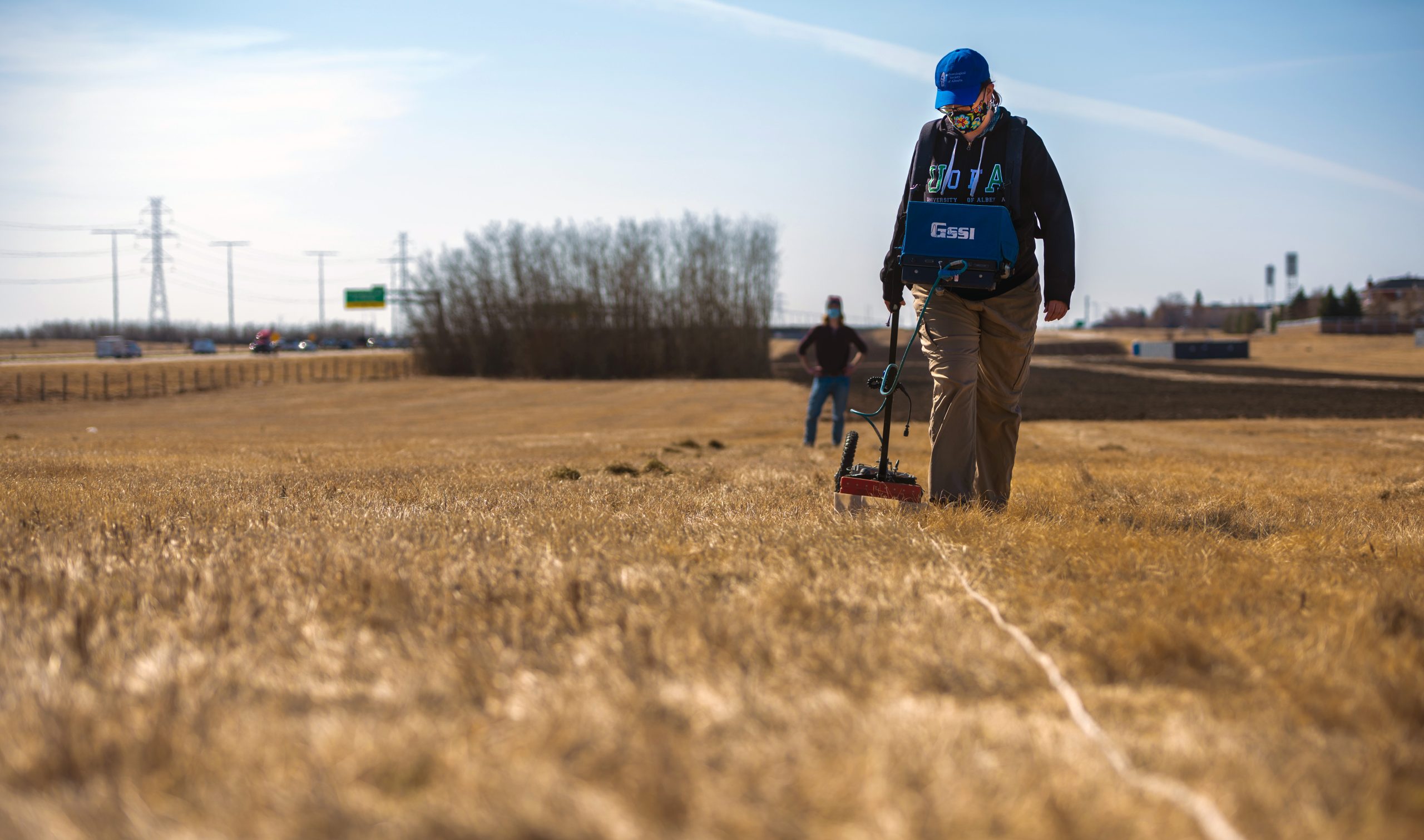
Gazan’s bill would make it illegal to wilfully promote hatred against Indigenous peoples by condoning, denying, justifying or downplaying the harm caused by the residential school system in Canada.
Kimberly Murray, Mohawk, is nearing the end of her term as Special Interlocutor for Missing Children and Unmarked Graves. She believes that denialism continues to grow in Canada.
“It’s just gotten worse. I actually have a whole chapter on this in my final report, and I continue to get threats. My life has been threatened,” Murray told ICT. “It’s disturbing, this constant release of misinformation and disinformation.”
With her mandate coming to an end she believes that the government of Canada is not providing communities the support they need.
“They don’t treat it as an obligation, an international legal obligation to provide proper reparation to the community, and if they did, then all these barriers that we see would no longer exist because Canada would be replying in a way that’s providing the proper restitution and reparations for the harms,” Murray said.
Murray had no power to compel any of the churches or institutions to provide access to documents.
“In my final report, I write about how I did a request for information from all the church entities,” Murray said. “It was a very small response rate, especially from the Catholic entities I had asked specifically about what processes they’ve put in place to support communities getting access to the archives. And so many didn’t even acknowledge receipt of my request. Others sort of just deflected and said, ‘You know, it’s not relevant.’”
Dr. Kisha Supernant, Métis/Papaschase/British is the director of the Institute of Prairie and Indigenous Archaeology at the University of Alberta. Her team has been working with communities that are searching for the remains of the children who never made it home. She supports the bill to have residential school denialism categorized as a hate crime.
“We need to have a mechanism to hold these people responsible for those comments. And one of the things that I find really challenging in this is the people who are the most vocal about residential school denialism, I don’t think we’re ever going to change their minds,” Supernant told ICT. “You literally could put the body of a child in front of them, and they would still make an excuse as to why it wasn’t as bad as everyone makes it seem, but there’s a lot of people who are listening to them, right?”
Suprenant says that the work they are doing is not about proving that hundreds of children died in these institutions.
“The work that’s going on right now in terms of ground searches, we’re not out to prove that children died. We already know this, right?” Supernant says. “This is something that there is already substantial evidence for, both from community knowledge, but also from archival and historical knowledge. You know, the work that’s being undertaken right now is trying to figure out where those children are, right, not if they died.”
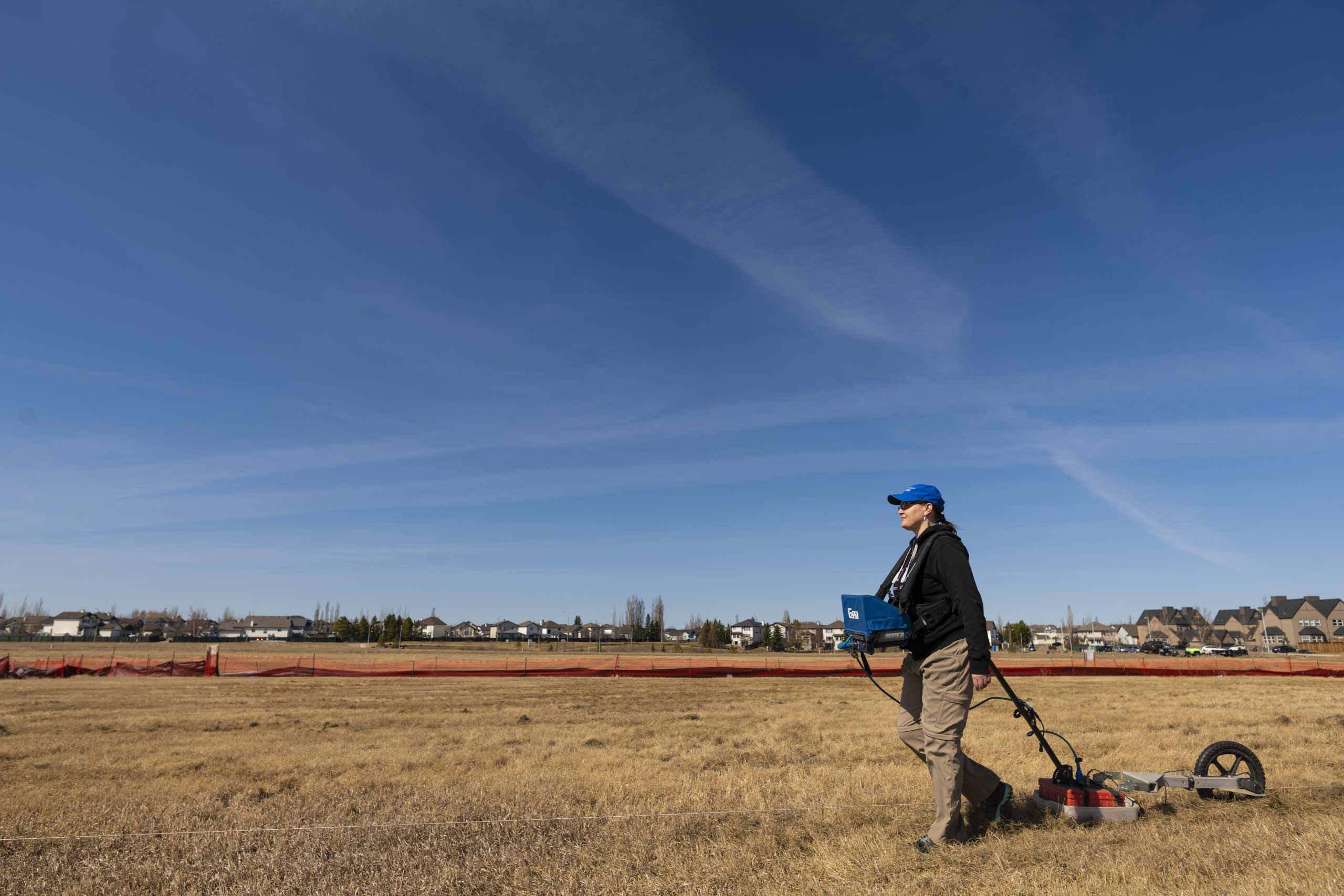
As Canada marks the fourth year that Sept. 30 is commemorated as a federal holiday and the National Day for Truth and Reconciliation, Supernant believes that the truth must still be lifted up.
“On our national day for truth and reconciliation, we can’t forget that the truth needs to come first,” Supernant said. “There can be no reconciliation without a full understanding of the truth. And that’s really a lot of the work that’s happening right now is bringing that truth to the forefront.”

Our stories are worth telling. Our stories are worth sharing. Our stories are worth your support. Contribute today to help ICT carry out its critical mission. Sign up for ICT’s free newsletter.

