Miles Morrisseau
Special to Indian Country Today
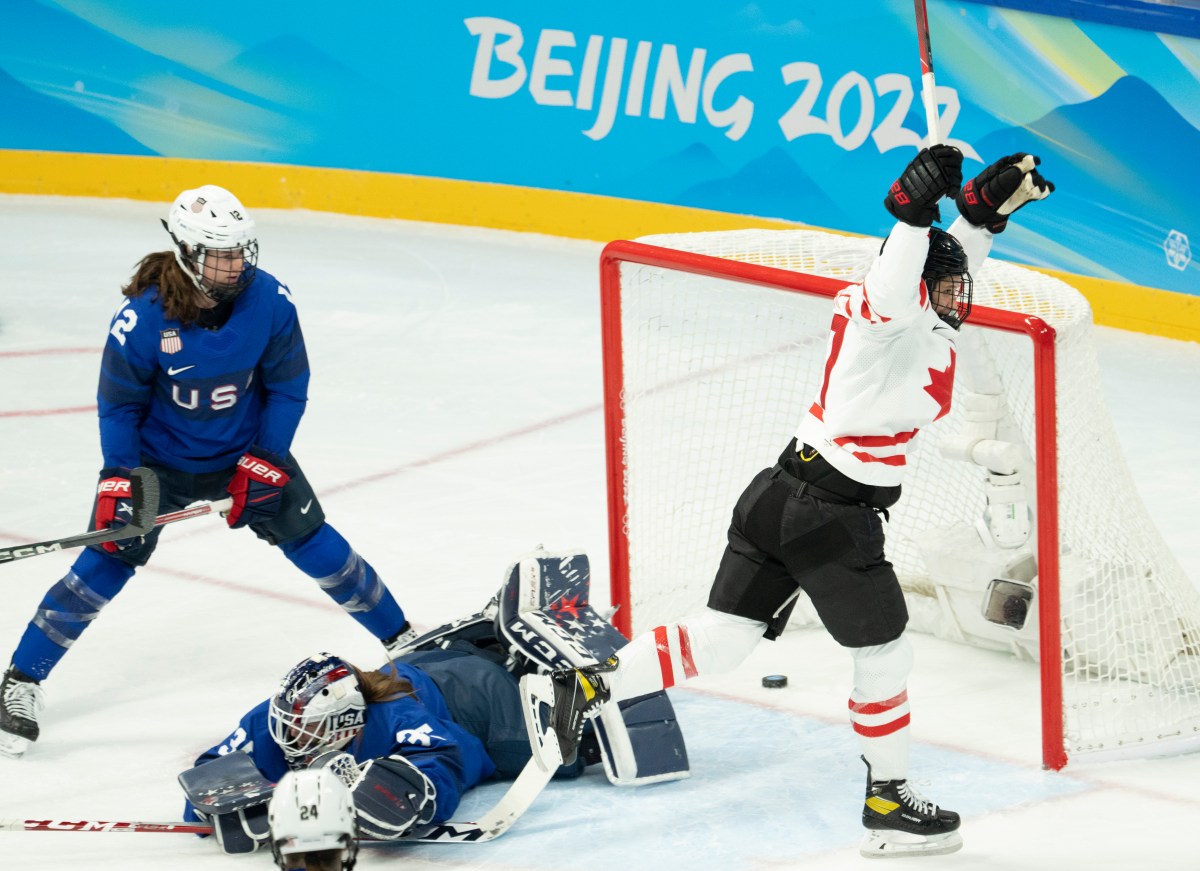
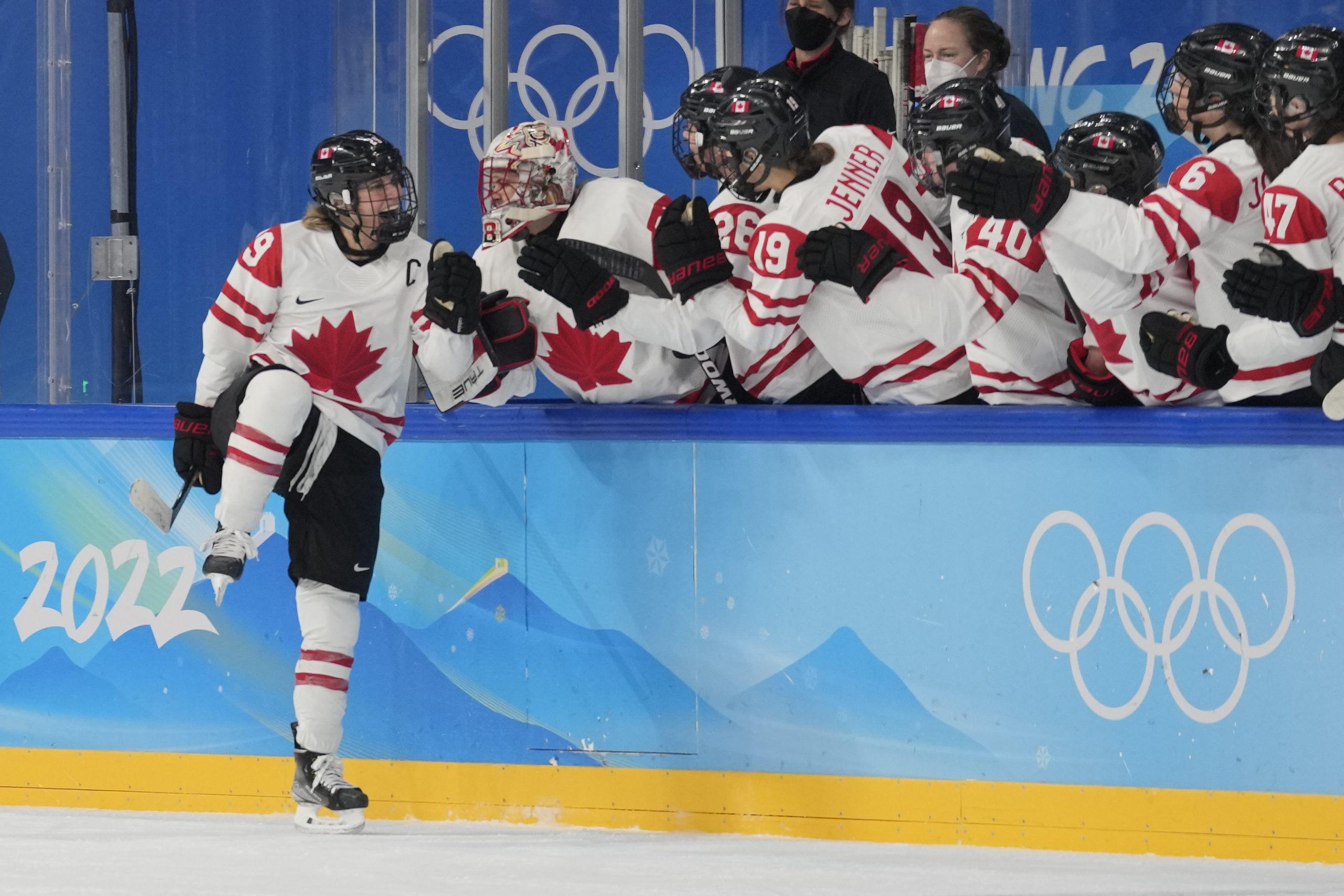
It was another classic game in the undisputed rivalry between Team Canada and Team USA in women’s hockey. In a match up before the start of the medal round, with both teams undefeated, Team USA dominated with 57 shots to Team Canada’s 34, yet in the final tally the Canadians won 4-2.
It was as usual a rough and tumble affair with a lot of hits and open ice checks but very few penalties. This game had it all including the first penalty shot goal in Olympic history when Canadian captain Marie-Philip Poulin was awarded the shot when she was hooked heading into a breakaway. The game had a wild finish with a Canada player in the penalty box and Team USA goalie Maddie Rooney pulled for the extra attacker. It was six on four for almost the last two minutes of the game.
The MVP was Team Canada goalie, Ann-Renee Desbiens, but the Indigenous women representing both countries had an impact on the game.
Related stories:
—Dene snowboarder added to Canada’s roster
—Breaking barriers: NHL’s 1st First Nations scout
—Indigenous focus hits the ice in pro hockey
— Winter Olympics feature three Indigenous women
Abby Roque, Anishinaabe, Wahnapitae First Nation, has moved up to center the first line for Team USA following the injury of assistant captain Brianna Decker during the team’s first match against Finland. The first time Olympian is not backing down from the opportunity with six shots on net including two high quality chances. Though she did not assist she carried the puck out of her own end to set up the second U.S. goal. She got a lot of time during power plays and would use her 5-foot-8, 180 pound frame to take up residence in front of the Canadian net.
Roque also dominated in the faceoff circle with 100 percent efficiency which was why Team USA maintained puck possession whenever she was on the ice. The play-by-play commentator for the Canadian Broadcasting Corporation broadcast of the game gushed, “Abby Roque is giving a clinic on how to control the puck.”
With the Americans controlling possession and having a shooting gallery on the opposition net, the role of goalie and defender was essential to Team Canada’s victory. Jocelyn LaRocque, Métis Nation, who is one of Canada’s most experienced defenders finished with over 26 minutes of ice time. She also had three shots on net and one penalty.
Jamie Lee Rattray, Métis Nation, scored what would be the winning goal 14 minutes into the second period. Making her Olympic debut at the age of 29, Rattray made no mistake when Natalie Spooner found her in the slot with a perfect pass. Rattray deposited the puck in the back of the net with a quick wrist shot to give Team Canada the lead.
This was the first the teams have met in the Olympics since the U.S. beat Canada 3-2 at the gold medal game in 2018. The teams will not meet again until sometime in the medal round. The quarter finals begin Friday, Feb. 11 when Team USA will play Czechoslovakia and Team Canada will play Sweden. The other quarterfinal matchups are on Feb. 12 with Team ROC (Russia) versus Switzerland and Japan versus Finland.
Team USA and Canada are expected to meet again in the gold-medal finale barring any major upset.
The gold medal game is scheduled for Wednesday, Feb. 16. There has been a change to how the medal games will be played. At this Olympics the medal games in hockey will no longer be settled in a shootout which is like having the game decided by penalty shot. The games will be played in overtime periods until somebody scores the winning goal, which in hockey is called “Sudden Death.”
The CBC in Canada is also offering Olympic coverage in Eastern Cree and Inuktitut.

Our stories are worth telling. Our stories are worth sharing. Our stories are worth your support. Contribute $5 or $10 today to help Indian Country Today carry out its critical mission. Sign up for ICT’s free newsletter.