
Mark Trahant
ICT
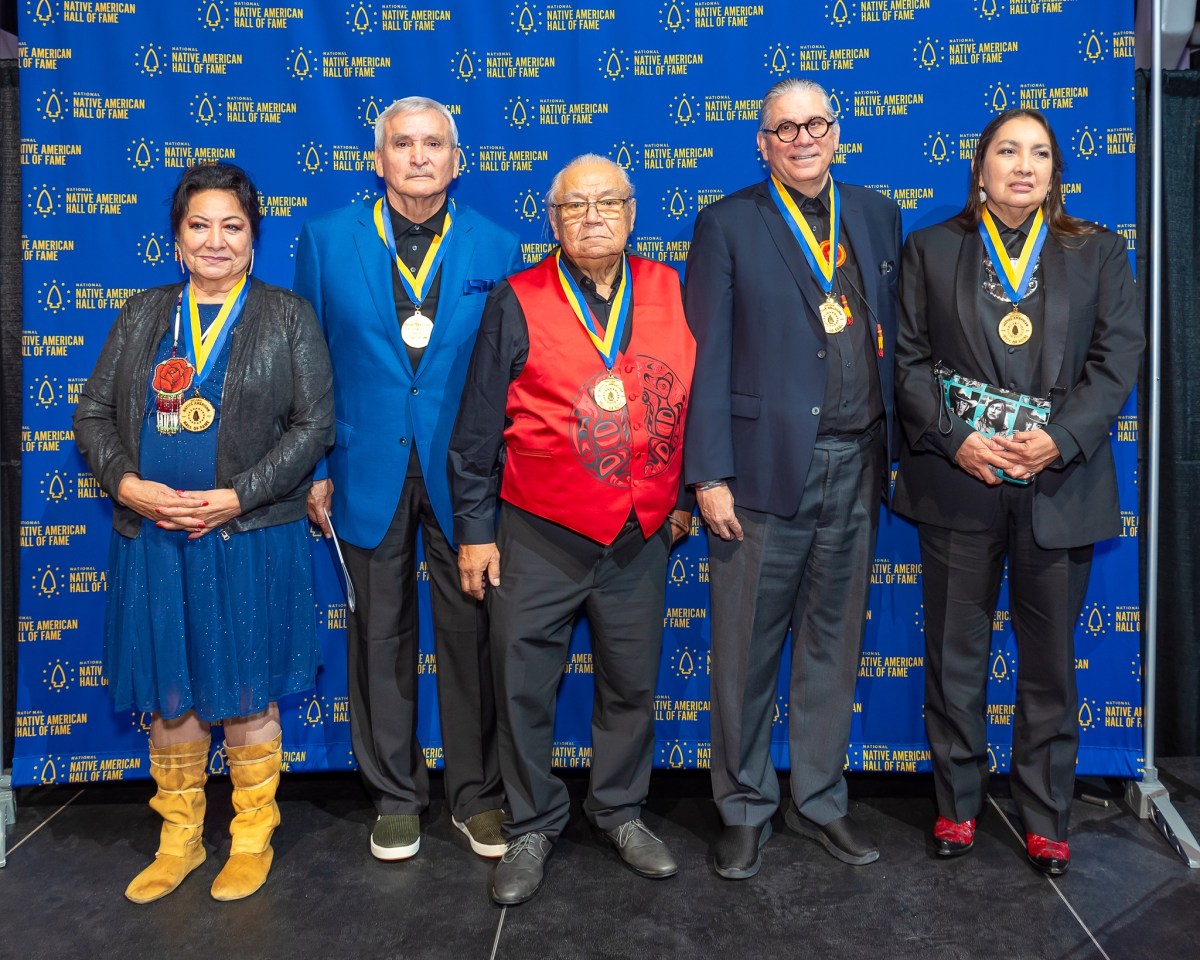
This is tricky territory … but here goes anyway. I am writing about this weekend’s National Native American Hall of Fame induction ceremony in Oklahoma City. I was one of six inductees this year (and, so, yes, a personal pronoun warning because I am writing about myself.)
I am doing that because there is a bigger story; the importance of foundational stories about ourselves that include a narrative of excellence. The National Native American Hall of Fame celebrates what’s been done and in doing so, calls attention to our collective efforts toward a better future.
This idea is something I have explored often. I wrote this in 2018:
“What is “The Canon of Indian Country?”
“Those stories that are recited in schools, the ones most young people know by heart, tales of valor, excellence and an optimistic future.
“We do have great modern stories to tell.
“How leaders like Joe Garry or Lucy Covington out maneuvered Congress and put an end to the nonsense called termination. Or how Taos leaders patiently pressed the United States for the return of the sacred Blue Lake, even though that effort that took nearly seven decades. Or how a summer program in New Mexico helped create an entire generation of American Indian and Alaska Native lawyers.
“But there is no canon. So important stories drift about in individual memory, forgotten far too easily, instead of being told again and again.”
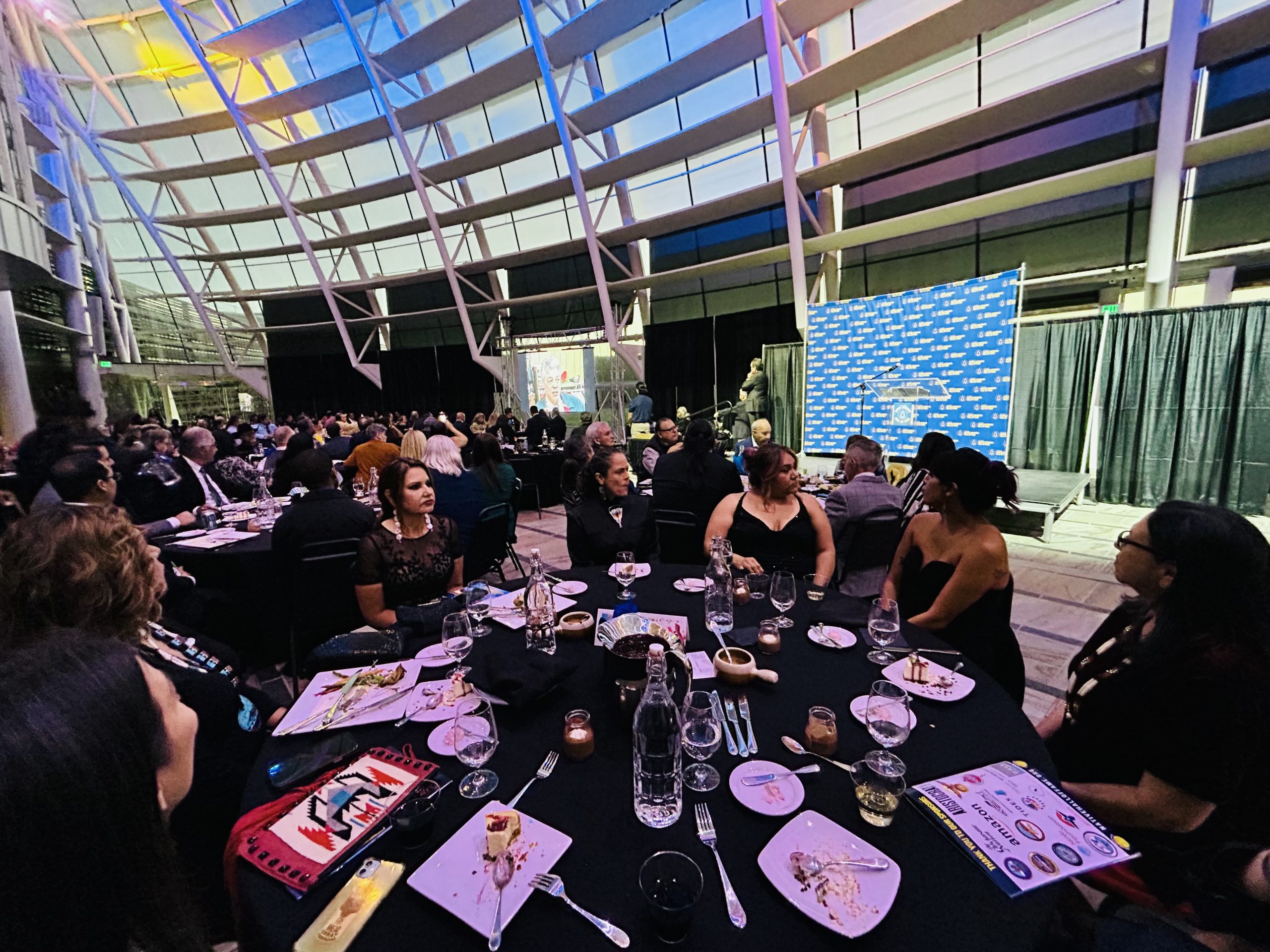
That last line is no longer true because the National Native American Hall of Fame is precisely that canon. At the First Americans Museum in Oklahoma City there is a dedicated space displaying those stories – and the organization behind the hall of fame is developing a comprehensive curriculum to share those stories with schools and young people.
That’s so important because so many of our stories sound implausible at best … how could someone do that, really? Yet they did.
Further reading:
The man behind the National Native Hall of Fame

One I told at the ceremony was about Joe DeLaCruz and a conversation we had when I was working at the Seattle Post-Intelligencer. He called me and said to make sure I attended a meeting that year in Portland. When we greeted he laughed and said, “we are going to beat Slade Gorton.” The Senator from Washington had built a career on attacking tribal sovereignty.
I asked “how” and “who?” DeLaCruz said it didn’t matter who. The how was what was important, he pulled from his back pocket polling data that looked at the senator’s weaknesses in key demographic groups. DeLaCruz, who was then chairman of the Quinault Nation, and other Washington tribal leaders built a coalition that included hiring a Republican campaign consultant that zeroed in on what messages could be used to defeat Gorton.
That happened on Nov. 7, 2000, when Maria Cantwell won. Gorton lost by a few hundred thousand votes. The voter data that DeLaCruz assembled was broad in scope, but one of the items was a campaign tactic that Gorton himself had used many years before, painting his opponent as someone from the past. Cantwell had come from the tech industry, a perfect foil against Gorton’s image.
The Hall of Fame’s contribution to the canon includes how we tell stories, and how those stories are amplified.
Take Alcatraz. In 1969 Bay Area college students occupied the island and demanded that treaty rights be respected. LaNada War Jack was one of the leaders. War Jack is Shoshone-Bannock.
The power of Alcatraz goes far beyond the mechanics of a year-and-half occupation. It’s a story about changing the story; about inherent power and sovereignty. And if you think about the activism from the 1970s until today all roads to the shores of Alcatraz.
And speaking of stories, we cannot let a younger generation forget the artistry of Will Sampson, Muskogee Nation. He set the standard on the movie screen; he could tell a story with just his eyes or a smile.
When I was young I was lucky enough to hang out with him and many other amazing actors from that era at the American Indian Film Festival in San Francisco. During the late 1970s, that festival was a fascinating crossroad between filmmaking and journalism.
The only inductee this weekend I don’t know directly is Leslie Marmon Silko, Laguna Pueblo. But I know her work. I remember the first time I read “Ceremony.” That one book made the case for storytelling – my craft – and how that tied that back to ceremony.
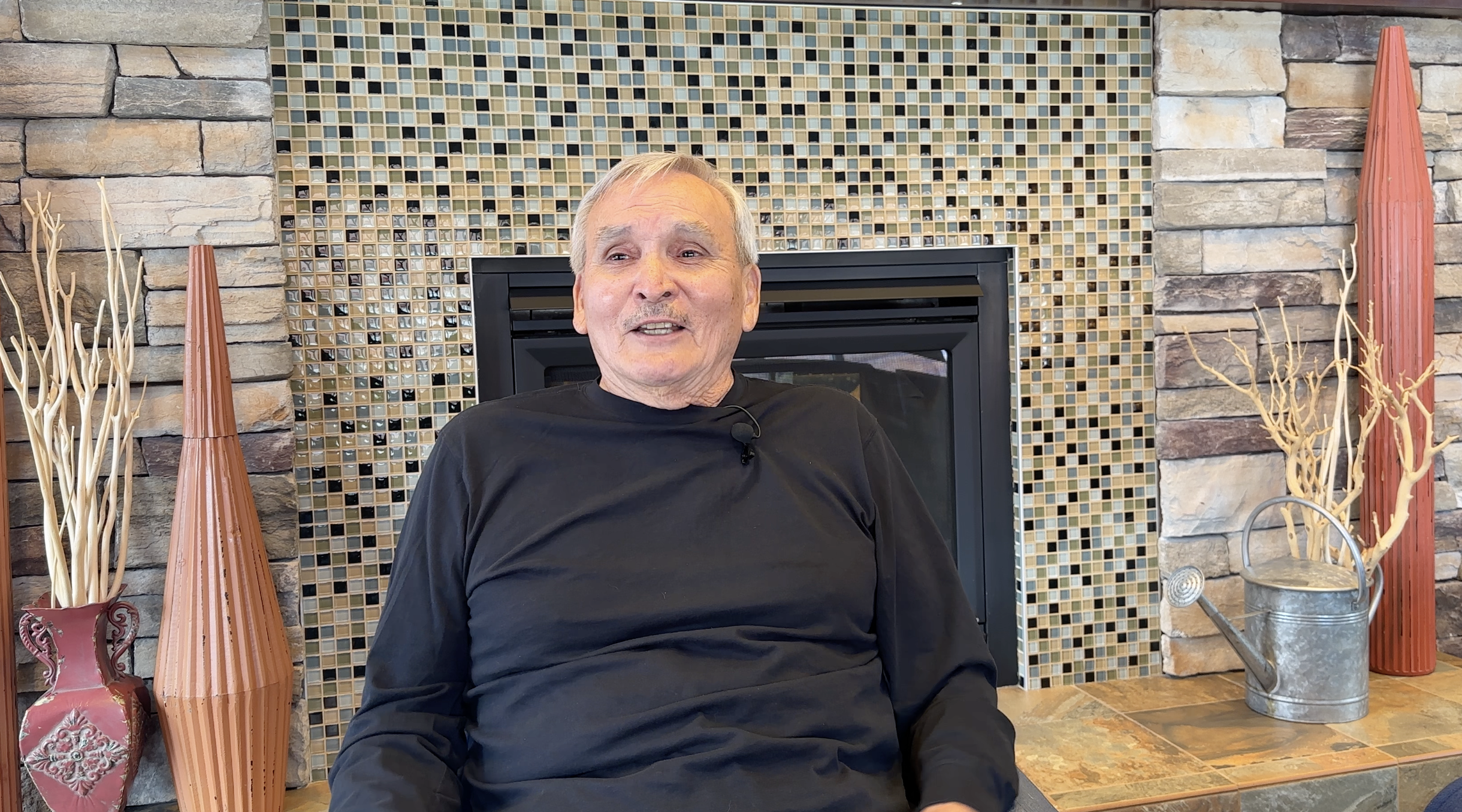
My friendship with Richard Trudell, Santee Sioux, goes back to the 1970s and the American Indian Film Festival (at least that’s how I remember it). Our paths cross often – I doubt there is any more center to the intersection of policy and advocacy. (I joke that he is the master of the one-question interview … I ask a question and then we’re out of time.)
But these are some of my favorite interviews because we cover so much of the last 50 years. Trudell’s influence can be found in so many spaces because his network was so incredible. He worked with Hillary Clinton and Peterson Zah on legal services programs before either was a household name.
Further reading:
– Cracking the corporate code
Trudell also praised the work of me and ICT. At the induction ceremony he said he has followed my career since we first met at the American Indian Film Festival.
“Well, I think about some of the reporting you’ve done. When you’re looking at corporate boards, (and asking) are there any Indians who serve on boards? And I think of your interview with Mary Smith.”
Last year I interviewed Trudell on the ICT Newscast where he looked back at what’s unfolded.
“I tend to look at decades, what happened in the sixties, the seventies, the eighties and nineties going forward, and my involvement, ” he said. “It’s been a pleasure just to watch Indian Country evolve in terms of all the challenges they faced and the progress they’ve made. And I was very fortunate to be able to witness some amazing tribal leaders because at that time, no one had anything. We didn’t have the financial resources to do much. “
Yet so many things happened. Like starting off with no lawyers, poor or non-existent facilities.
“And so I myself being a lawyer, that was one of the first areas I looked at … it has just been amazing. I think we probably have in excess of 3000 attorneys across the country working for tribes as well as a number of them working in Washington, DC.”
This gets us back to stories. And the canon. How are we developing the next round of leaders.
“Obviously each generation faces different challenges and different tasks as well as dealing with unresolved challenges, but there are a host of things that future leaders are going to have to deal with that resemble what we’ve been through in the past.”
It’s the stories, then, that carry us forward.

Our stories are worth telling. Our stories are worth sharing. Our stories are worth your support. Contribute $5 or $10 today to help ICT carry out its critical mission. Sign up for ICT’s free newsletter.

