

Chad Hunter
Cherokee Phoenix
TAHLEQUAH, Okla. — The Cherokee Nation is using millions of dollars in opioid-settlement funds for drug-treatment centers, but more resources are needed from the government to address addiction within the reservation, the chief told members of a U.S. House panel.
“We need the federal government to fulfill its trust obligations to tribes and fully fund these vital programs to help our tribal citizens recover from addiction and access behavioral health services,” said Principal Chief Chuck Hoskin Jr. who testified remotely during the House Natural Resources Subcommittee on Oversight & Investigations’ April 5 hearing on opioids in tribal communities. “Without a significant investment in building a highly trained prevention workforce, we’ll continue to just plug holes in the dam rather than repair the issues causing the leaks.”
The tribe sued drugmakers McKesson, AmerisourceBergen Drug Corp. and Cardinal Health in 2017, which led to a 2021 settlement of $75 million-plus over 6-1/2 years. While the tribe plans to use at least $15 million of the settlement funds to construct drug treatment centers, it’s still not enough, Hoskin said.
“We need tribal workforce development programs,” he added. “We need non-competitive funding for community-based prevention efforts. We need to return to our traditional communal values so that we can address the effects of addiction for the next generation. We need supportive services. We need the government of the United States to meet its obligation. Frankly, we need the United States to follow the lead of the Cherokee Nation as we lead in efforts to heal our people and address this epidemic.”
Related
— Cherokee Nation reaches $75M settlement with drug companies
— As COVID fueled the drug crisis, Native people hit worst
— Tribes reach $590 million opioid settlement
— Tribes: Settlement in opioids case will foster healing
Rep. Katie Porter, a California Democrat, told fellow subcommittee members that federal funding for tribal health care “has been woefully insufficient.”
“Congress needs to provide long-term, sustainable funding for tribal-run treatment and prevention programs if we want to truly combat the scourge of opioids in Native American communities,” she said.
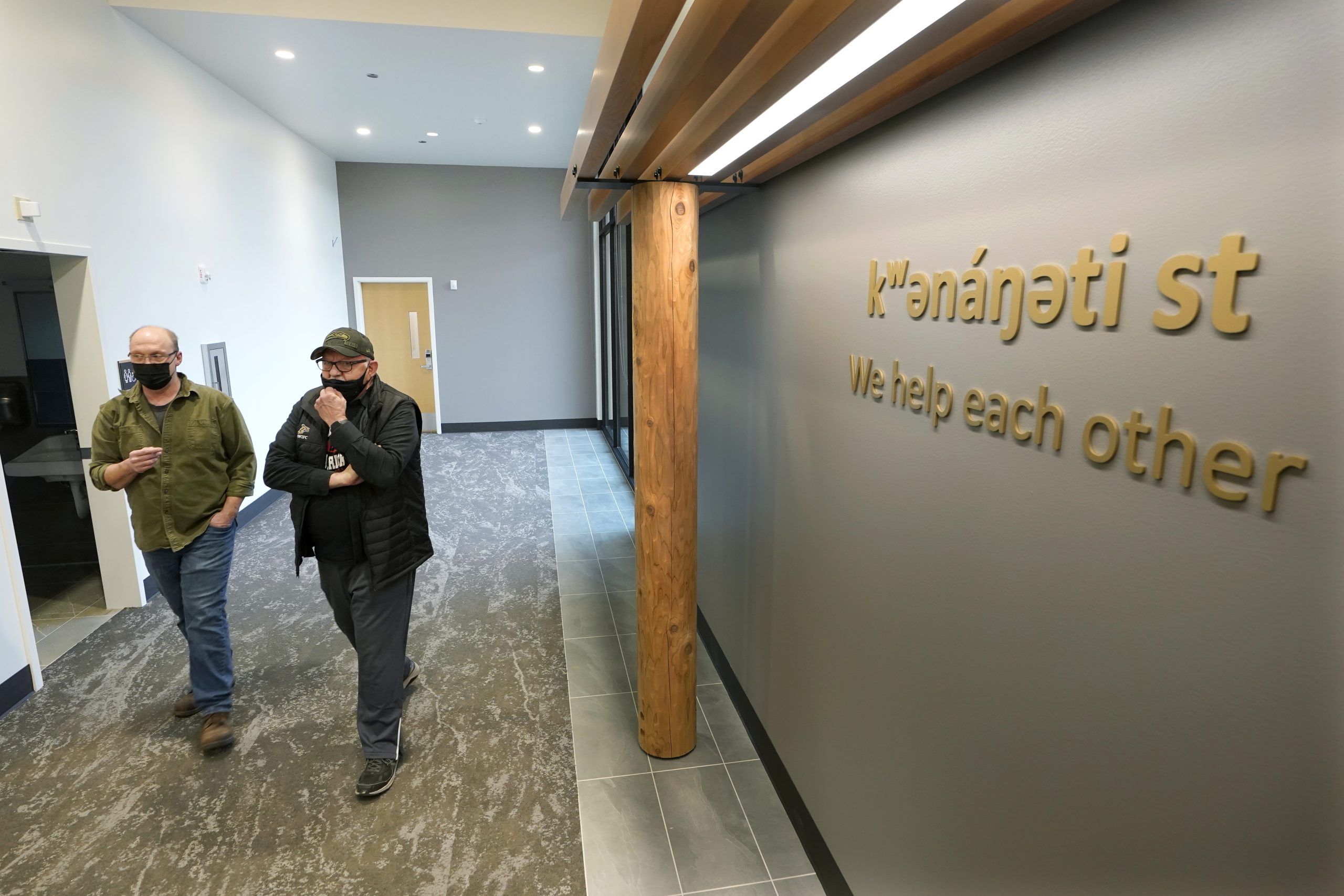
The Cherokee Nation’s lawsuit against the drugmakers alleged they failed to prevent an epidemic of prescription opioid abuse within the tribe’s 14-county reservation.
“For two decades, the opioid epidemic has affected every facet of our society from our economy to our health system, to schools, to our families,” Hoskin said. “The pharmaceutical industry flooded the communities within our reservation with hundreds of millions of pills. Hundreds of Cherokee citizens have died from overdoses as a consequence. Tens of thousands more have suffered.”
In just one year, Hoskin added, approximately 184 million opioid pills were distributed within the reservation.
“This is enough to supply every person living in our reservation with 153 pills each in one year,” he said. “Cherokee Nation is less than 6 percent of Oklahoma’s population, yet nearly a third of the opioids that were distributed in the state went into our communities. This was no accident. The multi-generational trauma that still lingers within our communities made Cherokee Nation and the Cherokee people a prime target.”
According to the Centers for Disease Control and Prevention, a record-breaking 100,000-plus people in the U.S. died of a drug overdose between April 2020 and April 2021.
“Opioids are harming tribal communities more than any other group in our nation,” Porter said. “Before COVID-19, Native Americans were almost 50 percent more likely to die of an opioid overdose than members of any other demographic group. During the pandemic, while American Indians and Alaska Natives were getting sick and dying at some of the highest rates in our country, opioids claimed even more lives.”
In addition to the $75 million settlement with the large opioid distributors, earlier this year the Cherokee Nation settled with Johnson & Johnson for $18 million over two years. The Cherokee Nation has legal claims pending against Walmart, Walgreens and CVS.
“We believe these pharmacy chains greatly contributed to the crisis,” Hoskin said.
The tribe’s plan to spend $15 million on new drug-treatment centers over three years is “a start down a path of healing,” Hoskin said.
“That’s a minimum number,” he said of the $15 million. “We’ll commit more of those opioid settlement dollars to these efforts. But it is a start.”
The goal is to create a “system in terms of addiction treatment” that provides immediate and long-term solutions, Hoskin said.
“That includes residential treatment programs. That includes getting people back into the workforce. That includes making sure that moms and dads can be with their children as they’re going through recovery when the setting and situation is appropriate,” he said. “So these opioid-industry dollars will go to build those clinics because I think it’s the most effective long-term strategy – Cherokees taking care of Cherokees.”

This article was originally published in the Cherokee Phoenix.

