

Joaqlin Estus
ICT
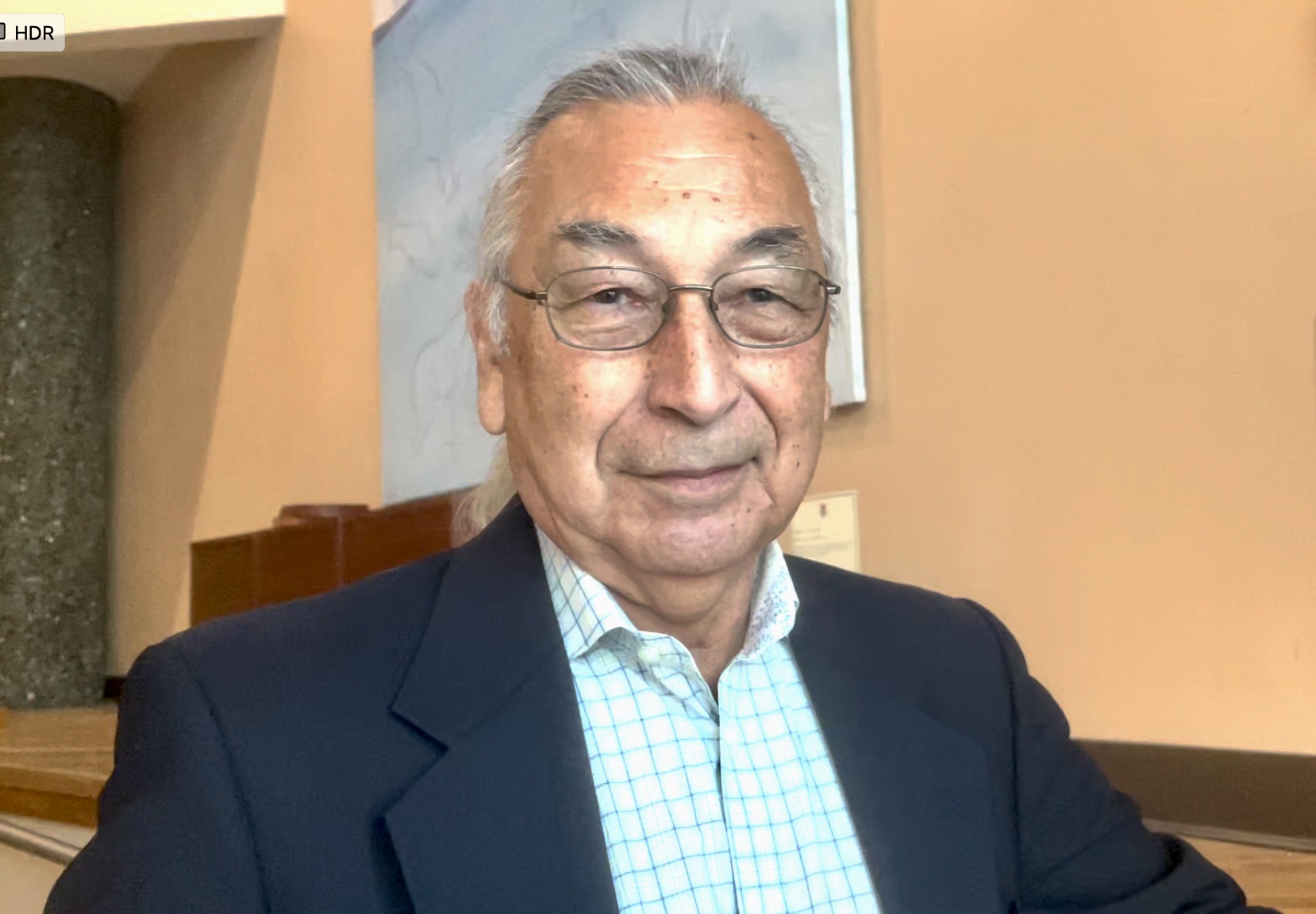
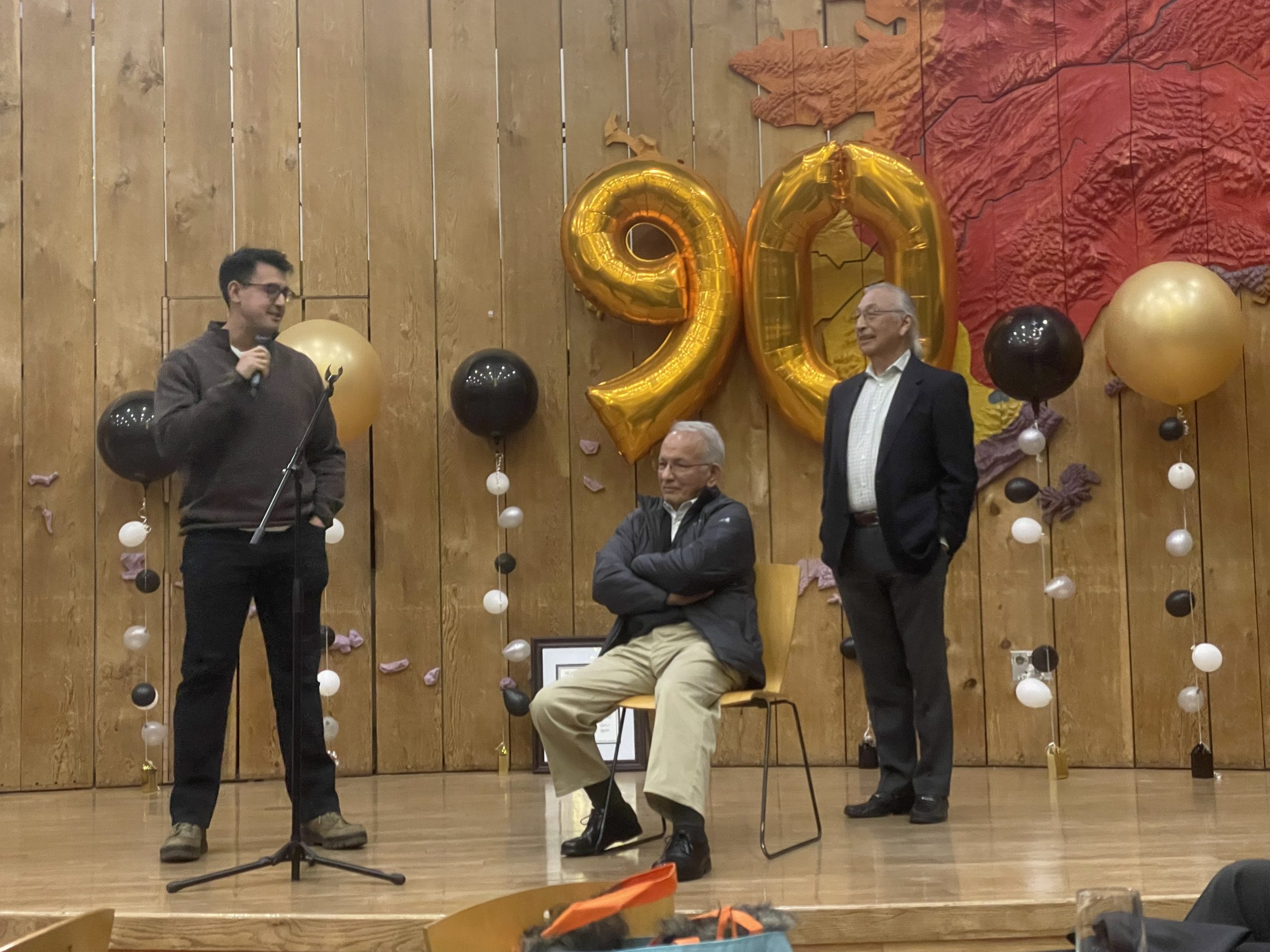
ANCHORAGE, Alaska — About 80 people turned out to celebrate Emil Notti’s 90th birthday March 10 at the Alaska Native Heritage Center. Invitees showered the Koyukon Athabascan man with praise for his life of service to the people of Alaska and particularly for his leadership in getting the Alaska Native Claims Settlement Act of 1971 (ANCSA) adopted by Congress.
Notti was the founding president of the Alaska Federation of Natives in 1966, and the unifying force behind the lobbying effort to get the settlement act passed.
Notti’s long-time friend and fellow statewide Native leader Willie Hensley, Inupiaq, said “through thick and thin we worked together, especially those years between 1966 and 1971 when we were just engaged in this humongous battle for our lands.”
At the time, the odds were against them.
“We were fighting everybody. I mean, the state was beating up on us. All the businessmen were against us. The miners, especially the timber people, everybody, in business anyway,” Hensley said.
It was widely held that Alaska Natives had no right to claim land, no Aboriginal title. Notti paraphrases former Alaska governor Wally Hickel’s position as, “just because someone’s grandfather chased a moose across the tundra did not give them any rights to land.”
While trying to build public support for a settlement, “we also had the challenge of kind of holding Alaska Natives together. That in itself was a challenge. So that’s how we were able to get our legislation through. Emil was our leader in those days,” Hensley said.
The act issued title to 44 million acres of land to 12 Native corporations, and set up the new companies with nearly a billion dollars. ANCSA is counted among the top three historic events that profoundly shaped Alaska, one being the U.S. purchase from Russia, the second being statehood.
(ICT’s series: The Alaska Native Claims Settlement Act at 50)
The settlement act came about as the result of a confluence of events. The state was selecting its 100 million acres of land promised in the statehood act, putting pressure on Alaska Natives to get a settlement.
Oil was discovered on the North Slope of Alaska. Oil companies were itching to get at it but stymied by the lack of clear title as long as Native claims were unresolved.
AFN’s pleas to resolve the issue through Congress gained traction when Secretary of Interior Stewart Udall imposed a land freeze: no transfers of federal land until Native claims were resolved.
“We wanted the land freeze because homesteads were being held up. If you wanted a dock, you couldn’t put it in, if you need an airport, you want to put a road in, nothing could move. Homesteaders were being stopped; state selections were being stopped,” said Notti. That made Native claims a problem for everybody, not just Natives, Notti told ICT recently.
A few years later, in 1969, Hickel was President Nixon’s pick to become the new secretary of Interior.
“As governor, he filed a lawsuit against the land freeze saying ‘it’s illegal,” Notti explained. “‘Natives are driving the state into bankruptcy because they can’t get land to sell to run the government,’ Notti paraphrased Hickel’s position.
The governor was traveling when “(the news media) asked him, ‘What are you gonna do about the land freeze?’ He was pretty cocky, and he said ‘what Udall can do with the stroke of a pen I can undo.’ (That) means like, it’s gone,” Notti said.
Notti was warned by an attorney for one of the tribes that it was a no-win situation to oppose Hickel’s nomination. If he wasn’t confirmed, the Native community would have to deal with him as governor. If confirmed, they’d have to work with him as Secretary of Interior.
Notti said Hickel’s promises behind closed doors that he’d uphold the land freeze weren’t enough. It had to be on the record.
AFN’s board of directors gave their lobbyists carte blanche to oppose or support Hickel’s nomination depending on his stance on the land freeze. Notti, Hensley, Eben Hopson, Inupiaq, and John Borbridge, Tlingit, had arrived in Washington, D.C., a few days early to lobby committee members. At Hickel’s Senate confirmation hearing, under pressure from committee members, the governor agreed to maintain the land freeze.
“Emil stuck to his guns, and I really respect that,” said Hensley.
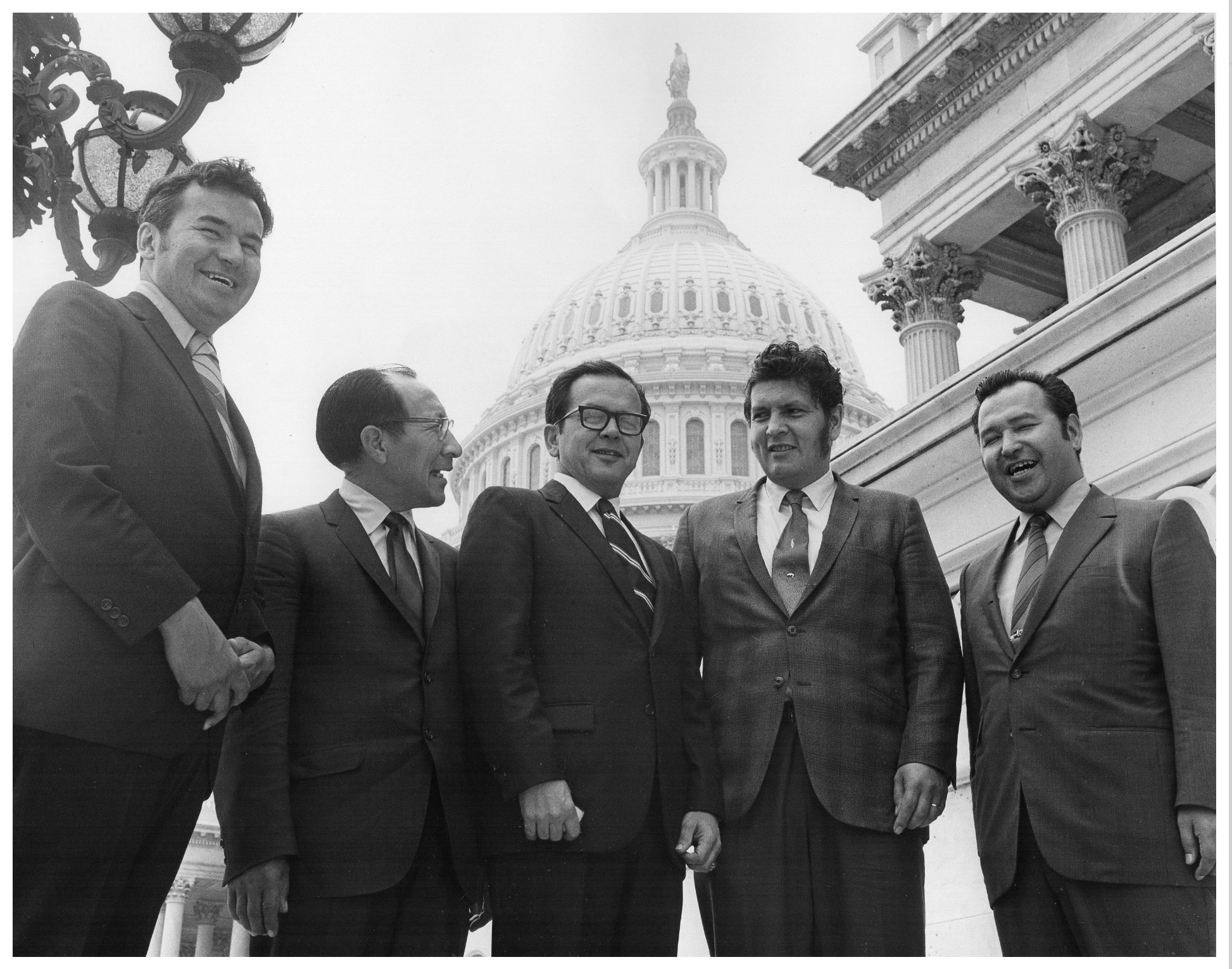
The pressure was intense. At one point, Notti’s life was threatened and police guarded his house.
“What we did had never been done before in America with Native Americans, and so that’s why I really respect him as he stood up when we had few people who were willing to do that,” Hensley said.
Yet, throughout, Notti has never forgotten his humble beginnings.
He was born in the village of Koyukuk, (current population 100) on March 11, 1933. He grew up with his family traveling from the village to a trapping cabin in winter and fish camp in the summer.
Some years his school days could be measured in weeks until he was sent to a boarding school at age 11. He joined the Navy then went on to earn a bachelors of science in aeronautical and electrical engineering and worked in the aeronautical industry in California before returning to Alaska in 1963. He has honorary doctorate degrees from Alaska Pacific University and University of Alaska.
He served on many boards, according to a legislative citation, including the Alaska Permanent Fund, the Alaska Industrial Development Authority, National Bank of Alaska, the Native corporations Cook Inlet Region and Doyon, Inc, and the Alaska Federation of Natives. He served in Cabinet positions under three governors.
Alaska Sen. Clark “Click” Bishop said, throughout his prestigious career, “Emil has maintained the heart of a public servant, which has been spoken about here… with his calm, kind, modest, selfless and humble, but not seeking the limelight (way). In fact, it may be argued that he has not been recognized nearly enough for all of these. And I would agree with that.”
Former Alaska Sen. Jerry Ward, Athabascan, said Notti’s service was not just through jobs and board memberships, but on the personal level too.
“He’s also worked with a lot of Alaska Natives and, and just Alaskans making sure that they’re okay. When people, you know, when we grew up here if somebody needed some firewood, you’d go cut it for them. Somebody needed some food, you’d get a moose or a fish for them. And Emil’s still that way. That’s the culture that we grew up in. And he has that in him and he’s instilled it to his kids,” Ward said.
Emil’s daughter Cindy Notti read a note from Cindy Erickson, a store owner in the village of Tanana. Erickson said, “thank you Emil, for being the wonderful man you are and setting a great example for all of us Village kids who sit by the sidelines and admire your hard work and dedication to make our lives better.”
“We have so much because of you standing up and speaking up and fighting for us,” jobs, land, shares (in Native corporations), dividends, Erickson wrote.
Because of you “our lives are better. Our state is better because of your strength and your voice. We all gather today to thank you and honor you for all of the long hours, endless days, too many meetings, hundreds of flights, many uncomfortable hotel rooms, hundreds of days away from your family and a lot of sleepless nights. Thank you for your sacrifices. We truly appreciate everything you’ve done,” she said.
“You’ve really made history. Not many people can say that. We love and appreciate you,” Erickson wrote.
For his part, Notti acknowledges ANCSA is flawed but says it was hard won, and was the best they were able to get at the time.
Attendees at the gathering included U.S. Sen. Dan Sullivan, former U.S. Sen. Mark Begich, former Congressional candidates, numerous current and former state legislators, top leaders in state government, as well as people whose parents and grandparents were close to Notti and his parents.
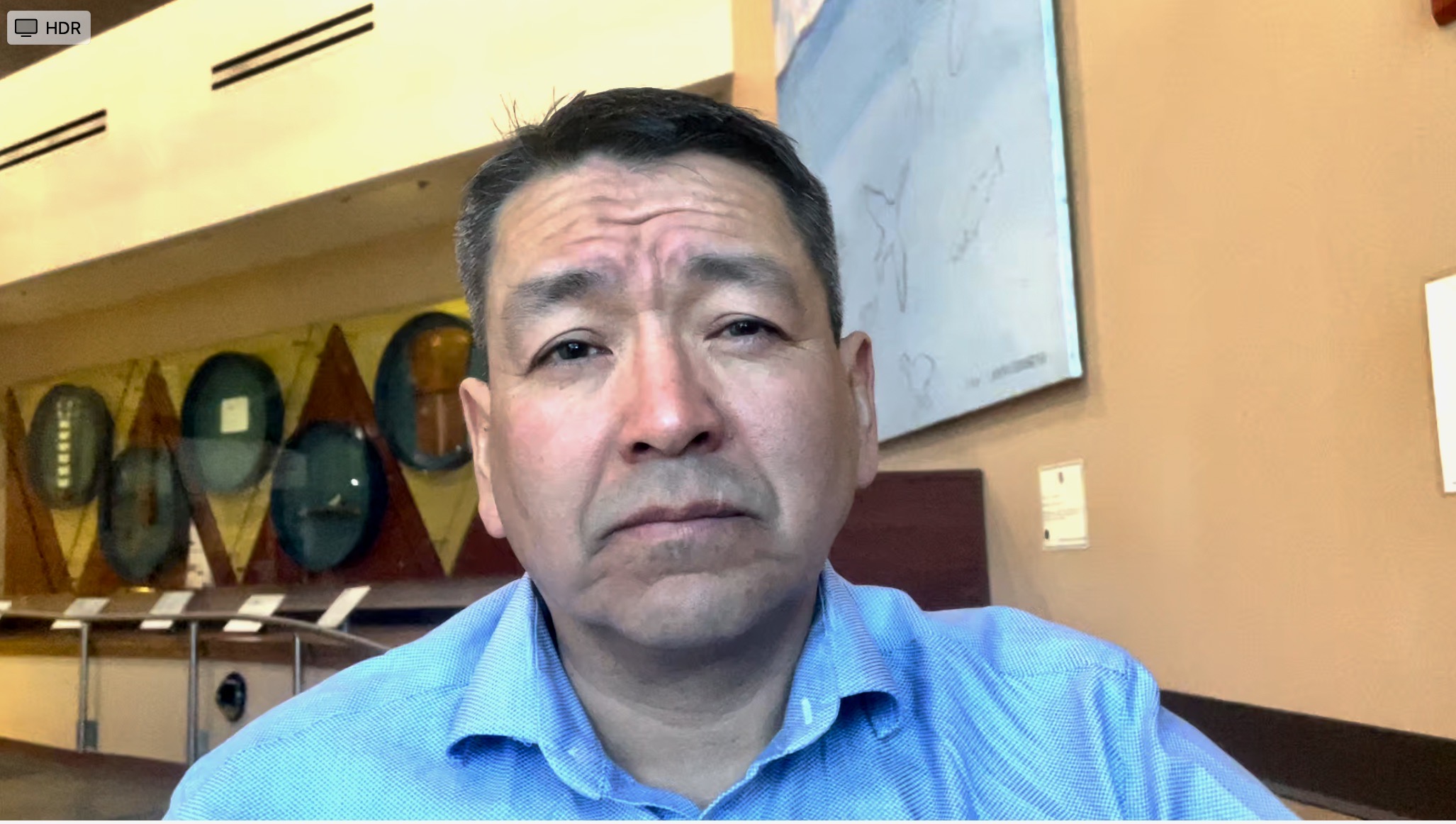
PJ Simon, Athabascan, traveled 40 miles by snow machine from the village of Allakaket to Bettles where he got in his truck and drove 240 miles to Fairbanks. Then he caught a plane for the one-hour flight to Anchorage. “Just to be here, it’s a tremendous honor,” Simon said.
These days Notti is regarded as an elder statesman. He recently attended an AFN meeting in Washington, D.C., on a major oil development project called Willow.

Corrected: Changed “just because you chase a moose across it doesn’t mean you own the land,” to “just because someone’s grandfather chased a moose across the tundra did not give them any rights to land” as Emil Notti’s paraphrasing of Gov. Hickel’s stance on aboriginal rights.
ICT is a nonprofit news organization. Will you support our work? All of our content is free. There are no subscriptions or costs. And we have hired more Native journalists in the past year than any news organization ─ and with your help we will continue to grow and create career paths for our people. Support ICT for as little as $10. Sign up for ICT’s free newsletter.

