
Daniel Herrera Carbajal
ICT
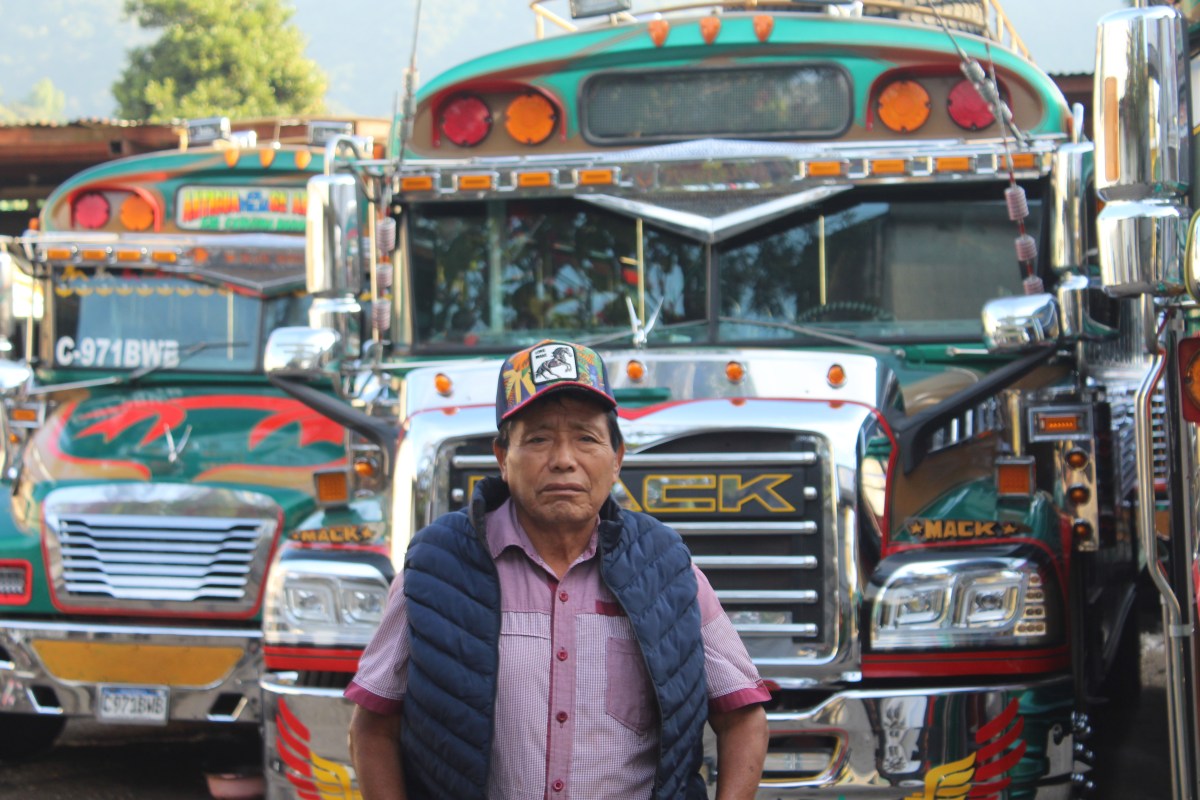
In between sprawling hills, at the base of a 12,000-foot volcano, buses of every color cover the roads carrying Indigenous passengers from their village of San Antonio Aguas Calientes, Guatemala, to major city centers.
Since the 1990s, Rutas Santa Fe has made it its mission to provide safe and reliable transportation to the village of San Antonio Aguas Calientes, Guatemala – a majority Kaqchikel Maya village with little public transportation.
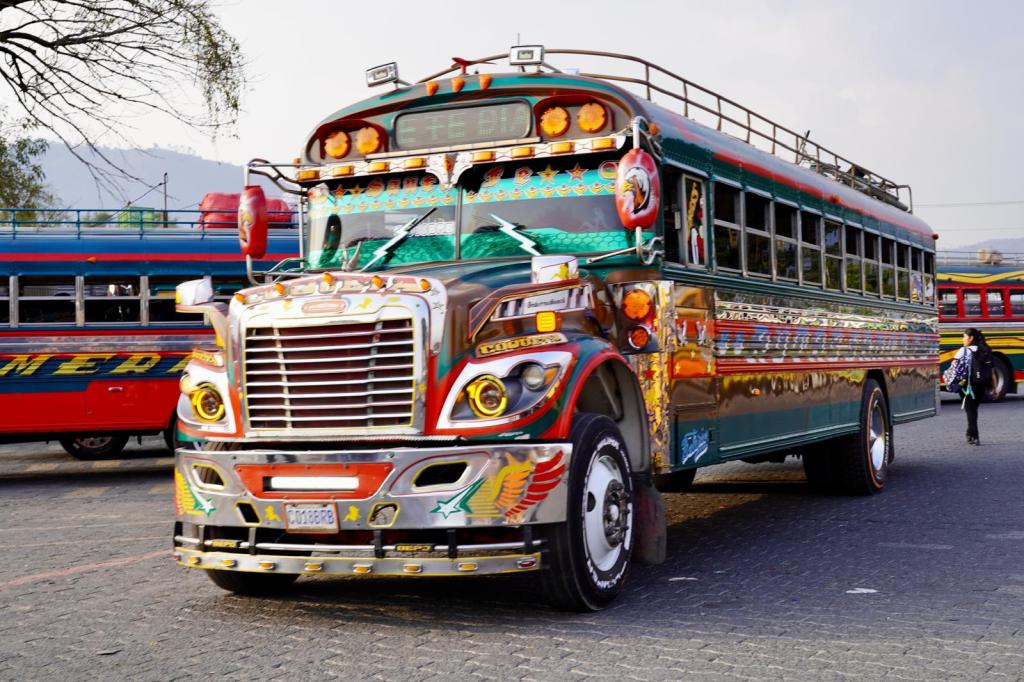
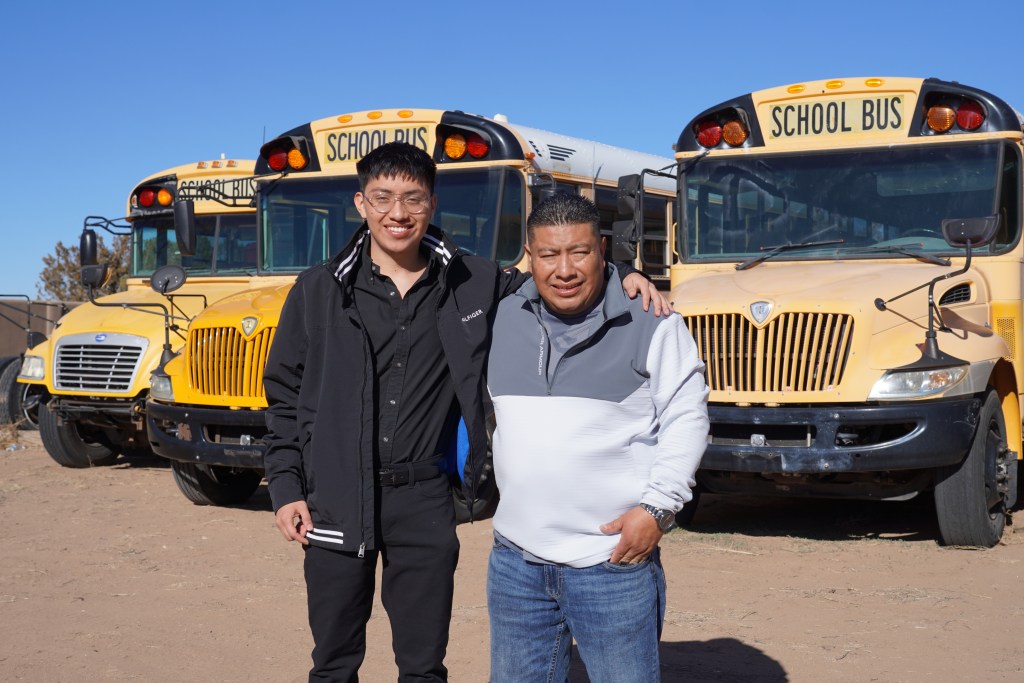
The company buys decommissioned school buses, or “camionetas,” and fixes them in Santa Fe, New Mexico, before driving them all the way through Mexico to Guatemala, where they are painted in vibrant colors, representing the vibrant Indigenous cultures of New Mexico and Guatemala.
Israel Carmona, Kaqchikel Maya, and his family are from Guatemala but primarily operate the company from Santa Fe.
“It all started with my father back in 1992 with the first bus that we bought at a junkyard and it was really damaged,” Israel Carmona said. “We purchased it and then we rebuilt it here in Santa Fe so we can drive it through Mexico into Guatemala.”
The camionetas are used to transport villagers from San Antonio Aguas Calientes, a rural village located in the hilly countryside, to the nearby city of Antigua, Guatemala.
“The majority of our clients are Indigenous people who do require these services,” said Kendra Carmona, Kaqhickel Maya, daughter of Israel Carmona and director of community outreach for Rutas Santa Fe. “You can see within the camionetas it says ‘Los Pioneros’ which means the pioneers and it’s because we really did help connect the small village to Antigua and people were able to go and sell in the mercados and get gainfully employed.”
The nearly 2,100-mile trip from Santa Fe to Guatemala takes more than 40 hours. Aiverson Carmona, Kaqchikel Maya, son of Israel Carmona and director of video and logistics for Rutas Santa Fe, said the road south is dangerous and scenic.
“The experience was beautiful yet it was also very difficult because we would have issues on the road, whether that be mechanical issues, border issues,” Israel Carmona said. “It can also be dangerous going through Mexico, depending on gangs and violence and also police always wanting money while you’re getting stopped. But I also saw a lot of beauty in it, a lot of beautiful cultures within Mexico, within the playas and just traveling with my father. Getting to Guatemala was such a relief, finally being back home and connecting with family.”
“Being from Santa Fe, New Mexico, we were surrounded by other Indigenous nations. Aiverson and I grew up going to powwow, the Gathering of Nations, where Indigenous culture is celebrated and it was just so wonderful to see because that isn’t necessarily the case. Indigenous communities are still very marginalized all throughout the world,” Kendra Carmona said. “We really celebrate Indigenous innovation and it’s seen within the artwork itself. A lot of the details are based on features within Santa Fe like the road runner and the colors of the bus are the colors of the Quetzal, green and red, which are the colors of the Indigenous bird of Guatemala.”
“Guatemala is called ‘el pais de la eterna primavera’ because of its colorful flowers and the way the people wear their huipils. It’s always colorful. It’s a culture that we try to reflect on the buses in the way we show the paintings and the designs that they have,” Israel Carmona said.
A huipil is a traditional garment worn across Central America and Mexico by Indigenous women.
Despite the challenges, Israel Carmona and his family continue to provide this service for their home village.
“It’s a hard business and we continue to do it because it serves the community and the most marginalized people,” Kendra Carmona said.
The people love the buses, that makes us happier and satisfied that we’re bringing good and safe transportation for our community,” Israel Carmona said.

