
Deusdedit Ruhangariyo
Special to ICT
Around the world: Shrinking Gran Chaco poses health risks to uncontacted Ayoreo people in Paraguay, Indigenous children make up 60 percent of Western Australia child protection, York Indigenous faculty oppose enrollment suspension in Canada, safeguarding Tonga’s rare traditional songs for future generations, and Sami Parliament urges reform of Finland’s Reindeer Damage Act.
PARAGUAY: Shrinking Gran Chaco
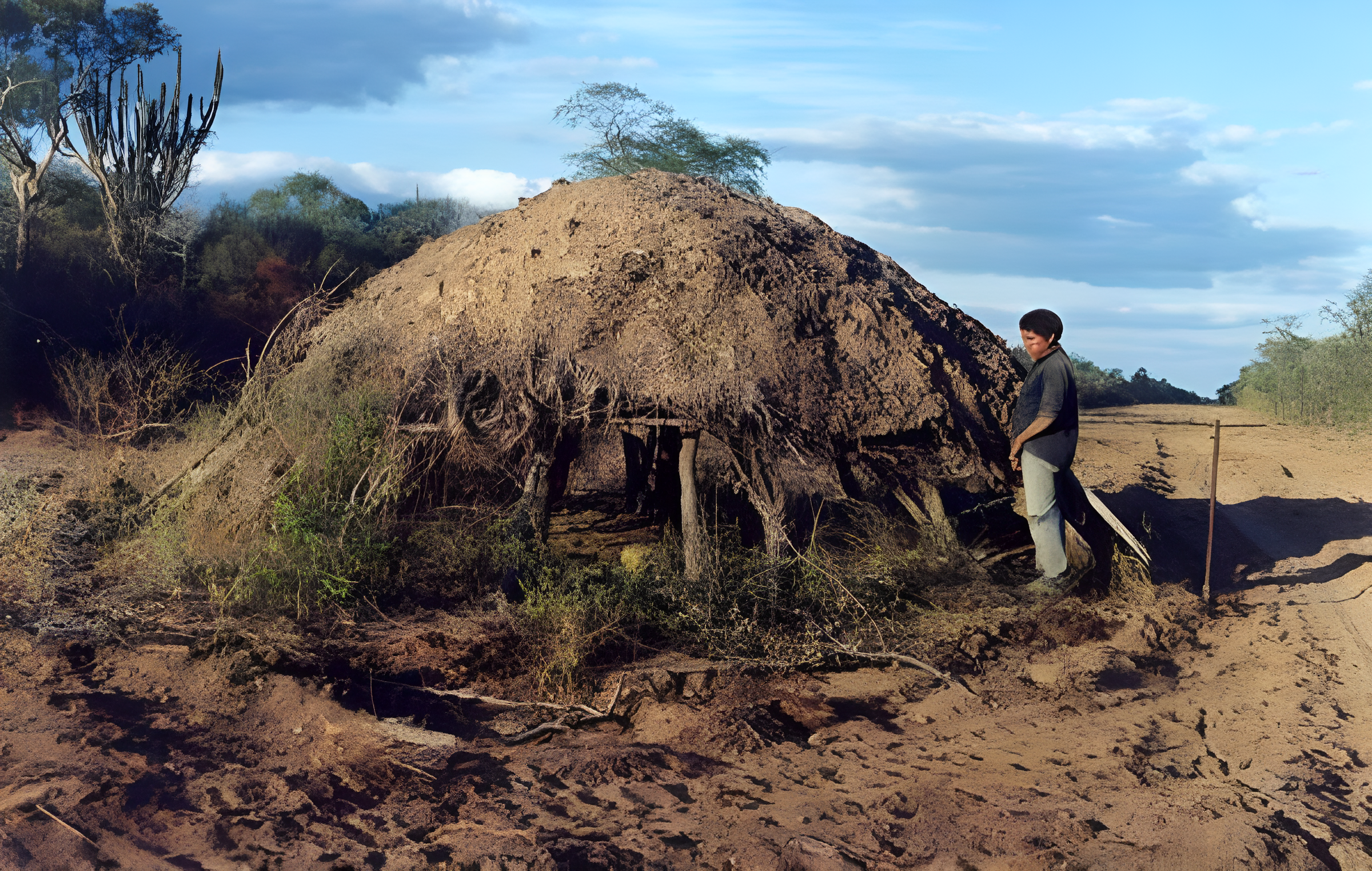
Deforestation in Paraguay’s Gran Chaco, driven by agribusiness and infrastructure projects, threatens the Indigenous Ayoreo people. Many live in isolation, at risk of losing their land and traditions while facing exposure to deadly diseases, experts warn, Mongabay reported on March 21.
A global coalition of Indigenous rights advocates is urging the Paraguayan government and international community to take stronger action. In February, the International Working Group for the Protection of Indigenous Peoples in Isolation and Initial Contact visited northern Paraguay to assess the situation. The findings were alarming.
“At any moment, our Ayoreo brothers and sisters in isolation are going to come out,” said Rocío Picaneré of the Ayoreo Native Council of Eastern Bolivia. “And why is this happening? Because we treat the forest like a supermarket, and the forest is being cleared every day.”
The International Working Group for the Protection of Indigenous Peoples in Isolation and Initial Contact, comprising 21 Indigenous and civil society organizations, focuses on threats to uncontacted peoples in the Amazon, Brazilian Cerrado, and Gran Chaco. The Gran Chaco spans about 65 million hectares (160 million acres) across Argentina, Paraguay, Brazil and Bolivia. It is South America’s second-largest forest and has experienced severe deforestation, losing 5.3 million hectares (13.1 million acres) from 2001 to 2021.
The Ayoreo, living semi-nomadically in the Paraguayan and Bolivian Gran Chaco, are believed to be the last uncontacted people in South America outside the Amazon. Their last known contact with outsiders was in 2004, when 17 Ayoreo-Totobiegosode were forced from the forest due to encroaching cattle ranching. In 2021, some secretly met with relatives, expressing concern over rapid deforestation.
The International Working Group for the Protection of Indigenous Peoples in Isolation and Initial Contact warned that more Ayoreo may soon emerge unless deforestation stops. The territory they inhabit once exceeded 1.1 million hectares (2.7 million acres) but has drastically shrunk. “We’re trying to defend the life and food of our brothers and sisters, who are still maintaining their natural way of life in the forest,” said Tagüide Picanerai of the Payipie Ichadie Totobiegosode Organization. “We’re calling attention to this and urge the authorities to help us.”
The coalition urged Paraguay to reassess land-use policies and the impact of agrochemicals on Indigenous communities. Pesticides and fertilizers contaminate drinking water and harm wildlife. Additionally, road construction projects, including the 2,200-km (1,360-mi) Bi-Oceanic Corridor and a 220-km (137-mi) highway connecting Bolivia and Paraguay, could further disrupt the region. “The deforestation from construction is only a small part of the profound changes [roads] will bring,” stated the International Working Group for the Protection of Indigenous Peoples in Isolation and Initial Contact.
The uncontacted Ayoreo lack immunity to common diseases. In 1989, after missionaries forcibly brought several Ayoreo out of isolation, many died from a tuberculosis-like lung disease. Similar illnesses affected those who emerged in 2004. The International Working Group for the Protection of Indigenous Peoples in Isolation and Initial Contact warned Paraguay lacks the resources to handle potential health crises if more Ayoreo make contact.
The Paraguayan Indigenous Institute, responsible for Indigenous affairs, declined to comment. The Ayoreo began negotiating for land titles and protections in 2016 but abandoned talks in 2021 due to a lack of progress. That same year, the Inter-American Commission on Human Rights urged Paraguay to halt deforestation and prevent outsiders from entering Ayoreo land. However, most measures remain unimplemented.
The International Working Group for the Protection of Indigenous Peoples in Isolation and Initial Contact called for urgent action. “We raise our alarm at the magnitude of the loss of the Chaco forests and their cultures and call for urgent action to safeguard the rights of the Indigenous population and recover the lost forests.”
AUSTRALIA: Indigenous children report
A recent report reveals that nearly 60 percent of children in out-of-home care in Western Australia in 2023-24 are Indigenous, National Indigenous Times reported on March 21.
A report released recently by Western Australia’s Commissioner for Children and Young People, Jacqueline McGowan-Jones, reveals that of the 653,000 children and young people in Western Australia, 99,300 (15.2 percent) live below the poverty line.
“Children today are more vulnerable than ever before,” Commissioner McGowan-Jones said, according to National Indigenous Times. “From increasing poverty and displacement to lack of access to basic services, we must not only raise awareness but also prioritize tangible, systemic change that can mitigate these threats to ensure a safer, brighter future for our children and young people.”
Aboriginal children make up 7.3 percent of Western Australia’s child population, yet nearly 60 percent of those in out-of-home care (OOHC) are Indigenous. The number of children in OOHC increased by 2.9 percent to 5,326 in the past year, with 3,178 First Nations children in care – 52 percent of them under the age of 10.
Over the past decade, the percentage of Indigenous children in OOHC has risen by 10 percent, including a 3.6 percent increase between June 2023 and June 2024. “In the 10 years from 30 June 2014 to 30 June 2024, the total increase of children and young people in out-of-home care was 1,089. Of the 1,089 children and young people, 1,034 were Aboriginal and 55 were non-Aboriginal,” the Profile states, according to National Indigenous Times.
The report also highlights concerns within the youth justice system. While the number of children in detention dropped from 105 in 2021-22 to 86 in 2022-23, more than 57 percent were unsentenced. Of the 132 children aged 10-13 detained in 2023–24, fewer than five received sentences. The latest Closing the Gap data shows that Indigenous children in Western Australia are 28.1 times more likely to be incarcerated than non-Indigenous children, a decline from over 38 times a decade ago.
Commissioner McGowan-Jones emphasized the need for early intervention, stating, “It’s clear that the future of many of our children is being compromised. They need wraparound supports and early intervention to ensure they do not go down a path of neglect, anti-social behaviour, and crime.”
The Profile underscores the link between the child protection and youth justice systems, revealing that 60.7 percent of young people in Western Australia’s youth justice system in 2022–23 had prior interactions with child protection. Disparities in education access were also noted, with nearly a quarter of children in very remote areas classified as developmentally vulnerable, compared to 9.4 percent in metropolitan areas.
“Every child has the right to quality education and care, but for remote children especially, they are often deprived of this fundamental opportunity due to a range of socio-economic and infrastructural barriers,” McGowan-Jones said, according to National Indigenous Times. “We cannot blame children and young people for the circumstances into which they are born. We must act now to reverse this trajectory.”
CANADA: Faculty fight degree program closures
Indigenous faculty urge York University to reinstate enrollment for 18 degree programs, including Indigenous studies, gender studies, and environmental biology, in 2025, CBC reported on March 20.
Angele Alook, a faculty member at York University’s School of Gender, Sexuality, and Women’s Studies and a member of Bigstone Cree Nation, has condemned the university’s decision to suspend enrollment in 18 degree programs, including Indigenous Studies.
According to CBC, “The administration needs to immediately reverse its decision because we’ve had a huge public outcry,” Alook said, highlighting the numerous letters of support the department has received from around the world. She and other faculty members only learned about the suspension through an email sent late on a Friday before Reading Week, prompting emergency meetings with the union and Indigenous Council despite the break.
Alook emphasized that York has an Indigenous framework based on the Truth and Reconciliation Commission’s Calls to Action, with commitments to decolonization, equity, and inclusion. “Decolonization is stated to be one of the principles of the institution, and Indigenous faculty and students feel like this is a violation of the decolonizing and Indigenizing efforts that we’ve been working so hard on for years,” she said.
She also expressed concern that the decision further erodes trust between Indigenous students, faculty, and the administration, noting that this is not the first time she has had to fight for program resources.
Brock Pitawanakwat, an Anishinaabe professor from Whitefish River First Nation and coordinator of the Indigenous Studies program, criticized the lack of transparency in the decision-making process. “It was shocking,” he said, according to CBC, explaining that while faculty had been warned about financial struggles due to provincial underfunding and changes to international student visas, there was no prior indication that suspending programs was under consideration.
He called the move a shortsighted approach to financial management, arguing, “It’s not going to grow the university, it’s not going to increase our reputation, and it’s certainly not going to lead to better outcomes for our students.” He also noted that many students enter Indigenous Studies after taking elective courses, pointing out that two of his three classes this semester were overloaded with students eager to join.
In response, four York University senators and a member of the academic planning and research committee are seeking a judicial review, arguing that program admissions fall under the senate’s jurisdiction and should not be suspended without its approval.
The university stated that while enrolment in many of the affected programs is low, it recognizes their “intellectual value” and aims to revise them to attract more students. Meanwhile, York’s Indigenous Council has requested a meeting with the university president to address the harm caused to Indigenous students, faculty, and staff.
NEW ZEALAND: Safeguarding traditional music
A newly established creative hub in West Auckland is dedicated to preserving Tongan culture through traditional song and dance, Te Ao Maori News reported on March 22.
Te Puna Creative Hub, now occupying the former children’s theatre at Whoa! Studios in Henderson, is helping reconnect New Zealand-born Tongans with their cultural heritage through music and storytelling. Recently, the hub hosted the Ocean Star Fetu’u Moana Academy as they recorded traditional songs for their dance performances.
The 12-person Tongan choir, accompanied by guitar and drums, recorded a selection of songs to preserve and share with future generations. “Oh, my gosh, having this recording session is so important,” said academy tutor Fiana Tuli-Tahifote, daughter of academy coordinator Hila Tuli and Ocean Star chief executive ‘Anitelu Tuli.
The academy’s collaboration with Te Puna Creative Hub ensures students have access to high-quality recordings of rare Tongan songs, safeguarding them for the future. Through its audio engineering internship, Atai is supporting the academy’s mission to preserve Tongan heritage.
“When this project came up, and it was all about preserving traditional Tongan songs that are slowly dying out, [so] I raised my hand to it,” Atai said. The initiative also provided interns with a unique and challenging learning experience, exposing them to cultural music beyond their usual work.
Kevin Vave, one of Atai’s mentees, assisted with the recording session and appreciated the opportunity to be part of something meaningful. “I’m a Samoan, and I’ve seen Samoan choirs recorded before. So hearing a Tongan choir… I know they’ll be happy with the quality of the recordings. That’s the most enjoyable part,” he said. He emphasized the importance of quality recordings for Pacific communities. “Having a great song is important, but if it’s recorded wrong, it’s not going to come out as good as you want it to,” he added.
The recordings offer Tongan communities a chance to revisit and relive songs from generations past. “To hear re-recorded songs from their ancestors – songs from 50 years ago – is just cool,” Vave said. The project was facilitated by Crescendo at Te Puna Creative Hub and delivered by Tātaki Auckland Unlimited in partnership with Te Kawerau ā Maki, the mana whenua for Te Kōpua Henderson.
FINLAND: Sami Parliament urges reform
The Sámi Parliament in Finland is urging reforms to the Reindeer Damage Act following the government’s March 13 decision to reject an investigation into the ongoing freezing of reindeer pastures, Eye on the Arctic reported on March 18.
The dispute arose after Sámi reindeer herding communities formally requested on March 4 that the Ministry of Agriculture and Forestry implement the Reindeer Damage Act.
Across Sápmi – the Sámi homeland spanning Arctic Norway, Sweden, Finland, and Russia’s Kola Peninsula – reindeer are struggling with extreme weather conditions, including freezing temperatures, mold and thick ice layers in the snow, making their natural food sources inaccessible. With the animals unable to dig through the ice, Sámi herders are forced into costly emergency feeding and large-scale migrations.
On Tuesday, Leo Aikio, First Vice-Chairman of the Sámi Parliament in Finland, condemned the Ministry of Agriculture and Forestry for claiming there was no measurable damage to assess and no significant threat to the long-term sustainability of reindeer herding.
“Finnish legislation must be reformed so that in exceptional circumstances, assistance is provided proactively, and not only after reindeer deaths,” Aikio stated. “The current situation, where information on the number of reindeer deaths is expected until the autumn, is unreasonable and also more expensive than timely assistance for emergency feeding.”
Aikio also expressed frustration that Finland has yet to take action, while neighboring Norway and Sweden have already stepped in to support their reindeer herders. The harsh environmental conditions are exacerbating financial hardships for Sámi herders, who are also struggling with recent cuts to predator compensation.
“The cut in predator compensation is yet another blow to reindeer herders, whose financial situation is already extremely tight following the devastation of exceptional winters,” Aikio said.
“Reindeer are subject to property protection, and any damage caused to them should be fully compensated. The state regulates predator populations, and it is also the state’s duty to compensate reindeer killed by predators.”
My final thoughts
My final thoughts are with the Ayoreo people of Paraguay’s Gran Chaco who face mounting dangers as deforestation driven by agribusiness and infrastructure projects rapidly consumes their land. As the forest shrinks, these uncontacted Indigenous communities are increasingly at risk of being forced out of isolation, exposing them to diseases for which they have no immunity.
Past encounters, such as those in 1989 and 2004, led to fatal lung infections among the Ayoreo, highlighting the catastrophic consequences of forced contact. Beyond health risks, the destruction of their ancestral land threatens their cultural identity and traditional way of life.
To protect the Ayoreo, the Paraguayan government must take stronger action by enforcing land protections and halting deforestation in their territories. The recommendations of the Inter-American Commission on Human Rights, which called for restrictions on outsiders entering Ayoreo land and measures to curb deforestation, must be fully implemented.
Additionally, regulations should be put in place to control agrochemical pollution, which contaminates drinking water and endangers both Indigenous communities and local wildlife. Without immediate intervention, the Ayoreo’s survival remains in jeopardy.
International support and pressure are also crucial. Human rights organizations, environmental groups, and foreign governments must push for stronger protections while ensuring that agricultural imports from Paraguay do not contribute to Indigenous displacement.
Companies involved in infrastructure projects like the Bi-Oceanic Corridor must be held accountable for their impact on the environment and Indigenous populations. Sustainable development strategies should prioritize conservation and Indigenous land rights over economic expansion that leads to irreversible harm.
The way forward requires urgent and coordinated action. The Paraguayan government must engage in meaningful dialogue with the Ayoreo and Indigenous advocacy groups to secure legal land rights and develop protections against forced contact. Emergency health measures should also be established to mitigate the risks of disease outbreaks if contact becomes inevitable.
Preserving the Gran Chaco is not just about protecting the Ayoreo – it is a matter of human rights, biodiversity conservation, and climate stability. Without immediate intervention, an entire culture and way of life could be lost forever.

Our stories are worth telling. Our stories are worth sharing. Our stories are worth your support. Contribute $5 or $10 today to help ICT carry out its critical mission. Sign up for ICT’s free newsletter.
