
Deusdedit Ruhangariyo
Special to ICT
Around the world: Indigenous leaders condemn New Zealand’s treatment of Māori, First Nation leader joins opposition to nuclear waste disposal site, protections sought for Thai hornbills, a Western Australia premier condemns children’s prison conditions as “torture,” and US officials urge release of detained retired Uyghur doctor.
NEW ZEALAND: Government criticized over Māori rights
An international collective of Indigenous leaders has condemned the New Zealand government’s handling of Māori rights as the proposed Treaty Principles Bill enters a new phase of cabinet discussions, Te Ao Maori News reported on Sept. 9.
Indigenous leaders, including groups like the Indigenous Environmental Network, have urged New Zealand’s coalition government to respect Te Tiriti o Waitangi, the nation’s foundational bicultural document.
At the 18th Protecting Mother Earth Conference held in the Eastern Cherokee Nation last month, the collective condemned the proposed treaty principles bill. They argued it undermines democratic processes, treaty law and ethical standards. The bill, along with a proposed review of the Waitangi Tribunal, was described as “a profound violation” similar to colonial attempts to weaken Indigenous treaties in countries like the United States and Canada, said Tom BK Goldtooth, executive director of the Indigenous Environmental Network.
“This bill reflects racist colonial attitudes that still persist in governments today,” Goldtooth said, likening it to a “termination and erasure agenda” targeting Māori legal and political status, according to Te Ao Maori News.
Tonatierra spokesperson Eve Reyes-Aguirre supported this view, emphasizing that treaties should be treated as “living agreements” between sovereign nations. “To honour the treaties is to honour justice and the sovereignty of Indigenous nations,” she said, according to Te Ao Maori News.
The collective also criticized the government for using Te Tiriti o Waitangi to avoid fully endorsing the United Nations Declaration on the Rights of Indigenous Peoples, specifically failing to uphold Article 37, which calls for respect of treaties with Indigenous peoples.
Tina Ngata, lead advisor for the National Iwi Chairs Forum’s Independent Action Plan Against Racism, emphasized the importance of global Indigenous solidarity amid rising far-right movements worldwide. “We deeply appreciate the support… Our global Indigenous solidarity is crucial at this time,” Ngata said.
Dame Naida Glavish also condemned the bill, urging the government to stop claiming equality, saying, “The data and statistics speak for themselves – racist government policy over time has worked to displace Māori.”
The statement concluded by calling on the New Zealand government to honor Te Tiriti o Waitangi and protect Māori from the harms of colonialism.
CANADA: Nuclear waste site opposed
The Bloc Québécois leader has joined the opposition to the nuclear waste disposal site at Chalk River, APTN News reported on Sept. 9.
“It is completely irrational to place one million cubic meters of nuclear waste on the surface near a river that ultimately provides fresh water for over five million people,” said Yves-François Blanchet at a press conference held in the House of Commons in Ottawa.
Blanchet was accompanied by Kebaowek First Nation Chief Lance Haymond and Assembly of First Nations Regional Chief for Quebec and Labrador, Ghislain Picard.
In January, the Canadian Nuclear Safety Commission approved the construction of a near-surface disposal facility at Chalk River Laboratories to store low-level radioactive waste. The facility is located about 200 kilometers (125 miles) northwest of Ottawa in Ontario.
Despite the commission’s approval, local Algonquin nations continue to oppose the nuclear waste facility, arguing it will harm local wildlife and water sources and that First Nations were not adequately consulted.
Haymond highlighted that pre-construction activities for the site are already impacting wildlife, particularly black bears.
“Canadian Nuclear Laboratories has begun pre-construction work for the near-surface disposal facility, which now includes blocking black bears from reaching their dens and using sound deterrents to drive wildlife away,” he said, according to APTN News. “These actions not only violate the Wildlife Conservation Act but also infringe upon Algonquin Anishinabe customary laws and our deep respect for the wildlife that has coexisted with us on these lands for generations.”
Picard emphasized the government’s responsibility to honor its promises to consult First Nations before making significant decisions like this one.
“Canada must uphold its own commitments,” he said. “This commitment is reflected in the adoption of Bill 15 in June 2021, which obligates Canada to align its policies with the principles of the United Nations Declaration on the Rights of Indigenous Peoples.”
THAILAND: Protections sought for Thai hornbills
Budo-Sungai Padi National Park, a tropical rainforest in southern Thailand, spans rugged peaks and valleys across Narathiwat, Yala and Pattani provinces, facing increasing political unrest, unpredictable weather and escalating wildlife poaching threats, Mongabay reported on Sept. 10.
Despite environmental and social challenges, conservationists and local communities have worked together for over 30 years to restore hornbill populations in and around the 34,100-hectare (84,263-acre) Budo-Sungai Padi National Park.
In the 1990s, hornbill populations were at significant risk due to habitat loss and poaching, driven by the lucrative trade in their ornate head casques and live chicks. Poachers often destroyed old-growth trees to access hornbill nests. However, in 1994, the Hornbill Research Foundation at Bangkok’s Mahidol University began engaging local communities by offering poachers an alternative livelihood as nest guardians. Instead of hunting hornbills, they were paid to monitor nests, collect data and protect the species they once exploited. This initiative helped reduce poaching and supported the fledging of 490 chicks between 1994 and 2008.
New research emphasizes the importance of education programs in local villages and schools in the success of this Hornbill Research Foundation initiative. Surveys of over 400 villagers revealed that participants with more knowledge of hornbills and their ecological role were more likely to support conservation efforts. These education programs have integrated conservation into local culture, ensuring future generations continue to protect hornbills.
“Three decades ago, people hunted hornbills because they needed the money. They didn’t know how hornbills live or how they’re important to the forest,” said Jiraporn Teampanpong, study lead author and assistant professor at Kasetsart University. “Now, people recognize that hornbills are part of the legacy they can give to the next generation.”
Thailand is home to 13 species of hornbills, six of which are found in the south: helmeted, rhinoceros, white-crowned, great, wreathed, and bushy-crested hornbills. Conservation efforts have been especially critical for the critically endangered helmeted hornbill and vulnerable rhinoceros hornbill.
“Having the support and interest from local people is very important,” Jiraporn explained, according to Mongabay. “Whenever they notice hunters going into the forest to collect hornbill chicks, they report it to conservation staff.”
The strong legacy of hornbill conservation spans generations, with many current nest guardians being children of those who started the project three decades ago. Over time, hornbill conservation has become synonymous with protecting forest resources, such as water and non-timber forest products.
However, challenges remain. Habitat loss due to illegal logging, land encroachment, and forest degradation continues to threaten hornbill populations. A study comparing two protected areas in southern Thailand found that hornbill populations, particularly helmeted hornbills, struggle in more degraded environments. While the overall population of great and wreathed hornbills has increased, helmeted hornbills have declined by more than 90 percent.
Bee Choo Strange, Hornbill Research Foundation international coordinator, emphasized the need to expand research to additional hornbill habitats in the region. She also stressed the importance of training young researchers in fieldwork techniques.
The future of the project remains uncertain due to limited funding. Political unrest in the region restricts traditional funding sources like ecotourism, and the project now relies on a nest adoption scheme, where donors contribute $150 annually to support a nest. Currently, the Hornbill Research Foundation pays 30 local residents as nest guardians, but funds for education programs are scarce.
Jiraporn highlighted the importance of continuing education efforts, particularly for younger generations. “Young people who have been through the conservation education program say they would not hunt hornbills, even if it meant quick cash. That’s why it’s essential to keep this program going.”
AUSTRALIA: Children’s prison conditions attacked
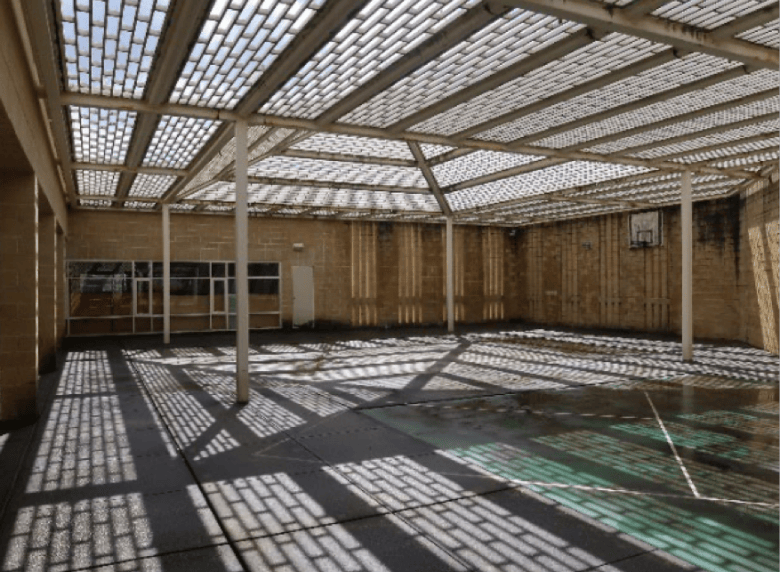
Former Western Australian premier Colin Barnett has criticized the conditions in the state’s infamous Unit 18, describing them as “bordering on torture,” the National Indigenous Times reported on Sept. 10.
Former Western Australian premier Colin Barnett has condemned the treatment of children in Unit 18, a maximum-security adult prison, as “clearly abusive.”
Barnett said he was compelled to speak out following the deaths of two children in Western Australia’s youth detention system: 16-year-old Yamatji boy Cleveland Dodd in Unit 18 in October, and a 17-year-old in Banksia Hill last month.
The former Liberal MP, who served as premier from 2008 to early 2017, warned that Western Australia’s treatment of children in detention would tarnish the state’s global reputation more severely than the destruction of Juukan Gorge.
“This is the kind of abuse you expect in undeveloped, backward nations and totalitarian states,” Barnett said, according to National Indigenous Times. “This should not be happening in Australia, and certainly not in Western Australia.”
He expressed deep concern over the state’s recent record. “The fact that there had not been a suicide of any youth in the justice system prior to this, and now there have been two in a year, is a great shame to Western Australia.”
Barnett also voiced disappointment in the silence of Labor MPs, accusing them of failing to address the ongoing crisis. “What I would like to see is some of our members of Parliament, from all parties, speak out on these justice issues,” he said.
CHINA: US officials urge release of Uyghur doctor
Family members and U.S. officials have urged China to release a retired Uyghur doctor who was abducted six years ago and later imprisoned in retaliation for her siblings’ outspoken advocacy abroad, Radio Free Asia reported on Sept. 12.
Gulshan Abbas, 62, was abducted by Chinese authorities on Sept. 10, 2018, in apparent retaliation for the advocacy work of her sister, Rushan Abbas, the founder and executive director of Campaign for Uyghurs in the U.S., and her brother, Rishat Abbas, president of the U.S.-based Uyghur Academy International.
In March 2019, Gulshan was sentenced to 20 years in prison on “terrorism-related charges,” despite being a respected, retired physician who had avoided political involvement throughout her life.
“Although our efforts, speeches and tireless activism have not yet succeeded in freeing my sister, Gulshan Abbas, from China’s prison, they have played a crucial role in exposing China’s crimes of genocide on a global scale,” said Rushan Abbas, according to Radio Free Asia.
The United States and several other nations have labeled China’s treatment of Uyghurs and other Turkic Muslims in Xinjiang, which includes arbitrary arrests and detentions, as genocide and crimes against humanity.
On Tuesday, a bipartisan group of 12 U.S. congressmen, led by Ben Cardin, a Democrat from Maryland and chair of the Senate Foreign Relations Committee, issued a joint statement demanding Gulshan’s immediate release.
“Dr. Gulshan Abbas has endured more than six years of unjust and inhumane imprisonment by the Chinese Communist Party, solely due to the political advocacy of her sister, who is a U.S. citizen,” the statement read, according to Radio Free Asia.
“Global leaders and human rights organizations have repeatedly called for her release,” the congressmen said. “No one should be imprisoned by a foreign government for the actions or perceived crimes of a family member. We reaffirm our call for the immediate release of Dr. Abbas.”
My final thoughts
My final thoughts are in Western Australia where a former Western Australian Premier Colin Barnett’s condemnation of the treatment of children in Unit 18 brings attention to a global crisis in youth detention.
He describes the conditions as “clearly abusive,” highlighting the tragedy of children like 16-year-old Cleveland Dodd, who died in Western Australia’s youth detention system. Barnett warns the state’s treatment of these vulnerable young people could severely tarnish Western Australia’s global reputation.
The issue extends far beyond Australia, reflecting a widespread failure in how societies handle youth incarceration. Placing children in adult prisons, where they endure solitary confinement for up to 20 hours a day, is not just harmful – it is inhumane. Extensive research shows that solitary confinement causes severe psychological harm, particularly to developing adolescents, exacerbating mental health issues and making rehabilitation nearly impossible.
For Indigenous communities, this treatment compounds historical injustices. These children are disproportionately affected by such policies, further alienating them from support systems and perpetuating cycles of trauma and disadvantage.
The way forward must involve a complete rethinking of youth detention systems. Rehabilitation, rather than punishment, should be the priority. Restorative justice programs, which focus on healing and community reintegration, provide a more humane and effective alternative. Non-violent youth offenders should be offered community-based services addressing the root causes of their behavior, such as trauma, poverty and substance abuse.
Governments must also end the practice of housing children in adult facilities. Instead, they should create specialized centers with trained staff, mental health support, and age-appropriate care. Global collaboration and advocacy are essential to ensure youth detention systems everywhere uphold human rights, prioritize rehabilitation, and treat children with dignity.

Our stories are worth telling. Our stories are worth sharing. Our stories are worth your support. Contribute today to help ICT carry out its critical mission. Sign up for ICT’s free newsletter.
