Global Indigenous
Coverage around the world on Indigenous issues for the week ending May 18, 2025
Around the World: Cambodian activists threatened, officials dismiss Preah Roka abuse reports, people seek people – Māori tourism sets the standard in New Zealand, and Gija mother and daughter duo leading rural health change in Australia.
CAMBODIA: Cambodian activists threatened
Civil society organizations are urging a comprehensive and impartial investigation into alleged forest crimes within the Prey Preah Roka Wildlife Sanctuary. They are also calling on authorities to refrain from politicizing the matter, as public concern continues to grow in response to official denials and mounting legal intimidation, Cambodianess reported on May 13.
The Kuy Indigenous community of Prame commune, located in Tbaeng Meanchey district of Preah Vihear province, has reported 334 instances of deforestation inside the Prey Preah Roka Wildlife Sanctuary, recorded between May 5 and 7, 2025.
In a joint declaration, the community voiced deep disappointment and distress, stating, “We, the Kuy Indigenous community, who rely on forest for livelihood, are deeply saddened by the Ministry of Environment’s failure to prevent forest crimes.” They appealed to both the Ministry and local government to remove barriers that hinder Indigenous and public involvement in safeguarding forests and natural resources.
Meanwhile, environmental advocate Ma Chetra raised alarms over illegal logging during an interview with Radio Free Asia on May 10. His remarks triggered immediate retaliation from government officials, who alleged he had relied on obsolete images and disseminated falsehoods.
The Preah Vihear Provincial Department of Environment accused Chetra of trespassing into protected zones, fabricating claims, and provoking instability. Authorities issued a legal notice and cautioned media outlets against sharing what they termed “misleading information,” urging journalists to uphold ethical standards or face legal consequences.
Despite the intense pushback, governance expert Ok Serei Sopheak emphasized the importance of transparency and called for an independent inquiry. “The authenticity of old or new photos is easily verifiable in the digital age,” he noted. He also criticized the politicization of environmental matters, warning, “Linking environmental and political cases is threatening and weakens supporting arguments, and the media ban on reporting on this case further confuses public opinion.” Sopheak underscored the necessity of aligning national commitments with local practices, insisting that public trust depends on sound governance.
Other environmental defenders reinforced calls for accountability. San Mala of the Partnership for Environment and Development, along with Moen Chandara from the Cambodian Youth Network, pointed out that local reports of deforestation are often disregarded or downplayed for political reasons. “The Preah Roka Forest Community reports daily deforestation and forest crimes,” said Chandara. “If these crimes continue to occur every day, what else can the people who depend on the forest products of this community rely on?”
In light of the mounting public concern, Ministry of Environment spokesperson Khvay Atitya stated that investigations are ongoing. “The working group will continue to monitor natural resource management in protected areas,” he said, while acknowledging that previous misinformation had circulated. However, no official findings have been released regarding the recent deforestation complaints.
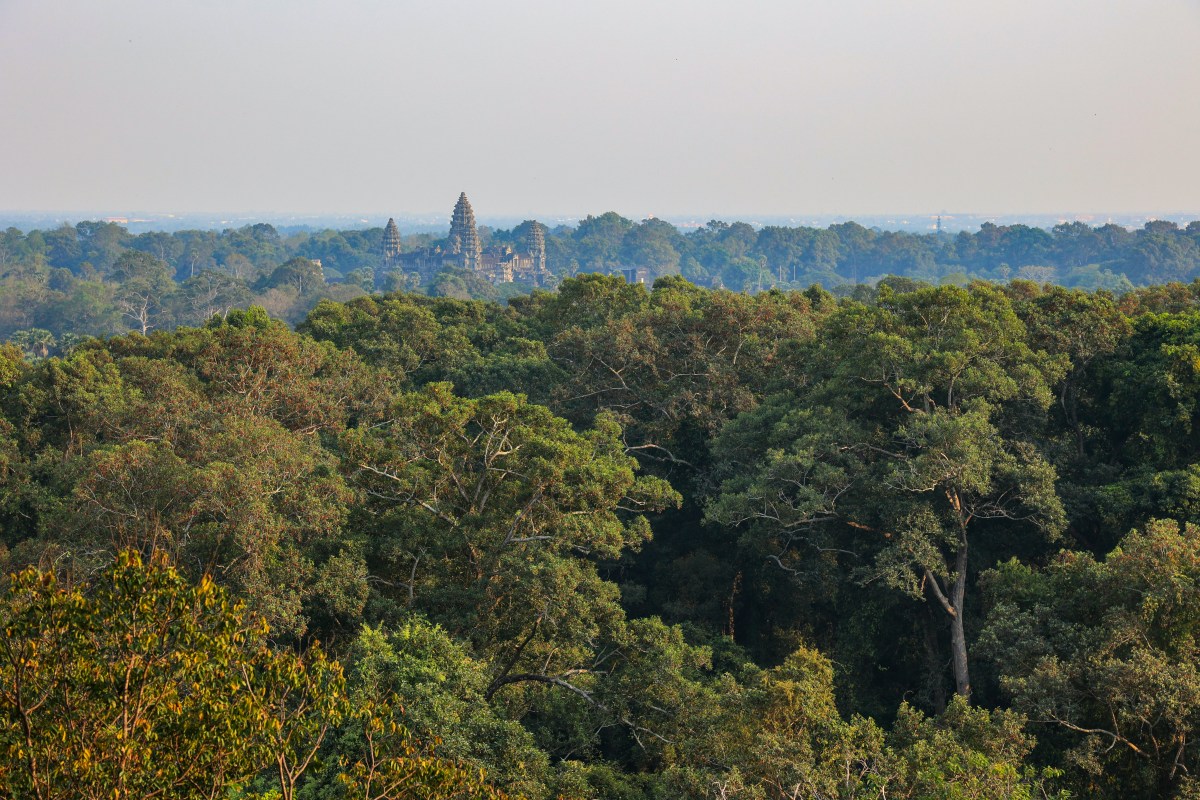
Covering 90,000 hectares across Preah Vihear province, the Prey Preah Roka Wildlife Sanctuary remains a crucial refuge for biodiversity and a lifeline for Indigenous communities who depend on it.
NEW ZEALAND: Māori tourism boosts New Zealand economy
Māori tourism is experiencing significant growth, and industry operators emphasize that the cornerstone of its sustained success lies in delivering genuine and meaningful cultural experiences, Radio New Zealand reported on May 13.
Māori tourism contributed $1.2 billion to the New Zealand economy in 2023, a nearly 25 percent increase from $975 million in 2018, according to a recent report.
Debbie Robertson, general manager of Wai Ariki Hot Springs & Spa, said her business integrates cultural storytelling into every guest experience.
“People want to connect with people and that’s what makes it different,” she explained.
“Anyone can go anywhere and sit in … mineral water. It’s around the world but what the difference is the connection to the culture and the people and what we’re able to offer.”
Robertson emphasized that Māori tourism across the motu offers visitors an authentic cultural connection that makes Aotearoa stand out.
“Many of our people that are offering products across Aotearoa are very humble and they need to elevate their price point,” she said.
“People will pay to experience what they have and connect with them and our culture, and don’t be shy about doing that. Be unapologetically Māori.”
Ngāi Tahu Tourism general manager Jolanda Cave credited the sector’s growth to collaboration among operators.
“It has to be authentic or it actually isn’t going to be an amazing manuhiri experience,” she said. “You can’t do it overnight ’cause then it wouldn’t really be an authentic experience.”
Cave noted the industry is adapting to meet the expectations of younger, tech-savvy travelers as well as affluent retirees.
“We’re storytellers … regardless of how they’re travelling – virtually or in person – we’re still going to be sharing our story in an authentic way, just potentially delivering it in a different means.”
New Zealand Māori Tourism board chair Dale Stephens praised the hard mahi that has helped the industry flourish. He urged a shift toward high-quality, immersive visitor experiences.
“If we use that as the focal point … treat our manuhiri as family … and be prepared to welcome them back time and time again, I think that’s the real secret for having successful tourism in this country.” He said.
Stephens also cautioned against repeating pre-pandemic mistakes of overcrowding, advocating for promotion of lesser-known destinations.
Tourism Industry Aotearoa chief executive Rebecca Ingram added that international visitors are increasingly drawn by culture.
“Thirteen percent of them were inspired to come to New Zealand because of our culture and our heritage,” she said.
Prime Minister Christopher Luxon echoed the optimism.
“Māori tourism can do so well and it always has,” he said. “They connect through culture and have some of our highest quality products.”
A new government tourism roadmap is expected soon.
AUSTRALIA: Gija mother and daughter duo leading rural health change
Dr. Ellen Engelke, a graduate of Curtin Medical School, and her mother, Dr. Catherine Engelke – a Curtin School of Nursing alumna and senior medical officer in Kununurra – are helping improve health outcomes in rural and Indigenous communities, National Indigenous Times reported on May 17.
The Gija mother-daughter duo have built careers in medicine that reflect a deep dedication to both their community and cultural roots.
Dr. Ellen Engelke, who received support from the Australian Rotary Health Indigenous Scholarship during her studies, said the assistance allowed her to stay focused on her ambitions and further inspired her commitment to giving back. For Ellen, pursuing medicine has always been about a strong sense of purpose shaped by her upbringing.
“Mum studied while I was young, and I remember watching her practice clinical exams on me,” she recalled. “She never pressured me to follow in her footsteps, but seeing her journey made me believe that if she could do it, so could I.”
Her mother, Dr. Catherine Engelke, began her medical journey in nursing. She completed a Postgraduate Diploma in Clinical Nursing (Midwifery) at Curtin in 1996 before becoming a doctor herself.
“I wanted them to know they could achieve anything they set their minds to,” she said, speaking of her children.
Ellen described her time at Curtin as both rewarding and demanding. She said the encouragement from faculty, fellow students, and the broader university community played a major role in her success.
“Some of my best memories – and some of my toughest – were from medical school,” she said. “But the support from staff, peers, and the wider Curtin community made all the difference.”
She also expressed gratitude for the scholarship, which helped relieve financial stress and served as a powerful motivator.
“The Rotary community genuinely cared about my journey,” Ellen said. “Their support gave me even more motivation to succeed and give back.”
Now beginning her professional career, she is focused on improving healthcare access and outcomes in rural and Indigenous communities, especially in places like Kalgoorlie.
“I want to be a doctor that people can rely on – that’s what matters to me,” she said.
Catherine noted that Curtin’s problem-based learning (PBL) model equips students with skills that extend beyond the classroom.
“PBL challenges students early on, but it helps them develop an inquiring mindset and clinical reasoning skills that serve them throughout their careers,” she said.
Giving back has always been a central value in Ellen’s life.
“A group of strangers believed in me and supported me. That inspires me to do the same for others,” she said. “Be yourself, apply for every opportunity, and when you receive support, make sure to give back.”
Reflecting on her daughter’s achievements, Catherine shared her pride.
“She’s going to be an incredible doctor,” she said. “She has the heart, the determination, and the humility to truly make a difference.”
My final thoughts
My final thoughts are in Cambodia’s Prey Preah Roka Wildlife Sanctuary, where the trees are falling faster than truth can take root. And with every tree felled, a promise is broken – to the Kuy Indigenous people, to biodiversity, and to a world that pretends to care about climate justice.
“We are deeply saddened,” the Kuy community said in a statement. But this sadness is not passive, it is sharp, ancestral, and alive. These are the people who have lived in harmony with the forest for generations, who know the sound of every bird, the scent of every healing root. And now, they watch as bulldozers and chainsaws erase their inheritance, while the Ministry of Environment stands by, or worse, points fingers at those raising the alarm.
Ma Chetra did what any brave environmentalist would do, he spoke out. He showed the world what was happening. And for that, he was smeared, threatened, and accused of fabricating truths that thousands of tree stumps already confirmed. The government’s response was swift and chilling: stop speaking, stop sharing, stop resisting. But truth, like forests, always finds a way to grow back, if not here, then in the global conscience.
And yet, how convenient to call forest defenders “agitators” and whistleblowers “liars,” while handing sacred lands to the highest bidder. The pattern is old. Criminalize the witnesses. Silence the victims. Protect the system.
As governance expert Ok Serei Sopheak rightly said, “Linking environmental and political cases is threatening and weakens supporting arguments.” But here’s the uncomfortable truth: in Cambodia and across the world, the environment has become political. Because defending rivers and forests now means defying powerful interests, and it’s often Indigenous people and activists who pay the price.
The Ministry says it will investigate. But the Kuy already know what’s been lost. They walk through the empty groves. They hear the silence where birds once sang.
Prey Preah Roka is more than 90,000 hectares of forest. But it is also a test. A test of truth. Of courage. Of whether we will protect those who protect the Earth, or let them fall like the trees they’ve sworn to defend.
Let history show where we stood.