
Help ICT make strides in 2024. Our goal is to raise $150,000 by the end of the year with generous contributions from funding partners and collaborators like you. We’re thankful for your support, and we’re thriving because of it. DONATE TODAY!
Deusdedit Ruhangariyo
Special to ICT
Around the world: The United Nations human rights chief accused of ignoring Uyghur genocide, climate funding pledge on track but not to Indigenous groups, and a Western Australia school and Māori TV channel win top awards for excellence
REPORT: Biases divert climate funds away from Indigenous communities
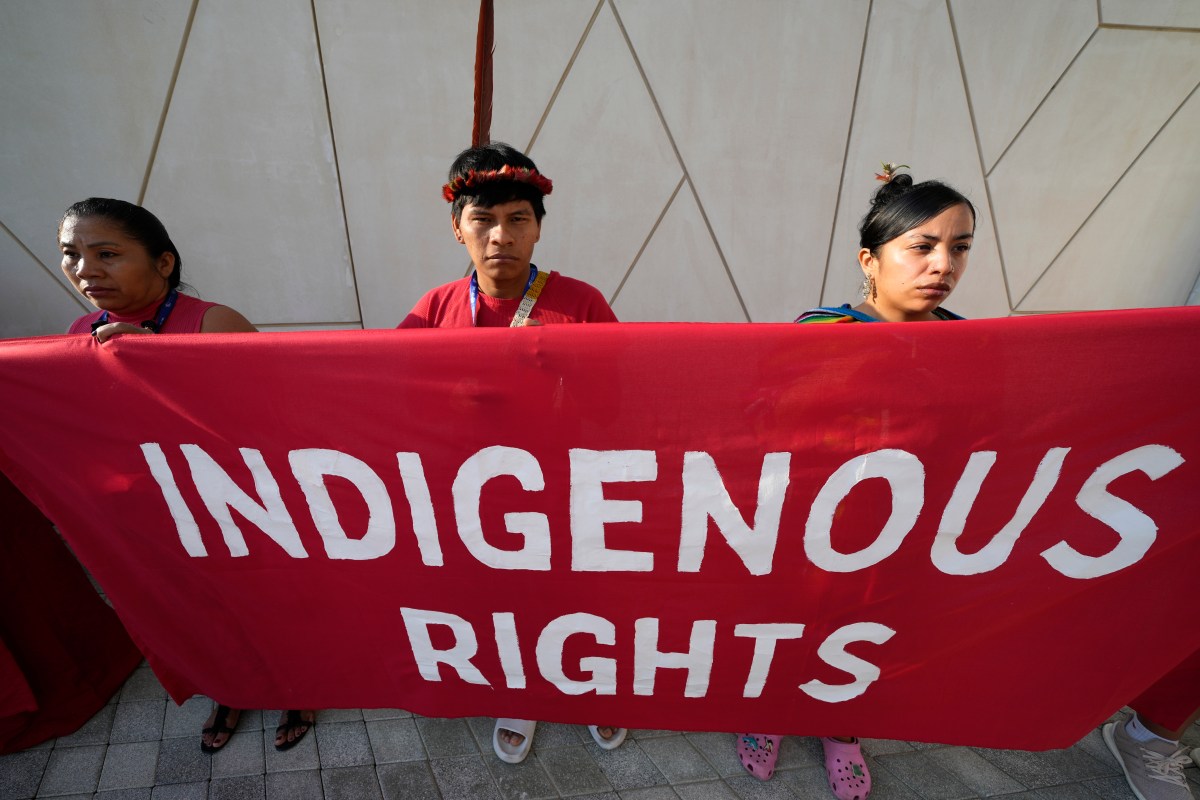
A five-year plan to disburse $1.7 billion to support the land rights of Indigenous and local communities is largely bypassing the very communities it is designed to help, Mongabay reported on Dec. 4.
A report released Dec. 1 indicated that nearly half of the funding has been distributed but only 2.1 percent has been distributed to Indigenous groups and local communities, Mongabay reported.
“We are still struggling to get money directly to Indigenous and local community organizations,” said Kevin Currey, a program officer at the Ford Foundation and author of the new report.
He said that obstacles hindering direct funding to the communities, known as Indigenous Peoples and Local Communities, or IPLCs, include administrative challenges, strict grant criteria and the perception that Indigenous and local communities may not be reliable.
“We see that [IPLCs] are doing quite a lot to build their capacity,” said Currey, according to Mongabay. “But there are many cases where these organizations don’t have a legal identity and aren’t able to receive funds directly, so they partner with [non-goernmental organizations] or other groups as a way of getting access to funds.”
The funding was approved during the 2021 United Nations climate conference in Glasgow, Scotland, and signed by 22 governments and private funders. The new report was released as this year’s climate conference, COP28, met in Dubai from Nov. 30-Dec. 12.
The report indicates they’re on course to meet the five-year commitment ending in 2025.
Advocates including the Mesoamerican Alliance of Peoples and Forests and the Indigenous Peoples Alliance of the Archipelago are demanding increased access to the funds, despite the crucial role by Indigenous and local communities in preserving endangered ecosystems, Mongabay reported.
About $8.1 million of the total $494 million disbursed in 2022 reached those communities, an ongoing issue with climate-related aid. The Rainforest Foundation Norway reported in 2021 that less than 1 percent of climate aid went to Indigenous and local communities.
“It positions Indigenous peoples and local communities as unknowledgeable instead of recognizing them as critically important experts of lands, water, and air,” said Tamra Gilbertson, a program coordinator at the Indigenous Environmental Network, according to Mongabay.
“To believe that Indigenous people can’t handle money or can’t handle their lands or forests is insulting,” she said. “The funders are the ones in need of direction from Indigenous knowledge holders and leaders.”
UNITED NATIONS: Leader ‘disgraceful’ in ignoring Uyghurs
On the 75th anniversary of the United Nations Convention on Genocide, the U.N.’s top human rights commissioner drew heat for failing to include the plight of the Uyghurs in China’s Xinjiang region in calling for the global community to hold violators accountable, Radio Free Asia reported on Dec. 5.
Volker Turk, the high commissioner for human rights, referenced historical genocides including the Holocaust, Cambodia, Rwanda and Yugoslavia, but did not include the Uyghurs.
“Genocide is never unleashed without warning,” Turk said in a statement, according to Radio Free Asia. “It is always the culmination of preceding and identifiable patterns of systematic discrimination – based on race, ethnicity, religion or other characteristics – and of gross human rights violations, targeted as a matter of policy against a people; minority; community.”
Rahima Mahmut, who serves as director of the World Uyghur Congress in Great Britain, sharply criticized Turk’s comments.
“Volker Turk’s statement means little when people in powerful positions like him are not prepared to act over a well-documented and publicized genocide happening against the Uyghur people, recognized by free parliaments and by tribunal,” Mahmut said, according to Radio Free Asia.
“I personally find it disgraceful how so many people rightly acting against other atrocities are silent on China,” Mahmut said.
Emma Reilly, a former U.N. employee who was terminated for whistleblowing on the U.N.’s disclosure of Uyghur activists’ names to the Chinese government, voiced similar criticisms on the social media outlet X, formerly known as Twitter, saying Turk had not taken any tangible steps at the U.N.
“@volker_turk is a hypocrite,” she posted. “@UNHumanRights is complicit in #UyghurGenocide by handing names to #Beijing;”
Since 2017, at least 1.8 million Uyghurs and other Turkic minorities are believed to have been held in a network of detention camps in Xinjiang. Beijing claims the camps are vocational training centers and denies allegations of torture or mistreatment, but the U.S. government and several Western parliaments have labeled China’s actions toward the Uyghurs as either genocide or crimes against humanity, Radio Free Asia reported.
AUSTRALIA: Aboriginal teachings cited in education award
A remote community school in Western Australia that incorporates traditional Aboriginal wisdom into its curriculum has been recognized as one of the top five outstanding educational institutions in the state, National Indigenous Times reported on Dec. 5.
The Wananami Remote Community School, which teaches kindergarten through sixth grade, received the Excellence in Cultural Responsiveness Award in the esteemed WA Education Awards for 2023.
The school, on Mount Barnett Station in the Kimberley region, is committed to fostering confident and knowledgeable leaders who embrace their Ngarinyin culture and heritage, National Indigenous Times reported.
The school places high value on respecting and upholding Aboriginal ways, and offers a robust science program that blends Western Australian curriculum science with traditional Aboriginal knowledge. It also offers a diverse range of culturally responsive learning in language, arts, and culture.
“This award not only recognizes the school, but celebrates the amazing work our communities and families do in guiding the cultural learning program within our school,” said Nikki Sandilands, the principal of Wananami Remote Community School.
The school will receive a $20,000 grant to fund a project or program of their choice.
NEW ZEALAND: Māori TV channel wins top award
The Whakaata Māori television channel won a top award at the 2023 New Zealand Television Awards for its live broadcast of the annual day of remembrance and commemoration of service members, Te Ao Māori News reported on Dec. 6.
Whakaata Māori, a New Zealand television channel that airs programs in both Māori and English languages, was cited for its coverage of the Australia and New Zealand Army Corps, known as ANZAC, which is observed each year on April 25.
The day remembers soldiers and service members from both Australia and New Zealand who served and sacrificed their lives during wars, conflicts, and peacekeeping missions, particularly World War I.
Other notable mentions involving Whakaata Māori included the TV series “Homesteads,” which aired on the channel. The series received the Te Māngai Pāho award for the best reo Māori program, and Sesilia Pusiaki was awarded Best Supporting Actress for her role in the film, “Inky Pinky Ponky.”
Whakaata Māori has been a standout in covering the ANZAC events since 2006, capturing dawn services across the nation and in Gallipoli while also featuring narratives from veterans and their communities, Te Ao Māori News reported.
My final thoughts
My final thoughts are on the report on the distribution of climate funds to support the land rights of Indigenous and local communities, as declared during the 2021 United Nations climate conference.
Indigenous and local communities play an invaluable role in climate change mitigation and environmental conservation and require more resources for the following reasons:
*Guardians of biodiversity: Indigenous peoples often inhabit regions with rich biodiversity. Their traditional knowledge and sustainable practices are vital for preserving ecosystems and protecting endangered species. By supporting their land rights, we empower them to continue their role as stewards of the environment.
*Carbon sequestration: Many Indigenous territories encompass forests and lands that act as significant carbon sinks. Preserving these areas helps absorb carbon dioxide from the atmosphere, mitigating the impacts of climate change.
*Sustainable land use: Indigenous and local communities have a deep understanding of sustainable land-use practices that prioritize long-term environmental health. This knowledge is crucial for maintaining ecosystems, preventing deforestation, and promoting regenerative agriculture.
*Community resilience: Empowering these communities is an effective way to build resilience against climate-related disasters. Their traditional practices often include strategies for adapting to changing weather patterns and natural disasters.
*Cultural preservation: Supporting land rights for Indigenous and local communities is not only about environmental conservation but also about preserving unique cultural heritages. These communities often have deep spiritual and cultural connections to their land, which must be respected and protected.
Given these vital roles, it is necessary that more funds are allocated to support the land rights of Indigenous and local communities. This commitment should extend beyond mere financial support; it should also involve meaningful collaboration, inclusion, and the recognition of their rights and sovereignty.
As concerned global citizens, we must call for increased investment in these communities and advocate for policies that empower them to continue their invaluable work in protecting our planet. It is a crucial step towards achieving our climate goals and ensuring a sustainable future for all.

Our stories are worth telling. Our stories are worth sharing. Our stories are worth your support. Contribute $5 or $10 today to help ICT carry out its critical mission. Sign up for ICT’s free newsletter.

