
Deusdedit Ruhangariyo
Special to ICT
Around the world: Flooding victims still can’t go home to Peguis First Nation, Indigenous communities face threats as deforestation rises in Nicaragua, and a traditional Noongar story gets a modern twist at the Perth Festival
CANADA: Peguis First Nation evacuees left in limbo
More than 900 people evacuated from Peguis First Nation amid historic flooding last spring are still unable to return to their homes, CBC News reported on Feb. 6.
The flooding was the worst in the First Nation’s history and was the fifth time in two decades the reserve had faced severe flooding, officials said. A state of emergency was issued April 28 and an evacuation order May 1 after the flooded Fisher River washed out roads and breached dikes, CBC reported.
SUPPORT INDIGENOUS JOURNALISM. CONTRIBUTE TODAY.
Now, nearly nine months later, about 300 homes are uninhabitable, with no timeline given for when residents might return, said Chief Glenn Hudson of Peguis First Nation, Manitoba’s largest First Nation community with more than 10,000 members of Ojibwe and Cree descent.
At least 85 homes have been condemned and nearly 200 are in need of major repairs, Hudson said.
“The homes themselves are mold infested,” Hudson said. “The furnaces, the hot water tanks, washers and dryers … the appliances are all damaged. They’re not functional.”
More than 2,000 people were forced to evacuate last spring. About 1,200 have been able to return to the community, while others remain with family or are living in motels.
Peguis also faced major flooding in 2006, 2009, 2011 and 2014, prompting leaders to call for the provincial and federal governments to help provide permanent protection from flooding.
NICARAGUA: Living in fear as deforestation rises
Many Indigenous people in Nicaragua are too scared to speak up against deforestation in their homelands, as threats have risen against environmentalists, journalists and others, Mongabay.com reported on Jan. 30.
Data on mining, deforestation and loss of biodiversity is difficult to obtain from the government, but all signs indicate 2022 was another bad year for the nation’s forests, Mongabay.com reported.
Particularly hard hit are two large biosphere reserves on the eastern and western borders, Bosawás and Indio Maíz.
Initial satellite data show severe encroachment into primary forests by cattle ranching, mining and logging. The encroachment also pose concerns for human rights advocates, since the reserves sit within or are close to Indigenous autonomous zones meant to preserve land ownership and self-governance for Mayangna and Miskito peoples.
“The forest is Mother Earth for us, because it’s the mother that provides what you need to survive, to feed and protect yourself,” an Indigenous leader who asked to remain anonymous because of safety concerns told Mongabay.com.
In 2021, Bosawás faced its third-highest level of tree cover loss in 10 years, according to satellite data from Global Forest Watch. Overall, the 4.9 million acre reserve lost 20 percent of its tree cover between 2011 and 2021.
Much of the deforestation in the area results from clear-cutting to make room for cattle pastures, Mongabay.com reported. And a study published in 2022 by Fundación del Rio found that mining concessions, many of them granted to Colombian and Canadian companies, now cover around 66 percent of the reserve.
AUSTRALIA: Noongar story of Djoondal kicks off festival
The Noongar story of Djoondal will open the Perth Festival on Feb. 10 with a modern twist to a traditional story using lasers, lights and stars, National Indigenous Times reported on Feb. 5.
Djoondal runs Feb. 10-12 at Pinar’s Tree in Lake Joondalup, Australia.
The latest incarnation of the so-called dreaming story is from Ian Wilkes, a Noongar theater-maker who is tackling a story handed down through generations of Noongar people.
Although there are many different versions of the story, Djoondal tells of the creation of the stars, the National Indigenous Times reported.
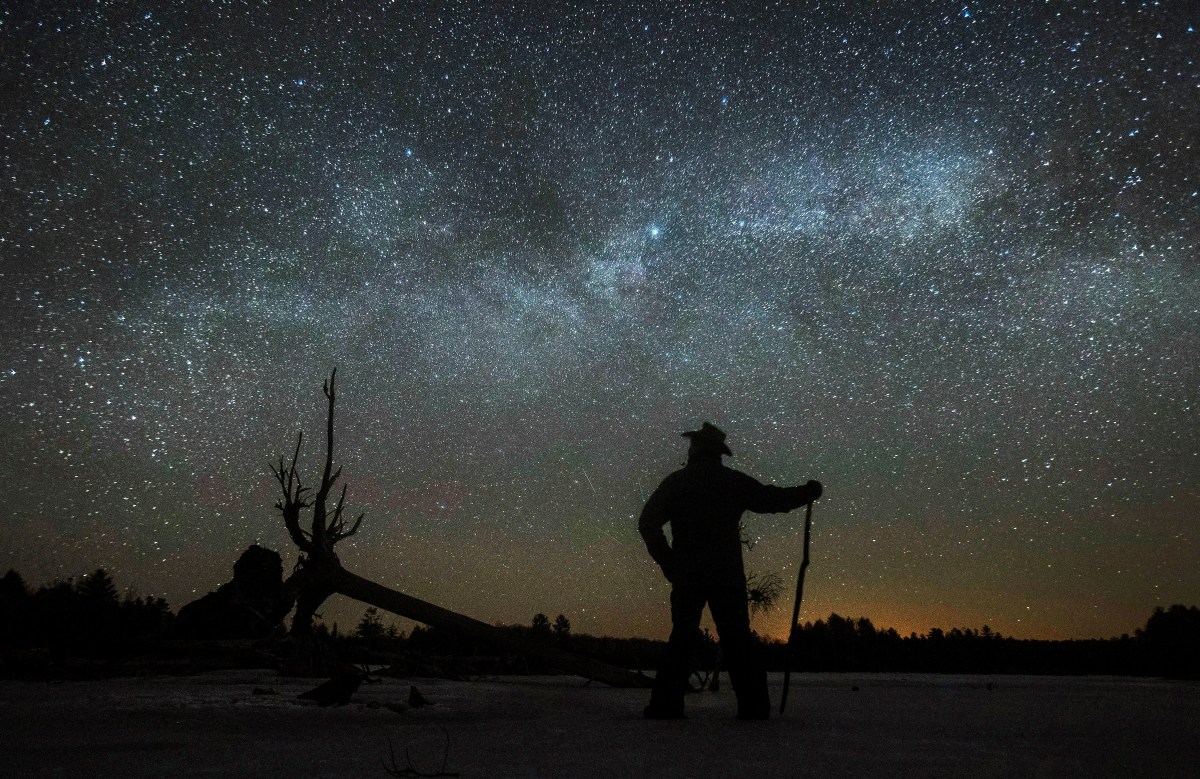
Djoondal is a spirit woman with long, white hair who flicked her hair as she collected the spirit children into the night sky. The children became the stars and her white hair became the Milky Way.
Wilkes said celebrations often centered at Lake Joondalup, where the waters served as a mirror to the sky.
“It’s a bit like a cinema complex for Noongars for thousands of years,” he told National Indigenous Times. “And so we’re bringing it back but we’re doing it in a bit more of a modern form, using lights and lasers and drones and stuff like that.
“Djoondal is based around that story but it also speaks about our modern issues.”
Joining Wilkes in the production are illustrator Rubeun Yorkshire, who is Noongar, Yamatji and Wongatha, and Chloe Ogilvie, a lighting designer who is Yamatji and Nanda.
“The story of Djoondal is driven through the theme of the festival as a whole,” Ogilvie said.
“The theme being ‘Djinda’ (the stars). You can’t talk about the stars without acknowledging First Nations people who were the first astronomers but also just the creation of them, which is the story we will tell at Joondalup.”
My final thoughts
My final thoughts are in Nicaragua, where Indigenous people and environment defenders live in perpetual fear for their lives because of weak laws. The government has done little to put in place strong regulations to support the environment. I challenge the Nicaraguan government — and the whole country — to do more. The environment affects everyone.
Global Indigenous is a weekly news roundup published every Wednesday by ICT (formerly Indian Country Today) with some of the key stories about Indigenous peoples around the world.

Our stories are worth telling. Our stories are worth sharing. Our stories are worth your support. Contribute $5 or $10 today to help ICT carry out its critical mission. Sign up for ICT’s free newsletter.

