
Deusdedit Ruhangariyo
Special to ICT
Around the world: Finland passes historic Sámi parliamentary reform, ‘spiritual tourism’ exploits Indigenous medicine in Ecuador, a First Nations chef’s diabetes changed his life’s trajectory, gender violence in the Solomon Islands needs focus on prevention, and Naga elders join scholars in India to explore ancient climate survival knowledge
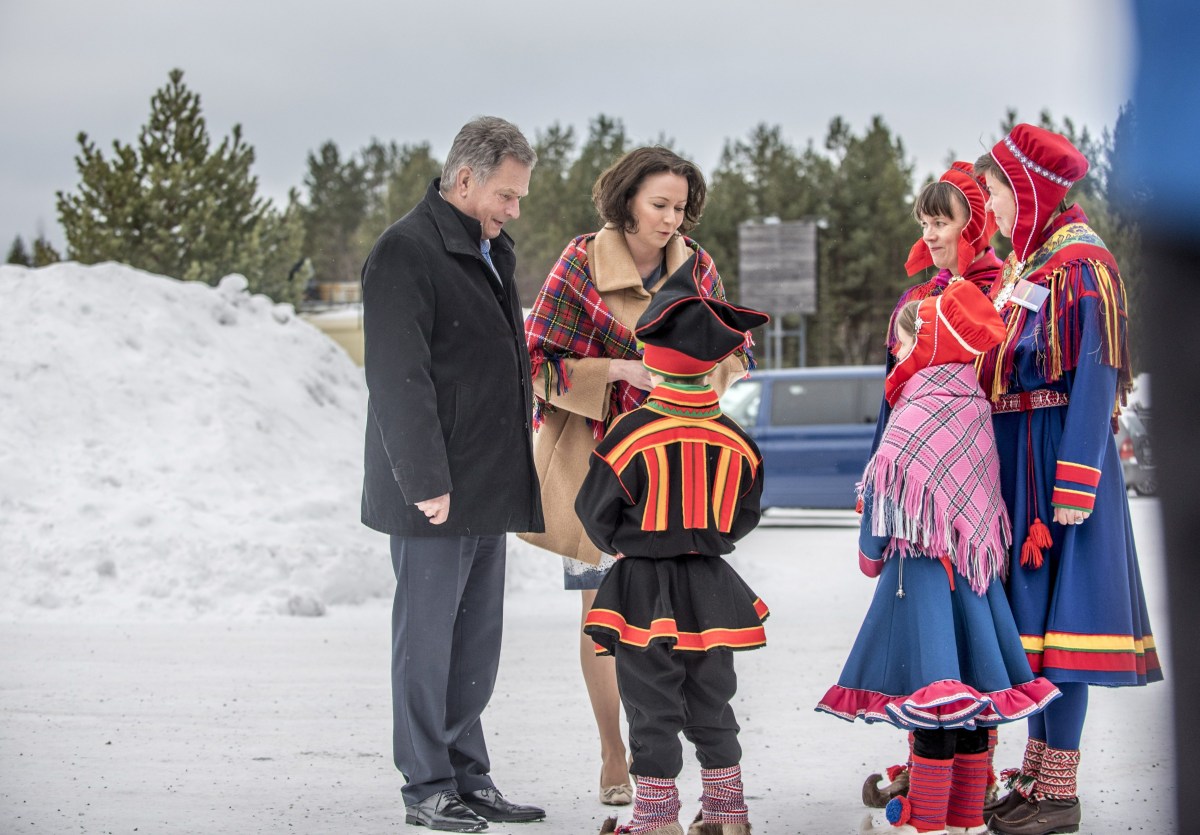
FINLAND: Sámi reforms win historic vote in Parliament
Finland’s Parliament has finally delivered on a promise the Sámi have pursued for more than a decade, formally affirming the Sámi people’s right to determine who represents them, the Helsinki Times reported on June 19.
By a vote of 150–27, Members of Parliament approved sweeping amendments to the Sámi Parliament Act on June 19.
“For more than 14 years now, we have had to fight to have a free voice,” said Acting Speaker Tuomas Aslak Juuso after the vote, according to the Helsinki Times.
The reform abolishes the so-called Lapp clause, a legal loophole that allowed Finns with distant archival references to “mountain, forest or fishing Lapps” to register on the Sámi electoral roll. Critics said the clause enabled non-Sámi to tilt elections and undermine self-determination.
Under the new rules, voting eligibility will be based on language ties, mirroring Norway and Sweden: a voter or their parent, grandparent, or great-grandparent must have learned a Sámi language as a first language.
President of the Sámi Parliament Pirita Näkkäläjärvi called the reform “a watershed moment,” thanking Prime Minister Petteri Orpo for keeping the bill in his coalition programme.
“We can finally move from defending our legitimacy to rebuilding our language and culture,” she said, according to Helsinki Times.
The change follows repeated rulings by the United Nations Human Rights Committee, which found Finland in breach of international law for forcing non-Sámi onto the roll. Helsinki was urged to fix the statute to “ensure the Sámi people’s self-determination.”
Ecuador: Sacred vine exploited by wellness tourism
Hayakwaska, once a sacred Amazonian medicine, is now being exploited by spiritual tourism, fueling cultural erasure, misnaming, and ecological harm under the guise of global wellness, The Guardian reported in an opinion piece that ran on June 17.
The article, written by Nina Gualinga and Eli Virkina, Indigenous women from the Ecuadoran Amazon who are storytellers and land defenders, describes the use of the “bitter vine” in a ceremonial medicine that is being marketed as a path to healing and enlightenment.
“This growing industry fuels the exoticisation of Indigenous peoples, turning our languages, practices and identities into consumable fantasies for outsiders,” the women write. “Sacred rituals are stripped of context, spiritual roles are commercialised, and even the names of the plants are misused, reducing complex cultural systems into simplified, marketable experiences.”
The ceremonial medicine is known as ayahuasca to outsiders or, to Indigenous peoples, hayakwaska, or hayakata upina, “to drink the bitter vine,” they write.
The wellness retreats re-package Indigenous ceremonies as individual ego journeys, they say. And yachaks – healers whose duty is to tune the harmony between forest, people and spirit – are coaxed into performing personalized revelations for high-paying guests.
Tour operators now sell jaguar-tooth pendants and skin bracelets as “mystical enhancers” of the ayahuasca experience, pushing an already threatened species closer to extinction.
“When healing is stripped from community and land, it stops nourishing awakening and starts feeding spectacle,” the writer.
“Hayakwaska is knowledge woven into territory, responsibility and humility. To understand it you must live the relationships: canopy and soil, river and myth, the more-than-human parliament of the rainforest. A week-long retreat cannot deliver that education any more than a postcard can replace a forest.”
CANADA: Chef Kirk Ermine’s diabetes journey
Kirk Ermine was just 21 when his body shut down without warning. Living in Prince Albert, Saskatchewan, and surviving on cheap convenience foods, he had no idea he was in diabetic crisis until he ended up in a coma, CBC News reported on June 20.
“It took them about nine days to bring my sugars down to normal,” he recalls.
After two misdiagnoses, he was finally diagnosed with juvenile Type 1 diabetes. His blood sugar levels were nearly 10 times the normal range. Ever since, Ermine, of Sturgeon Lake First Nation, has lived with insulin dependency — and a fierce determination to rewrite the narrative of Indigenous health.
Diabetes rates among First Nations people in Canada are alarmingly high. According to Diabetes Canada, 17.2 percent of First Nations people on reserves and 12.7 percent off reserves live with diabetes, compared to about five percent of the general population. Nearly 10 per cent of Métis people are diabetic.
Ermine believes diet is a key factor.
“Eating convenience foods — the Kraft dinners, the ramen noodles, a lot of breads—a lot of hollow carbs that really turn into sugars when they’re in your body,” he says, according to CBC News.
Working as a firefighter in the bush forced him to pay close attention to his blood sugar levels. That’s when he started cooking — for himself and his crew. What began as a necessity turned into a calling. He has now launched a catering and consulting business, teaching people how to prepare health-conscious meals using traditional ingredients instead of processed foods.
Now he’s thinking about creating videos and sharing recipes online — and maybe even writing a cookbook. But for now, his focus is simple: keep perfecting his meals, keep sharing his story, and keep inspiring others.
“It makes me feel really good inside knowing that through my illness, my disease, I can create a positive change in the world,” he told CBC News, “taking a negative and creating a positive out of it.”
SOLOMON ISLANDS: Prevention needed to stop gender-based violence
The SAFENET network has raised concerns about ongoing gaps in public education and community-based prevention of gender-based violence across the Solomon Islands, especially in Western Province, Solomon Star News reported on June 21.
Juliana Zutu, SAFENET’s coordinator, said at a recent workshop in Gizo that the network continues to offer vital services, counseling, shelter, legal support, and medical care, but that resources are overwhelmingly concentrated on response rather than proactive engagement.
“Too often, our efforts are focused on responding to cases after they happen, rather than preventing them in the first place,” Zutu said, according to Solomon Star News. “There is still a clear need for more awareness, especially at the village and household level. It is not an easy job and task to carry out.”
Providing services is expensive and resource-intensive, involving the Family Support Centre, social welfare, non-governmental organizations and government agencies.
Zutu also warned that despite ongoing advocacy, many cases in remote areas remain invisible, compounding the problem. She expressed hope that a new strategy under development will address these blind spots with more support from the government.
“We all need a safer and peaceful community,” she added, according to Solomon Star News. “And by doing this, it will have an impact behind it.”
INDIA: Naga elders, scholars unearth ancient climate survival knowledge
Nagaland University in Lumami, India, is spearheading a four-year, community-driven archaeological project to reveal how prehistoric Naga societies adapted to climate shifts — and how those lessons might bolster modern food security, Imphal Times reported on June 16.
Launched in June and funded by Australia’s Research Council, the study unites scholars from Nagaland University, the University of Sydney, La Trobe University, the University of York, and India’s Birbal Sahni Institute of Palaeosciences, Imphal Times reported.
The team will investigate Holocene-to-Anthropocene sites across Nagaland, pairing archaeology with palaeoclimate research. Work spans two site types: early forager camps that predate farming and ancestral village layers buried beneath today’s settlements, offering glimpses of pre-colonial lifeways.
Pilot excavations at Langa village in Shamator district have already unearthed an abandoned settlement whose existence had survived only in oral history.
Project lead Professor Tiatoshi Jamir says local participation is central. Elders help map stories to soil strata, and the Yimkhiung Tribal Council co-produced a short film documenting the dig.
“Community voices are not add-ons; they are data,” Jamir said, according to Impal Times.
High-resolution methods including pottery residue analysis, phytolith counting and radiocarbon dating will track changes in diet, farming, and climate.
“Our research uncovers deep histories of food systems and past adaptations to climate change,” said Professor Alison Betts of the University of Sydney, according to Imphal Times. “This knowledge, combined with scientific methods, may guide future resilience strategies.”
My final thoughts
In five corners of the world this week, Indigenous peoples have offered not merely memory, but method; not just heritage, but horizon.
In Nagaland, India, where ancestors once navigated shifting climates long before the term “climate change” existed, archaeologists are now digging through soil and oral history to uncover ancient strategies of survival. With community elders guiding excavations and correcting government claims, Nagaland University has turned archaeology into a living conversation where the past isn’t a relic but a blueprint, with the ancestors still instructing.
In the Ecuadorian Amazon, that instruction is under threat. Hayakwaska, a sacred vine long used for healing and spiritual balance, is being packaged for wellness tourism and consumed by outsiders chasing enlightenment. Worse still, this distorted tourism fuels illegal hunting, threatening both jaguars and the very ecosystems these traditions were meant to protect. Profit is swallowing prayer.
In Canada, Chef Kirk Ermine has taken a diabetic coma and turned it into a culinary revolution. Using sweet potatoes, game meat and laughter, he teaches Indigenous youth how to cook for life — not just taste. His kitchen is more than a place to eat. It’s a school of survival. Food, for once, is not erasure — but revival.
In the Solomon Islands, SAFENET sounded the alarm that violence is met with reaction, not prevention. Resources are poured into the aftermath, not awareness. And while shelters, counseling, and law exist, what’s missing is the heart of community transformation: grassroots engagement, village-level education, and government-backed prevention. The violence didn’t start with the wound. Neither should the healing.
And in Finland, Parliament finally heard what Sámi communities have been saying for decades: that Indigenous identity cannot be decided by outsiders or archival labels. By removing the discriminatory “Lapp clause,” Finland took a bold step toward upholding Sámi self-determination.
Across continents, one pattern emerges: Indigenous resilience is not folklore. It is frontline knowledge — applied, adaptive, and alive. From the Arctic to the Amazon, ancestral memory is not passive. It warns, cooks, speaks, digs, and resists.
The world must stop treating Indigenous knowledge as ceremonial and start treating it as central. These are not sentimental tales — they are strategic lifelines. Let policymakers, scientists, educators, and funders look to these stories not as exceptions, but as models.
Because when the ground speaks, and we finally listen, we may just survive together.

