
Deusdedit Ruhangariyo
Special to ICT
Around the World: An Australian court recognizes the cultural rights of First Nations peoples, Indigenous issues fizzle at COP27, Aboriginal tourism industry grows in Northern Australia, and the Assembly of First Nations moves to resolve historical grievances in Canada.
AUSTRALIA: Court recognizes cultural rights
In a landmark ruling recognizing the cultural rights of First Nations people, the Land Court of Queensland in Australia concluded that a planned thermal coal mine poses “unacceptable climate change impacts” and threatens human rights, National Indigenous Television reported on Nov. 26.
SUPPORT INDIGENOUS JOURNALISM. CONTRIBUTE TODAY.
The court upheld objections to Australian billionaire Clive Palmer’s proposed Waratah coal mine raised by the Environmental Defenders Office. The defender’s office was acting on behalf of Youth Verdict and The Bimblebox Alliance in opposing the mine on human rights grounds, and argued it would aggravate climate change and destroy the 20,000-acre Bimblebox Nature Reserve nearby.
“The evidence suggests it is likely the refuge will be lost and the ecological values of Bimblebox seriously and possibly irreversibly damaged,” the court’s president, Fleur Kingham, concluded in the ruling, according to National Indigenous Television.
Kingham said her ruling was a recommendation to the minister and the department, who would make the final decisions.
COP27: What happened to Indigenous rights?
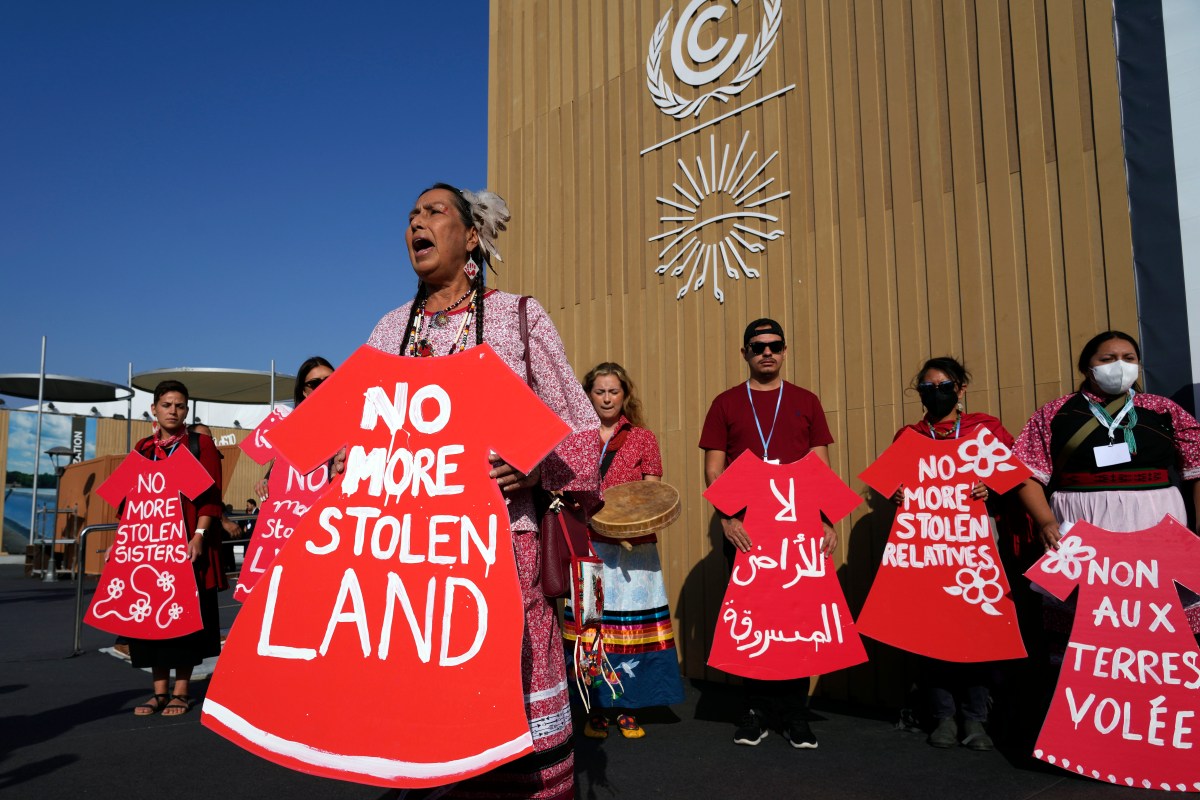
Indigenous participation at the United Nations COP27 climate conference in Egypt this year was at its highest level ever, but the push to put human rights at the center of discussions were largely ignored, Mongabay.com reported on Nov. 25.
More than 300 Indigenous delegates participated in the conference, which ended Sunday, Nov. 20, with an historic agreement to create a loss-and-damage fund to help nations damaged by climate change.
But despite promises by high-level representatives, Indigenous issues did not gain the same attention as they did at COP26 in Glasgow, Scotland.
“We are here for the recognition of our Indigenous knowledge and our values as part of the climate discourse and climate solution,” said Pasang Dolma Sherpa, executive director of the Center for Indigenous Peoples Research and Development, according to Mongabay.com.
However, Sherpa added, “Indigenous people being in the mouths of the decision makers doesn’t guarantee that your issues…are going to be in the negotiation text.”
Kera Sherwood-O’Regan, another member of the Indigenous Caucus, said Indigenous rights were initially mainstreamed across all COP27’s agenda items, but many issues were sidelined as negotiations continued.
Last year’s conference saw $1.7 billion pledged to support Indigenous land rights, but a new report shows that only 19 percent of the funds have been distributed – and only 7 percent went directly to Indigenous and community organizations.
Indigenous territories are estimated to contain 36 percent of the world’s remaining intact forests, which are vital for absorbing carbon and fighting the climate crisis, Mongabay.com reported.
AUSTRALIA: Aboriginal tourism gets boost
Aboriginal cultural experiences and other tourism are expected to contribute $40 billion to the economy in Australia’s Northern Territory by 2030, according to a new study reported by National Indigenous Television on Nov. 21.
The government is investing in the growth of Aboriginal tourism through grants, marketing, the Aboriginal Tourism Committee and with such projects as the National Aboriginal Art Gallery and Larrakia Cultural Centre, said Nicole Manison, the minister for tourism and hospitality.
The government’s commitment to support Indigenous tourism operators is based on the 2020-2030 Strategy. The gallery, for example, has been granted $130 million, of which $50 million is from the Northern Territory government and the remainder from the federal government.
“The Northern Territory is uniquely placed to offer a diverse range of authentic Aboriginal cultural tourism experiences and capitalize on people seeking out those experiences,” Manison said, according to National Indigenous Television.
Paul Ah Chee Ngala, chair of the Aboriginal Tourism Committee, said local leadership is vital to the strategy’s success.
“The Aboriginal Tourism Committee contributes to developing sustainable and prosperous Aboriginal tourism enterprises across the NT, leading to positive economic and social outcomes for the Territory and Aboriginal communities, as well as providing a key role in guiding the implementation of the NT Aboriginal Tourism Strategy 2020-2030,” he said.
CANADA: Assembly works to resolve historical grievances
The Assembly of First Nations is working with the Canadian federal government to improve the resolution of historical grievances, CBC News reported on Nov. 21.
Plans call for an independent center to review claims and weigh the government’s conflict of interest and for a development of a working group to develop other options for consideration.
“The immediate need is to … create an independent process that is completely separate from the federal government,” said AFN Nova Scotia/Newfoundland Regional Chief Paul Prosper, according to CBC News.
“The work has only begun and there are still some tough discussions ahead of us.”
There are currently 318 specific in active negotiation and 173 still under assessment, CBC News reported.
Explicit claims deal with breaches of the Crown’s legal obligations relating to treaties, the administration of lands and resources, and First Nations trusts.
The Specific Claims Tribunal, an independent adjudicatory body aimed at fast-tracking the resolution of claims, was established in 2008 as a part of the federal government’s Justice at Last policy and a joint initiative with the Assembly of First Nations.
Prosper said there has been improvement over the years to the specific claims process, but more work is needed in managing and funding research into the claims.
My final thoughts
My final thoughts go to the recently concluded COP27 climate conference, where Indigenous rights were largely sidelined. At last year’s conference, $1.7 billion was pledged to support Indigenous land rights. Mind you, Indigenous territories are estimated to contain 36 percent of the world’s remaining intact forests, which are vital for absorbing carbon and fighting the climate crisis, yet only 7 percent went directly to Indigenous and community organizations.
I don’t know whether the parties concerned mean business. The figures are clear but the world is moving slowly at pouring resources into these territories in order to safeguard the future generations. For those who were lucky to be a part of the negotiations but who failed to do the right thing, history will judge you harshly.
Global Indigenous is a weekly news roundup published every Wednesday by ICT (formerly Indian Country Today) with some of the key stories about Indigenous peoples around the world.

Our stories are worth telling. Our stories are worth sharing. Our stories are worth your support. Contribute $5 or $10 today to help ICT carry out its critical mission. Sign up for ICT’s free newsletter.

