
Deusdedit Ruhangariyo
Special to ICT
Around the world: Sámi reindeer herders face military expansion, an Australian scholarship works to empower future Aboriginal teachers, a Papua New Guinea woman helps empower other women, and Wampís pursue autonomy despite resistance in Peru
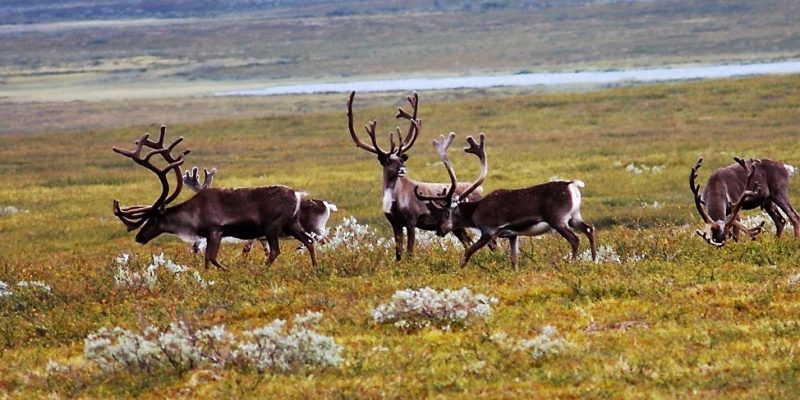
FINLAND: Sámi reindeer herders struggle with military presence
The Sámi people of northern Finland find themselves caught between national security priorities and the survival of their traditional livelihoods.
A new report for the Finnish Sámi Truth and Reconciliation Commission warns that increased militarization in Sápmi — accelerated by Finland and Sweden’s NATO accession — is placing a heavy strain on reindeer herding, The Barents Observer reported on Sept. 4.
Professor Laura Junka-Aikio of the University of Lapland, the report’s author, notes that virtually all of Sápmi, except Russia’s Kola Peninsula, is now under NATO control. While the Sámi share the broader population’s concern for security, they face a disproportionate burden: reindeer grazing land is shrinking under the pressure of frequent military exercises, infrastructure projects, and land use changes.
The report underscores that the Sámi have consistently shown a willingness to cooperate, offering knowledge that could improve ecological sustainability and operational resilience for the Finnish military. Yet decisions on national security often override established systems of negotiation with Sámi representatives.
The bypassing of dialogue, according to Junka-Aikio, signals a troubling pattern: Indigenous rights are being systematically overlooked in decision-making, The Barents Observer reported.
Reindeer herding, central to Sámi culture and economy, is among the most affected. Roads, railways, and construction projects tied to strategic priorities now cut through migration routes and grazing areas, undermining centuries-old practices. The report cautions that without protective measures, these pressures could accelerate the colonisation of Sápmi, assimilation of Sámi identity, and discontinuation of traditional livelihoods.
Junka-Aikio points to Norway as a model for potential solutions. There, Sámi reindeer herders have been integrated as guides and educators during military exercises — ensuring that training adapts to local knowledge and environmental constraints. Such cooperation not only strengthens operational capacity but also respects Indigenous expertise.
AUSTRALIA: Scholarships support future Aboriginal educators
Two Aboriginal women have been named as this year’s recipients of the Bob Hawke Aboriginal Teacher Scholarships, an initiative by the Western Australian Department of Education designed to increase the number of Indigenous secondary teachers in the state, National Indigenous Times reported on Sept. 1.
Charlize Manado, from Geraldton, and Shaye Skraha, from Bunbury, both former public school students, will benefit from the financial and professional support the scholarships provide, National Indigenous Times reported.
The scholarships, launched in 2020 with the opening of Bob Hawke College, offer $28,000 for undergraduate students — $7,000 per year of study — and a $2,000 appointment allowance if graduates enter teaching within a year of finishing.
For recipients, the support has already proven transformative.
“My job as an Aboriginal and Islander Education Officer at two schools gave me the opportunity to make a positive impact to student lives,” said Jessika Coenen, who won last year’s undergraduate award.
Manado, who graduated from Geraldton Senior High School in 2020, is pursuing a bachelor’s degree in education from CQ University through Universities Centre. Skraha, a Larrakia woman, finished high school the same year and completed a bachelor’s degree in sports sciences and exercise and health at the University of Western Australia. She is now enrolled in a master’s program for secondary teaching at the University of Western Australia.
PAPUA NEW GUINEA: Indigenous woman weaves liberation, culture and power
At 17, Florence Jaukae Kamel became a mother for the first time. By 2009, after winning election to local office and becoming a fashion icon using traditional bilum bags as clothing, she fled from a violent home to live on her own, The Guardian reported on Sept. 1.
Her work as a fashion designer and advocate for women survivors of domestic violence is credited with starting a movement that restores dignity and power to women across Papua New Guinea, The Guardian reported.
She is one of five Indigenous women recognized by The Guardian in a story about their work to protect their culture, land and way of life.
Kamel had already made her mark by the time she left to live on her own. In 2002, she became the first woman elected to local government in Goroka province, and her bold choice to use bilum as clothing caught people’s attention.
“When people talked they motivated me to do more,” she said. “I wore them every day; I had a whole wardrobe.”
By 2006, she had dressed Papua New Guinea’s Commonwealth Games team and showcased bilum fashion on global stages. She then founded an annual bilum festival and built a collective of 3,000 women. The network offers training in marketing, money management, and climate adaptation, and includes a safe house for survivors of domestic violence — with plans for more.
“Most of the women here are unemployed and the skill they have is weaving,” she told The Guardian. “We are helping them to keep telling the stories that originate in their communities, and the training helps them understand what the markets are like overseas.”
The results are transformative: women buying sewing machines, purchasing land, sending daughters to school, and preserving oral histories of elders. She said her work, however, is more than art or income.
“It’s a bond, it’s a heartbeat,” she said. “We share stories. We create laughter, joy, the peace that women need.”
PERU: Wampís pursue autonomy
The Wampís people of northern Peru’s Amazon did something unprecedented In 2015 – they declared themselves an autonomous Indigenous nation. A decade later, their struggle for recognition continues, even as they build their own systems of governance and conservation, Mongabay reported on Sept. 3.
“The Peruvian state has little interest in our autonomy, but we want to be recognized,” said Pamuk Teófilo Kukush Pati, elected leader of the Autonomous Territorial Government of the Wampís Nation.
Speaking at London Climate Week, Teófilo wore traditional garments, including utsupak chest pieces and a tawas feather crown, according to Mongabay.
Despite progress, the Peruvian state does not legally acknowledge their sovereignty. Peru’s Constitution recognizes collective property and customs but not political control over natural resources.
“That attack by the state through laws and oil concessions was one of the reasons for forming an autonomous government, because proclaiming ourselves as such strengthens us much more than when we are alone,” said Justice Director Tsanim Evaristo Wajai Asamat, according to Mongabay.
The Wampís’ territory of more than 1.3 million hectares, or 3.2 million acres, faces persistent threats from oil drilling, logging, and illegal mining. In response, they created Charip, an Indigenous territorial guard, to monitor incursions.
“Those who are firmly active here are truly committed. Without food and money we fight,” said René Santiago Ti, Charip’s president, according to Mongabay.
The Wampís pursue conservation projects rooted in their philosophy of Tarimat Pujut — living well in harmony with nature. They say their aim is not independence but inclusion in decisions affecting their lands.
“What we seek is to have a voice in political decisions,” Teófilo said, according to Mongabay.
My final thoughts
My final thoughts are across multiple continents where Indigenous survival is still a struggle.
That is because, if you build security without conscience, the Sámi of northern Finland will find their ancestral grazing lands turned into military staging grounds. If you build opportunity without equity, Indigenous students in Australia must fight for scholarships to stand at the front of classrooms. If you build beauty without recognition, women like Florence Jaukae Kamel in Papua New Guinea will have to stitch survival into bilum cloth to transform pain into power. If you build democracy without respect, the Wampís in Peru will declare their own nation because their government will not hear them.
These four stories, scattered across continents, remind us of a shared struggle: Indigenous peoples remain visible enough to be displaced but invisible when they speak.
In Finland, the Sámi report captures the sharp contradiction of NATO expansion. “Indigenous rights have systematically been overlooked on all levels of decision-making,” Professor Laura Junka-Aikio warns. Here, reindeer herding — the heartbeat of Sámi identity — is being squeezed out by tanks and infrastructure. Security for some becomes insecurity for others.
In Papua New Guinea, Florence Jaukae Kamel embodies the resilience that follows rupture. After escaping domestic abuse, she transformed bilum weaving into a festival, a collective, and a lifeline for thousands of women. “It’s a bond, it’s a heartbeat,” she said. Through threads of fabric, she has rewoven dignity, enabling women to pay school fees, buy land, and preserve oral histories. What began as resistance became a flourishing network of creativity and survival.
In Australia, the Bob Hawke Aboriginal Teacher Scholarships point toward a different future. For Charlize Manado and Shaye Skraha, the awards are not just financial support; they are validation that Aboriginal voices belong at the center of classrooms. “They will undoubtedly be incredible teachers who will help inspire Western Australian students,” said Education Minister Sabine Winton. This initiative shows what can happen when systems invest in Indigenous knowledge instead of ignoring it.
And in Peru, the Wampís remind us that autonomy is not a dream but a declaration. “What we seek is to have a voice in political decisions,” said Teófilo Kukush Pati. Their creation of Charip, a territorial guard, and conservation projects like turtle recovery programs are not acts of rebellion but acts of survival. When the state fails to protect rivers, forests, and lives, the Wampís shoulder the task themselves, insisting on Tarimat Pujut — living well in harmony with nature.
Four continents, four struggles, one truth: Indigenous futures are repeatedly pushed to the margins by states, markets, and militaries that claim progress. Yet these stories also reveal something more powerful: the persistence of Indigenous agency. Whether through weaving, teaching, guarding, or governing, these communities show that resilience is not passive endurance—it is active creation.
If the world is listening, the path forward is clear: honor Indigenous knowledge, protect Indigenous rights, and recognize that true security, true prosperity, and true democracy cannot exist without them.
