Deusdedit Ruhangariyo
Special to ICT
Around the World: Brazil’s new Indigenous Affairs minister takes charge, a Māori chef searches for his food identity through study, and Indigenous youth in Canada look toward clean energy
BRAZIL: Indigenous ‘terror’ under Bolsonaro
Indigenous people in Brazil lived through four years of “great fear and terror” under the regime of former President Jair Bolsonaro, Brazil’s new minister of Indigenous affairs told Mongabay.com.
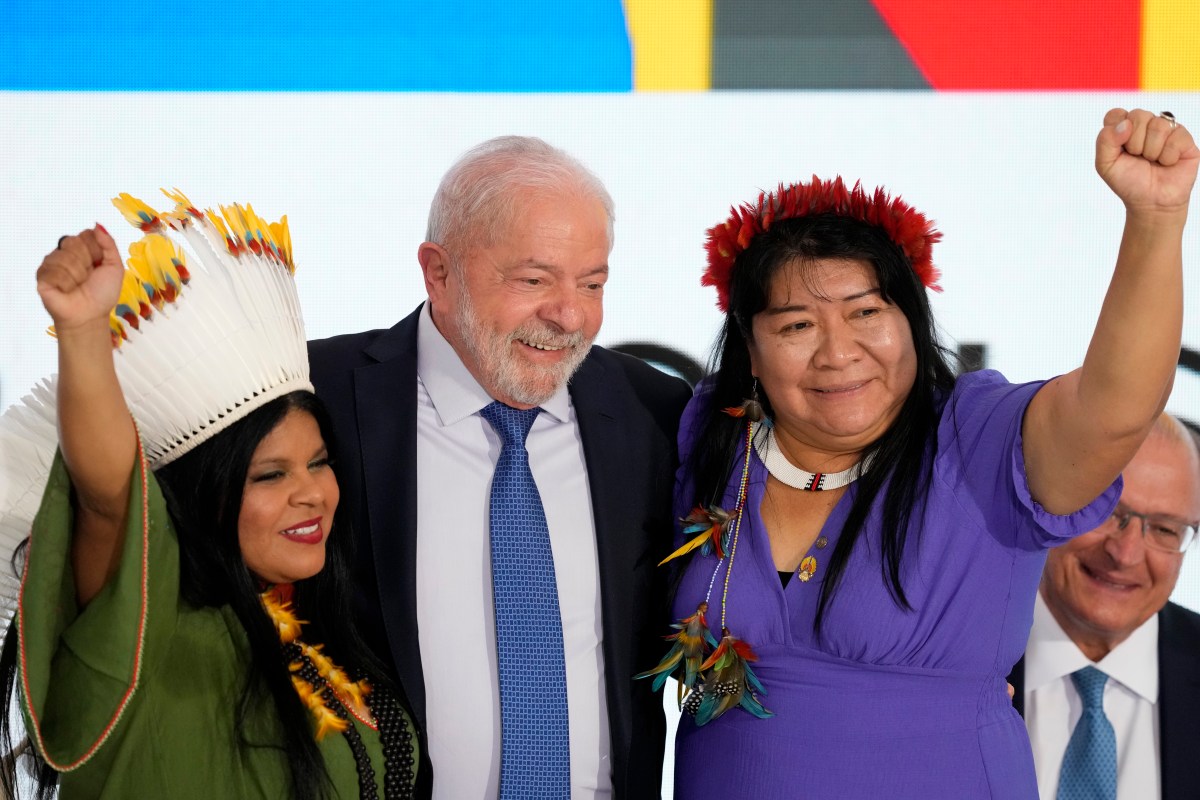
Speaking just a week before she took her post in the newly created Ministry of Indigenous Peoples in Brasilia, former activist and environmentalist Sonia Guajajara said she was threatened with arrest for challenging the government.
SUPPORT INDIGENOUS JOURNALISM. CONTRIBUTE TODAY.
“It was really hell,” she said. “We lived a moment of great fear and terror. It was a government that brought terror to society and also to the civil servants. Everybody worked very scared, afraid, persecuted.”
Guajajara was elected to Congress in the recent election, in which Luiz Inácio Lula da Silva defeated Bolsonaro to become the nation’s new president. She told Mongabay.com that she never thought of becoming a minister but accepted the appointment to give Indigenous people decision-making powers and to end injustices.
Bolsonaro’s government was disastrous for Indigenous policy and for Indigenous peoples, as well as being bad for the environment, human rights and women, she told Mongabay.com.
She said among the most critical areas is the Yanomami Indigenous Territory. She accompanied Lula on Jan. 21 to the area and declared a public health emergency on Jan. 22 after getting reports of children dying of undernourishment and other diseases caused by unlawful gold mining.
She also cited the Javari Valley, in northern Amazonas state, where Indigenous expert Bruno Pereira and British journalist Dom Phillips were violently murdered in June 2022, and two territories – the Munduruku Indigenous Territory in northern Pará state and the Arariboia Indigenous Territory in northeastern Maranhão state, which she said are noted for violence and persecution of Indigenous peoples.
NEW ZEALAND: Māori chef broadens search for food identity
A Māori chef with more than 20 years of experience has decided to find his “food identity” by studying culinary arts at a higher level, Te Ao Maori News reported on Jan. 25.
Joshua Kanara-Bailey, who is Te Arawa from Hamilton, plans to study toward a bachelor of culinary arts by “exploring my food journey and history to figure out my food identity as well as food styling.”
Kanara-Bailey was strongly inspired by his mother, who worked in restaurants, and said he spent a lot of time studying food technology at high school. He has also worked in cafes, at events and pop-ups, and at a resort by Lake Rotoiti.
Kanara-Bailey chose the life of a chef, saying he “wasn’t built to run” so being a police officer was out of the question. He currently teaches the fundamentals of cooking, serves as a guest judge at the Waikato Culinary Fair and works with the Pacific Island community holding events, Te Ao Maori News reported.
His advice for young people?
“If you are passionate about food and hospitality, give it a go,” he said. “Learn the fundamentals, which will give you the foundation to move into food space you are passionate about and go hard.”
CANADA: Indigenous youth attend clean energy conference
Indigenous young people from across Canada are in Whitehorse in northwestern Canada this week to take part in an Indigenous clean energy conference, CBC News reported on Jan. 27.
The participants, aged 18 to 30, are visiting the Yukon through a program called Generation Power, which provides career training for young people in the clean energy field. The group hasa been participating in online courses that started in the fall, but the conference marks the first time they have had a chance to meet in person.
“It all kind of comes together in one week of learning, as well as experiences on the land and experiences seeing some clean energy projects in the area,” Kayla Nolan, one of the program’s co-managers, told CBC News.
A participant from Chippewas of the Thames First Nation in Ontario, Dionovan Grosbeck, said the group members have learned from each other.
“In clean energy, we’ve seen there’s not as much Indigenous representation,” Grosbeck said, according to CBC News. “As a kid, I’ve seen that it means a lot when you see people that look like you and people from your community doing and making the changes.”
My final thoughts
My final thoughts are in Brazil, where the new president was sworn in at the National Congress in Brasilia on Jan. 1. One of his promises was to create a ministry of Indigenous affairs, and he did. And the ministry is off to a terrific start. I wish all countries the world over emulated him and formed a ministry of Indigenous affairs in order to closely follow issues affecting Indigenous peoples.
Global Indigenous is a weekly news roundup published every Wednesday by ICT (formerly Indian Country Today) with some of the key stories about Indigenous peoples around the world.

Our stories are worth telling. Our stories are worth sharing. Our stories are worth your support. Contribute $5 or $10 today to help ICT carry out its critical mission. Sign up for ICT’s free newsletter.