
Deusdedit Ruhangariyo
ICT
Around the World: Santiago Yahuarcani and the last stand of the White Heron Clan in Peru; sacred river polluted; whadjuk voice silenced again in Australia; Heiltsuk box returns to Canada after 150 years of silence; and Nepal’s forest guardians defend red panda from extinction.
PERU: Santiago Yahuarcani and the last stand of the White Heron Clan
Santiago Yahuarcani’s Amazon is no longer the lush paradise of his childhood. Once filled with parrots, dolphins and spirits of the jungle, it has become a battlefield of greed and memory. The 65-year-old Indigenous artist from Peru is now using his brush to fight back – not just against deforestation, but against cultural erasure, The Guardian reported on June 30.
His first solo international exhibition at The Whitworth in Manchester, titled “The Beginning of Knowledge,” opens this week. It showcases fantastical Amazonian beings – mermaids dancing with dolphins, pipe-smoking lizards – but also depicts the haunting legacy of genocide and ecocide. One painting, “The Stone-Hearted Man,” shows white-hatted bosses branding and burning Indigenous bodies, a tribute to his grandfather’s stories of the rubber boom atrocities in the Putumayo region.
“My grandfather told us how they demanded 50kg of sap and punished anyone who failed – cutting flesh, throwing babies into fire,” Yahuarcani recalls.
His family is now the last 12 of the White Heron Clan of the Uitoto nation in Peru. A century ago, they fled from Colombia during the rubber genocide. Today, they fight a different war – against oil extraction, gold mining and mass deforestation. Yet the battle is lonely. Many Indigenous youth leave for education, respect for forest guardianship is fading, and Indigenous artists are sidelined in Lima’s cultural spaces.
Yahuarcani paints on llanchama, bark cloth prepared by hand, using pigments from seeds, leaves and roots. His art is rooted in cosmology, shaped by ayahuasca visions and guided by ancestral stories. “We were never taught our history in school. Only the Incas. Not the rubber genocide. Not our clan. Not the Amazon.”
Even so, his work is finally breaking through. A past exhibit in Lima stirred headlines but little official response. Now, in Madrid and Manchester, audiences are finally listening. In one recent piece, “Optic Fibre in the Depths of the Amazon River,” animals clutch smartphones as technology creeps deeper into the rainforest. It is both humorous and a grim mirror of modern encroachment.
Yahuarcani’s voice is urgent: “We are the last White Herons. When we disappear, our story ends.” But through his paintings, a different possibility emerges that memory can resist extinction. That Indigenous art can be protest. That every brushstroke can keep a nation alive.
AUSTRALIA: Sacred river polluted, whadjuk voice silenced again
The Whadjuk Aboriginal Corporation has condemned a recent wastewater spill into the Upper Derbarl Yerrigan (Swan River), describing the event as a grave insult to Whadjuk Noongar culture and a breach of formal land agreements, National Indigenous Times reported on July 6.
The overflow, which impacted the Guildford and Viveash areas, occurred without any prior consultation or notice to Whadjuk leaders, despite the river’s sacred and ecological importance. The corporation called the incident “deeply concerning and disappointing,” highlighting that the river is a living entity central to Whadjuk identity and custodianship.
“It’s not just about water,” said Whadjuk Aboriginal Corporation CEO Leon Ruri. “The health of Derbarl Yerrigan is the health of our People. Our exclusion in this matter is a violation of cultural protocol and trust.”
Under the Whadjuk Indigenous Land Use Agreement, the corporation holds cultural authority over the area. Yet no engagement took place. The efforts by Ruri to contact the CEO of Water Corporation have gone unanswered, further fueling community frustration.
The Whadjuk Aboriginal Corporation’s statement emphasized that this lack of consultation is not an isolated incident but part of a broader pattern of marginalization: “There’s a continued institutional disregard for Aboriginal voices and cultural governance especially when sacred waterways and Country are at stake.”
The group is demanding transparency, accountability, and formal recognition of their role in all environmental decisions affecting Whadjuk territory. “It’s time for meaningful partnership,” Ruri urged, “not exclusion.”
The Water Corporation’s CEO, Pat Donovan, was reportedly on leave during the incident. No public response had been issued at the time of reporting.
As water authorities face growing scrutiny, this moment exposes a deeper truth: environmental mismanagement and cultural disrespect often go hand in hand. For the Whadjuk people, Derbarl Yerrigan is not just a river, it’s a spiritual ancestor, a lifeline, and a legal commitment yet to be honored.
CANADA: Heiltsuk box returns after 150 years of silence
After nearly 150 years, a sacred bentwood box has come home. Q̓íx̌itasu Elroy White, Heiltsuk hereditary chief and councillor, traveled by plane with the ancient cedar box wrapped carefully beside him. “I felt like royalty,” he said. “I wasn’t carrying an object – I was bringing home a belonging,” The Guardian reported on July 1.
The box was welcomed with ceremony in the Heiltsuk big house, part of a larger movement to reclaim Indigenous items taken during Canada’s colonial era. This particular box had surfaced at a Vancouver auction in 2020. Janet and Dave Deisley, collectors from Utah with deep respect for Indigenous culture, purchased it – and then made the decision to return it.
But repatriation is not simple. The box sat for a year in a downtown Vancouver office until the community coordinated its respectful return. Crafted from a single cedar plank curved and steamed into shape, the box is more than art – it is memory, lineage and cultural law.
Once banned under colonial potlatch laws, these ceremonial boxes were often looted or sold under duress. Mortuary poles, masks and bentwood containers were scattered to museums and private homes across the globe. “The existential question,” said Janet, “is what a sacred cedar box from British Columbia is doing in a Utah living room.”
White said the gesture by the Deisleys has inspired others to consider returning items. Still, most First Nations must fund these returns themselves, despite a C$663 million shortfall in provincial repatriation funding. The Heiltsuk has reclaimed four major items since 2022, including a chief’s seat that once sat behind glass and now rests in the big house where it belongs.
“Smoke and dust will land on the seat,” said White. “Because it was never meant for a museum.” The same goes for the box, now housed in the chief’s room – not for tourists, but as a reminder of a time when such items were abundant.
White emphasized the need for a new kind of museum, one designed by and for the Heiltsuk people. “We don’t need a museum like where these belongings came from. It must benefit our people first.”
The young artist who crafted a thank-you gift for the Deisleys knew exactly which box to give. He had spent years studying museum-held boxes but now one had returned, giving him a living model.
“There’s probably still a tree out there,” said White, “with half its wood missing, used to make this box. And now, after all these years, it has come home.”
NEPAL: Nepal’s forest guardians defend red panda from extinction
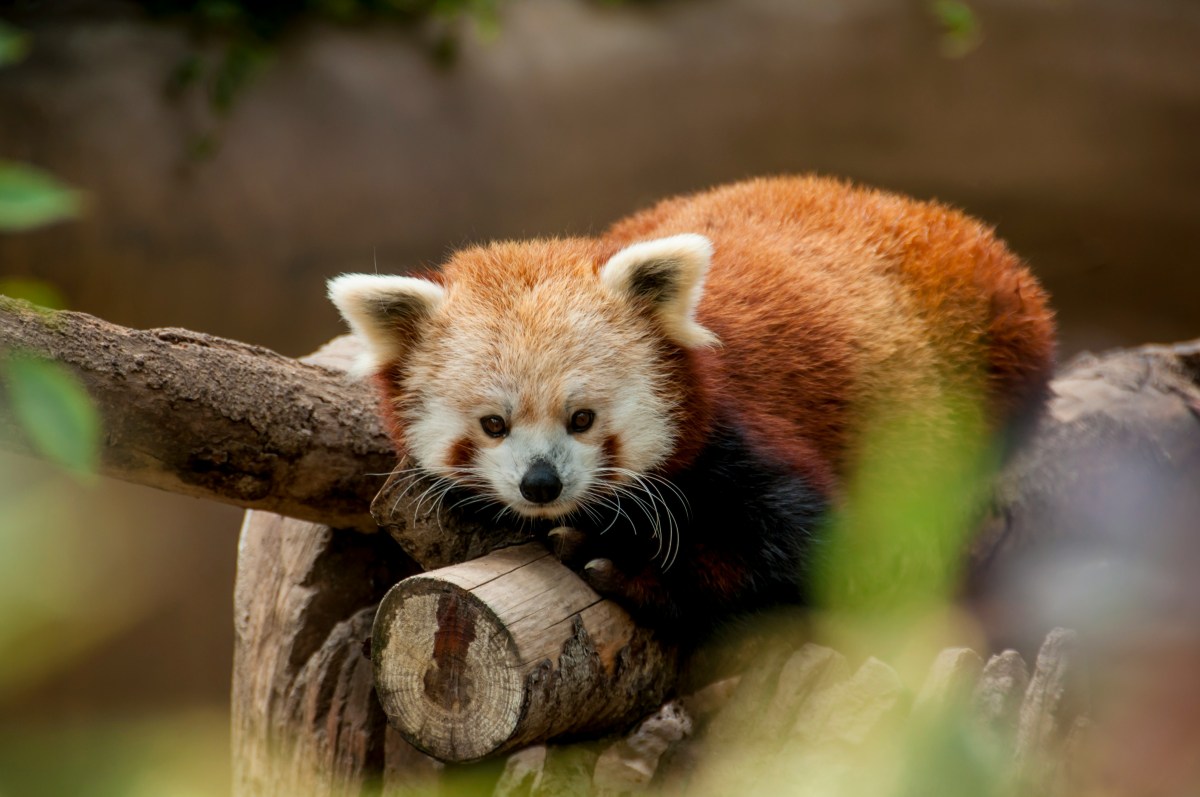
In the misty Himalayan hills of eastern Nepal, 48-year-old farmer Surya Bhattarai trudges steep forest slopes, not to harvest crops, but to protect a vanishing icon – the red panda. Armed with a GPS tracker, notebook and decades of local wisdom, he scans for scat, claw marks or signs of poachers in Sudap Community Forest near the India border, Mongabay reported on July 4.
Bhattarai is one of 128 Forest Guardians trained by the Red Panda Network, a nonprofit leading one of Nepal’s most ambitious grassroots wildlife conservation initiatives. These community-based stewards – drawn mostly from marginalized groups – patrol the 11,500-square-kilometer Panchthar-Ilam-Taplejung Corridor, home to nearly a quarter of Nepal’s 500-1,000 red pandas.
Monitoring happens four times a year, aligned with the species’ life cycle. “The health of these forests depends on community vigilance,” says Red Panda Network’s executive director, Ang Phuri Sherpa. “Forest Guardians are our local ambassadors, building trust and awareness.”
The red panda, native to Nepal, India, Bhutan and China, is under growing threat from deforestation, hydropower projects, and unregulated road construction. Habitat fragmentation has pushed the animal toward extinction, with fewer than 10,000 left worldwide.
Since launching in 2010 with just 16 members, the Guardian program has curbed poaching incidents in Panchthar-Ilam-Taplejung corridor project areas to nearly zero. They are paid a modest $22 per monitoring session but earn lasting respect as defenders of cultural and ecological heritage. “Earlier there were up to 10 poaching cases a year,” says Sherpa. “Now we haven’t had one in years.”
Women also play a vital role. In Taplejung’s Phurumbu village, Chandra Kumari Limbu trains other women in nettle fiber weaving, a Red Panda Network-supported effort to create eco-livelihoods. “We need to market our products, so people know,” she says, stitching bags for schools and shops.
In Ilam, families run homestays for eco-tourists hoping to glimpse a red panda in the wild. Profits from tourism are reinvested in conservation. “Our goal is to reduce forest dependency by offering alternative incomes,” Sherpa explains.
Despite progress, threats remain. Free-roaming dogs near the Pathibhara temple pose dangers, especially after religious festivals. “The dogs feast on discarded meat and then attack red pandas when hungry,” says Ramesh Rai, coordinator of Himali Conservation Forum. Vaccination drives have reduced disease transmission, adds Guardian Dhan Kumar Sembu.
Red Panda Network recently secured a $2.5 million grant to restore 500 hectares of habitat in Ilam, aiming to connect fragmented forests with India’s Singalila National Park. “Genetic isolation is a serious threat,” Sherpa warns. “If disease hits, it could wipe out entire groups.”
Red pandas, though descended from carnivores, now survive on bamboo – a diet low in calories, which forces them to eat continuously and stay inactive most of the day. Meanwhile, Forest Guardians like Bhattarai brave stormy weather, driven by duty. “We must leave wild animals in forests, not just in photos,” he says. “This is for the next generation.”
My final thoughts
In four corners of the world this week, Indigenous peoples are not asking for sympathy. They are offering strategy – rooted in memory, carried by the land, and sharpened by centuries of survival.
In Nepal, 48-year-old Surya Bhattarai does not wear a lab coat or carry a badge. But four times a year, through monsoon winds and steep Himalayan fog, he climbs through bamboo forests to track red pandas – not with drones, but with reverence. As part of the Forest Guardian program, he collects data, deters poachers, and reminds us that conservation begins with those who live beside what they protect. “We should leave wild animals in the forest,” he says, “not just in photos.” And so, the bamboo breathes a little longer.
In Peru, the Amazon bleeds. But not just from chainsaws or oil. It bleeds from memory. Santiago Yahuarcani, one of the last of the White Heron Clan, paints what textbooks erase – the rubber boom genocide, the burning of babies, and the weeping of trees. In his canvases, pink river dolphins dance beside atrocities so brutal they defy language. “They came for our land, our wood, our gold,” he says. But he paints to protect what words alone cannot – the soul of a forest under siege. His art is not decoration. It is testimony.
In Australia, a sacred river was poisoned with wastewater – and the Whadjuk Noongar were not even told. “The health of the Derbarl Yerrigan is the health of our People,” said Leon Ruri, CEO of the Whadjuk Aboriginal Corporation. Their cultural rights under law were ignored. Their warnings, sidelined. And once again, Indigenous people were expected to drink the consequences while corporations drank the profits. “It is time,” Ruri said, “for meaningful partnership, not exclusion.” In a nation built on stolen land, even water isn’t respected unless it flows through pipes.
And in Canada, the return of a single carved box rewrote a century of silence. The Heiltsuk’s sacred bentwood box – stolen 150 years ago and once displayed in a Swedish museum – finally came home. “It’s not an object. It’s a belonging,” said Q̓íx̌itasu Elroy White. Escorted by ceremony, welcomed by song, the box wasn’t just repatriated – it was re-embodied. Because for many Indigenous nations, heritage isn’t history. It’s heartbeat.
Across continents, one thread emerges: Indigenous knowledge isn’t stuck in the past. It is busy repairing the future.
Bhattarai’s bamboo trails are more scientific than satellites when backed by trust. Yahuarcani’s mythic lizards and spirits warn us better than most climate reports. The Whadjuk’s river teachings hold more sustainability than any green paper. And the Heiltsuk box teaches that justice isn’t returned in silence – it arrives with drums.
We are watching a planetary test. Who will listen to the land? Who will treat consent as protocol, not paperwork? Who will recognize that survival has always depended on those willing to plant forests they will not live to walk through?
Let policymakers, tech developers, conservationists and climate negotiators read these stories – not as token tales, but as frontline instructions. The wisdom is not metaphor. It is a map.
Because when the rivers rise, and the forests thin, and the last red panda vanishes into silence, it won’t be because we didn’t have answers. It will be because we ignored the people who carried them.
And when the ground speaks – as it did in Taplejung, in Pebas, in Perth, and on the Pacific Coast of British Columbia – the only question left will be: Did we finally listen?

