
Deusdedit Ruhangariyo
ICT
Around the world: Communities resist national park plan threatening ancestral lands in Indonesia; Métis artist celebrated for lifelong devotion to northern communities; Oxford’s first Indigenous woman inspires; Māori Rhodes scholar’s journey; and restoring identity through Indigenous language renewal in Tasmania.
INDONESIA: Communities resist national park plan threatening ancestral lands
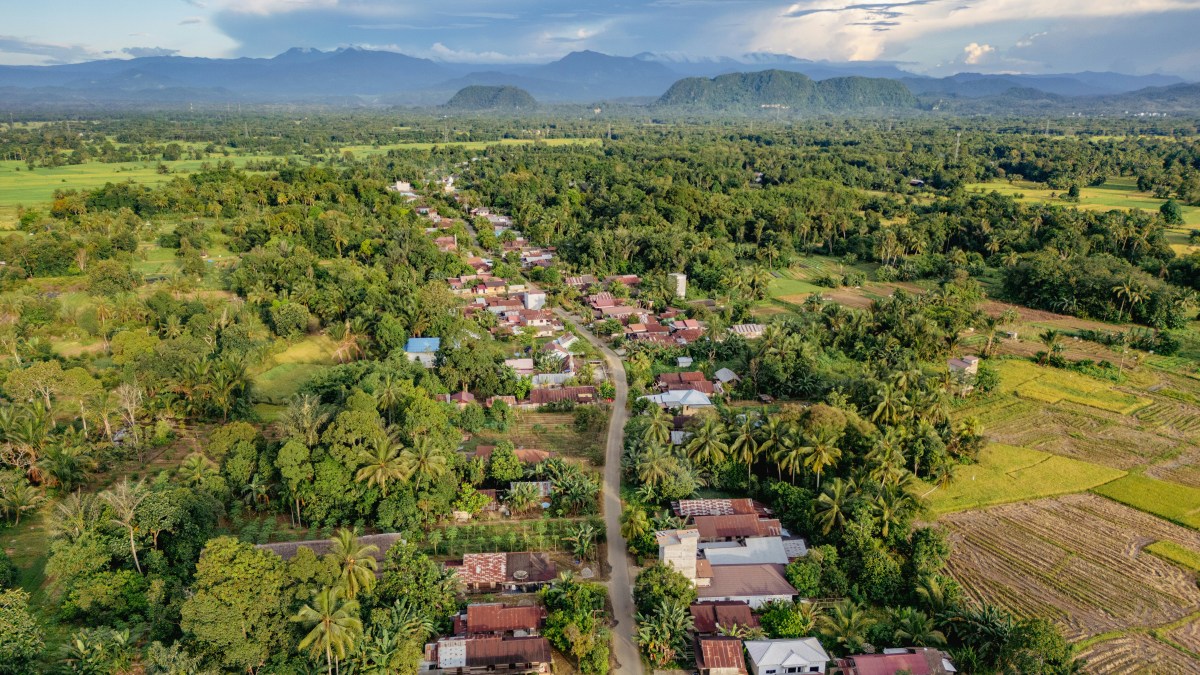
In the Meratus Mountains of South Kalimantan, a growing coalition of Indigenous Dayak communities, students and civil society groups is mobilizing against government plans to transform 119,779 hectares of ancestral land into a national park. Reported by Mongabay on Nov. 19, the movement argues that the proposal threatens to displace more than 6,000 families and risks severing centuries-old cultural ties to land, forest and livelihood.
For Dayak spokesperson Anang Suriani, the stakes are existential. “The Meratus forest is our mother,” he said. “It’s a place where we live, farm, forage, practice tradition and obtain medicine. Making it a national park is tantamount to destroying us.”
The proposed park, larger than Singapore, would absorb 23 villages across five districts. Yet many residents say they were never properly consulted. Some 20,328 people live in the affected villages, and elders fear the national park designation will criminalize everyday activities such as fishing or subsistence farming.
The Dayak Pitap tribe, for example, inhabits a 22,800-hectare customary area, including Suriani’s village of Kambiayan. The tribe manages land through a layered system: rice fields (huma and raba), hunting zones, and sacred forests designated for spiritual practice. Scholars have long emphasized that these Indigenous governance traditions, including strict bans on mining and logging, have protected the region’s ecosystems for generations.
Experts warn that conservation models imported from Western contexts, like the U.S. national park system, do not reflect Kalimantan’s cultural or ecological realities. “The Meratus Indigenous people have long inhabited and managed this area of forest, so they should be fully involved,” said Lambung Mangkurat University lecturer Netty Herawaty. Others argue that Dayak land stewardship far exceeds the conservation success of many formal protected areas.
Indonesia has committed to the UN’s global “30 by 30” biodiversity target, seeking to protect 30 percent of land and oceans by 2030. However, the UN has warned that conservation efforts must not harm the people who live in these landscapes. Conflicts often emerge when governments prioritize land classification over community recognition — a recurring issue in Indonesia, where formal acknowledgement of Indigenous peoples remains limited.
Governor Muhidin says the national park is necessary to shield Meratus from mining. Beneath the karst lie coal, nickel, iron ore, and other minerals. “Its status is only protected forest and it could change to production forest at any time,” he warned in August.
Yet activists worry that mining concessions within the region would be handled inconsistently, leaving Indigenous communities burdened by strict regulations while corporations remain protected under older contracts.
Protests intensified between Aug. 13-15, when students and Dayak residents clashed with riot police in Banjarmasin. Muhidin promised: “As long as I’m governor, no one will be evicted. If anyone is, I’ll happily resign.” But protesters remain skeptical, citing past displacements of Suku Anak Dalam communities in Sumatra.
For many Dayak residents, the issue is not conservation but consent. “Indigenous communities don’t fundamentally oppose conservation,” said Rudy Redhani. “But the model must be based on traditions such as the Dayak Meratus katuan system.” As Suriani concluded, “We always have hope. But this country has never acknowledged our existence.”
AUSTRALIA: Restoring identity through Indigenous language renewal
In Tasmania’s remote Northwest, a profound cultural reawakening is underway. The Circular Head Aboriginal Corporation has launched Marmanar, a community-driven language revitalization program described as “the reawakening of the sleeping language once spoken by the 12 tribes of the Northwest of Tasmania.” Reported on Nov. 20 by National Indigenous Times, the initiative seeks to restore a linguistic lineage that colonization disrupted, guided by the principled belief that “language is culture, and culture is language.”
Language Project Manager Rochelle Godwin explained that Northwest tribes historically did not share a single national name. Their identity was instead rooted in a network of tribal connections, shared cultural practices, and collective survival. Marmanar, she said, “gives us a name that honors those connections and carries them forward. The name Marmanar carries both emotional and cultural power.”
The unveiling of Marmanar is the result of years of research supported by generations of elders and community members. Together, they combed archives, old recordings, and historical documents to piece together fragments of a language nearly erased by colonization. The Circular Head Aboriginal Corporation honored the memory of the late Terry Cox, whose foundational contributions helped begin the project, and acknowledged the mentorship of Dr. Ian McFarlane, whose guidance shaped many of the program’s core methods.
Yet Marmanar is far more than a technical linguistics project. As Godwin put it, “This is more than a language project; it’s an act of reclamation and healing. Marmanar reconnects us to the tribes of the Northwest, our country, and to each other. It gives voice to what was silenced, and in doing so, breathes life back into our culture and identity.”
The Circular Head Aboriginal Corporation’s researchers uncovered 420 potential English translations buried within historical documents. From this, a foundational vocabulary of 50 core words was constructed — the seedbed for Marmanar’s orthography, sound system, and future grammatical structure. The Community Language Committee, made up of elders and local members, ensures every decision reflects Aboriginal leadership and community ownership. The Circular Head Aboriginal Corporation emphasized the process is “transparent and rigorous, designed to support peer review and to share knowledge with other language revitalization projects across the state.”
Every dictionary entry will be linked directly to its archival audio source, preserving linguistic integrity and cultural authenticity. The name Marmanar was chosen by the Community Language Committee from historical usage of mamana, meaning “tongue,” and enhanced by the prefix mar, interpreted as “part of me/us.” Together, they signify “my/our language” — a linguistic homecoming.
The next phase includes community events, regional workshops, teaching resources, and integration into schools and local programs. Community Language Coordinator Stephen Hafner summarized the program’s heart: “We want families to hear, speak and enjoy Marmanar together; in classrooms, at home, and in community gatherings. This is how language lives again.”
The Circular Head Aboriginal Corporation affirmed that the work will always remain Aboriginal-led, driven by a collective determination “to reclaim what was taken and to ensure future generations grow up hearing, speaking and celebrating Marmanar.”
CANADA: Métis artist celebrated for lifelong devotion to communities
In northern Saskatchewan, the community of La Ronge is preparing to honor one of its most beloved artists, Roger Jerome, now 80, whose work has shaped the cultural landscape for decades. Reported by CBC News on Nov. 21, the La Ronge Arts Council is awarding Jerome a lifetime membership in recognition of “a working artist who has evolved and changed,” as council chair Lori Ulriksen described him.
Jerome, born in England to a Métis father from St. Louis, Saskatchewan, and an English mother, moved back to Saskatchewan at the age of five. His teachers had admired his early drawings, but it wasn’t until he worked in the Anglo-Rouyn copper mine that he felt compelled to pursue art more seriously. “After a rain I was just amazed by the color that was brought out in those rocks,” Jerome recalled — a moment of revelation that set him on a lifelong artistic journey.
He later studied commercial art in Brandon, Manitoba, establishing a long and varied career deeply connected to local northern communities. His most famous work, a centennial mural in the Saskatchewan Legislature completed in 2005, was intentionally created with a northern Indigenous lens. The mural features paddlers, bush landscapes, water routes, and a float plane, symbolizing the traditional and transitional “highways” of life in the North. “In the past the lakes and rivers were all the highways in the north,” Jerome said. “The float planes were a transition.”
The mural also carries an intimate tribute: Jerome subtly included the initials of his cousin, artist Bob Boyer, who had also submitted an entry but passed away before the winner was announced. It was Jerome’s way of honoring a shared artistic lineage.
Throughout his artistic journey, Jerome has admired the realism of Michael Lonechild and the depth of Alan Sapp’s work. Standing in the northern bush, he says, continues to inspire his paintings. “When I start a painting and it’s all going so well, it’s a feeling of falling in love again,” he reflected. “And when it becomes difficult I’ll start a new one … because I want to feel that way during the start of a painting again.”
For many in the community, Jerome’s artistic footprint is immeasurable. “Everywhere you go there are little pieces of him around,” Ulriksen noted, pointing to portraits, signs, and public artworks across La Ronge. Having once taken lessons from him 20 years ago, she noted how his evolution from pastel work to oil painting reflects not only perseverance but artistic courage.
Jerome expressed deep gratitude for the honor: “We are looked upon as valued community members and I love that.” For the La Ronge Arts Council, the recognition is not simply about acknowledging past work but celebrating a living artist who continues to contribute, inspire, and shape the cultural identity of northern Saskatchewan.”
NEW ZEALAND: Oxford’s first Indigenous woman inspires Māori Rhodes scholar’s journey
In New Zealand, the story of a young Māori Rhodes scholar, Naianga Tapiata, has become inseparable from that of a trailblazing ancestor figure: Mākereti (Maggie) Papakura, believed to be the first Indigenous woman ever to study at Oxford University. As Te Ao Maori news reported on Nov. 23, Tapiata will begin a Master of Philosophy in Social Anthropology at Oxford in 2026 — a journey he says began the moment he stood at Papakura’s gravesite.
“We heard the stories of Maggie Papakura growing up, but I never dreamed of it, never saw it being possible,” Tapiata recalled. During his visit to Oxford, he visited her urupā, the burial ground where she rests. “That sparked something in me where I realized, ‘Oh, this is possible.’ This is possible for a young Māori to go to a university like Oxford.”
Born in 1873, Papakura was from Te Arawa and became widely known for interpreting Māori culture for global audiences. She died in 1930, weeks before presenting her thesis, which was later posthumously published as “The Old-Time Māori.” Nearly a century later, in September 2025, Oxford formally awarded her a posthumous degree — a symbolic closing of a long-delayed circle.
For Tapiata, who was raised in Rotorua near Whakarewarewa, the thermal village Papakura once guided visitors through, her legacy is not distant history but a living model of Indigenous excellence. “The conditions of care she gave to everybody in her vicinity demonstrated to me the ability for Māori to help offer things to the world,” he said. “It’s a reciprocal relationship.”
His own path has been shaped by Māori institutions such as Te Aho Matua, Kura Kaupapa Māori, and Kohanga Reo. Becoming the first graduate of kura kaupapa Māori to earn a Rhodes scholarship reflects what he calls a collective investment. “It’s a testament to the way they’ve invested into kaupapa like Te Aho Matua,” he said.
Tapiata believes the revival of Indigenous cultures worldwide makes Oxford — a place deeply associated with colonial history — an important crossroads for new conversations. “Walking through the halls where colonialism was thought about and strategized … what’s probably more important to me is the people that gather there and the experiences they bring,” he said.
He envisions Indigenous scholars creating new collaborations, exchanging ideas, and bringing solutions back home — particularly for global challenges such as climate change. “What we could take back to our own people … and help to offer to Oxford,” he reflected, is equally significant.
The timing of his acceptance feels symbolic. Papakura enrolled in 1927 — 98 years before Tapiata begins his own journey. “Timing plays a big role,” he said. Māori, he noted, have always navigated using environmental tohu — signs that shape decision-making. Those same principles, he suggests, guide this moment.
For Tapiata, studying at Oxford is not simply an academic milestone. It is the continuation of a legacy — one that began with an Indigenous woman who dared to study anthropology through her own eyes and whose delayed recognition now becomes a source of strength for the next generation.
My final thoughts
Across these four stories — from Tasmania to Saskatchewan, Oxford to Borneo — a single truth emerges with unmistakable clarity: Indigenous communities worldwide are engaged in an urgent struggle to protect, revive and affirm what colonial histories tried to erase. Whether through language, art, scholarship, or land defense, these narratives reveal the deep moral architecture of Indigenous resilience — an architecture built on memory, land, lineage and the unbroken desire to pass ancestral knowledge forward.
In Tasmania, the reawakening of the Marmanar language is not simply a linguistic project. It is an act of healing — a reclamation of breath, sound, identity and collective dignity. When Rochelle Godwin says, “It gives voice to what was silenced,” she speaks to centuries of attempted erasure. Marmanar is the country speaking again through its people, a reminder that languages do not die — they wait for their children to return.
In northern Saskatchewan, the honoring of Métis artist Roger Jerome reveals another essential truth: Indigenous art is far more than decoration. It is testimony. Jerome’s murals, portraits and community work embed northern history into public memory. His decision to include his cousin’s initials in the legislative mural shows how Indigenous creativity is always relational — never solitary, never disconnected from kinship. Art becomes archive, stewardship, and love letter to the land and people who shaped him.
In New Zealand, the legacy of Mākereti Papakura finds new life in the journey of Naianga Tapiata. His story shows the power of ancestral footsteps to open pathways across generations and continents. To stand at Papakura’s urupā and feel a spark of possibility is to witness how Indigenous time collapses — how the past becomes the wind that lifts the future. His Rhodes scholarship is not only a personal achievement; it is a continuation of Papakura’s unfinished work, a reminder that Māori scholarship belongs on global stages.
And in Indonesia, the Dayak resistance to the Meratus national park proposal exposes the ongoing colonial logic within contemporary conservation. Once again, the land is treated as empty, available and disconnected from the people who have protected it for centuries. The irony is painful: the Dayak have preserved Meratus through local wisdom, while extractive industries, which the park designation claims to prevent, have historically driven destruction. The question is not whether the forest should be protected, but who protects it and whose knowledge is recognized as legitimate.
Taken together, these stories reveal a profound global pattern: Indigenous futures depend on the restoration of Indigenous authority. Language revival, artistic legacy, academic visibility, and land rights are not separate struggles. They are facets of the same foundational demand, the right to remain whole.
What binds these stories is a moral truth the world is slowly rediscovering: that cultures rooted in deep time carry wisdom indispensable to humanity’s survival. These communities are not fighting to return to the past. They are fighting to ensure that the world still has a future.

